Book review

Get thee to a notary

From our UK edition

Given this year’s 400th anniversary of Shakespeare’s death, there was always going to be a slew of new publications; few, I suspect, will have as long-lasting an effect as John Kerrigan’s. His field of inquiry is both straightforward and complicated. It is almost retrospectively obvious that Shakespeare’s plays contain a great amount of vows, oaths, swearing both covenantual and vulgar, pledges, promises and imprecations. The same might be said for a great many playwrights’ works; but the depth of subtlety which Kerrigan finds in the handling of these specific rhetorical forms is compelling.

A mirror to the world

From our UK edition

[audioplayer src="http://feeds.soundcloud.com/stream/260046943-the-spectator-podcast-obamas-eu-intervention-the-pms.mp3" title="Lloyd Evans and Dr Daniel Swift discuss how Shakespeare died" startat=1008] Listen [/audioplayer]Who’s there? Shakespeare’s most famous play opens with this slightly hokey line, and the question remains for his countless audiences, biographers and scholars. Who was this man? What makes his works so apparently endless? Like the plays, his life is studded with riddles. Even the basic facts are slippery and over-determined. We do not, for example, know the date of Shakespeare’s birth. His baptism was recorded at Stratford on 26 April 1564, and since it was customary to baptise newborns quickly, it has been accepted that his birthday was 23 April.

The last word

From our UK edition

Nicola Barker is both prodigiously talented and admirably fearless. I have loved her books. But for some time I had little or no idea what the point of the story of Sri Ramakrishna was. In fact he was one of the outstanding men of 19th-century India. Characteristically of Barker, the narrative of her latest book is interlaced with little jokes and haikus and sly references to contemporary language and manners. (There is even an excursion to the Camargue.) At first I found the whole enterprise repetitive and wilfully quixotic, but it is well worth persevering. Barker describes her book as ‘truly little more than the sum of its many parts’.

Fast and furious | 14 April 2016

From our UK edition

Modern life is too fast. Everyone is always in a hurry; people skim-read and don’t take the time to eat properly; the art of conversation is dying; technology places too much stress on the human brain. This litany of familiar complaints comes, of course, from the late 19th century, as collected by the American writer and XKCD comic artist Randall Monroe in his arch cartoon ‘The Pace of Modern Life’. And here we are in the 21st, in another culture that both worships and deplores its ostensibly unprecedented speed. Today we have hookup apps and high-frequency trading, and ‘tl;dr’ (too long, didn’t read) is the all-purpose internet comment; but on the other hand we have long reads and slow food.

To be a pilgrim

From our UK edition

In his friendly and beguiling voice, Jean-Christophe Rufin explains (in a way that reminded me of the pre-journey relish of Camilo José Cela’s Journey to the Alcarria) that, before setting off on foot for Santiago de Compostela, he went to a little shop in Paris and joined the Association of Friends of St James. I have sometimes toyed with the idea of starting an Association of Enemies of St James. I suspect that in his worse, or better, moods Rufin might join. It’s not St James who’s the problem but his friends. Look at the evidence. Rufin walks to Santiago, but chooses the northern route from San Sebastian along the coast.

Trivial pursuits

From our UK edition

Well, he’s back. Though you’d be forgiven for thinking he’d never been away. Fresh from delivering the Reith lectures, exhibitions nationwide, various television shows for Channel 4, countless broadsheet interviews, building his ‘dream house’ in Essex and much else besides, Grayson Perry is back. His latest offering is a book of sketches, selected from across his career. He began drawing as a boy in notebooks his grandmother gave him, filling them with images of racing cars and comic-book characters. It was at art school in Portsmouth in the early 1980s, however, that Perry began sketching in earnest, a practice he kept up when he subsequently moved to London, a lack of money for studio space meaning it was his only artistic outlet.

Trapped in hell

From our UK edition

The mechanic, blinded in one eye by shrapnel, spent three days searching for his family in the destroyed buildings and broken streets of Darayya. Finally he found his father’s body in a farmhouse, alongside those of three boys, already starting to decay. ‘Can you tell me why they would kill an old man?’ he asked, before adding: ‘This is not my Syria. When I see the sorrow that happens in our towns, all I think is — this is not my Syria.’ Yet it is. Indeed, one mystery of the darkness that has descended on Syria is that so many gut-wrenching depravities could befall a place of such bewitching beauty, history and apparent tolerance.

Nine angst-ridden men

From our UK edition

‘Insufficiency’ is a favourite David Szalay word. The narrator of his previous novel, Spring, suffered from ‘insufficiency of feeling’; in this new collection of carefully juxtaposed tales, a Scottish ne’er-do-well adrift in Croatia decides his smile is ‘insufficient’. Szalay’s dissections of masculinity can produce wonders from such banal anxieties. Over 400 pages, he goes to town on nine specimens of the male gender, only surfacing to spit out the bones. While the stories aren’t linked by characters, they trace a rough chronological arc through a man’s life, skipping the mewling infant and whining schoolboy.

Out of the depths

From our UK edition

‘This happens to other people.’ The Guardian journalist Decca Aitkenhead says she had heard the phrase countless times, interviewing the survivors of random disasters, and the idea had always puzzled her: ‘Why would they think other people are any different from them?’ But when her partner of ten years drowned while rescuing their small son from the Jamaican sea on a family holiday in May 2014, she was startled to catch herself feeling exactly the same thing. She unpicks the emotion in her piercing account of his death and the strange series of events surrounding it: We read about freak disasters every day, knowing perfectly well that the news is not fiction. And yet, deep down, what we are reading must feel to us made up.

Britannia rued the waves

From our UK edition

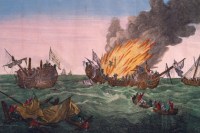
Military history is more popular than respected. It is not hard to see why. It is masculine history, a trifecta of logistical planning, technical detail and violent death. It shows the value of hierarchy and duty, sacrifice and patriotism — disgraceful notions which the young and impressionable might be inspired to emulate. And,with its sudden twists from tedium to danger and its tidily destructive conclusions, it has tight plots. One way to make civilian history as exciting is, as Eric Hobsbawm showed, to turn it into a false kind of fiction, true neither to the facts nor the life. Another, as N.A.M. Rodger did in The Wooden World, his ‘anatomy’ of the Georgian navy, is to integrate military history with political and social history.

The tragedy of Arabia

From our UK edition

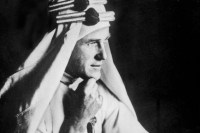
Is there anything new to be said about T.E. Lawrence? I mean, really. In the century since his stirring exploits in the Arabian desert we have had all manner of biographies, from simpering hagiography to heartless hatchet job. We have had Lawrence the colonial hero and faithful imperial servant; Lawrence the linguist, explorer and spy, pioneer of guerrilla warfare; Lawrence the Machiavellian betrayer of the Arabs; Lawrence the preening, self-mythologising sado-masochist. Each generation projects its own prejudices and visions, fears and fantasies upon this unusual man. Even now, 80 years after his death, the torrent of biographies shows little sign of abating.

The halo slips

From our UK edition

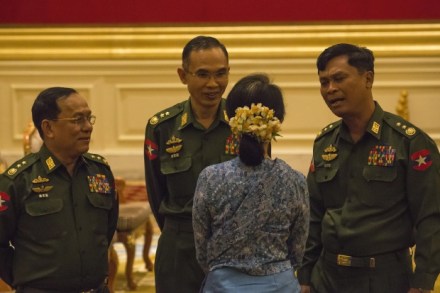
Peter Popham is commendably quick off the blocks with this excellent account of the run-up to last November’s Burmese general election, in which Aung San Suu Kyi’s National League for Democracy swept the board. At the time of writing this review, Suu is taking four ministries, including foreign affairs. So she will do what she did during her years of house arrest — offer a beautiful human face to the outside world of a country still under the heel of the generals. Popham seems to enjoy Burma and to understand it as much as any westerner can. Notwithstanding recent liberalisation, Burma is perhaps the second weirdest state on earth after North Korea, with impossibly complicated ethnic and religious fault lines that are cannily exploited by the army.

Recent crime fiction | 7 April 2016

From our UK edition

All it takes is a spark. In her compelling new thriller, Ten Days (Canongate, £14.99), Gillian Slovo tracks the progress of a riot as it spreads across a rundown London estate. When Ruben, a black man of fragile nature, is accidentally killed in a police action, his friends and neighbours gather to protest his needless death. This peaceful demonstration ignites into violence and looting. Resident Cathy Mason and her family are caught up in the dangers of that night and the ones that follow. Slovo takes the London riots of 2011 as her blueprint, but she moves beyond that, focusing not only on the local people but also on the new Commissioner of Police and the Home Secretary, both of whom are using the riots for their own political ends.

The holy sinner

From our UK edition

Many of the great faith narratives (the Holy Quran being a notable exception) are clumsy, rough-hewn things; makepiece amalgams of different texts from an abundance of sources that have been gradually hacked together over hundreds — sometimes even thousands — of years. Most have been found useful or resonant (spiritually and politically) at various stages in history, and some have been purposefully engineered (by individuals or institutions with agendas — their motives pure or otherwise). Eventually these fragments become embedded into a whole — a unity. A consensus is reached on what, fundamentally, works. This process is essentially pragmatic.

Onwards and downwards

From our UK edition

This is a very upsetting book. The Harvard sociologist Matthew Desmond spent a year and a half living in low-income housing in Milwaukee — first in a trailer park on the mostly white South Side and later in a rooming house in the black inner city. Desmond himself plays no part in the body of the story, but he reports what he saw and heard, using a digital recorder and filling in the rest with double-sourced eyewitness accounts and official documents. And what he saw was upsetting, though not always, or not particularly, in a dramatic way. The things that happened to the people he lived among happened too often and routinely to seem extraordinary to them.

Those fearless men, but few

From our UK edition

While reading this book in a London café, I was politely buttonholed by an Irishman: ‘Sorry to disturb you, but I saw what you were reading and wondered how far back it went.’ I answered that, as it was a group biography of the men who led the Dublin Easter Rising of 1916, it began with the eldest of them, Tom Clarke, in the mid-19th century. ‘But,’ I added, ‘it goes back further, to Robert Emmet, Wolfe Tone — even Cromwell is mentioned.’ ‘Sure the feud’s much older than that,’ was the gleeful reply. If Ruth Dudley Edwards had been at the table, I imagine she would have said that that was part of the problem — the romantic, rebel, republican view of Irish history as an unbroken tradition of justified resistance.

Obscure object of desire

From our UK edition

Garth Greenwell’s debut novel is as dreary and oppressive as the Soviet-era apartment buildings among which it takes place. But presumably this was intentional. Having grown up in a rural backwater where ‘disease was the only story anyone ever told about men like me’, the book’s American narrator, a teacher in Sofia, seeks to escape shame and tedium by having sex with random men in the toilets beneath the National Palace of Culture. ‘It wasn’t so much pleasure I sought as the exhilaration of setting aside restraint,’ he says: ‘a thrill so intense it was almost suicidal.

The iceberg cometh

From our UK edition

Every second novel is fated to be measured against its predecessor; and that comparison is particularly hard when the debut in question was acclaimed (Jenni Fagan’s The Panopticon was shortlisted for the Desmond Elliott Prize) or held to exemplify some modish literary sub-genre. Fagan’s style was tagged as ‘gritty Scottish realism’, and ill-served by comparisons to Irvine Welsh, which made much of her use of profanity and dialect. But where Welsh’s style has long since descended into shtick, Fagan’s coarseness of language was never more than surface detail. It was clearly in the service of authenticity of voice, and Anais Hendricks, the disturbed but resilient protagonist of The Panopticon, is memorable for much more than her readiness with swear-words.