Book review

Europe’s best hope

From our UK edition

Go into any high street bookshop and find the European history section. There’s usually a shelf or two on France and about the same on Germany, but the difference between these two categories is apparent straight away. The French stuff spans several centuries, whereas German history is confined to just 12 years. Yes, a lifetime since the death of You-Know-Who, Britons are still obsessed with the Third Reich, and who can blame us? It remains the most bizarre and awful epoch in European history and we’re still reeling from its consequences. What’s less forgivable is our wilful ignorance about anything that came before (my son learnt all about the Nazis for his history GCSE, but it wasn’t until he did A level that he got onto Bismarck).

Boxing clever

From our UK edition

Thirty years ago, Russell Davies wrote a weekly sporting column in the New Statesman. It proved unsustainable and was soon discontinued, but not before Davies had described a boxer ‘genuflecting through the ropes’ — an image I have coveted ever since. Boxing is ‘a standing challenge to [a writer’s] powers of description’, according to Carlo Rotella and Michael Ezra in their preface to The Bittersweet Science. They are right. All physical action is a challenge to writers: YouTube can repair deficiencies, and is invoked several times in this anthology; but it is no substitute for writing, because writing adds focus to reality.

The gangster life of Ryan

From our UK edition

Lisa McInerney found a brilliant way to turn heads and hone her craft as the ‘Sweary Lady’ behind the ‘Arse End of Ireland’ blog. Taking a gonzo approach to the life she knew — first a council estate in Co. Galway, then a selection of much nicer houses in Cork — she let rip as an ‘amplified, wittier, crankier version of myself’. She took that mood of wild pace and confidence into her first novel, The Glorious Heresies, and it paid off. Her boisterous tale of Munster drug dealers, nailed as ‘Trainspotting with a heart’ by online magazine The Pool, won both the Baileys Prize for women’s fiction and the Desmond Elliott Prize for debut novels.

The curse of the Yeti

From our UK edition

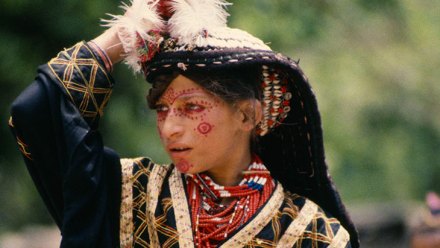
This book, according to its author Gabi Martínez, is ‘a non-fiction novel’. It tells the story of Jordi Magraner, a Morocco-born Spaniard who grew up in France. A largely self-taught zoologist and naturalist, Magraner worked on humanitarian convoys in Afghanistan before devoting his life to searching for the Yeti among the Kalash people in the Hindu Kush. He was, according to Martínez, ‘Proud. Enigmatic. Multifarious. Pagan. Passionate. A beast.’ The book opens with his murder (which remains unsolved). The Yeti, possibly a version of Neanderthal man, are the monsters of the title. In north Pakistan they are known as barmanu. These bipeds never make an appearance. But Magraner kept the faith.

A cuckold’s revenge

From our UK edition

Perhaps the least necessary piece of advice ever given to a Hanif Kureishi protagonist comes in 2014’s The Last Word. ‘Harry,’ a wise old writer tells the main character, ‘always put your penis first.’ It’s a suggestion, needless to say, that Harry has no trouble accepting — not least because, like so many Kureishi protagonists, he shares the belief that ‘the body of the young woman is the world’s most significant object’. (Or as the narrator of 1998’s Intimacy puts it, ‘women’s bodies… are at the centre of everything worth living for’.) Admittedly, Kureishi’s men do occasionally agonise between betraying their partners and betraying themselves — i.e.

Dark secrets of village life

From our UK edition

Jon McGregor’s first novel, If Nobody Speaks of Remarkable Things, a surprise inclusion on the 2002 Booker longlist that went on to win the Somerset Maugham and Betty Task Awards, captured 24 hours in the life of a suburban street. Fifteen years later, his fourth novel, Reservoir 13, has a similarly concentrated focus, but this time on a village in the north of England and the lens remains open for 13 years. McGregor’s portrait of a village is an astonishing feat.

The wondrous cross

From our UK edition

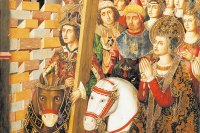
How did the cross, from being such a loathsome taboo that it could scarcely be mentioned, change into an image thought suitable viewing for all ages in public art galleries? There is no doubt about its early despicable reputation. A hundred years before the birth of Jesus, Cicero declared that ‘the very word cross should be far removed not only from the person of a Roman citizen but from his thoughts’. It was the cross that gave rise to the word excruciating. It makes me feel rather queasy to envisage the slow death by suffocation of the crucified man, left without the strength to draw breath, so I was glad that Robin M. Jensen trotted fairly briskly through the forensic evidence, which includes a first-century heel bone with a nail through it.

Golden opportunities

From our UK edition

Tudor merchants — shivering in furs in tiny creaking ships, sailing through the ice of unknown winter seas — knew something that today’s careworn EU and civil service officials might be irritated to hear: that despite all travails, trade deals can sometimes be sexy, thrilling and epic. In 16th-century London, plans to open up fresh trading routes across the world were also about vaulting leaps of fantastical imagination, and naturally also about slavering greed. Down by the Thames, men of property would dream of alien Cathay, and of realms where the beaches, they thought, would glitter brilliant red and green with loose rubies and emeralds.

Anything for a good story

From our UK edition

When I was at boarding school in the early 1970s, the Durrells, or at least Gerald, were immensely popular. My Family and Other Animals made us laugh out loud; we squealed as the scorpions skittered across the family’s dining table and groaned empathetically when Margo kissed the mummified feet of St Spiridion in an attempt to banish her acne. ‘Gerald Durrell was my ideal man,’ recalls one animal-loving friend. Those of us with intellectual pretensions tackled Lawrence’s Alexandria Quartet, with mixed success. Now a popular TV series has brought the family, and Corfu, into the lives of a new generation. But how literally should we take the tales of colourful chaos from these ‘masters of fabulation’?

A choice of first novels | 20 April 2017

From our UK edition

If you go down to the woods today… That is the starting point for Idaho by Emily Ruskovich, who grew up on Hoodoo mountain in the Idaho panhandle. A family — mother Jenny, father Wade, daughters May and June — leave their little house in the big woods and drive a pick-up truck to a clearing where they chop birch wood, squabble and drink lemonade that attracts the flies. You want them to find something wonderful there. A teddy bears’ picnic. A magic faraway tree. A Piglet. But this is Idaho, not our friendly day-tripping woods. Nature is vast and hostile. In winter the house is cut off for months at a time, the paths too steep for a snowplough. In summer you sweat and sweat and tempers frazzle. Leave the windows open and the beetles get in.

Bring up the bodies

From our UK edition

I grew up with a skeleton in the attic. My mother’s clinical training bestowed on our family a short man’s dry remains, and his residency at home fed the nightmares of my siblings. When I started medical school, he came too, but now as an ally in passing the anatomy exam. On moving house, I stiffened as the taxi driver carried the loosely fastened casket in just one hand. A pavement littered with 200 bones would have been a challenging start in this family-friendly neighbourhood. My accustomed eyes were suddenly anxious to protect others from such a deathly interruption. Carla Valentine doesn’t want her choice of job to sound pathological.

Truth is stranger than satire

From our UK edition

I think we’re all agreed about Donald Trump — by which I mean all of us who read the literary novel, buy hardbacks and take pleasure in good writing. The novel as a form is interested in different points of view; is protean and humanly various; listens to different voices patiently; does not shout down. As Auden said, the novelist ‘in his own weak person, if he can, /Must suffer dully all the wrongs of Man.’ Donald Trump is not much like that. He shouts down; he evidently does not see much in other people to recommend them, other than their opportunity to proffer sycophancy; and the range of his vocabulary has been assessed as equivalent to a ten-year-old (in American education, moreover).

A feast in every sense

From our UK edition

After reading Gastrophysics: The New Science of Eating, you might, as I did, sit for a bit wondering what a chef is, exactly. We think of chefs as cooks, people in charge of a kitchen, ingredients, pan and heat, who hopefully produce great dishes of food. But this is apparently an outdated concept. For chefs who want to make their name in the world now, the expression of their art must exceed the nourishment on the plate. Cooking can only take a dish so far in order to make it memorable, claims Professor Charles Spence. ‘No matter how exquisitely executed,’ he adds. Whoa! I can still recall the taste of my mother’s sublime steak-and-kidney pudding from 20 years ago. Spence is an eminent scientist at the department of experimental psychology at Oxford University.

Unearthly darkness

From our UK edition

Mask of the Sun: The Science, History and Forgotten Lore of Eclipsesby Norton, £20, pp. 336 On 28 May 1900 Mabel Loomis Todd, friend and editor of the poet Emily Dickinson, stood with her astronomer husband on the roof of a house in Tripoli to witness one of nature’s most spectacular events: a total eclipse of the sun. Afterwards she wrote: I doubt if the effect of witnessing a total eclipse ever quite passes away… A startling nearness to the gigantic forces of nature and their inconceivable operation seems to have been established. My own first experience of a total solar eclipse was also in North Africa, at a remote viewing site in the depths of the Libyan desert. As the resident astronomer on an organised eclipse tour, I had done my homework.

Neither green nor pleasant

From our UK edition

The old coaching inn on the green. The Sunday morning toll of church bells. The ducklings paddling on the pond. The soft sound of leather against willow. Nothing, absolutely nothing, defines England’s idea of itself more than the sleepy rural village. World events can shake our island nation. Population growth can swell our cities. Who knows, climate change could even sink East Anglia beneath the waves. But as long as the country’s villages stand true, then England is safe and we can all put the kettle on for tea. Utter rot, says Tom Fort, in this timely, myth-busting march through English rural history.

No end in sight

From our UK edition

Are you a deathist? A deathist is someone who accepts the fact of death, who thinks the ongoing massacre of us all by ageing is not a scandal. A deathist even insists that death is valuable: that the only thing that gives life meaning is the fact that it ends — an idea not necessarily embraced by someone about to be murdered on video by an Isis fanatic. But what is the alternative? There has never been one, which is why until recently no one needed to coin the term ‘deathist’. But now many tech entrepreneurs and scientists take a different view: death, they say, is simply an engineering challenge. Biotechnology should, in principle, be able to reverse the wear-and-tear on cellular machinery in our bodies and keep us in our prime indefinitely, barring violent accident.

Bones of contention | 12 April 2017

From our UK edition

A few years ago, a group of Native American leaders drove 12 hours from Oklahoma to Denver Museum of Nature and Science, a natural history museum in the Rocky Mountains of Colorado, to collect 26 sets of human remains. When Chip Colwell, the museum’s senior curator of anthropology, explained to them that, though the remains were fragments from people that populated the Great Plains, he didn’t know from which tribes, they were shocked: ‘The room plunges into silence,’ he recounts, followed by ‘heated deliberation’. The visitors were affronted. ‘They had come to rebury their kin — not strangers.

Romancing the stones

From our UK edition

If Britain’s prehistoric monuments have had a magnetic attraction for generations of artists, it is perhaps because they have long been seen as works of art themselves. ‘The whole temple of Avebury may be consider’d as a picture’, enthused the antiquary William Stukeley in 1743, while ‘my God how sculptural’ was Barbara Hepworth’s response to Cornish sites such as the Mên-an-Tol and the Nine Maidens which she encountered after moving to St Ives in 1939. The creative tension between artists and these mysterious presences in the landscape is the subject of Sam Smiles’s engaging book British Art: Ancient Landscapes, published to accompany an exhibition at the Salisbury Museum (until 3 September).