Book review - essays

The Position of Spoons is flawed but fascinating

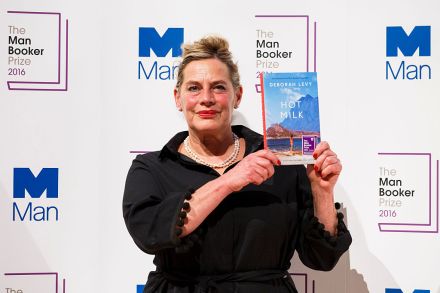
"When you take a flower in your hand and really look at it, it’s your world for the moment. I want to give that world to someone else.” The final installment of Deborah Levy’s “Living” biographies, Real Estate, begins with this quote from the artist Georgia O’Keefe. It would be neat — oh, so neat! — for me to remark that if her memoirs were each a single flower — the world of the writer unfurling between its papery leaves — her latest book, The Position of Spoons, is a bouquet: a collection of variously published and unpublished letters, essays, short stories and poems spanning her entire life as a writer. But The Position of Spoons is not neat. Instead, reading it feels rather like rummaging through Levy’s desk.
Levy

The Soviets brought far from home

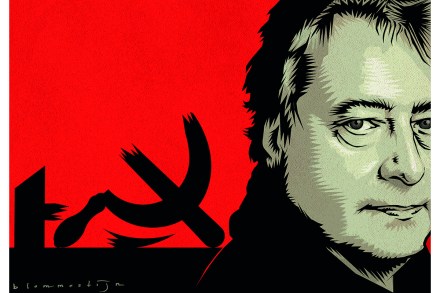
"It’s best not to talk politics with patients, but if a woman has an unusual mitral valve, it’s tempting to think that she herself must be interesting,” sighs the Russian doctor, essayist and short-story writer Maxim Osipov towards the end of his 2017 essay “The Children of Dzhankoy.” The temptation does not, alas, live up to expectations for Osipov. His mitral valve patient is “a thirty-six-year-old journalist and amateur pilot who misses the USSR.” “Now, that was strength” she claims. Osipov, with typical economy, comments, “nothing interesting.

Osipov

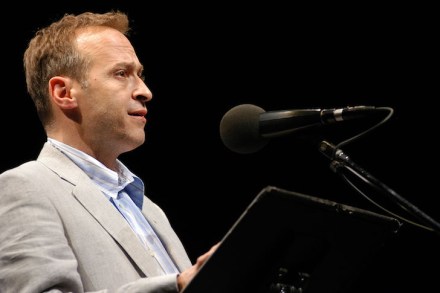
David Sedaris, the current king of humourists, is often not funny at all

Since the 17th century, a ‘humourist’ has been a witty person, and especially someone skilled in literary comedy. In 1871, the Athenaeum said that Swift had been ‘an inimitable humourist’. But in modern usage the term seems to describe a specifically American job title: someone who specialises in writing short prose pieces whose only purpose is to be funny. The current king of humourists is David Sedaris, and his books are essentially scripts for his sell-out reading tours. But is he funny? On a line-by-line basis, he sure can be. He helps push someone’s broken-down car, ‘and remembered after the first few yards what a complete pain in the ass it is to help someone in need’.

The changing face of war and heroism

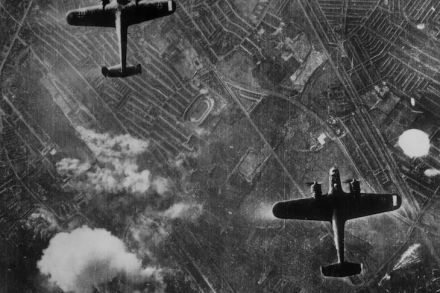
On War and Writing by Samuel Hynes is hardly about war at all. There is little about combat here, or the actual business of fighting and killing — what Shakespeare wryly called ‘the fire-eyed maid of smoky war/ All hot and bleeding’. Hynes is an august scholar of English literature and particularly the literature of 20th-century warfare. But he also served as a bomber pilot in the Pacific during the second world war, and has written an engaging, plain-spoken memoir of his service called Flights of Passage, published in 1988. His two vocations, he explains in the introduction to his new book, are ‘professor’ and ‘pilot’, and here the professor not the pilot is at the controls.