Book review - biography

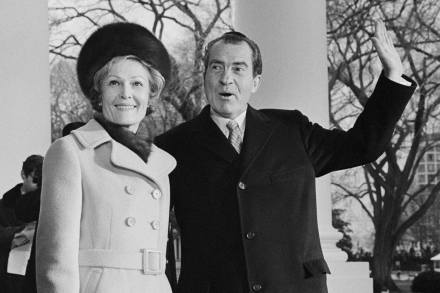
Pat Nixon, ambassador of goodwill

The Watergate scandal already commands a wide bookshelf. In the fifty years since Richard Nixon fell on his sword, we’ve had the big-ticket books by the tag-team of Woodward and Bernstein, and others, by contrast, seeking to exonerate Nixon and pin the whole thing on his adversaries; tales about secret sources and White House interns and plucky whistleblowers like the oleaginous John Dean and that human hand grenade Martha Mitchell; not to mention self-serving memoirs from all the principals, some now on their second or third helping at the table; or the ones saying it was all a conspiracy involving an unholy alliance of the FBI, MI6 and KGB, with the little green men from Mars thrown in.
Pat
Turner

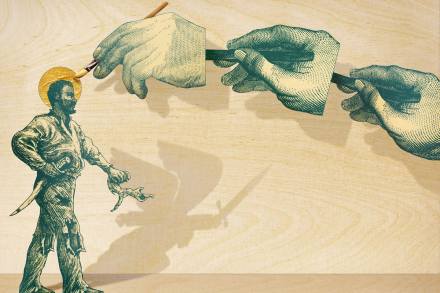
A new and compelling study of the life of the iconic rebel Nat Turner

In 1831, while the slave rebel leader Nat Turner sat in jail awaiting trial in Southampton County, Virginia, he was visited by a local lawyer named Thomas Gray. Turner spoke at length to Gray, who subsequently published his record of their conversations. At one point Turner said he had been visited many years before by the spirit. “What do you mean by the spirit?” Gray asked. “The Spirit that spoke to the prophets in former days,” Turner replied. Gray was unmoved by Turner’s claims of divine inspiration and concluded that he was a “gloomy fanatic” moved to mass murder by religious delusions.

The wit and wisdom of Margaret Cavendish

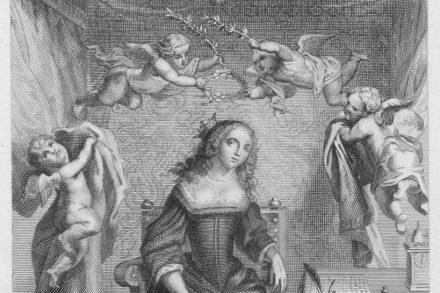
Margaret Cavendish, Duchess of Newcastle, who died aged fifty in 1673, was a divisive character whose life spanned one of the most fraught periods of English history. To some contemporaries, she was one of the wonders of the age, while others considered her one of the silliest writers ever to have taken up a pen. In her last two decades, Cavendish published over a dozen works of drama, philosophy and poetry, including what some consider her masterpiece, The Blazing World. Posterity has seen her obscured and dismissed, the fame she admitted craving granted only in 1929, when Virginia Woolf described Cavendish in A Room of One’s Own as “a giant cucumber” who “frittered her time away, scribbling nonsense and plunging ever deeper into obscurity.

Cavendish

Relive Lou Reed’s wild, contradictory life

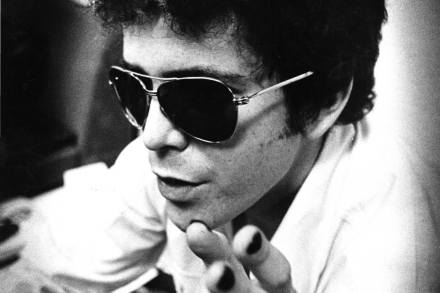
Before “Walk On The Wild Side” changed everything for Lou Reed in 1972, bringing him status and bolstering his bank account, he had been lead singer of the Velvet Underground, a group, as managed by Andy Warhol, that served up songs about drugs, gender-bending and sexual fetish, all designed to crash the boundaries of what polite America considered acceptable. The great thing about Velvet Underground songs was that musically, too, they transgressed: drone-based harmonies progressed glacially as rhythmic impetus stuttered. The big problem with the Velvets, in terms of finding any wider audience beyond self-confessed weirdos who hung out with Warhol, was that virtually nobody wanted to hear drone-based harmonies moving glacially or rhythms that fragmented. Where was the fun in that?

reed

A definitive biography of Liz and Dick, Hollywood’s most controversial and glamorous couple

What is it about Richard Burton and Elizabeth Taylor that still hooks us in, thirty-nine years after his death and twelve years after hers? In his magnificent, definitive double biography, Roger Lewis nails down the answer. Liz Taylor was the last great Hollywood movie star, starting in the golden age in National Velvet (1944), aged twelve. As Lewis puts it, her origins were in the magazines and movies of the Forties: “the era of Bing and Bob, Big Bands, such as Glenn Miller, Bogie...Tom and Jerry, Disney.

lewis

An admirable but flawed new biography of George Eliot

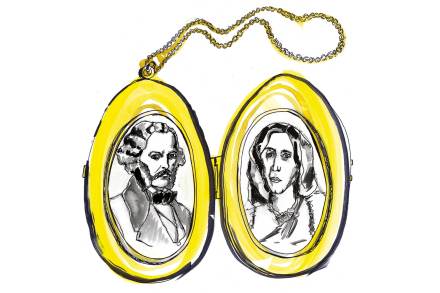
What to call her? The question troubled George Eliot, and challenges Clare Carlisle, her latest biographer. Even this book’s indexer plays along, providing more than one entry for its shapeshifting but steadfast subject. The Marriage Question shows us a woman fragmented, attempting to understand in her various existences how — and if — personal freedom can be achieved when your life is bound to another. Mary Ann (or Anne) Evans was born in Warwickshire, in the West Midlands of England, in 1819. On moving to London in 1850, hoping to make her living as a writer, she became Marian Evans.

Eliot

Why is George Orwell so difficult to pin down?

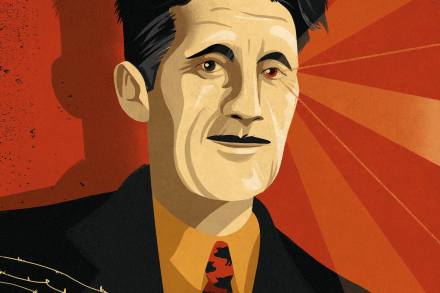
Outside Broadcasting House, the BBC’s main center in London, is an imposing, eight-foot-high statue of a man. He leans over slightly, as if to accost passersby, and holds a cigarette. A sign behind him declares, “If liberty means anything at all, it means the right to tell people what they do not want to hear.” The man is the author and critic George Orwell and the statue was intended as a permanent commemoration of his writings and values, as well as his short-lived stint at the BBC during World War Two.

orwell
Caroline

Lady Caroline Lamb and the frantic bed-hopping between the great houses of England

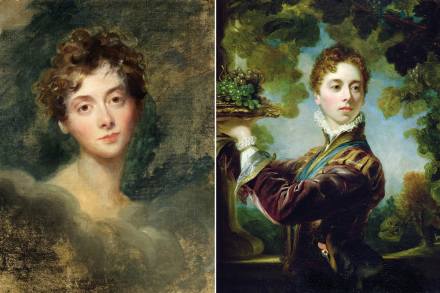
“Mad, bad and dangerous to know.” That’s the line Lady Caroline Lamb (1785-1828) is known for — her brilliant, pithy verdict on her lover Lord Byron. Her other great claim to fame — her marriage to Viscount Melbourne, twice prime minister — was marginal from a historical point of view: she died, aged only forty-two, her health shattered by drink and laudanum, before Melbourne became PM; before he became Lord Melbourne, in fact — he succeeded to the title after her death. But, still, as Lady Antonia Fraser reveals in her gripping biography, Lady Caroline Lamb: A Free Spirit, she was a remarkable woman, possessed of exceptional charm, as was Byron.

The king and queen who saved the British monarchy

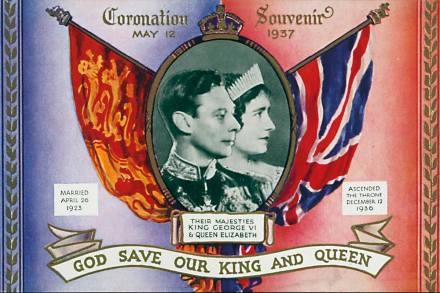
In some ways, the world of George VI and his consort Elizabeth, the future Queen Mother, from 1936-52 was very different from how we envision that of today’s British royal family; its rituals seem to belong to an era of Jurassic antiquity. In George’s day, Britain was still a global power, and its monarch ruled over both an empire and an elaborate court system with a “Page of the Backstairs” and a “Yeoman of the Pantry” — not to mention a fully staffed, oceangoing yacht — at his disposal. His coronation in May 1937 was as protracted as that of any maharajah. The Edwardian braid and sashes on display during more recent military pageantry look sadly Ruritanian by comparison. In other ways, their lives resonate more clearly with our own.

George queen

Who was the real Martin Luther King, Jr.?

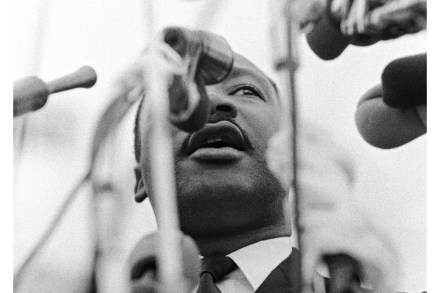
Jonathan Eig’s new King: A Life (KAL) is the first comprehensive biography of the black civil rights hero to appear in more than thirty years, and it will succeed my own Bearing the Cross (BTC), published in 1986, as the standard account. One normally does not review a book one’s blurbed — I’ve called it “a great leap forward in our biographical understanding” — nor where one’s actively aided the author’s research and read his manuscript multiple times. But comparisons between KAL and BTC will be legion, so highlighting the three most significant ways in which the two biographies differ will be a service both to the thousands of readers whom Eig’s volume should attract and to students of King’s life more generally.

king

Vince McMahon: the modern-day P.T. Barnum who changed America

Book reviews should be like Car & Driver: flip over the page to a concrete, plainly written piece — no writerly words or literary drivel — by someone who’s test-driven the book and punched up a nuts-and-bolts guide. The reader should get a look under the hood: polished steel and chrome cylinders. Does it hum? Vroom, we’re off the races. I say this because I’m reporting on a prototype I’m afraid of driving: an advance reader’s edition, uncorrected, not for sale or quotation. I can’t rev this baby for you, or even kick the tires, but here goes.

ringmaster

Jimmy Page is a Capricorn – that says it all

In 1957, aged 13, Jimmy Page appeared with his skiffle group on a children’s TV programme dedicated to ‘unusual hobbies’ — skiffle apparently qualifying as one. During the show, he was interviewed by Huw Wheldon who, following an old-fashioned BBC lunch, arrived in the studio with a hearty cry of ‘Where are these fucking kids then?’ Asked what he planned to do when he grew up, Page gave a perhaps unexpected reply: find a cure for cancer. As we now know, this plan failed — but already, it seems, the young Jimmy wasn’t lacking in the swaggering self-confidence that true rock stars are required to possess (or at least to fake convincingly).

jimmy page capricorn

Ménage à quatre with Robert Graves

‘I have a very poor opinion of other people’s opinion of me — though I am fairly happy in my own conceit — and always surprised to find that anyone likes my work or character.’ This admission by Robert Graves — made to his then friend Siegfried Sassoon in the mid-1920s — goes to the heart of his character as a man and a poet. It projects a powerful mixture of defiance and neediness, which in his personal life produced a series of highly disruptive assertions and reversals, and in his writing life an equally striking set of commitments and walkings-back. Jean Moorcroft Wilson, who has previously published fluent biographies of Sassoon and Edward Thomas, is a reliable guide to all these contortions.

robert graves

Bruce Lee: weird, gruesome and oh-so-cool

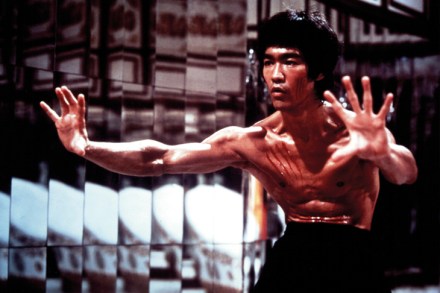
Every cinema-loving person has a favourite Bruce Lee moment. My own comes towards the end of Enter the Dragon, the film which Lee made just before his death in 1973 at the age of 32, and that would in turn seal his worldwide stardom. There, on one side, stands Lee himself. There, on the other, is the villainous Han, who has a set of metal talons where one of his hands ought to be. The two men leap across each other, leaving Lee with an unpleasant gash on his shirtless torso. He pauses, dabs a finger in the blood, raises it to his mouth — and licks. It is weird, gruesome and oh-so-cool, all at once. Why did Lee do this? The answer is in Matthew Polly’s biography.

You didn’t have to be mad to work for Tommy Nutter — but it helped

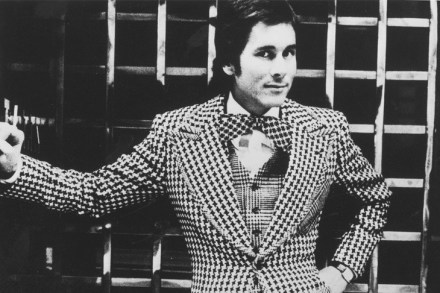
The tailor’s art is a triumph of mind over schmatte. Not just in the physical cutting and stitching, but in the faith that style makes content. This, not the question of which way you dress, is the secret compact between tailor and client. ‘Every faculty of his soul, spirit, purse and person is heroically consecrated to this one object, the wearing of clothes wisely and well, so that as others dress to live, he lives to dress,’ Carlyle wrote of the dandy in Sartor Resartus. Tommy Nutter was one of Tommy Carlyle’s dandies, a ‘clothes-wearing man’ and a ‘poet of the cloth’. From 1969 to 1976, Nutter bestrode the world of tailoring like a Narcissus. Though he could barely manage a backstitch, his designs rewrote the book on male style.

From persecutor to preacher: the journey of St Paul

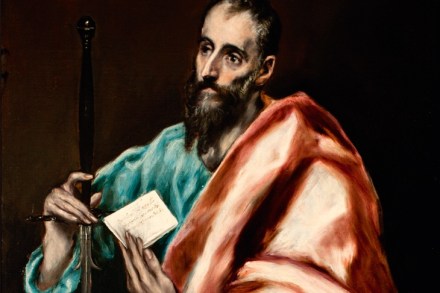
Saint Paul is unique among those who have changed the course of history — responsible not just for one but two critical historical developments 15 centuries apart. First, he persuaded the early followers of Jesus of Nazareth that gentiles as well as Jews could belong to their nascent church. This enabled its spread throughout the Roman empire, until Christianity become the state religion under the Emperor Constantine, and remained the official creed of all European nations until the French revolution. Second, there was his teaching on justification by faith alone —a ticking time bomb detonated by Martin Luther in the 16th century.

How a 14th-century Arab thinker influenced Ronald Reagan

 At a press conference in October 1981, Ronald Reagan quoted Ibn Khaldun (1332–1406) in support of what is known as supply-side economics. Although the 14th- century politician and thinker wrote extensively about economics and was almost unique among medieval Arab writers in so doing, it is quite ‘marvellous’ writes Robert Irwin, the author of a new intellectual biography of this famous North African, that he ‘should have anticipated American Republican party fiscal policy’.