Bob dylan

The photographer who connects Bob Dylan and the Beatles

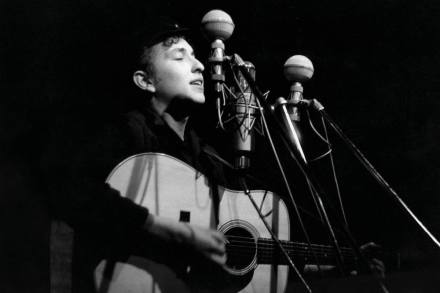
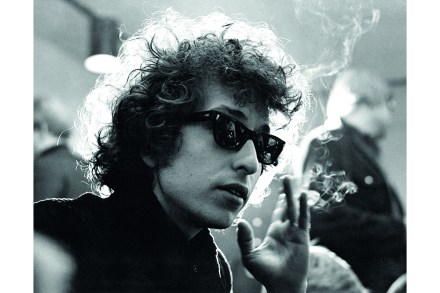
MAX JONES: “What do you think of the Beatles as artists and people?” BOB DYLAN: “Oh, I think they’re the best. They’re artists and they’re people.” —Melody Maker, March 1965 For more than 60 years, people have been fascinated by the connections between Bob Dylan and the Beatles. All were born during World War Two. All loved the music of Little Richard and Elvis Presley and Eddie Cochran; all were blues fans swept off their feet by rock and roll. Dylan was a Minnesota boy who early in his life became the avatar of the American folk scene, and then a protean man containing multitudes, both musically and otherwise.

bob dylan

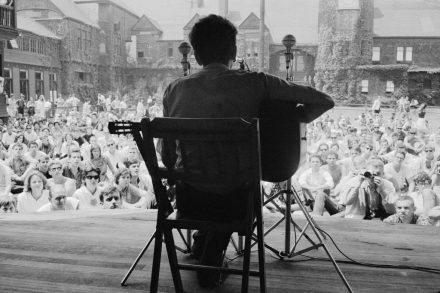
When Dylan went folk

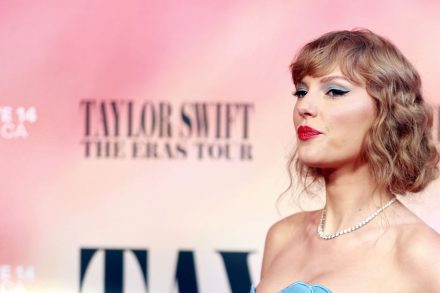
For all the billions Taylor Swift has made from guiding her career into carefully delineated “eras,” it was Bob Dylan who pioneered this career path. With practically every new album, Dylan traded one persona for another. There’s the folkie hobo of The Freewheelin’ Bob Dylan, the pill-popping beat poet of Blonde on Blonde, the cleaned-up country crooner of Nashville Skyline, the Christian revivalist of Slow Train Coming and many, many others. This year marks the 50th anniversary of Dylan’s The Basement Tapes, a tranche of previously unreleased hoedowns, goof-offs, shaggy-dog stories and barroom ballads that was never meant to be a proper album, but might be the closest we can get to seeing the man behind the mask.

bob dylan

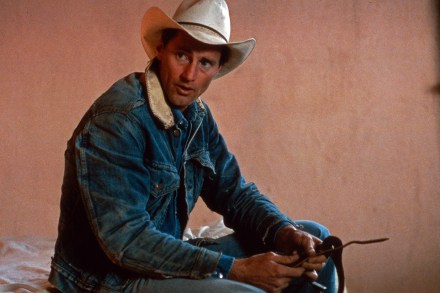
Sam Shepard’s life was as dramatic as his theater

Sam Shepard and I crossed paths several times when we were both living near Charlottesville, Virginia, he with Jessica Lange and their family, and me as a student at the University of Virginia. He towered over passersby on the Downtown Mall, walking as if invisible spurs should be clinking on his bootheels, mane of dark floppy hair pushed back off his forehead and behind his ears, keen eyes above a quick grin. I last saw Shepard 20 years later, having a coffee and reading the Daily Racing Form in a Greenwich Village restaurant; he looked even better then. He was a true Renaissance man. There he was, on Bob Dylan’s Rolling Thunder Revue tour in 1975, charged with writing a screenplay for a movie somehow set in the concert tour.

sam shepard

Rolling Thunder falls flat

April this year marked the 50th anniversary of the end of the Vietnam War. Celebrating this milestone – or perhaps cashing in on it – is Rolling Thunder, an off-Broadway musical imported from Australia now playing at the New World Stages.  Marketed as “part rock concert, part documentary,” Rolling Thunder is all cliché – and not in a good way. The two-hour jukebox musical uses a razor-thin plot and woefully undeveloped characters to connect various popular songs of the era, from “Born to Be Wild” to “We Gotta Get Out of This Place” and "Bridge over Troubled Water," supported on stage by a five-piece band.

My Bob Dylan pilgrimage

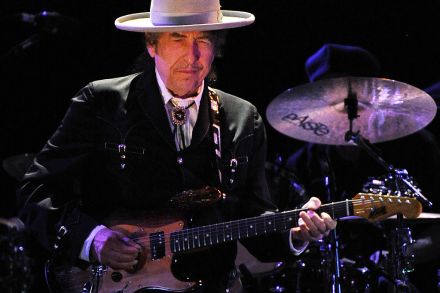
On March 25, Bob Dylan delivered his first performance of the year in Tulsa, Oklahoma, as his “Rough and Rowdy Ways” tour enters its fourth year running. At 83 years old, there was no guarantee Dylan would keep performing live. At the start of the year, there were no new dates listed on his website. Then, in early January, one performance popped up. The show was to be held at the Tulsa Theater – an important location for the performer, as the city is home to the Bob Dylan Center, located in the downtown art district. Tulsa also has a reputation as a musical destination through which almost every legendary folk, rock, country and blues artist has toured. Dylan is no exception.

Dylan

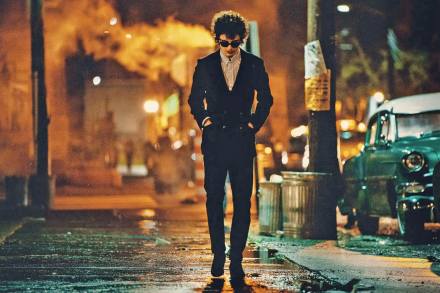
Like Bob Dylan in the movies

The Bob Dylan biopic A Complete Unknown has opened worldwide to largely positive reviews. Negative ones have focused on the silly quibble that fiction is not fact: the story told in the movie of Dylan’s rise to fame, from his January 1961 arrival in New York City as an unknown, folk-obsessed teenager from the Minnesota Iron Range, to his electrified electrifying performance at the Newport Folk Festival in July 1965, does not strictly hew to actual biography. Recently the New York Times made the unfathomable decision to take A.J. Weberman, best known for going through the Dylans’ garbage when they lived in Greenwich Village in the early 1970s (and getting thumped by Dylan for stalking), to see A Complete Unknown.

Dylan

Why we dramatize history — and why we should stop

A few weeks ago, a friend asked if I had watched the Newsnight interview with Prince Andrew. That interview, yes — the one with all the sweating and the pizza in Woking, in which he definitely didn’t meet Virginia Roberts Giuffre but he did single-handedly crash his reputation, and Emily Maitlis, like the Medusa of journalism she has since become, just let him tie his own noose. Of course I’ve watched it. I’m a journalist. And a twenty-first-century citizen. Who hasn’t? My friend, for one, though she pointed out that she can just watch the three-part Amazon dramatization of the whole affair, A Very Royal Scandal, which is even juicier than the interview. (“I’m the son of the sovereign,” bellows the Duke of York, played by a soapy Michael Sheen.

history

Better Man and the dangers of ambition

The Robbie Williams biopic Better Man opened in American theaters last weekend and, as every single box office commentator predicted, it flopped, and flopped hard. A gross of just over $1 million in its opening three days — less than the Golden Globe-winning The Brutalist, which is only showing on sixty-eight screens nationwide — is utterly disastrous, all the more so because this wasn’t a $10 million indie, or even a $40 million Rocketman, but a movie that it cost $110 million to make.

better man

This month in culture: December 2024

Star Wars: Skeleton Crew Disney+, December 3 Of the making of Star Wars, there appears to be no end. This one, though, looks different. The characters are a group of children on an Amblin Entertainment-style adventure, a coming-of-age story as they try to make their way back home across the universe after something goes wrong on their home planet. The trailer gives strong Spielberg/E.T./Goonies vibes. Taking place around the same time as The Mandalorian, it rounds out its cast with Jude Law as a “new kind of Jedi,” according to the creators. — Zack Christenson Nightbitch In theaters December 6 Based on Rachel Yoder’s hit horror-comedy novel of the same title: Amy Adams stars as an artist turned stay-at-home mom who learns that domesticity contains multitudes.

culture

Back to the birth of the Greenwich Village music scene

In 1961, the folk guitarist Barry Kornfeld moved back to Manhattan after spending a year in Boston. The Greenwich Village folk musicians he called friends, who before his trip to Boston had been enduring a hand-to-mouth existence, were now making a living playing their music in clubs along MacDougal Street — not necessarily “a good living,” Kornfeld noted, but certainly enough to get by. Kornfeld spotted another difference, too. Audiences at clubs weren’t merely clapping; they were snapping their fingers in appreciation, which felt like the hippest thing ever. Rolling Stone writer David Browne’s latest book, chronicling the history of Greenwich Village music, pivots around 1961.

Greenwich

Of course Taylor Swift deserves to be TIME’s Person of the Year

Well, it had to happen. Taylor Swift has been the most talked-about person in the world for some time now. After 2023 saw her conquer both stadiums and the world’s cinemas with her Eras Tour film — which, with a current gross of $249 million, is now the highest-earning concert movie ever made — her remarkable year has been capped off both with the enormous success of her re-recorded album 1989 (Taylor’s Version) and now, the news that TIME magazine has awarded the thirty-three-year-old musician the accolade of Person of the Year. She follows in the footsteps of everyone from Josef Stalin and Adolf Hitler to Mark Zuckerberg and Elon Musk. There are several noteworthy features of the accolade.

taylor swift

Age is catching up with our much-beloved musicians

On the Who’s 1965 single “My Generation,” the band’s twenty-one-year-old lead singer Roger Daltrey half-sang, half-sneered, “Hope I die before I get old.” The song, written by the then-twenty-year-old Peter Townshend, has remained a classic for nearly sixty years, boasting both a fantastic tune and unforgettable lyrics. Yet even as the Who continue to tour the world — often in the company of that invaluable accessory for any self-regarding rock band, a full orchestra — it is now with self-aware amusement that the seventy-nine-year-old Daltrey and seventy-eight-year-old Townshend perform it.

musicians

I’m a forty-year-old male Swiftie. No, I’m not ashamed

Here’s the kind of guy I am: my musical taste is small-c catholic and runs about 30,000 albums. (All CD and digital, no vinyl. I’m not a hipster prone to dropping thirty-five bucks on a picture disc of Ghost in the Machine or a “junkyard swirl”-colored 2-LP edition of Out of State Plates.) If you make good music, no matter the genre, I’m probably going to like it. On any given day I might alternate listening to some Webb Pierce records with the Annie Get Your Gun original cast recording, and then follow those up with some Pantera, and then some Dandy Livingstone, and then some Bananarama, and then some Albert King, etc. etc.

swiftie

Bob Dylan’s tower of song

“He doesn’t write on drugs, he doesn’t write on liquor, he writes on everyday occurrences.” — Beatty Zimmerman, Bob Dylan’s mother, 1999. After you admire the cover of Bob Dylan’s The Philosophy of Modern Song, and its triptych portrait of Little Richard, Alis Lesley and Eddie Cochran in their prime, open it to the title page. There, in pulp-fiction red, is a little crimson lightning bolt. On the next page, there is a photograph of the twenty-two-year-old Elvis Presley — the man who popularized the lightning bolt, with his logo “TCB” or “Taking Care of Business in a Flash” — in a Memphis record store, looking through just-released bounty like “Here’s Little Richard” and “A Tribute To James Dean.

Dylan

Bob Dylan’s curious book signing controversy

The times, they are a-changing. For the past six decades, Bob Dylan has been one of the most enigmatic artists in American music, whose every public utterance has been pored over by his admirers and detractors alike. But one thing that Dylan has never been is a man who threw it all away: reputationally speaking, at any rate. Yet things at last have changed. In a simple twist of fate that Dylan surely never could have predicted, he has become embroiled in — of all things — a controversy over signed books. Dylan's most recent publication, The Philosophy of Modern Song, was released in a deluxe limited edition, retailing at $599 apiece.

Bob Dylan, the song and dance man

In Folk Music, Greil Marcus has captured an entire world of the creative and cultural development of the artist known as Bob Dylan in a single book. Marcus not only tells a Bob Dylan biography through the study of seven songs, he also creates an autobiography of his own long career as a writer on music and America — as well as a rich history of American folk songs and the new life they engendered as Dylan sat down to write his own. How does Marcus do it? I’ve often wondered as I’ve read him in the past. This time, I have no answers at all, only admiration and respect. It is far from unusual for other biographies of Dylan — and there are a shelfful — to tell you more about the biographers than their subject.

Dylan

Is losing God making America miserable?

The number of Americans who believe in God has reached an all-time low, according to a Gallup survey that’s been tracking our nation’s “values and beliefs” since 1944. For a God fearin’ woman such as myself, it’s a disheartening statistic. But we are told never to abandon hope, and recent events — the Supreme Court rulings against abortion and in favor of prayer, a million swing voters switching their registrations to Republican, Keeping Up with the Kardashians finally airing its last season — betoken a more God-centered future. Gallup reports: The vast majority of US adults believe in God, but the 81 percent who do so is down six percentage points from 2017 and is the lowest in Gallup’s trend.

god

A grand slam

The majority of us who aren’t touched by genius come to terms with our mediocrity in late adolescence, once our dreams of sports superstardom are dashed or that bumbling first attempt at a novel sets us straight. You won’t be the next Jordan or Hemingway, after all. Getting over the initial shock of one’s dreams being dashed without suffering some kind of crack-up is the mark of high character and perhaps the first sign a man will settle solemnly — but not joylessly — for a well-adjusted life of invisible, middling victories. The best-adjusted man will embrace the comfort of mediocrity and live vicariously through the great men he admires, which is to say that he’ll become a fan.

dyer

Bob Dylan’s and T.S. Eliot’s search for truth

The fact that the master songwriter Bob Dylan is a fan of a literary allusion should come as no surprise. This is the man who, in his autobiography Chronicles Vol. 1, declared that reading the French symbolist poet Arthur Rimbaud made “bells [go] off.” (Incidentally, it was Suze Rotolo, his first love whom he so cruelly lambasted in “Ballad of Plain D,” who introduced him to the poet. One feels that Dylan should have paid her a little more retrospective credit than the all-but-bitter love songs on The Freewheelin’ Bob Dylan.

Time for Jack Kerouac to hit the road

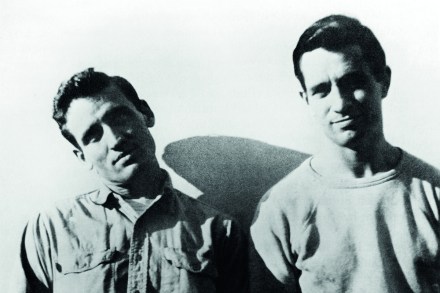
I saw the best minds of my generation destroyed by madness, starving hysterical naked, dragging themselves through the last pages of Naked Lunch at dawn looking for an angry fix of good literature, angelheaded hipsters burning for the ancient heavenly connection between plot and prose, who poverty and tatters and hollow-eyed and high sat up reading Kaddish, who bared their brains to the delights of On the Road in the pursuit of just a fraction of the “angels staggering on tenement roofs illuminated.” Everyone knows the Beats: from Jack Kerouac to William Burroughs to Allen Ginsberg, their influence has been undeniable, if not always delightful. And on March 12, their lodestar, Jack Kerouac would have been 100 years old.

kerouac