Blackmail

Persistent gossip about Brian Epstein’s death risks defining his life

From our UK edition

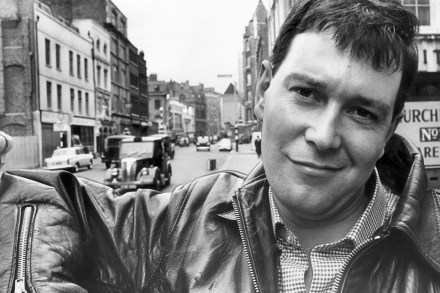
We know the facts about Brian Epstein’s death. The Beatles’ manager died in bed at his Belgravia home on 27 August 1967, six years after he struck gold in a Liverpool cellar, a month before his contract to manage the Beatles was due to end and four weeks after homosexual acts between men were partly decriminalised. At the time of his death, the 32-year-old Epstein was addicted, adrift and depressed – not least as a result of a long effort to hide his sexuality and the low-level anti-Semitism he encountered everywhere. One moment he was manically active, the next he was in despair, according to those around him. He had overdosed in the past and had been treated at a psychiatric hospital. On the day he died, his blood contained alcohol, antidepressants and barbiturates.

The demonising of homosexuals in postwar Britain

From our UK edition

Not every human culture leaves clear and legible accounts of itself. Here we have a comparatively recent way of life which we know thousands of men led. It was proscribed, and those who lived within it had good reasons to conceal their participation and nature, usually taking care not to leave any records. Invisible and, even at this short distance, impossible completely to understand, the culture of male homosexuals in London was only partially legalised in 1967. Before that has to be interpreted through material which is intrinsically unsatisfactory. A comparison might be drawn to the textual means historians have of understanding another proscribed culture, the early Christians in Rome.

An insight into the American Dream: Table for Two, by Amor Towles, reviewed

From our UK edition

Amor Towles was a Wall Street banker before he published his first novel, Rules of Civility, in 2011, at the age of 46. Since then, his books have sold six million copies, and the second, A Gentleman in Moscow (2016), has been made into a Paramount + series starring Ewan McGregor. Towles’s success in banking and publishing has perhaps given him a particular insight into the American Dream. The six stories and one novella that make up his stylish and confident new collection, Table for Two, all feature characters in pursuit of an ambition that puts them in varying degrees of peril – protagonists tasked with missions of differing seriousness.

Even the greatest tennis players need to be adored

From our UK edition

Louis MacNeice once wrote that if you want to know what chasing the Grail is like, ask Lancelot not Galahad. Because failure helps you see — the successful types are too busy succeeding. Two recent books on tennis put this theory to the test. The Master, by Christopher Clarey, long-time tennis correspondent for the NY Times, is about Roger Federer’s greatness. Clarey played for Williams College, where he ‘struggled and choked enough to understand just how difficult it can be to hit the shots that virtuosos like Federer make look routine’. Billie Jean King’s most recent autobiography, All In, is the second. She tells the story from Galahad’s point of view. King’s is harder to sum up: part coming-out memoir, part tennis journal and part polemic.

Circe has been recast as the girl next door – it’s a sign of the times

When poor old battered Odysseus landed on Circe’s island having lost all his ships (except his flagship) when he tangled with the Laestrygonians (their king liked to eat Greek flesh and swallowed up most of his crews, yummy) Circe — witch, sorceress and goddess in her own right — turned the few survivors into swine, except for Odysseus, whom she wanted for some old-fashioned hanky-panky. If she were around today she would most probably be the first American female president. Odysseus serviced her rather well and stayed in her palace for a year. He also used the ‘moly’, the antidote Hermes had given him in the form of a magic herb that turned pigs back into men.