Birmingham

Around the horn

From our UK edition

The concert began with a flourish and a honk. Well, of course it did. Telemann wrote his last Ouverture-Suite in F major for the Landgrave of Darmstadt. The Landgrave loved hunting, and in the 18th century hunting meant horns. And horns mean honks. If you’ve ever played the horn — applied 12 feet of coiled metal tube to your face and tried, through a combination of lip muscles and willpower, to make the damn thing sing — you’ll know that no amount of hoping, praying or practice can prevent the occasional squawk. The two excellent players in Florilegium’s concert at St John’s Smith Square, moreover, were using 18th century-style horns — without the valves and additional plumbing that render the modern beast just about controllable.

Scottish power

From our UK edition

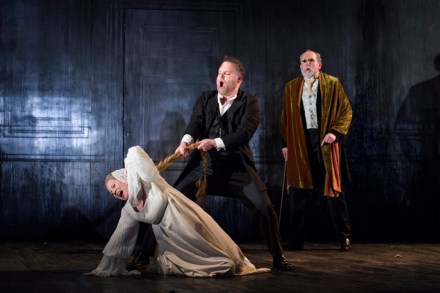
‘Perhaps in this world nothing ever happens without purpose,’ sings old, blind King Arkel in Debussy’s Pelléas et Mélisande, and that at least is something to hold on to. God knows, you need it. Peel away the fairy-tale trappings of Maeterlinck’s original play, and the world of this opera is profoundly cruel. Its characters are often passive observers of their own fate (Pelléas admits before his final scene that he’s never yet returned his beloved Mélisande’s gaze). And yet Debussy pretty much compels you to feel for them, in a score of all-but-unbearable tenderness and beauty.

Will Theresa May’s grammars undermine David Cameron’s free schools?

From our UK edition

Grammar schools remain one of the most highly-charged issues in domestic politics. There is bound to be controversy about how to boost social mobility and educational standards. But grammar schools bring to the surface other deep undercurrents as well. Were things better in the 1950s? What was Margaret Thatcher’s role in closing so many of them and did she want to see them brought back? Does the call for more grammar schools represent the best of authentic politics shaped by our own experiences, or does evidence-based policy making mean going beyond that?

Where new is good

From our UK edition

On Saturday night, the City of Birmingham Symphony Orchestra makes its first appearance at the BBC Proms under its new music director, the 30-year-old Lithuanian Mirga Grazinyte-Tyla. It’s all a bit sudden. Grazinyte-Tyla only conducted the CBSO for the first time last July, and she’ll have made her debut as official successor to Simon Rattle, Sakari Oramo and Andris Nelsons at Symphony Hall, Birmingham, the previous night. The programme comprises Mozart, Tchaikovsky, and the London premiere of Hans Abrahamsen’s Grawemeyer Award-winning song cycle let me tell you. That’s right, the ‘London premiere’. It says so on the BBC website. Auntie has blessed the venture; the metropolis is poised to give its imprimatur.

Goodbye to all that | 12 May 2016

From our UK edition

Glimpsing the title of Lynsey Hanley’s absorbing new book as it fell out of the jiffy bag, I found myself thinking of my grandmother, Mrs Lilian Taylor. This lady, who died in 1957, spent the first part of her married life inhabiting a couple of furnished rooms on the western side of Norwich and the second part of it living in a white stucco council house on the newly built Earlham estate. She was an intensely respectable woman, implacably opposed to strong drink and strong language, but of what, materially, did her respectability consist? On the one hand it meant goading my father through the scholarship exam to a place at the local minor public school.

An inconvenient truth | 14 April 2016

From our UK edition

‘Our findings will shock many people,’ promised Trevor Phillips at the beginning of What British Muslims Really Think (Channel 4, Wednesday). But the depressing thing is that I doubt they will, actually. I think the general British public have known for some time what Phillips’s documentary professed to find surprising: that large numbers of Muslims don’t want to integrate, that their views aren’t remotely enlightened, and that more than a few of them sympathise with terrorism. It’s only the establishment elite that has ever pretended otherwise. As former head of the Equality and Human Rights Commission, Phillips was very much part of that elite. He commissioned the 1997 Runnymede report that popularised the word ‘Islamophobia’.

The kids are all right

From our UK edition

In a remote fishing village a lone figure confronts an unexplained death, standing tormented but unbroken against fate, the community and the elements of sea and wind that surge through every note of the score. No, not Peter Grimes: this is Vaughan Williams’s 1932 operatic setting of Synge’s Riders to the Sea. But Vaughan Williams’s operas are undramatic, runs the received wisdom. There were no great British operas between Purcell’s Dido and Aeneas and the premiere of Grimes in 1945, we’re repeatedly told. This student production of Riders to the Sea didn’t just refute those assumptions: it threw them into a riptide and watched them being dragged under and swept away.

The heavens are falling

From our UK edition

The dystopian novel in which a Ballardian deluge or viral illness transforms planet Earth has become something of a sub-genre, and Clare Morrall’s astute and vigorously imagined novel follows on from the best of them, such as Margaret Atwood’s MaddAddam trilogy and (most recently)Emily St John Mandel’s Station Eleven and Antonia Honeywell’s The Ship. Intriguingly, the future that Morrall imagines very much resembles the past. Following 50 years of climate catastrophe, and the spread of the population-depleting Hoffman’s disease, the only hope for humanity’s survival is to find ways of ‘living with the weather’, or learning ‘skills that don’t depend on failing technology’.

All in the mind | 21 January 2016

From our UK edition

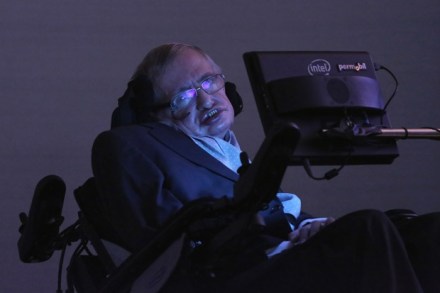
You don’t expect to be brought close to tears by the Reith Lectures, which are after all at the most extreme end of Radio 4’s commitment to ‘educating’ its audience. Yet when Stephen Hawking delivered this year’s talks at the Royal Institution in London (in front of a lucky audience of listeners and scientists) there was both much laughter and a heightened sense of emotion. This was not because of his plight — the eminent professor of theoretical physics has suffered from a rare form of motor neurone disease since the age of 21 and the only discernible movement in his body is in his eyes, and the twitching of his facial muscles. Nor his cheeky sense of humour, or his grace and dignity, although these are remarkable enough.

Why most four-year-olds deserve to be sectioned

From our UK edition

The first episode of Let Us Entertain You (BBC2, Wednesday) definitely couldn’t be accused of lacking a central thesis. Presenter Dominic Sandbrook began by arguing that, since its industrial heyday, Britain has changed from a country that manufactures and exports things into one that, just as successfully, manufactures and exports popular culture. He then continued to argue it, approximately every five minutes, for the rest of the programme. By way of proof, Sandbrook presented a fairly random collection of postwar Britain’s greatest hits, which served both as examples and as opportunities for some nifty wordplay designed to hammer the point home still further.

Giselle has floored many a ballerina — it did so again last week

From our UK edition

English has all sorts of emotive metaphors for how we feel about the ground. We’re floored. Or well grounded. Or earthbound. Life’s a minefield, so watch where you step. Stay on your toes. One moment we’re walking on air, next brought down to earth. Which is not at all the same as being down-to-earth. We have a fractious, if necessary, relationship, then, with the floor. Dancers even more so. If you were watching the Bolshoi’s live cinema relay of Giselle on Sunday, you will have seen its hyper-exquisite prima ballerina Svetlana Zakharova come clattering down in a most unghostly fashion in Act 2.

Quarter

From our UK edition

‘No quarter given,’ yelled my husband as he stabbed at a cushion with his stick, spoiling the cavalier effect a little by catching his foot in the loose rug, about which I have told him twice (not the hundred times he likes to claim). He made his inadvertently slapstick attempt at humour because I had reported to him the appearance of a new commercial sign ‘Royal Quarter’ not far from the former Army & Navy Stores in Victoria. Apart from the presence of Buckingham Palace round the corner, there is very little royal about the area, which is identified by its proximity to Victoria station.

Beauty and the bleak

From our UK edition

The Ice Break is Michael Tippett’s fourth opera, first produced at Covent Garden in 1977 and rarely produced anywhere since, though there is an excellent recording of it. Its brevity (75 minutes) rather took the wind out of the Royal Opera’s sails, since they had envisaged a full evening’s piece. So, I imagine, did its wackiness, though more extreme things in that line were to follow from Tippett. There are numerous ingredients in The Ice Break, but it gives the impression that its composer was so fascinated by all of them that he restlessly moves from one to another, leaving his audience to see whether they can make sense of them. As with his previous opera, The Knot Garden, almost all the characters have strange names — Lev, Yuri, Olympion, Astron etc.

Nick Clegg has damaged Britain’s counter-extremism strategies

From our UK edition

There is some fuss around the publication delay on the government’s review into the activities of the Muslim Brotherhood in the UK.  But why the fuss?  After all, if other news today is anything to go by, nobody reads government inquiries anyway - let alone bothers to act on them. On the Muslim Brotherhood review and the possibility it will include negative facts about the group, the Financial Times quotes one ‘senior government figure’ saying last year: ‘This cuts against what the FCO has already been doing in this area… It risks turning supporters of a moderate, non-violent organisation that campaigns for democracy into radicals.

Why radio is a surprisingly good medium for talking about art

From our UK edition

You might think it a fool’s errand to attempt programmes about art on the wireless. How can you talk about pictures or sculptures or any other visual form without being able to see them? But features on artists and their work can have a surprising resonance on radio precisely because without any images the programme-makers and their listeners are forced to work harder, and to look beyond the canvas to the back story, the purpose of a self-portrait, a seascape, a domestic interior. You could say that’s why the great film Mr Turner lacks a certain meaning. The visuals are stunning but the dialogue disappoints.

The Islamic sermon that taught me what’s happened to Birmingham

From our UK edition

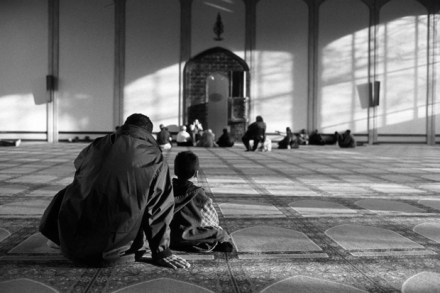
Birmingham has changed a bit since I grew up there in the 1970s. Back then, the stories of the hour were the usual industrial unrest at Longbridge, the IRA bombs in the Tavern in the Town and the Mulberry Bush, and the ongoing success of local lads Slade, Wizzard and ELO. Today, though, it’s mainly stuff like Operation Trojan Horse, and I barely recognise the place or the culture at all. So when, driving back from the Conservative party conference the other week, I found the radio button that normally takes me to Radio 4 mysteriously tuning instead to a local Islamic station, I thought I’d do a bit of homework and listen to the sermon it was playing. I’d never heard an Islamic sermon before. Nor probably have you.

Cameron must reunite the Tories or lose the next election

From our UK edition

[audioplayer src="http://traffic.libsyn.com/spectator/TheViewFrom22_25_Sept_2014_v4.mp3" title="Freddy Gray, Fraser Nelson and James Forsyth on Cameron's radicalism" startat=70] Listen [/audioplayer]No one goes to Birmingham to revive a marriage. But that is what David Cameron and the Conservative party must do next week at conference. They must find a way to put the passion back into their relationship, to learn to trust each other again ahead of the general election. For neither can win without the other next May. That election is there to be won. The Labour gathering in Manchester this week was not one of a party convinced that it is going to surge to victory in a few months. The atmosphere was subdued, bordering on depressed.

Britain has let Islamists run riot – as today’s report into the ‘Trojan horse’ plot reveals

From our UK edition

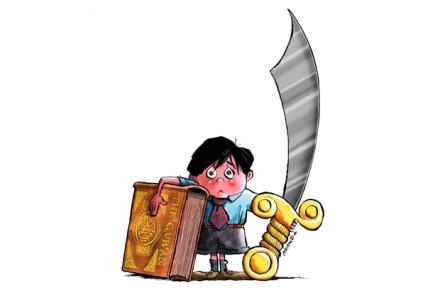
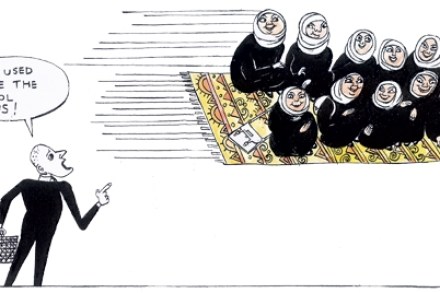
Peter Clarke, a former counter-terror chief, has published a report today which reveals that an 'aggressive Islamist agenda' was pursued in 'Trojan horse' schools in Birmingham. He has found evidence of a coordinated plan to impose strict Islamic teaching on pupils. This piece by Douglas Murray was originally published in the print edition of The Spectator magazine, dated 14 June 2014: Who’s up, who’s down? Who’s in, who’s out? While Westminster spent last week gossiping about which minister’s special adviser said what, in another city, not far away, a very different Britain was unveiled.

Let’s face it – Ray Honeyford got it right on Islam and education

From our UK edition

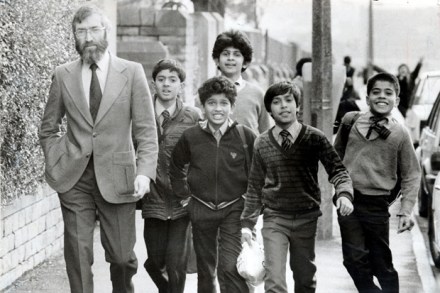
Thirty years ago, as editor of the Salisbury Review, I began to receive short articles from a Bradford headmaster, relating the dilemmas faced by those attempting to provide an English education to the children of Asian immigrants. Ray Honeyford’s case was simple. Children born and raised in Britain must be integrated into British society. Schools and teachers therefore had a duty, not merely to impart the English language and the English curriculum, but to ensure that children understood and adhered to the basic principles of the surrounding society, including racial and religious tolerance, sexual equality and the habit of settling conflicts by compromise and not by force.

Portrait of the week | 12 June 2014

From our UK edition

Home After an Ofsted inspection of 21 schools in Birmingham (none of them faith schools), against the background of allegations of attempts of a Muslim takeover in a so-called Operation Trojan Horse, David Cameron, the Prime Minister, joined Michael Gove, the Education Secretary, in seizing upon an observation by Sir Michael Wilshaw, Her Majesty’s Chief Inspector, that ‘all maintained schools and academies, including faith and non-faith schools, must promote the values of wider British society’. Five of the schools were put under ‘special measures’.