Biography

The boundless enthusiasm of Asa Briggs

From our UK edition

It’s doubtful whether Asa Briggs ever had an idle moment in his life. Bestselling historian, pioneer of the new universities of the 1960s, chronicler of the BBC, champion of adult education, academic globetrotter and much more besides, he possessed phenomenal energy. He was a miracle of the kind of boundless enthusiasm that his Victorian hero Samuel Smiles had extolled in his book Self-Help. Short and tubby, with large glasses, Briggs effortlessly outpaced academic colleagues who tended to be left panting behind him. A joke did the rounds that if a word were to be coined for a unit of intellectual energy it should be an ‘Asa’. He was dubbed ‘the last great Victorian improver’ and ‘the Lord Macaulay of the Welfare State’.

The mixed legacy of Zbigniew Brzezinski, strategist of the Cold War

From our UK edition

In the autumn of 1938, within nine weeks of each other, two boys arrived in New York, fleeing the gathering storm: a 15-year-old Jewish German and a ten-year-old Catholic from Poland. Both would repay the mortal debt they owed by dedicating their lives to the Land of the Free. The older boy was, of course, Henry Kissinger, later Grand High Poobah to Richard Nixon and Gerald Ford. The younger was Zbigniew Brzezinski, Jimmy Carter’s national security adviser from 1977 to 1981 and the subject of a magisterial biography bythe Financial Times’sWashingtonsupremo, Edward Luce. From the first, Zbigniew Brzezinski (pronounced ‘ZbigNieff BreshinSki’, as Carter helpfully informed his team) sat in Kissinger’s shadow, always a step or two behind the great Bavarian.

The crimes of Cecil Rhodes were every bit as sinister as those of the Nazis

From our UK edition

This is a brave and learned book. I would recommend it to anyone interested in the history of Africa; who has taken sides in the recent quarrel about ‘Rhodes Must Fall’, in Oxford or other parts of the world; or who wants to entrench themselves in contrary positions in our apparent ‘culture wars’. It is the biography of a vicar’s son, born in Bishop’s Stortford, Hertfordshire in 1853, who went as a teenager to Africa to join his elder brother who’d bought a plot of land in Natal. One day, walking past a stream by the side of a field, he noticed some pebbles gleaming especially brightly. They were diamonds. By the time Cecil Rhodes enrolled as an undergraduate at Oriel College, Oxford, aged 20, he had an annual income of £23,000 – the equivalent of about £1.

Elizabeth Harrower – the greatest Australian writer you’ve never heard of

From our UK edition

Elizabeth Harrower (1928-2020) became an Australian literary classic before she had fully established herself as an Australian writer. She had a rough childhood in Newcastle, New South Wales, and once contemplated lying on the road in the dead of night waiting to be run over. She described herself as a ‘divorced child’, saw her father Frank very rarely, despite his best efforts, and felt an inexorable loneliness during her days in the industrial city by the sea. Later she found herself in Scotland and loved it; and for much of the 1950s she lived in London.

The enigma of Tiger Woods

From our UK edition

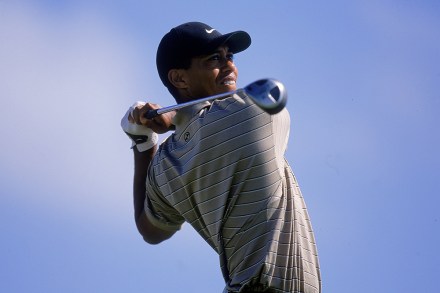
The aim of this book is straightforward enough: a study of the Tiger Slam, the incredible 2000-01 season when Tiger Woods held the Masters, the US Open, the Open and the PGA championship all at the same time. It’s the Tiger Slam rather than the Grand Slam because purists will argue that technically (purists always argue ‘technically’) Woods did not win all four trophies in the same year: he took the British and US Opens and the PGA in 2000 and added the Masters in April 2001. Whatever. The fact remains that Woods is the only player ever to hold all four titles simultaneously. Given how transient form on the golf course is, he is likely to be the only one who will ever do so.

Twain

Mark Twain’s finest invention was himself

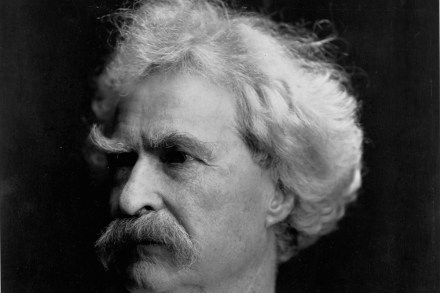
To speak of Mark Twain is to speak of the American psyche laid bare: forever restless, with an insatiable appetite for reinvention and biting commentary. Twain was not just a novelist or humorist: he was, in many respects, the nation’s most accurate mirror. He wrote the truth and then laughed at it. He carved his stories out of riverbanks and war zones, courtrooms and campfires. In his storytelling, Twain blurred the lines between truth and falsehoods, rage and laughter, freedom and fate. He gave us some of the greatest figures in American fiction. But Twain (1835-1910) was a creation more vivid, more volatile and more enduring than any character he put on the page. The “father of American literature,” as William Faulkner called him, didn’t hide behind his fiction.

Have the Gallaghers suffered from ‘naked classism’?

From our UK edition

Though I’d never read any books about Oasis before this one, I’d have bet it would be impossible to write boringly about the band – for two reasons: namely Noel and Liam Gallagher. As the most entertaining men in music, the former could be talking to a goldfish and still end up riffing in an entirely fresh, witty and profound way, while the latter is probably the greatest natural clown since Buster Keaton. I’ll put my cards on the table and admit that I’ve got a chronic crush on Noel. When I interviewed him for the Sunday Times nearly ten years ago, the simpering, gushing and giggling on the tape sounded as though a coachload of Japanese schoolgirls had joined us. He has spoken of how he enjoys the company of journalists – the mark of a reckless man with nothing to hide.

‘Too bohemian for Bournemouth’: the young Lawrence Durrell

From our UK edition

These legendary lives need the clutter cleared away from them occasionally. Lawrence Durrell and his brother Gerald turned their family’s prewar escape to an untouched Corfu into a myth that supplied millions of fantasies. It still bore retelling and extravagant expansion recently, if the success of ITV’s series The Durrells is any sign. (One indication of that pleasant teatime diversion’s accuracy: the actor playing Larry, Josh O’Connor, is 6ft 2in. Larry himself was a whole foot shorter.) How Louisa Durrell, struggling with life in Britain after returning from India, went in a bundle with her children to a Greek island of cheap Venetian mansions, heat and innocent adventure is always going to have its appeal.

The Spectator letter that marked a turning point in gay history

From our UK edition

On 3 June 1960, a letter appeared in The Spectator which began: Sir, We are homosexuals and we are writing because we feel strongly that insufficient is being done to enlighten public opinion on a topic which has for too long been shunned. The letter was prompted by the government’s failure to act upon the recommendation of the 1957 Wolfenden Report that homosexual acts between consenting adults in private should no longer be a criminal offence. This had led to the founding of the Homosexual Law Reform Society (HLRS) in 1958, and it was for this organisation that the letter’s three signatories worked as volunteers.

Admirable in their awfulness – the siblings Gus and Gwen John

From our UK edition

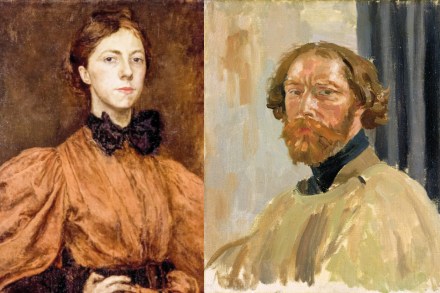
‘In 50 years’ time,’ Augustus John gloomily reflected following his sister’s death on 18 September 1939, ‘I will be known as the brother of Gwen John.’ He was right. In 2004, when the Tate mounted a joint retrospective of Augustus and Gwen John, it was Gwen who had become the major artist. The ‘variable strident chords’ of the self-styled Gypsy King, likened in his youth to Michelangelo, Rembrandt and Raphael, had been supplanted by the ‘sustained minor key’ of the nunlike recluse.

Nunc est bibendum – to Horace, the lusty rebel

From our UK edition

Horace suffers from a reputation as an old man’s poet. Classicists often joke that Catullus and Martial are for the young, and Horace for those of a certain vintage – wine being a favourite Horatian theme. Many lose their thirst for his Odes at school, only to realise their brilliance decades later. Classroom Horace is just a bit too bombastic and patriotic to be cool. The Horace of Peter Stothard’s beautifully written new biography surprises with his sexiness. Not many pages in we find him poring over scurrilous papyri in the libraries of Athens. A verse by the Archaic-era poet Archilochus has caught his eye. It describes a woman with a man, ‘head-down, as she did her work like a Thracian drinking beer through a straw’. Golly.

Everyone who was anyone in Russia was spied on – including Stalin

From our UK edition

Vasili Mitrokhin was a KGB colonel smuggled out of Russia by MI6 in the early 1990s with a treasure trove of notes from the KGB’s archive. The resulting 3,500 CI reports (CI meaning counter-intelligence – information about hostile spies) identified 1,000 KGB agents around the world and were shared with 36 countries. The CIA rated it ‘the biggest CI bonanza of the post-war period’, while the FBI described as ‘the most detailed and extensive pool of CI ever received’. The story behind it was as remarkable as the haul itself. Gordon Corera’s fluent narrative draws on many sources, including the magisterial two-volume Mitrokhin Archive compiled by the historian Christopher Andrew and Mitrokhin himself.

What Mark Twain owed to Charles Dickens

From our UK edition

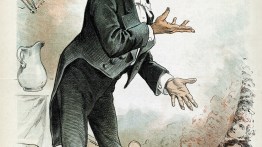
You know Mark Twain’s story. You’ve got no excuse not to; there have been so many biographies. Starting in the American South as Samuel Clemens, he took his pen name from the call of the Mississippi boatmen on reaching two fathoms. His lectures, followed by his travel pieces and novels, enchanted America and then the world. As a southerner, his principled stance against slavery gave him moral authority. The famous ‘Notice’ to The Adventures of Huckleberry Finn – ‘Persons attempting to find a motive in this narrative will be prosecuted; persons attempting to find a moral in it will be banished’ – was swept aside, so that persons like H.L. Mencken could straightfacedly describe it as ‘the greatest novel ever written in English’.

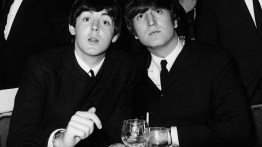
Unpacking John Lennon and Paul McCartney’s complex relationship

Fifty-five years after they broke up, what is there left to say about the Beatles? There have been so many books written about the group and so many obsessively detailed websites devoted to exploring every song, every public utterance, every twist and turn in their history, that the average rational man or woman might think they know all there is to be known about them. Craig Brown’s magisterial 2020 volume 150 Glimpses of the Beatles was a pop-cultural dive into their peerless influence and standing; Ian MacDonald’s still legendary Revolution in the Head dives into the 241 songs that they recorded (although, of course, it should be 242, thanks to the emergence of “Now And Then” in 2023) and does so with grace, intelligence and slightly frightening attention to detail.

John

Douglas Cooper – a complex character with a passion for Cubism

From our UK edition

The collector, art historian and critic Douglas Cooper (1911-84) relished conflict. He was a formidable man, loud in speech and dress, with forceful views and a taste for ridicule. He could also be very funny. John Richardson, Picasso’s biographer, who knew Cooper better than most, said it was as though an angel and a demon child were perpetually fighting for control of his personality. Physically robust, Cooper survived being stabbed in the stomach when he was 50 after unwisely propositioning a French soldier. He is remembered today, if at all, for his legendary collection of Cubist art, focusing on the four greats of the movement: Picasso, Braque, Léger and Gris.

‘I secreted a venom which spurted out indiscriminately’ – Muriel Spark

From our UK edition

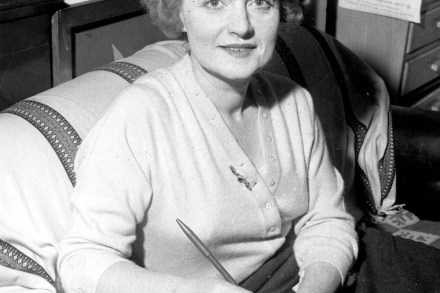
In 1995, Dame Muriel Spark, then one of Britain’s most distinguished living writers, was interviewed for a BBC documentary. During filming, the show’s editor commented that ‘her biographer must be the most depressed man in England’. Three years earlier, Spark had personally anointed Martin Stannard as the writer of what she intended to be the authorised version of her life, presenting him with the vast archive of documentation – spanning 50 years and 50 metres – gathered at her home in Arezzo. ‘Treat me as if I were dead,’ she instructed him. Stannard understood this to mean that he should proceed as a traditional historian; by the time his hag-ridden book was published 17 years later he had learned his mistake.

The mystifying cult status of Gertrude Stein

From our UK edition

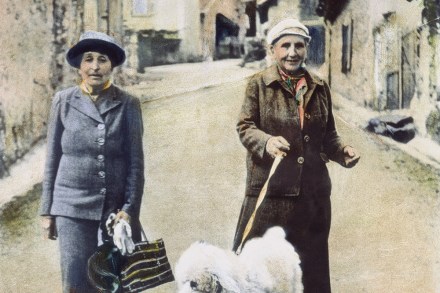
To most people, the salient qualities of Gertrude Stein are unreadability combined with monumental self-belief. This is the woman who once remarked that ‘the Jews have produced only three original geniuses – Christ, Spinoza and myself’. Of the reading aloud of her works, Harold Acton complained: ‘It was difficult not to fall into a trance.’ Even if you are as good a writer as Francesca Wade, it is still difficult to avoid the influence of what she herself calls Stein’s ‘haze of words’. So the first half of this impressively researched biography is cerebral rather than colourful.

Thomas More’s courage is an inspiration for all time

From our UK edition

Three years ago, when memories of the final series of HBO’s Game of Thrones were still fresh, Joanne Paul published The House of Dudley, a gripping account of three generations of the Dudley family, whose efforts to seize the crown from the Tudors, as I noted in these pages, made the machinations of the Lannisters and the Starks look tame. Now, hard on the heels of the final instalment of the BBC’s adaptation of Hilary Mantel’s Wolf Hall trilogy – and with a revival of Robert Bolt’s A Man for All Seasons opening in the West End in August – Paul has published another book equally attuned to the zeitgeist.

Richard Ellmann: the man and his masks

From our UK edition

Richard Ellmann’s acclaimed life of James Joyce was published in 1959, with a revised and expanded edition appearing in 1982. The first edition, the work of an ambitious young American academic, received what Ellmann’s editor at Oxford University Press described as ‘the most ecstatic reaction I have seen to any book I have known anything about’. Ellmann’s work would ‘fix Joyce’s image for a generation’ wrote Frank Kermode in The Spectator, a prediction described by Zachary Leader as ‘if anything, too cautious’. By the time of the second edition, Ellmann had become a lionised Oxford don and the image of Joyce he had fixed was starting to chafe.

The problem with Pascal’s wager

From our UK edition

Blaise Pascal resists definition. During a short life (he died in 1662, aged 39) he invented the calculator, laid the foundations for probability theory and created the first public transport system. He was also an austere Catholic, whose call for a return to strict Augustinian doctrines put him outside the religious mainstream. As a philosopher, he is remembered today for his ‘wager’ argument – a challenge to atheists, framed as a cosmic gamble. As Graham Tomlin shows in this lively, conversational biography, Pascal worked in threes, often steering a course between extremes.