Biography

What is it about Stieg Larsson?

From our UK edition

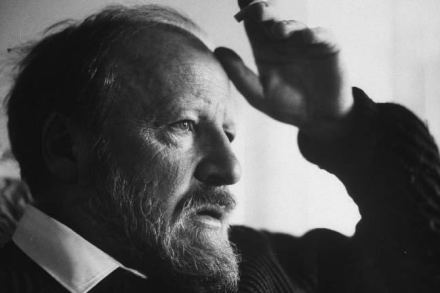
Stieg Larsson was a rather unsuccessful left-wing Swedish journalist who lived off coffee, cigarettes, junk food and booze, and died aged 50 after climbing seven flights of stairs, having recently sold to a publisher the series of crime novels now called The Millennium Trilogy. It was originally called The Men Who Hate Women, and in Sweden the first of the series was published under that prize-winningly awful title. The Millennium Trilogy is an improvement, but hardly has the ring of a hit. Nonetheless, it has sold millions of copies and inspired a global cult.
Summer reading | 21 July 2011

From our UK edition

It’s a tradition of the British summer. A Tory MP produces a summer reading list of weighty and worthy tomes to co-incide with the summer recess. This year, Keith Simpson has compiled the list, and as you can see it's long as your arm. Spectator Book Blog contributor Nik Darlington has made a few selections from the list. And of course, we'd like CoffeeHousers' recommendations too. Diary: Alastair Campbell, Diaries Vol. II: Power and the People and Diaries Vol. III: Power & Responsibility. Peter Catterall (editor), The Macmillan Diaries Vol. II: Prime Minister and After, 1957-1966. Earl Ferrers, Whatever Next? Reminiscences of a journey through life.

The gay Lambeth way

From our UK edition

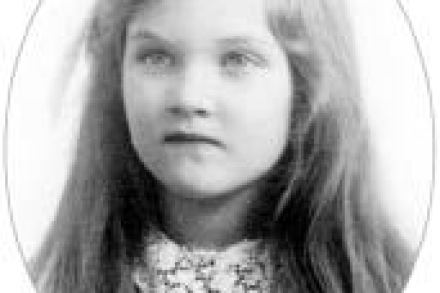
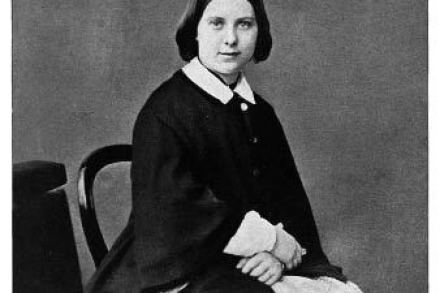
Archbishop Edward Benson was the ideal of a Victorian churchman. Stern and unbending, he was a brilliant Cambridge scholar and a dreamily beautiful youth. Older men fell over themselves to promote him, and he climbed effortlessly from one plum post to the next, rising almost inevitably to become Archbishop of Canterbury. As Rodney Bolt shows in this fine book, Archbishop Benson’s domestic life was less than perfect. When he was 23, Benson chose an 11-year old girl named Mary Sidgwick to become his wife. She was his second cousin, and when she was 12 (which was at that time the age of consent) he proposed to her. They married when she was 18. Mary Sidgwick later claimed that being a child wife meant that ‘I did not grow up’. Benson tried to control her in everything.

Lucky miss

From our UK edition

In Dreams From My Father, his exploration of race and roots, Barack Obama recalled the tales heard in childhood about the man who gave him his name. His father, they said, was a brilliant economist who grew up herding goats in western Kenya, then won a scholarship to the University of Hawaii, where he fell in love with a white woman. ‘There was only one problem: my father was missing. Nothing my mother or grandparents told me could obviate that single, unassailable fact.’ My boy, I thought on finishing this book, you have no idea how lucky you were. Sociologists may worry about the impact absent fathers are having on a generation of young black men robbed of male role models. But there are worse things in life than being abandoned by your father.

Scenes from the Mad Hatter’s tea party

From our UK edition

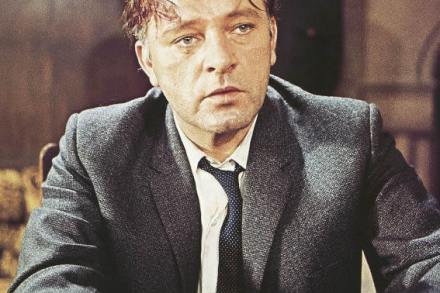
I only ever heard my mother admit twice to fancying other men. One, remarkably, was Saddam Hussein, the other was Richard Burton, and of each she said, ‘He’s a good-looking old man.’ She said this the way only a Welsh Baptist matron could: grimly, and because she was secure in the knowledge that she was not likely to meet either in chapel or on the streets of Carmarthen. Richard Burton, once of Port Talbot, later of the Dorchester Hotel, was cat-nip to women. He had a face ravaged by acne and his feet smelt, but he managed to sleep with the most beautiful leading ladies of his time, something his latest biographer quotes Stanley Baker, his fellow thespian and Welshman, as saying was ‘absolutely essential’ for an actor. Sadly, Baker did not say this.

A far cry from Dr Finlay

From our UK edition

If he is remembered at all, A.J. Cronin is known now for Dr Finlay’s Casebook, which ran for many years on both BBC television and radio, and today resonates with the glow of a gentler past — when a GP happily made house calls, delivered babies, and served as shaman, shrink and confessor to his rural community. If he is remembered at all, A.J. Cronin is known now for Dr Finlay’s Casebook, which ran for many years on both BBC television and radio, and today resonates with the glow of a gentler past — when a GP happily made house calls, delivered babies, and served as shaman, shrink and confessor to his rural community. Cronin’s association with these programmes was actually relatively loose.

The biography of a nobody

From our UK edition

A biography of Ed Miliband has to try hard not to be the sort of thing one buys as a present for someone one avidly dislikes. This effort, the first in what its authors seem (perhaps optimistically) to imagine may be a long series of accounts of their subject’s life, does not try hard enough. It has detail — Messrs Hasan and Macintyre boast of a million words of interview transcripts — but in the end it is, plainly and simply, stultifyingly boring. I am not sure this is entirely the writers’ faults. Before reading their book, I thought Mr Miliband was simply oversold, a man born to disappoint. Now I realise that he, and therefore an account of his life, is boring too.

A heart made to be broken

From our UK edition

Very useful in modern conversation, Oscar Wilde. Not for the quotable quips — everyone knows those already. His real value comes when you’re trying to guess someone’s sexuality. ‘He can’t be gay,’ someone will say of whoever is under the microscope, ‘he’s married with two kids.’ You hit them with the reply: ‘So was Oscar Wilde.’ It’s hardly surprising that so many people are unaware of Mrs W’s existence, or that those who do tend to forget about her, given her husband’s status as poster boy for the Two Fingers to Convention party. You’d be forgiven for thinking that Oscar was a Victorian Alan Carr, standing in the middle of Piccadilly belting out ‘Sing If You’re Glad To Be Gay’.

Sixties mystic

From our UK edition

The misery memoir is the fad of the moment. We seem to have a limitless desire to delve into other people’s hardships. Robert Irwin has gladly shown the way to a more enlightening type of memoir, that of the spiritual quest. But surely, I hear you say, the spiritual quest is nothing new? Think of Dante, half way along life’s path, looking for the right turning. For Dante, read the young Irwin, still a teenager, up at Merton College to read History and very much in need of direction. The year was 1965. But while others were tuning in and turning on, Irwin, as he confides in his first sentence, ‘wanted to become a Muslim saint’. It isn’t every writer who can get away with such an opening, but then Irwin is no ordinary memorialist.

Backs to the wall

From our UK edition

Susan Gibbs begins her book by describing the death from cancer of her first husband after 13 years of happy marriage. She ends with her farewell to Africa and her journey to Britain in 1983 with her second husband, Tim, and four children. Between these events she led a tense life farming in Zimbabwe, watching her children grow up, relishing the beauty of her surroundings and the company of friends, but always conscious that time was closing in and that one day they would be forced to leave the country they loved.

Dreaming of cowsheds

From our UK edition

In 1999, Adam Nicolson published a very good book called Perch Hill: A New Life, about his escape from London and a break-down, after his divorce and a nasty mugging, to a farm in the Sussex Weald, close to Kipling’s house, Batemans. In 1999, Adam Nicolson published a very good book called Perch Hill: A New Life, about his escape from London and a break-down, after his divorce and a nasty mugging, to a farm in the Sussex Weald, close to Kipling’s house, Batemans. It’s one of the great descriptions of what embedding yourself deep in a patch of the countryside is like, truthful about both its solaces and its frustrations. ‘The Weald has found its Thoreau,’ said Richard Mabey.

Bookends: Unbalanced chorus

From our UK edition

Imagine a 77-year-old woman hanging around, say, Leicester bus station, telling people about her life. She confides her belief that she is under surveillance by the military. She maintains that she can ‘see the reality of the web of synchronicity in my life’. Showing off her special jewellery that ‘helps balance the chakras’, she reveals that ‘because I had a high metabolism and moved around a lot, I had no real [weight] problem until I was about 50’. Imagine a 77-year-old woman hanging around, say, Leicester bus station, telling people about her life. She confides her belief that she is under surveillance by the military. She maintains that she can ‘see the reality of the web of synchronicity in my life’.

The choppy sea of family life

From our UK edition

This is a lovely book. Judy Golding writes of her father —indeed of both her parents — with candour, humour and great insight and perception This is a lovely book. Judy Golding writes of her father —indeed of both her parents — with candour, humour and great insight and perception. More than that, here is an exemplary memoir of childhood, not remorselessly chronological, but drawing on the jumbled past to give an account of what it was like to be a child in an unusual family. She describes an intense marriage, which was devoted and intermittently stormy. She sees herself and her brother David as always taking second place, especially as far as their mother was concerned.

The man mountain of Fleet Street

From our UK edition

A. N. Wilson has a queasy feeling that he won’t be re-reading the works of G. K. Chesterton for a while Yet another book on Chesterton! William Oddie is only half way through his immensely detailed two-volume biographical-cum-theological study of the man mountain of Fleet Street. Last year we had Aidan Nichols on Chesterton’s theology. And now Ian Ker comes with the familiar account of how the son of a Kensington estate agent, educated at St Paul’s and infected with the spirit of the Nineties, moved from being a Bedford Park aesthete-agnostic, through socialism and liberalism to distributism, and from unbelief to a broad, generous sympathy with the Anglo-Catholicism of his wife, Frances Blogg.

A certain tragic allure

From our UK edition

Towards Mohammed Reza Pahlavi (1919–1980), the last or most recent Shah of Iran, there are two principal attitudes. Towards Mohammed Reza Pahlavi (1919–1980), the last or most recent Shah of Iran, there are two principal attitudes. To the Islamic Republic and many in Europe and the US, Mohammed Reza was a tyrant, womaniser and poltroon, who was put on the throne by Britain and Russia in 1941 and maintained there by the US, till a popular uprising sent him scurrying abroad in 1979 where he died, unlamented, in Egypt 18 months later. The second attitude, which is gaining ground even in Iran, is that Mohammed Reza was a man of intelligence and industry.

A fate worse than death

From our UK edition

Hugo Vickers has already produced a well-documented and balanced biography of Queen Elizabeth, the Queen Mother. To follow this with the Duchess of Windsor is as bold a left-and-right as one could ask for; like writing biographies of Shylock and Antonio or Cain and Abel. ‘I will go to my grave,’ wrote the lady-in-waiting Frances Campbell-Preston, ‘trying to convince people that the Queen Mother did not hate the Duchess of Windsor.’ ‘Hate’ is a strong word; but the Duchess certainly hated the Queen Mother and Queen Elizabeth was as much as anyone responsible for the fact that the Duchess was never fully accepted by the royal family. The subtitle to Vickers’s new book is at first sight surprising.

Cuckoo in the nest

From our UK edition

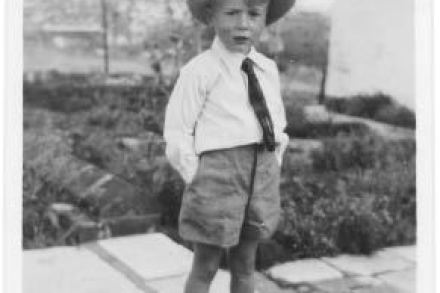
Caradoc King, the well-known literary agent, was adopted in 1948 as a baby into a family of three girls, shortly joined by a fourth, presided over by a difficult, unhappy mother and her feebly adoring husband. He grew up unaware of the adoption and has never discovered its motive. His adoptive mother, Jill, the moving spirit behind every family decision, may have simply longed for a boy. If so, she was singularly ill-prepared for standard boyish delinquencies. Young Carodoc liked playing with matches, embroidering the truth, and inspecting — in a spirit of scientific enquiry — the private parts of his younger sister.

The wisdom of youth

From our UK edition

‘You must write it all down’ is the age-old plea to elderly relatives about their childhood memories. ‘You must write it all down’ is the age-old plea to elderly relatives about their childhood memories. Fortunately P. Y. Betts, briefly a novelist in the 1930s, was 50 years later persuaded to do just that. Even more fortunately, her memories, now republished, are golddust. Betts was born in Wandsworth in 1909, meaning that many of the ‘people who say goodbye’ were saying hello to the trenches. Also, several of her childhood friends died of now treatable diseases.

A world of her own

From our UK edition

This book, written by someone whose husband was for three years prime minister of Britain, is impossible to review. Yes, it is dull, but it is so triumphantly, so ineffably, dull it enters a breezy little monochrome world of its own. There is no characterisation, for no value judgments are passed, except those on Mrs Brown’s husband, who is portrayed as such a force for good he is virtually an extra-terrestrial being intervening in the affairs of men. As for the rest they are ‘charming’ or ‘lovely’. This is Mrs Brown showing HRH Prince Andrew, as she calls him, round Chequers: Without thinking, I open the drawer that holds the wax death mask of Oliver Cromwell.

A bit of a softie

From our UK edition

Tom Bower’s fearsome reputation as a biographer preceded him in the Formula One paddock. Tom Bower’s fearsome reputation as a biographer preceded him in the Formula One paddock. His devastating treatment of subjects such as Conrad Black, Mohamed Al-Fayed and Richard Branson was well known. So here, at last, was a writer who would unravel the mystery of Bernie Ecclestone and explain how he progressed from selling buns in his school playground to wielding great power over a major world sport, trousering billions of pounds on the way. We all suspected that much of the mystery was created by Bernie himself. He loved to give the impression of a ruthless, frightening individual with a dark and menacing side. He liked to hint at sinister connections to the underworld.