Biography

Grit and grace

From our UK edition

The accepted story of mid-20th century culture in Britain belongs to the boys: the British Invasion, Beyond the Fringe and the Angry Young Men, with women relegated to bit parts. Celia Brayfield’s book is a corrective to that. She gathers seven young female writers who made their debuts in the late 1950s and early 1960s, and proposes them as a parallel clique to the Angries. Shelagh Delaney, Edna O’Brien, Lynne Reid Banks, Charlotte Bingham, Nell Dunn, Virginia Ironside and Margaret Forster never thought of themselves as a movement, but they ‘shared an inner place, the territory of girlhood,’ writes Brayfield.

Feasts and flowers

From our UK edition

Cedric Morris is often referred to as an artist-plantsman, and while as a breeder of plants, most particularly of irises, he has always been highly regarded in horticultural circles, his reputation as a painter has been subject to regular fluctuations. Last year, two excellent and complementary London exhibitions — Cedric Morris: Artist Plantsman at the Garden Museum and Cedric Morris: Beyond the Garden  Wall at Philip Mould & Company — did a great deal to revive interest in his paintings; and so a joint biography of Morris and his partner Arthur Lett-Haines is welcome. They met in 1918 at an Armistice party hosted by Lett (as he was always known) and his wife.

The Elder, the better

From our UK edition

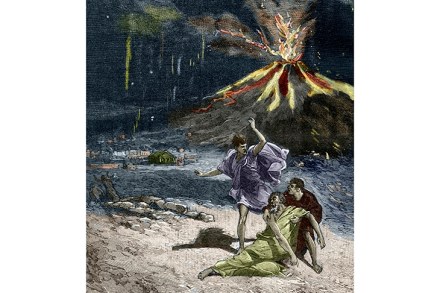
I couldn’t help thinking, as I read this book, of an old story, vaguely recalled from English A-level classes, about the poet and verse dramatist Gordon Bottomley. I can’t remember now which of his plays it concerns, but it must have been just after the notorious MP and swindler Horatio Bottomley had been imprisoned for fraud in 1922, because as the curtain fell on the final excruciating scene there was a shout from the audience: ‘My God, they’ve gaoled the wrong Bottomley!’ A reader is not going to get very far with Daisy Dunn’s new biography — the opening four lines, in fact — without a sinking sensation that the author has landed herself with the wrong Pliny.

The loveliest girl in Vienna

From our UK edition

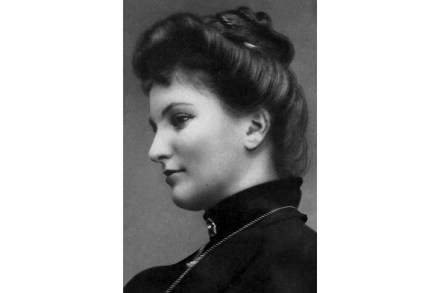
It must be rare for a popular song to have such a lasting influence on a posthumous reputation. However, this is the case with Tom Lehrer’s deliciously satirical tribute, ‘Alma’. Reading Alma Mahler’s obituary in 1964 — the ‘juiciest, spiciest, raciest’ he’d ever come across — Lehrer was amazed by her matrimonial CV and proceeded to immortalise it in a catchy lyric. Not only had Alma been married three times, to the composer Gustav Mahler, to Walter Gropius, the founder of Bauhaus, and, finally, to Franz Werfel, author of the runaway bestseller The Song of Bernadette, she’d also managed to bag as lovers some of the top creative men in the Europe of her time.

The thoughts of Chairman Gonzalo

From our UK edition

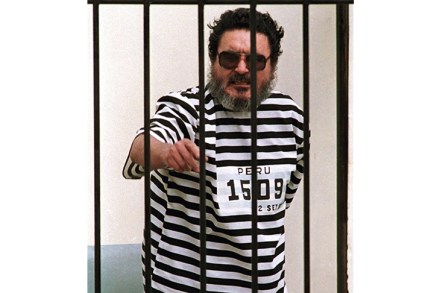
Few Peruvians today are interested in ‘the Shining Path years’, which left no traces besides 70,000 mutilated bodies and a wrecked country. Modern Lima, by and large, is a thriving city of five-star restaurants, shopping malls and newish Toyotas. Yet between 1980 and 1992 it was a vile and violent place, under siege from a revolutionary movement that modelled itself on Mao, Pol Pot and Enver Hoxha, and which venerated its leader as these men’s planetary heir. If anything, Sendero Luminoso was a precursor of Isis, with its child-suicide bombs, its rigid code of secrecy and its cultish devotion to a short, bearded, chubby figurehead who believed that ‘violence is a universal law’.

Writing that burns the eyes

From our UK edition

Of how many magazine articles can you recall where you were and what you felt when you read them? If any occur, there’s a reliable chance John Hersey’s ‘Hiroshima’ will figure among them, and not just because it will have been assigned at an impressionable age in school. For the first time in its history, the New Yorker cleared an entire issue in August 1946 to run the 30,000-word piece in full. In Mr Straight Arrow, his chronicle of Hersey’s career, the former Times Literary Supplement editor Jeremy Treglown relates an account of its reception among the international press corps in Rome — every one rapt, occupying their own cone of ‘silence... even in the bar’.

The gifts of Gabo

From our UK edition

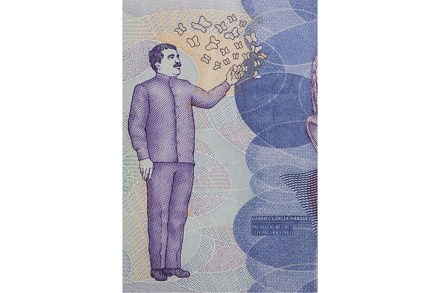
Gerald Martin’s titanic biography of 2010, Gabriel García Márquez: A Life, was the product of 17 years of research and 300 interviews, including one with Fidel Castro. So what does Solitude & Company add to the fairytale history of ‘Gabo’, as Latin America’s greatest teller of historical fairy tales is generally known? In the year 2000, when García Márquez was still alive, Silvana Paternostro began conducting her own interviews with Gabo’s family, his ‘first and last friends’, his agents, editors and fellow writers. She has now cut, spliced and transcribed the tapes in order to create the effect of a bar full of drunks interrupting one another. ‘Is that tape recorder off?

Conning the dons

From our UK edition

In 2010, Adam Sisman published a masterly biography of Hugh Trevor-Roper, who was not merely one of the best historians of his generation but also a former intelligence officer, fascinated by tricks, lies and fraud. He himself wrote a mischievous series of anonymous articles for The Spectator, purporting to emanate from the 17th-century pen of ‘Mercurius Oxoniensis’,which gave a hilarious picture of his contemporary dons at Oxford and their crazy ways. One of his funniest books was an exposé of the sinologist Sir Edmund Backhouse, a benefactor of the Bodleian Library, whom Trevor-Roper proved to have been a forger and liar on a heroic scale.

A moral hypochondriac

From our UK edition

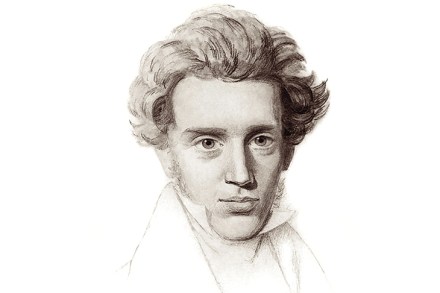
Surely God, if He existed, would find a major source of entertainment down the ages in the activities of theologians, reaching their climax perhaps in the 19th century, when they involved Him with German idealism, and then the descent from that to the present day, when the sheer naivete of anyone who thinks that God is ‘out there’ or actually exists, in some sense we can understand, provokes genial and condescending ridicule from the professionals. Central to the development of thought about Christianity is the work of the melancholy Dane Søren Kierkegaard, who in the course of his short life — he died, aged 42, in 1855 — wrote more books and notebooks than many of us succeed in reading in a longer lifetime.

A born rebel

From our UK edition

Running the entire course of the 20th century, Michael Tippett’s life (1905–1998) was devoted to innovation. He was an English composer who worked within established forms —symphonies, oratorios, string quartets, piano sonatas — to startlingly new effect. But his innovation was not just as a composer. He was also a political and social radical, embedded in Trotskyite, pacifist and gay rights ideas. The newness made itself known in a long attempt to find novel ways of living. Oliver Soden’s biography feels like an attempt to answer a series of questions. How, in the 20th century, should a creative artist live? Or be a pacifist? Or a homosexual? The answers were sometimes wrong; the music could be disastrously unsuccessful.

Sun, sea and spooks

From our UK edition

Cuba meant a lot to Graham Greene. Behind his writing desk in his flat in Antibes he had a painting by the Cuban artist René Portocarrero, presented to him by Fidel Castro, who had signed his name on the back, so that Greene didn’t know which way to hang it. Another prize possession was a tatty Penguin copy of Our Man in Havana, kept together by Sellotape, which the Russian cosmonaut Georgy Grechko had read in outer space, and in which, while circumnavigating our planet, Grechko had underlined the places in Havana that he had visited. ‘I’ve been reading it all my life, both on earth and in space,’ he wrote in his inscription when presenting the paperback to Greene in 1985. ‘I’ve learned it by heart.

An unlikely heart-throb

From our UK edition

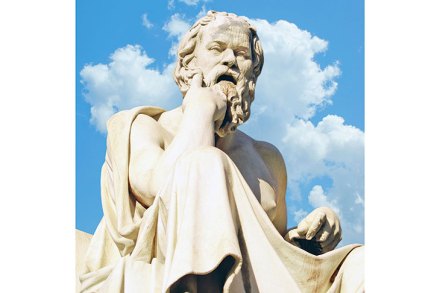
If western philosophy is no more than ‘footnotes to Plato’, so, arguably, is the myth of its founding hero, Socrates. While there is good evidence for certain aspects of Socrates’ life — his preoccupation with ethics, question-and-answer technique and his trial and death in 399 BC — most of it is shrouded in uncertainty. His only contemporary depictions are in a few satirical comedies by Aristophanes.

The lady with the limp

From our UK edition

‘This seems to be in your rough area. I mean, it contains wooden legs and everything…’ my commissioning editor at The Spectator emailed. He was requesting a review of Sonia Purnell’s excellent A Woman of No Importance, a biography of the remarkable Virginia Hall, the only second world war agent to serve not only with Britain’s Special Operations Executive (SOE) and its later American counterpart, the OSS, but eventually also with the CIA. It is perhaps unsurprising that war histories contain a high number of people with missing or prosthetic limbs.

Out of this world | 28 March 2019

From our UK edition

Like someone who has bought a first computer, then reads the manual from front to back but never actually gets around to switching the thing on, Robert A. Heinlein appears in his late fifties to have come across a how-to book about sex. Thereafter an instant expert, he wrote novel after novel brimming with it, much of it laughably theoretical and, well, wrong. Famously, to those who managed to get through an interminable book called The Number of the Beast (1980), he describes a kiss in the voice of a young woman: ‘Our teeth grated, and my nipples went spung!’ Nor were these the only breasts and nipples under discussion. The book is full of lubricious references to them, and other women’s parts, invariably objectified.

Eric the Red

From our UK edition

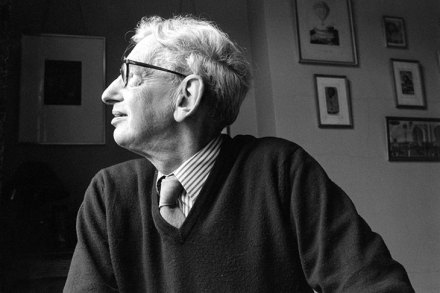
Sir Richard Evans, retired regius professor of history at Cambridge, has always been a hefty historian. The densely compacted facts in his books, the evidence of an inexorable mind incessantly at work, the knock-out blows that he has dealt to adversaries from David Irving upwards — they all characterise authoritative books by a hard-man among scholars. But in retirement, it seems, the great man is mellowing. His latest book — a biography of his friend, the historian Eric Hobsbawm — is a masterpiece of gentle empathy. Hobsbawm was born in 1917 in Alexandria, where his father (a naturalised British citizen of Polish origins) worked for the Egyptian Post & Telegraph service. His mother’s family were jewellers in Vienna.

Lies born from fantasy

From our UK edition

What is the most repulsive sentence in English/American literature? Even as a 12-year-old American boy, I cringed when reading, in Ernest Hemingway’s For Whom the Bell Tolls: ‘But did thee feel the earth move?’ At school I bought the myth of Hemingway as the master craftsman of American letters, teaching us to keep our sentences short and our syllables few. At university, however, I was privileged to be taught by R.S.

A serious tease

From our UK edition

Is there anything one can never laugh about? A question inevitably hanging over humour writing, it’s best answered by the masters of the genre who, rather than inventing jokes (a skill many possess), notice life’s winks and chuckles and tease them out of their surrounding matter, even if the latter happens to be of grave concern. Teffi was one of those writers. Born in 1872 in St Petersburg, by her early twenties Nadezhda Lokhvitskaya was a housewife with three children stranded in a provincial town; by her early thirties she was back in the capital, a literary celebrity writing for various publications under a snappy pseudonym, her witticisms quoted ‘in the streets, in trams, in clubs, in living rooms, at student gatherings’.

With Friends like these…

From our UK edition

The ultimate driving force of William Penn’s adult life is inaccessible, as the Quaker phrase ‘Inner Light’ suggests. While a young man administering the family estates in Ireland, Penn experienced ‘convincement’, another Quaker term for what other Dissenters called conversion. But while these experiences were inward and personal, they had public consequences. Since they were potentially available to anyone, they brought in their wake a tendency towards egalitarianism, manifested in plain speaking, pacifism, and a refusal to swear oaths or doff one’s hat. These outward manifestations of private experience inevitably caused ructions in the hierarchical social structure of 17th-century England.

‘I am the master’

From our UK edition

Whenever I find myself visiting some great historic house, I always like to break off from gawping at tapestries to ask the tour guide: ‘How did the family make its money in the first place?’ For some reason, this almost always astonishes and bewilders. It’s as if the devotion of capital to bricks and mortar, acres of commemorative canvas and fresco, marble and landscaping, covers up any roots in the slave trade or the amassing of bribes from Indian nawabs. Money is made, and then it sets about dignifying itself. The Gulbenkian Foundation is a solid organisation based in Lisbon. It dispenses money in improving ways and possesses a very handsome art gallery, full of treasures. It is a blameless thing. But why is it in Lisbon? Why does it have so much money?

Poet, novelist and arms-dealer

From our UK edition

When H.H. Asquith, as prime minister, visited Elswick, Newcastle upon Tyne, during the first world war, he found a vast noisy factory churning out the most sophisticated means of destroying human life. The firm, Armstrong Whitworth, would, during that war, supply Britain with 12 armoured ships, 11 cruisers, 11 submarines, eight sloops, two floating power stations, 4,000 naval guns, 9,000 military guns, 14.5 million shells, 21 million shell cases, 100 tanks, three airships, over 1,000 aircraft, together with bombs, grenades and armour plate. Asquith was accompanied by his daughter Violet, who sat beside the chairman of the company at dinner, a gigantic figure who her father described as having a ‘rather melancholy face and voice and the general air of a transplanted hidalgo’.