Biography

Relive Lou Reed’s wild, contradictory life

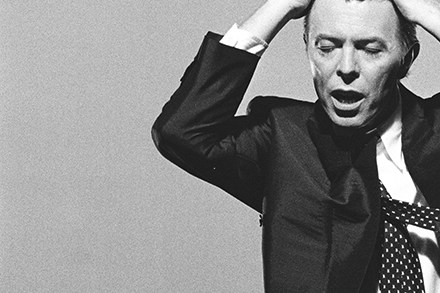
Before “Walk On The Wild Side” changed everything for Lou Reed in 1972, bringing him status and bolstering his bank account, he had been lead singer of the Velvet Underground, a group, as managed by Andy Warhol, that served up songs about drugs, gender-bending and sexual fetish, all designed to crash the boundaries of what polite America considered acceptable. The great thing about Velvet Underground songs was that musically, too, they transgressed: drone-based harmonies progressed glacially as rhythmic impetus stuttered. The big problem with the Velvets, in terms of finding any wider audience beyond self-confessed weirdos who hung out with Warhol, was that virtually nobody wanted to hear drone-based harmonies moving glacially or rhythms that fragmented. Where was the fun in that?

reed

A definitive biography of Liz and Dick, Hollywood’s most controversial and glamorous couple

What is it about Richard Burton and Elizabeth Taylor that still hooks us in, thirty-nine years after his death and twelve years after hers? In his magnificent, definitive double biography, Roger Lewis nails down the answer. Liz Taylor was the last great Hollywood movie star, starting in the golden age in National Velvet (1944), aged twelve. As Lewis puts it, her origins were in the magazines and movies of the Forties: “the era of Bing and Bob, Big Bands, such as Glenn Miller, Bogie...Tom and Jerry, Disney.

lewis

The life of the revolutionary Albrecht Dürer

Great books make genres jump. It happened with W.G. Sebald’s The Rings of Saturn, which looked like a travelogue, claimed to be a novel and felt like neither. Albert and the Whale by Philip Hoare, which recalls and converses with Sebald, is such a work. An antic and original creation, it is not exactly a biography of the revolutionary Renaissance printmaker, painter and theorist of geometry and perspective. For the fuller story of Albrecht Dürer, turn to Erwin Panofsky’s mighty monograph, as Hoare does frequently. Instead, Hoare has made a book as much for Dürer as it is about him. Dürer’s life and art are thrillingly encountered.

Dürer

Meeting Margaret Cavendish

In the spring and summer of 1667, London began to see some odd goings-on. Seven years after the restoration of King Charles II to the throne — after England’s republican experiment under Oliver Cromwell ended in 1660 — and one year after the Great Fire had laid waste to the city, things were rather tense: the second Anglo-Dutch war was under way and, by the end of June, there would even be the fear of a Dutch invasion making its way up the Thames. But oddly, it wasn’t wars, invasion threats or geopolitical goings-on that caused the great and the good of London society to exchange frantic missives. At the beginning of April, a young man-about town wrote a rollickingly bizarre letter to his father.

Adam Sisman’s new John le Carré biography entertains and disappoints

The fellow biographer for whom I always felt the most sympathy was James Atlas. Mr. Atlas, who has left an extensive account of his tribulations in The Shadow in the Garden: A Biographer’s Tale (2017), made the fatal mistake of writing a life of Saul Bellow while its subject was still alive. Bellow, you may not be surprised to learn, revealed himself to be a devious, shifty and manipulating old cuss. He interfered, blew hot and cold, disparaged his encomiast’s prose style, intelligence and research techniques and finally remarked, “I like you Atlas, but cut the crap.

le carré

An admirable but flawed new biography of George Eliot

What to call her? The question troubled George Eliot, and challenges Clare Carlisle, her latest biographer. Even this book’s indexer plays along, providing more than one entry for its shapeshifting but steadfast subject. The Marriage Question shows us a woman fragmented, attempting to understand in her various existences how — and if — personal freedom can be achieved when your life is bound to another. Mary Ann (or Anne) Evans was born in Warwickshire, in the West Midlands of England, in 1819. On moving to London in 1850, hoping to make her living as a writer, she became Marian Evans.

Eliot
astor

A diverting but unsurprising new history of the Astor clan

Mention “Astor” to most people and you immediately conjure up tales of fabulous wealth, the sort of Gilded Age beauty and excess expressed to perfection in the paintings of John Singer Sargent. The family name became synonymous at times with luxury and good taste, at others with greed, power and extreme snobbishness. The founder of the dynasty, John Jacob Astor, was a German immigrant and one-time fur trader who came to America in 1783 after the Revolutionary War. His descendants swiftly capitalized on his substantial achievements, creating a Manhattan property empire of unrivaled wealth. There was also plenty of Astor philanthropy and involvement in political and cultural life along the way but then, in the early twenty-first century, came a fall from grace as dramatic as the rise.

Why is George Orwell so difficult to pin down?

Outside Broadcasting House, the BBC’s main center in London, is an imposing, eight-foot-high statue of a man. He leans over slightly, as if to accost passersby, and holds a cigarette. A sign behind him declares, “If liberty means anything at all, it means the right to tell people what they do not want to hear.” The man is the author and critic George Orwell and the statue was intended as a permanent commemoration of his writings and values, as well as his short-lived stint at the BBC during World War Two.

orwell

Tucker Carlson is the new Voldemort

Murdoch gets what Murdoch wants — and this time, it’s to erase any evidence that Tucker Carlson ever existed. The media mogul is so insistent that the “T”-word remain unspoken that he has purportedly banned any mention of the ex-host across the Fox networks.  This is bad news for Chadwick Moore, author and contributing editor at The Spectator after he announced his new book, Tucker, that comes out next month. Moore tweeted that he’d been blacklisted from the network after announcing the book, saying: “I’m not allowed on Fox anymore, because I wrote a book about @TuckerCarlson. I’ve been banned from the network.

vice president tucker carlson

Michael Cimino’s gift to cinema

In the spring of 1981, I committed what the entertainment press of that day regarded as an act of self-abuse: I bought a ticket and sat through Michael Cimino’s epic flop Heaven’s Gate, and then I went back for another viewing before the universally reviled film ended its one-week run at the local cinema. In the four decades since, I have abused myself in similar fashion four or five more times. Heaven’s Gate is a 200-minute-plus mess of beautiful incoherences and stupefying contradictions, its pattern set by a gorgeously preposterous prologue in which forty-something actors Kris Kristofferson and John Hurt waltz across the greensward as newly minted Harvard graduates, class of 1870.

cimino

Who was the real Martin Luther King, Jr.?

Jonathan Eig’s new King: A Life (KAL) is the first comprehensive biography of the black civil rights hero to appear in more than thirty years, and it will succeed my own Bearing the Cross (BTC), published in 1986, as the standard account. One normally does not review a book one’s blurbed — I’ve called it “a great leap forward in our biographical understanding” — nor where one’s actively aided the author’s research and read his manuscript multiple times. But comparisons between KAL and BTC will be legion, so highlighting the three most significant ways in which the two biographies differ will be a service both to the thousands of readers whom Eig’s volume should attract and to students of King’s life more generally.

king

Why does a new Tolkien biography remain elusive?

Last year’s big-budget, much talked-about television series, Amazon’s The Lord of the Rings: The Rings of Power, had a somewhat unlikely figure as its presiding genius. For one thing, he has been dead half a century this year, and for another, he was a mild-mannered Oxford don with a particular scholarly interest in Anglo-Saxon and Old Norse literature. His reputation rests on four novels published during his lifetime, which have not only been bestsellers since their publications in 1937, 1954 and 1955, but continue to attract millions of readers, who are unusually ardent in their appreciation.

tolkien
ringmaster

Vince McMahon: the modern-day P.T. Barnum who changed America

Book reviews should be like Car & Driver: flip over the page to a concrete, plainly written piece — no writerly words or literary drivel — by someone who’s test-driven the book and punched up a nuts-and-bolts guide. The reader should get a look under the hood: polished steel and chrome cylinders. Does it hum? Vroom, we’re off the races. I say this because I’m reporting on a prototype I’m afraid of driving: an advance reader’s edition, uncorrected, not for sale or quotation. I can’t rev this baby for you, or even kick the tires, but here goes.

Bob Dylan, the song and dance man

In Folk Music, Greil Marcus has captured an entire world of the creative and cultural development of the artist known as Bob Dylan in a single book. Marcus not only tells a Bob Dylan biography through the study of seven songs, he also creates an autobiography of his own long career as a writer on music and America — as well as a rich history of American folk songs and the new life they engendered as Dylan sat down to write his own. How does Marcus do it? I’ve often wondered as I’ve read him in the past. This time, I have no answers at all, only admiration and respect. It is far from unusual for other biographies of Dylan — and there are a shelfful — to tell you more about the biographers than their subject.

Dylan

Blake Bailey deserves to be heard one more time

At the beginning of 2021, author Blake Bailey might have been forgiven for thinking that his literary career was not merely assured but stellar. He had gathered significant accolades for his writing, including a Guggenheim Fellowship and the National Books Critics Circle Award, and he was a Pulitzer Prize finalist. He had specialized in writing about heavy-drinking Great American Novelists, including the perennially underrated Richard Yates, John Cheever and The Lost Weekend’s Charles Jackson. His most recent subject was the elusive Philip Roth, a man whose literary brilliance was matched by his checkered reputation both on and off the page. Eighteen months later, matters have changed beyond recognition.

The Browning version

‘Ah, did you once see Shelley plain?’ asks the speaker in Robert Browning’s poem ‘Memorabilia’. Yet few of Browning’s contemporaries are as hard to see plain as his own wife: the poet who was known to her family as ‘Ba’, signed herself ‘EBB’ and published a number of popular works under her married name, Elizabeth Barrett Browning. During her lifetime she was one of the most admired poets of the age: a framed portrait of her hung in the bedroom of Emily Dickinson, and when Wordsworth died in 1850 there was serious talk of her becoming the first female poet laureate. Since her death in 1861, however, her reputation has sunk like a bad soufflé.

browning

Fear thy neighbor

In an age of rancor, one thing we can all agree on is that it makes a certain amount of sense to fear the police. What other force in civil society is authorized to intrude on private life, and deny its benefits and freedoms, in quite the same way? It may be the law-abiding members of society who fear the police most palpably. While actual criminals carry knowledge of their own guilt, the innocent must live with the knowledge of how easily we could be wrongly accused, misidentified or railroaded. Alfred Hitchcock did more than any other popular artist in the last century to help form a certain image of the police in the public consciousness.

hitchcock

The old man and his muse: Hemingway’s toe-curling infatuation with Adriana Ivancich

One rainy evening in December 1948, a blue Buick emerged from the darkness of the Venetian lagoon near the village of Latisana and picked up an Italian girl — 18, jet black wet hair, slender legs — who had been waiting for hours at the crossroads. In the car, on his way to a duck shoot, was Ernest Hemingway — round puffy face, protruding stomach and, at 49, without having published a novel in a decade, somewhat past his sell-by. He apologised for being late, and offered the rain-sodden girl a shot of whisky which, being teetotal, she refused.

ernest hemingway adriana ivancich

The electrifying genius of Nikola Tesla

Nikola Tesla, the man who made alternating current work, wrote to J. Pierpont Morgan, the industrialist and banker. It was 1902 and Tesla was broke. ‘Am I backed by the greatest financier of all time? And shall I lose great triumphs and an immense fortune because I need a sum of money? Are you going to leave me in a hole?!! Financially, I am in a dreadful fix.’ This was not perhaps the best way of approaching a millionaire who had made his fortune in the very industry Tesla was setting out to transform. It was a time of scientific entrepreneurs and robber barons. Morgan was a man of many concerns. He did not reply. Begging letters continued to be sent, and duly ignored.

The Wallis Simpson I knew – by Nicky Haslam

One would have thought this particular can of worms might, after nearly 80 years, be well past its sell-by date. But books about Mrs Simpson and her infatuated king appear with thudding frequency, each with some ever more far-fetched theory about this curious union. Now comes the leaden hand and leaden prose of Andrew Morton, with yet another: that Wallis was, all her life, in love with another man long before, during and after her experience of vitriolic abuse, first as the besotted prince’s obsession, then scapegoat for his abdication, and object of vilification during her years as his wife. This love (to borrow words from her step-great nephew, ‘whatever love is’) may well have been real. The man in question was Herman Rogers.