Betrayal

Emperor for three years: the doomed reign of Maximilian I of Mexico

From our UK edition

On 8 April 1864 an Austrian archduke with a penchant for daydreaming agreed to be emperor of Mexico. As Edward Shawcross describes in his majestic history The Last Emperor of Mexico, the process to install Maximilian of Habsburg began two and half years earlier. The plan was proposed by a determined clique of Mexican Conservatives and developed by Napoleon III, the scheming emperor of France. The Conservatives, who had just lost a four-year civil war, wanted to repeal the Liberal constitution that confiscated the assets and privileges of the Catholic church. They saw Maximilian as a symbol of the imperial family that had brought the faith to Mexico. Napoleon III, who wanted to expand French influence and trade, saw a potential puppet.

A late fling: Free Love, by Tessa Hadley, reviewed

From our UK edition

Tessa Hadley is the queen of the portentous evening, the pregnant light and the carefully composed life unwittingly waiting to be unravelled. Free Love, like its predecessor Late in the Day, begins on one such evening. The year is 1967 and Phyllis, a suburban housewife, is applying her make-up. She and her husband, a ‘respected Arabist’, are expecting the son of a family friend for dinner. Nicholas arrives, and broods angrily over his resentment of the staid old guard his hosts represent while plotting half-heartedly to seduce Phyllis as vengeance. Hadley is wonderfully wry at undermining the novel’s own urge towards solemnity: He wondered, if he pulled at that ribbon on Phyllis’s dress, what would come undone?

Why did the Allies dismiss the idea of a German resistance movement?

From our UK edition

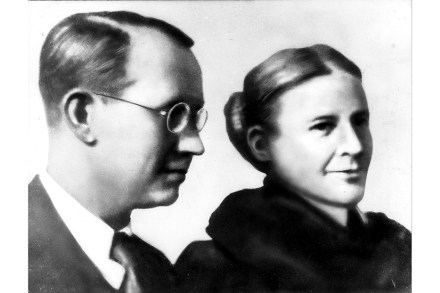
In 1928, a modest young lecturer from Wilwaukee, Mildred Harnack, née Fish, arrived in Berlin to begin her PhD in American Literature. In the febrile, polyglot atmosphere in the city at the ‘crossroads of Europe’, the media was still mocking Adolf Hitler and few took him seriously. Mildred saw, close up, the brokenness of American and German capitalism and, distantly, the apparently level playing fields of communist Russia. As the Nazis gained increasing control over the body politic, she taught an overtly socialist syllabus — Dos Passos, Theodore Dreiseret al. When, halfway through her dissertation, the university fired her, she promptly started teaching at a night school for working-class students. ‘Should Hitler be chancellor?’ she asked her pupils.

Sleeping with the enemy: the wartime story of ‘La Chatte’

From our UK edition

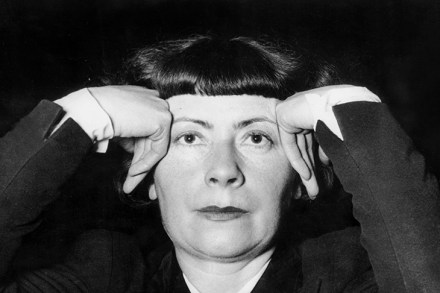
The name ‘Carré’ immediately evokes the shadowy world of espionage. Ironically, however, few people today have heard of the real Carré, also known as ‘Victoire’ and ‘La Chatte’, a female intelligence agent inside Nazi-occupied France whose life had enough plot twists and moral ambiguity to satisfy any spy novelist. Mathilde Carré (1908-2007) had beena clever but rather neglected child. Desperate to give her life meaning, and inspired by the poems of a patriotic aunt, she had romantically decided ‘at all costs, to die as a martyr for France’. Thirty years later, after a number of false starts, the second world war finally presented her with the chance to live a life of real value.

Betrayal was a routine business for George Blake

From our UK edition

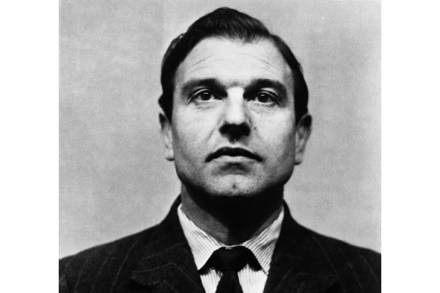
Kim Philby once remarked to the journalist Murray Sayle that ‘to betray, you must first belong. I never belonged’. Kim, as usual, was lying. Westminster and Cambridge, the Foreign Office and SIS: for all his attempts to pose as an outsider, Philby was a thorough-paced member of the British Establishment. George Blake — who is quoted using exactly the same phrase about himself in Simon Kuper’s wise, engaging biography The Happy Traitor — was telling the truth. Blake never belonged to a country, and communism was probably the closest thing he ever found to a spiritual home — even if he was deeply disillusioned by the reality of the workers’ paradise when his espionage career ended in exile in Moscow.