Belgium

The faceless man in the bowler hat

From our UK edition

Surrealism was, at least initially, as much about writing as painting. A plaque on the Hotel des Grands Hommes in Paris’s Place du Pantheon records that the oneiric movement began in 1919 when André Breton and Philippe Soupault invented ‘l’ecriture automatique’ at numéro 17. Automatic writing, with consciousness suspended, was supposed to open a conduit to an internal dreamworld. René Magritte (1898–1967) became one of the most famous Surrealist painters, but he wrote throughout his life: detective stories, manifestoes, criticism, essays, prose-poems, lectures, surreal bric-a-brac. His Ecrits Complets was published by Flammarion in 1979 and ran to 764 pages.

Never gonna give EU up

From our UK edition

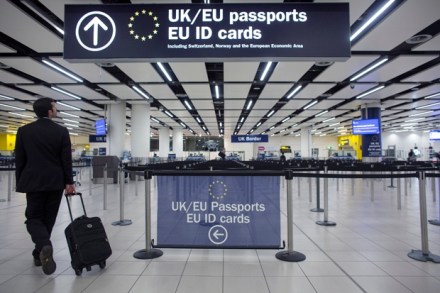
June the 24th was a grim morning for Remain voters, and we’ve been working through the seven stages of grief ever since. Given that nobody has the faintest idea when, how or even if the UK will actually leave, acceptance is still some way off. But Remainers are a pragmatic bunch and many have now worked out that their own personal Brexit can be deftly avoided by taking another EU nationality. Likewise, UK citizens living in the EU, who have found to their horror that they are pawns in a very complex game of migrant chess between Theresa May and Jean-Claude Juncker, are concluding that now is a wise moment to complete the paperwork for residency or citizenship. So which variety of passport would we most like? Controversially, Belgium is the top of many Remainers’ wish lists.

There’s a grim reason why Belgium has plenty of organ donors

From our UK edition

A discussion between two medical ethicists on the Today programme this morning ended with them agreeing on one point: whether or not it is right to breed pigs so that their organs can be harvested for transplantation into humans (as the University of California is experimenting with), the first thing we should do in order to solve the shortage of donor organs is to move to a system of ‘presumed consent’, where the organs of dying patients are considered fair game for transplantation unless they have signed a form excluding this. To leave the pigs for a moment, what is so ethical about presumed consent for human donors?

Hollande equals Thatcher? Not quite, Monsieur le President, but keep trying

From our UK edition

Have you ever tried discussing the merits of gun control with a Texan, or of deregulated labour markets with a Frenchman and his Belgian cousin? The prejudices involved are much the same. Many Americans believe that guns in the home and the pick-up truck are their best protection against violent attack, and that the 13,286 US gunshot deaths last year would have hit an even higher number if gun ownership was more restricted. Likewise, French trade unionists believe a 35-hour working week combined with laws restricting any company that is a going concern from making redundancies are the best protection of their economic wellbeing, rather than a root cause of the fact that more than 3.5 million of their compatriots are unemployed. That’s 10.

Letters | 12 May 2016

From our UK edition

Europe is already divided Sir: The Archbishop Emeritus of Westminster writes eloquently about the historical purpose of a ‘union’ in Europe as being primarily to eliminate the wars that for centuries had characterised Europe (‘Let’s renew the EU’, 7 May). He, and Pope Emeritus Benedict, both point to the shared Christian beliefs that defined all nations of Europe. But the EU, as it has evolved, is now no expression of such an underlying faith — in fact, the opposite. As he points out, it has removed any official reference to Europe’s common heritage, and is increasingly set on a shallow, utilitarian course. Europe is now more divided than ever, and it will become more so under its present policies.

The Economist’s assisted dying film is as crazy as a jihadi video

From our UK edition

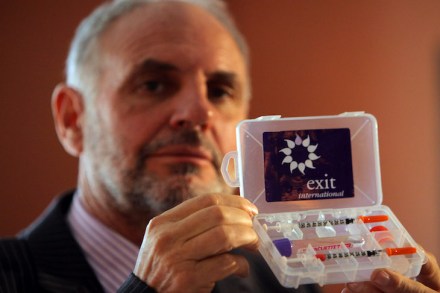
Because, it says, of its ‘liberal values and respect for human dignity’, the Economist has put out a film about Emily, a 24-year-old Belgian woman, who wants assisted dying. She is physically healthy, and comes, the film assures us, from a happy family. She has suffered from severe depression since childhood, however. By her own account, her self-made video (two years ago), in which she says ‘I don’t want to live a lie’ and ‘It keeps feeling empty whatever I do’, made her feel empowered. It inspired her to seek death at the hands of doctors. Belgium is one of two countries in the world which permits assisted dying for psychiatric reasons.

A stunning blend of simplicity and complexity

From our UK edition

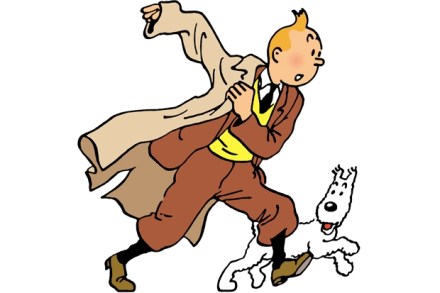
Reading Tintin when I was a child, in Britain in the 1970s, I always assumed Georges Remi’s creation was just a harmless bit of fun. However, when I went to Belgium I discovered, to my amazement, that over there they take him very seriously indeed (this year, a single Tintin picture sold for €2.5 million in Brussels). In Britain, the fearless reporter in the plus fours is a quaint juvenile amusement. In his native Belgium he’s seen as high art, and his creator Hergé (Georges Remi’s initials, backwards) is revered. The late Harry Thompson wrote a brilliant book about Tintin from the British perspective. It was informed and affectionate, but stopped short of adulation. Pierre Sterckx’s bulkier book belongs in the Continental camp.

Death watch | 27 August 2015

From our UK edition

[audioplayer src="http://rss.acast.com/viewfrom22/thereturnofassisteddying/media.mp3" title="Lord Falconer and Douglas Murray debate 'assisted dying'" startat=42] Listen [/audioplayer]A couple of years ago I contacted Holland’s top pro-euthanasia organisation. Our House of Lords looks likely to approve a bill legalising euthanasia here, I told them. ‘Very exciting!’ came the reply. Next month Parliament will again be discussing ‘assisted dying’, and although the tone of the British debate is not yet quite like the Dutch one, a shift in tone has undoubtedly occurred. In the past few years euthanasia has been renamed ‘assisted dying’ and become part of the ‘progressive’ cause.

We don’t encourage suicide, so why should we assist it?

From our UK edition

As MPs prepare to consider a private member's bill to license what is being euphemistically called 'assisted dying', in Belgium a young woman with mental health problems has been cleared for euthanasia some time this summer. The Belgium-based outlet DeMorgen outlined the situation of the 24-year-old, identified only as ‘Laura’. Aside from depression and the feeling that 'she wanted to die ever since childhood', ‘Laura’ is physically healthy, enjoys coffee, friends and going to the theatre. According to the New Yorker, 13 percent of Belgians who died by euthanasia last year didn’t have a terminal illness — and 3 percent suffered from mental disorders. Belgium legalised euthanasia in 2002.  Since then the numbers have soared.

Flanders

From our UK edition

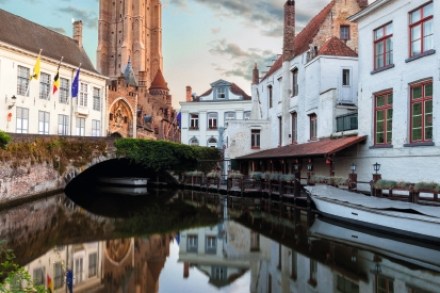
Usually, one of the first indications that you’ve entered a bilingual country is that the road signs are in two languages. At least this is the case in Ireland or Wales — but not in Belgium. In Flanders, the signs are written in Dutch. In Wallonia, they are all in French. French is spoken in Flanders, by the small local Francophone community, but more notably by the huge number of French people who descend on Brugge for the Christmas sales. The French registration plates and the gaggle of overly loud wanderers with cameras are giveaways, but don’t even think about trying French here yourself. It’s considered rude if it’s not your native language. You could, however, always make a stab at Dutch.

Antwerp

From our UK edition

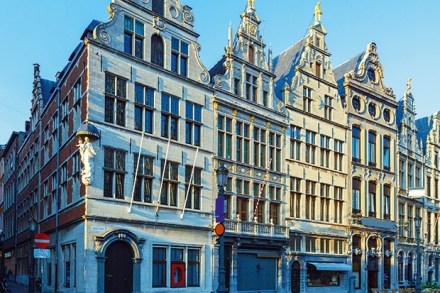
Napoleon didn’t think much of Antwerp. ‘Scarcely a European city at all,’ he scoffed. If only he could see it today. Ten years ago, Antwerp felt provincial. Now it feels like the capital of an (almost) independent state. ‘Jardin Zoologique’ it says outside the zoo, but that’s the only French signage you’ll see in this resolutely Flemish city. When they built the zoo, in 1843, Belgium was only 13 years old, and French was the official language throughout this mongrel nation. Now it only survives on a few old war memorials. ‘You’re in Flanders now,’ locals tell you, if you try to speak to them in French. Each time I come here, Antwerp seems more estranged from Belgium.

Both Belgium and the United States should be called to account for the death of Patrice Lumumba

From our UK edition

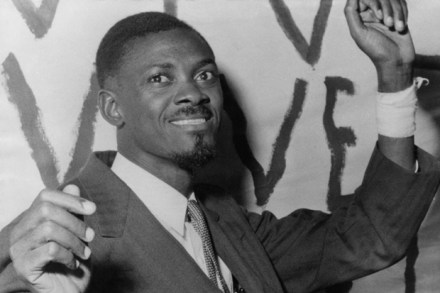
For decades, all the outside world knew was that Patrice Lumumba, the Congolese independence leader, had been done away with. Like so much connected with the Congo, details were lost in the murk of Africa’s magnificent but broken giant. He had been fed to Katangan pigs, drowned in the river — or was perhaps even still alive and being held hostage in the Ituri rain-forest. So radiotrottoir assured me variously in January 2001 when I made my first visit to Kinshasa around the 40th anniversary of Lumumba’s disappearance. The reason for my trip felt darkly familiar: one of Lumumba’s successors as national leader, Laurent Kabila, had himself just been assassinated by a ‘turned’ bodyguard.

A legendary piece of iconoclastic dance returns. Does the piece still stand up?

From our UK edition

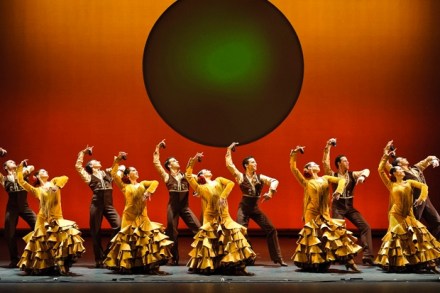
Funny how things turn upside-down with time. A work of contemporary dance that made an iconoclastic splash decades ago is revived today, exactly as it was, as if it were a museum piece. Yet more long-standing dance traditions — such as flamenco and circus — are constantly being remodelled. The contemporary work is that legendary 1987 invention of Eurocrash by the Belgian dance-inventor Wim Vandekeybus, What the Body Does Not Remember. The icons it trashed included rules about the place of grace in dancing, even the place of knowledge — Vandekeybus was a photographer and experimental theatre performer when he made this, his first dance piece, never bettered. Those icons have had boots in their faces for a generation since, so does this piece stand up?

Where Van Gogh learned to paint

From our UK edition

In December 1878 Vincent Van Gogh arrived in the Borinage, a bleak coal- mining district near Mons. He was 25 years old. He’d failed to become an art dealer. He’d failed to become a schoolteacher. Drawing was just a hobby — an artistic career was the last thing on his mind. He’d come here as a preacher, full of evangelical fervour, yet he proved a failure at that too. The problem was, he was far too pious. He gave away everything he owned. These miners didn’t know what to make of him. They called him ‘the Christ of the coal mines’. After six months, he was fired. With nowhere else to go and nothing else to do, during the next 18 months Vincent taught himself the rudiments of draughtsmanship, anatomy and perspective.

The man who discovered Ebola

From our UK edition

By some quirk of fate, just as news reached the papers that the Scottish nurse who had contracted Ebola while working in Sierra Leone was now recovered, the guest on that Radio 4 staple Desert Island Discs was the scientist who first identified the virus. This gave a programme that can seem rather outdated and superficial a whole new resonance, providing the back story to the news, adding that frisson of inquiry, of revelation. Did Professor Peter Piot, as a young researcher working at Antwerp’s Institute of Tropical Medicine almost 40 years ago, realise he was seeing something quite new and so dangerous?

How will the British public take to Rubens’s fatties?

From our UK edition

This week a monumental exhibition, Rubens and His Legacy, is opening at the Royal Academy. It makes the case — surely correct — that the Flemish master was among the most influential figures in European art. There are few painters of the 18th or 19th century — from Joshua Reynolds to Cézanne, Watteau to Constable — who were not affected by his work. It will be interesting, however, to discover what the London art public feel about Rubens himself. The British have had a complicated relationship with the great man. Its apex is represented by his residence in London — admittedly for a brief nine months in 1629–30 — his knighthood and the pleasure expressed by Charles I at meeting ‘a person of such merit’.

The siege in a kosher shop in Paris proves why Israel needs to exist

From our UK edition

As I write a siege is ongoing in a Kosher shop in Paris.  In France, Belgium and across Europe in recent years, Jews have repeatedly been the targets of Islamist attack.  They always are.  Last year saw the largest upsurge of anti-Semitic hate crime on record even in the UK. But it is the continent that has seen the worst and growing litany of attacks.  In 2012 Mohamed Merah killed three Jewish children and a teacher at a Jewish school in Toulouse.  In May last year three people were shot dead by an Islamist gunman at the Jewish museum in Brussels. During the twentieth century Judaism on the continent of Europe was almost wiped out.  In twenty-first century Europe the remaining Jews are once again the target.

The Spectator at war: Honour to Belgium!

From our UK edition

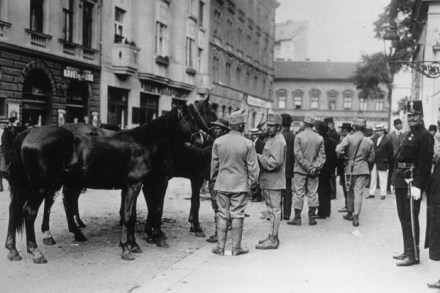
From The Spectator, 17 October 1914: NEVER did a people and their Sovereign and his Consort deserve greater honour than the Belgians and their King and Queen. They have drunk the cup of misery and horror to the very dregs. "Their heads are bloody though unbowed." The invaders have used against them the strength of a giant and the baseness of a giant, but all attempts to terrorize them into submission have been in vain. They have disputed every inch of ground that they could dispute with heroism, yet not with the madness of despair or with mere blind courage, though there has been plenty of that.

The Spectator at war: Gallant little Belgium

From our UK edition

From ‘News of the Week’, The Spectator, 15 August 1914: The war continues to be as amazing as ever. We have now had actual firing for over ten days and yet there has been no serious invasion of French soil. What one was always told would happen in the great war, and what undoubtedly the German meant should happen, was a steady and rapid advance of the stupendous tide of German soldiers into France. Wave was to succeed wave of men on the frontier and all of them were to have their faces turned to France and Paris. The sea, no doubt, was to break in through Belgium, but Belgium, it was confidently predicted, would make no serious opposition. It would flow over Belgium just as an incoming tide flows over and covers as isolated rock.

How Napoleon won at Waterloo

From our UK edition

In a one-horse town called Hestrud, on the Franco-Belgian border, there’s a monument which encapsulates Europe’s enduring fascination with Napoleon. The story carved upon this plinth is more like poetry than reportage. As Napoleon passed through here, on his way to Waterloo, he struck up a conversation with a bold little boy called Cyprien Joseph Charlet. ‘You think victory will always follow you, but it always disappears,’ this audacious lad told him, apparently. ‘If I were you, I’d stay at home. Tomorrow your star will surely dim.’ Well, that’s the story, anyway. Fact or fiction, or a bit of both? In a way, it hardly matters.