Belarus

Why Russia and China are competing to woo Belarus

From our UK edition

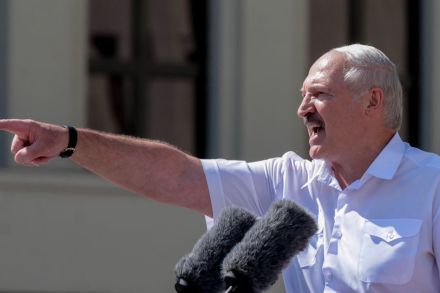
Belarus's president Alexander Lukashenko has been roundly condemned following the arrest of Roman Protasevich, but he still has one ally. Lukashenko spent the weekend at Sochi, on the Black Sea, where he was hosted on president Vladimir Putin’s yacht. The two leaders greeted each other with a hug. After dolphin spotting, the pair wrapped up a deal on the release of a $500 million (£350m) loan to Belarus which will help blunt the effect of fresh western sanctions. The announcement followed a celebration in Minsk earlier in the week for the 100th anniversary of the Chinese Communist party, where ambassador Xie Xiaoyong lauded the bilateral relationship between China and Belarus.

My plan for Belarus

From our UK edition

A terrible thing, to be torn. Last Sunday was International Day to End Obstetric Fistula, a very painful condition affecting the nether regions of women who have just given birth. I very much wished to observe the occasion in some way, but Sunday was also World Turtle Day, which naturally commended itself to me as well. Having thought about it, my hope was that those suffering from obstetric fistulae and the turtles might put aside whatever differences they may have and waddle together in a show of unity and I could commend them both at the same time. Better still, however, would have been if last Sunday had been designated International Day to Bomb Minsk. I sometimes feel that the people who choose what stuff to campaign about tend to miss the bigger picture.

For journalists like Protasevich, free speech is a matter of life and death

From our UK edition

Last August I wrote a column in The Spectator’s US edition urging Donald Trump to take a leaf out of Alexander Lukashenko’s book and campaign for re-election on a vodka-and-sauna approach to managing the pandemic. Belarus was one of a handful of European countries not to impose a lockdown last year, with the President urging his citizens to have plenty of vodka and lots of saunas to avoid infection.

Why sanctions against Putin and his allies don’t work

From our UK edition

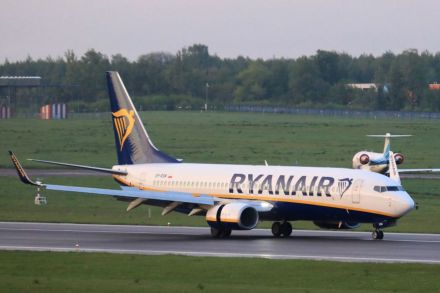
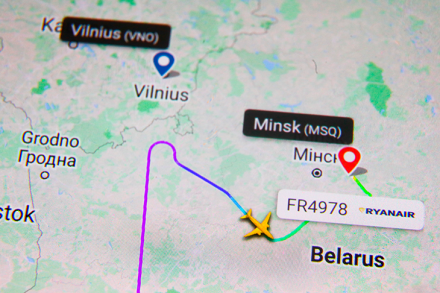
An ‘act of aviation piracy’ was how Ryanair boss Michael O’Leary described the forcible grounding of one of his planes in Minsk by Belarusian authorities in order to arrest a dissident who was on board. ‘A shocking assault on civil aviation and an assault on international law,’ said the UK Foreign Secretary Dominic Raab. The Taoiseach Micheál Martin, en route to Brussels for an emergency meeting, called for EU heads of state to deliver a ‘very firm and strong response’ to Belarus’s President Alexander Lukashenko. But what response can the West actually make that will put an end to lawless behaviour by Lukashenko — and, more importantly, by his on-and-off ally Vladimir Putin? Where to hit where it really hurts?

Germany’s Belarus blindspot

From our UK edition

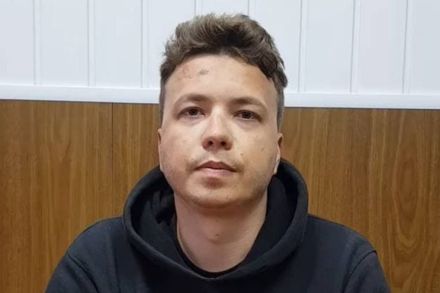
Everything about the video seemed wrong. ‘It's likely his nose is broken because the shape of it has changed and there's a lot of powder on it. All of the left side of his face has powder,’ said the father of Belarusian journalist Roman Protasevich. The details of the story are now known: the exiled activist’s plane was diverted while en route between two EU capitals. The Ryanair flight was grounded, the pilot having been fed false reports of a bomb threat while a Soviet-era jet stalked the plane. Protasevich and his girlfriend were then removed by Belarusian forces and the flight was sent on its way.  https://twitter.com/mediazona_by/status/1396898057858555909?

The Belarus hijacking reveals the West’s complacency

From our UK edition

On Sunday evening an act of appalling state kidnapping took place over the skies of Europe. Four alleged KGB officers and a Soviet-era MIG-29 fighter jet forced a Ryanair flight, travelling between two EU capitals, to divert to Minsk. The hijacking was a carefully planned, outrageous operation. The Belarusian KGB (sadly not an anachronism) had claimed there was an explosive device onboard, but their real target was Roman Protasevich, a 26-year-old journalist. Protasevich is the founder of the NEXTA telegram channel, which supported and covered the anti-government protests that erupted in Belarus last August after falsified presidential elections.

Why Lukashenko keeps getting away with it

From our UK edition

The diversion of a Ryanair flight bound for Lithuania from Athens and the arrest of passenger Roman Protasevich – an influential Belarusian blogger critical of the country’s dictatorial regime – is the latest tyrannical action to lead to expressions of grave concern and tempered outrage from the West. However, the fact that the passenger aircraft was forced to land by a Belarusian fighter jet on the pretence that the plane was carrying explosives is, arguably, a step up on the ladder of severity. Police brutality and the unlawful detention of opposition activists are quick to cause Western condemnation, but those still solely concern domestic matters – the interception of a European plane in transmit between two EU member states is unprecedented.

Britain is right to punish Belarus for its plane hijacking

From our UK edition

Belarus forcing down a civilian airliner flying between two EU, and Nato, capitals is a grave threat to the international order. If any flight crossing the airspace of an autocratic regime is vulnerable to such an attack, the world begins to look a very different ­– and more dangerous – place. The challenge to the free world now is to hit Minsk with such a set of punishments that it doesn’t dare repeat its action and that no other autocratic country tries to pull the same trick. Dominic Raab has just announced in the Commons that Belavia, the Belarusian national carrier, has had its operating license suspended, meanings its flights can’t land at any UK airport. (UK airlines have also been advised not to fly though Belarusian air space.

What does Belarus’s opposition leader want?

From our UK edition

There is an assumption that those fighting tyranny must instead want Western-style democracy, that the arc of history bends towards liberal representative government, allied inevitably to Washington and Brussels. Many former Soviet Union countries saw their politburos overthrown by young middle-class people espousing the desire for this kind of politics — from the Rose Revolution in Georgia to the Orange Revolution and Euromaiden protests in Ukraine (whether or not they eventually received that form of government is a different matter). But there is no logical imperative that connects dissatisfaction towards an autocrat with the kind of government and geopolitical order that will replace him, whether in Eastern Europe or elsewhere.

The West doesn’t know best

From our UK edition

I’d always rather liked the Finns, until I came across the conductor Dalia Stasevska. When I asked my mother what they were like, back when I was five or six and enjoyed staring at a globe of the world, she described them as ‘drunken and stupid, but very brave’. This was, by Mother’s standards, an extremely kindly benediction. Most of her descriptions of the world’s various people did not contain commendations. There were a few exceptions — Trinidadians were ‘drunken and stupid, but very cheerful’, for example. But by and large, to her the world comprised people who were drunken and stupid, apart from the Muslim world, where people were merely ‘stupid’.

Make America Normal Again

To win in November, Trump should seek inspiration from President Alexander Lukashenko, the 65-year-old autocrat who has ruled Belarus since 1994. He trounced his liberal opponent in the presidential election in August with 80 percent of the vote. I’m not suggesting Trump emulate Lukashenko’s methods. Among other things, the man dubbed ‘Europe’s last dictator’ disqualified his three main political opponents at the beginning of the race, imprisoning two of them. He has never won an election with less than 75 percent of the vote, although none have been found to be free and fair by the Organization for Security and Cooperation in Europe (OSCE), an election monitoring body.

make america normal again

Portrait of the week: Employment falls, exam failures and a roundabout rigmarole

From our UK edition

Home In fine weather with calm seas, 565 migrants in four days crossed the Channel in small craft. French officials said that 33 migrants in two boats that got into difficulty had been returned to Calais. In July more than 1,000 migrants crossed the Channel. Priti Patel, the Home Secretary, appointed Dan O’Mahoney as Britain’s Clandestine Channel Threat Commander, tasked with somehow making such voyages ‘unviable’. Employment fell by 220,000 in the three months to June, the biggest quarterly fall since 2009, but unemployment remained at about 3.9 per cent, as millions stayed on the furlough scheme. At the beginning of the week, Sunday 9 August, total deaths from Covid-19 stood at 46,566, with a seven-day average of 53 deaths a day.

Is this the end for Europe’s last dictator?

From our UK edition

Alexander Lukashenko, labelled by the Bush administration as ‘Europe’s last dictator’, was never going to go down without a fight. In his final public address before Belarus went to the polls he offered a thinly veiled warning to those who wish to remove him from power: ‘[Our Belarus] is rather naive and a little bit fragile but she is beloved and when you love something you do not give it up.’ On election day, Lukashenko delivered on his grim campaign promise. Official exit polls gave the incumbent an implausible 80 per cent of the vote: his fifth landslide in 26 years at the helm. The lion’s share of presumed electoral fraud happened before polls opened. State media announced that around 40 per cent of the electorate had opted to vote early.