Bbc

A Soviet version of Martin Parr: Adam Curtis’s Russia 1985-1999 –TraumaZone reviewed

From our UK edition

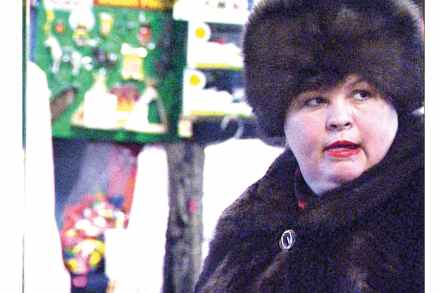
Russia 1985-1999: TraumaZone – even the title makes you want to scream – is Adam Curtis’s Metal Machine Music: the one where he frightens off his fans by abandoning the trademark flourishes that made him so entertaining and instead goes all pared-down and raw and grim. If you don’t know or remember what those trademark flourishes were, let me refer you to a cruelly funny pastiche which you can easily find on YouTube called The Loving Trap. This sends up poor Adam as a pioneer of the collage-umentary, a genre resembling ‘a drunken late-night Wikipedia binge with pretence to narrative coherence’ which ‘vomits grainy library footage onto the screen to a soundtrack of Brian Eno and Nine Inch Nails.

Has a Conservative government got any power at all?

From our UK edition

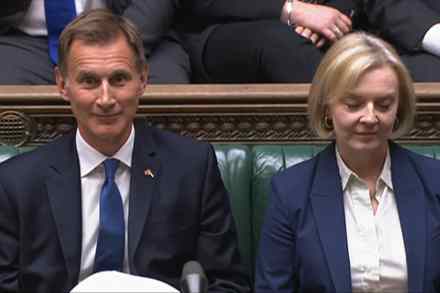
In the House of Commons on Monday, someone accused Liz Truss’s government of being ‘in office but not in power’. By chance, I was sitting in the peers’ gallery immediately behind the author of that famous phrase, Norman Lamont, who applied it to John Major’s administration in his resignation statement as chancellor in 1993. It grows ever more apt. I sometimes wonder if modern politicians positively welcome this situation. It is a general feature of the structures of the EU, where no elected politician has real power, but none seems to mind.

Liz Truss apologises for the chaos. What next?

From our UK edition

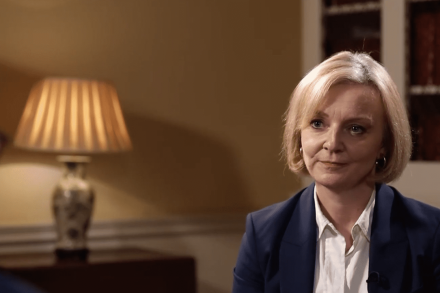
Finally, we hear from the Prime Minister. Liz Truss has given an interview to the BBC's political editor Chris Mason. It comes at the end of a day in which she was accused of 'hiding under a desk' and emerged in the Commons only for a silent half an hour of blinking occasionally. She apologised, saying: 'Firstly I want to accept responsibility and say sorry, for the mistakes that have been made.' Truss did not appear comfortable this evening. It would have been weird if she did The Prime Minister has left others to argue that the government is still functioning. What she hasn't done, until now, is offer any argument about why she should remain in office when Jeremy Hunt is effectively in power.

Sunday shows round-up: Is Truss a ‘libertarian jihadist’?

From our UK edition

Jeremy Hunt – ‘The Prime Minister is in charge’ To say things do not look rosy for Liz Truss would be quite the understatement. With the government now on its second Chancellor in as many months, and its once flagship policies being hastily swept under the carpet, the Conservative party appears to be in damage limitation mode. Laura Kuenssberg spoke to the new Chancellor this morning, in a pre-recorded interview, asking him if Truss was now such a damaged figure that he was the one really calling the shots: https://twitter.com/BBCPolitics/status/1581565785247465472?

Fairly desperate: BBC1’s Unbreakable reviewed

From our UK edition

On first impression, you might have thought that Unbreakable was just a fairly desperate reality show cobbled together from I’m a Celebrity, Mr and Mrs, Taskmaster and It’s a Knockout. After all, the format is that people of varying degrees of fame – from Simon Weston to, er, the bloke who presents MTV’s Celebs on the Farm – arrive with their partners at what presenter Rob Beckett calls ‘a big posh gaff in the country’. Once there, they’re made to perform a series of game-like tasks as Rob looks on and guffaws. Naturally, the series does make a few cunning tweaks to its obvious forebears. Unlike in Taskmaster, for example, some of the tasks are extremely boring.

The genius of More or Less

From our UK edition

In a week of slim audio pickings, I spent time reacquainting myself with some of the BBC classics and can confirm that, yes, More or Less still warrants a place in that category. Like Thinking Allowed, which also drew me back, the programme works wonders with data and statistics, and benefits from having a calm and unobtrusive presenter. While most of the questions put to the stoical Tim Harford are delightfully pedantic, some have that special quality of convincing you that, while you’ve never given the topic a second thought, you are in fact deeply invested in it, and absolutely must know whether or not the thing that’s been alleged is correct.

The BBC’s Meloni problem

From our UK edition

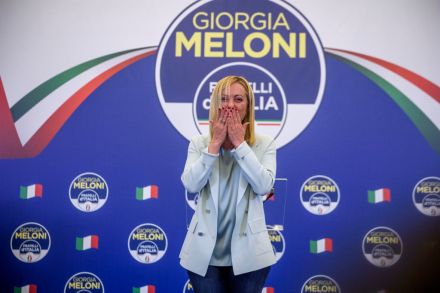
Here is a quote from the BBC Europe Editor, Katya Adler’s, very short piece on the BBC Radio 4 Six O'Clock News this evening, concerning the electoral victory of Giorgia Meloni in Italy: Millions of Italians didn’t vote for her. They say they do not recognise themselves in her nationalist, protectionist proposals, her anti-immigration rhetoric and her conservative family mores. Isn’t that remarkable? Can you imagine the awful Adler, or indeed any correspondent, commenting on the victory of a left-wing candidate:  Millions of people didn’t vote for her.

The BBC’s new direction

From our UK edition

I am becoming terribly worried about the people of Sunderland with regard to how they will cope in this coming winter. The greatly increased fuel bills will affect all parts of the country, of course – but none more so than the Mackems who, I suspect, will largely die as a consequence. Their particular problem was highlighted by the local Labour MP, Bridget Phillipson, on BBC2’s Politics Live hosted by the excellent Jo Coburn. Ms Phillipson said people in her constituency opened their doors to her wearing their coats and possibly mufflers, because they were trying to reduce their energy bills. The temperature up here has not dropped below about 21°C for the past two months, but these Mackems are apparently already close to hypothermia.

The utter misery of BBC’s Marriage

From our UK edition

‘Who are these people and why should we care about them?' This is the most important question any screenwriter must ask before committing pen to paper. Sadly it's a question I failed to come anywhere near answering during the interminable 'realism' of the BBC’s much discussed (and much praised) Marriage. Sean Bean and Nicola Walker play Ian and Emma, an uptight midlife couple caught in the tedium of marital graft after 27 years together. The four-part 'drama' has been widely commended for showing the profound inanity of ordinary people's domestic lives. While I consider myself to be pretty ordinary, I failed to recognise either of these dullards as anything other than famous actors trying to appear real and failing miserably.

Why political interviews matter

From our UK edition

She’ll never do it. She’d have to be mad. Why take the risk? That’s what everyone said when I announced at the end of my BBC1 interview with Rishi Sunak that we were still hopeful that Liz Truss would also agree to a half-hour in-depth conversation in prime time. Well, guess what? She has agreed and will come into Broadcasting House just a week before most people expect her to move into No. 10. Too late to have any impact on the result, say the cynics. That ignores the fact that 10 to 15 per cent of the Tory selectorate will not, I’m told, vote until the last minute. More importantly, it ignores the tens of millions of people who have had no say in the choice of their next prime minister.

Why we must defend Radio 3 from threatened cuts

From our UK edition

Who doesn’t love Eurovision? All that razzmatazz. The ghastly frocks and gloopy pop songs, the false bonhomie and bare-faced bias when the voting comes around. It’s an irresistible annual event, guaranteed to put a smile on your face and provide the pretence that we are all one happy European family. But all that showbiz comes at a cost (€6.2 million, and rising), with the host country’s broadcaster expected to cough up about one-third of that. What might have to be lost by the cash-strapped Corporation in the next year, or curtailed, to ensure that we put on the biggest and best show ever next year? The BBC budget has become a hot topic in recent weeks.

Has the lab leak theory really been disproved?

From our UK edition

The BBC carried a story this week with the headline ‘Covid origin studies say evidence points to Wuhan market’. Bizarrely the paper in Science they are referring to, by Michael Worobey and colleagues, says no such thing. It says: ‘the observation that the preponderance of early cases were linked to the Huanan market does not establish that the pandemic originated there’. All three of the scientists quoted in the BBC story have been highly dismissive about even discussing the possibility that the pandemic began as an accident in a Wuhan laboratory. Their vested interest is clear: they worry that the reputation of their field of virology would be threatened by such a discussion.

Letters: What William Blake meant

From our UK edition

Procurement profligacy Sir: In response to Susan Hill’s query ‘Who allows the profligacy in NHS hospital procurement to continue?’ (‘Best medicine’, 16 July), it seems the national scale of public sector bureaucracy is just too great. Given the size and spending power of the NHS, no one should come close to achieving equal efficiencies in economies of scale, nor gain better prices from suppliers. But this is not the case. As a non-clinical procurement professional in the NHS, having come from the private sector, I’ve been surprised to consistently find the national purchasing authority of the NHS (formerly ‘NHS Supply Chain’, now ‘SCCL’) to be the worst pricing option available to us.

‘Our’ by ‘our’, Boris’s resignation speech

From our UK edition

There was a word I didn’t understand in Boris Johnson’s resignation speech (in which he did not resign). He spoke of ‘our fantastic prop force detectives’. Prop? Prop forwards, clothes props, proprietors, propositions, propellers? Perhaps they are personal protection officers, though I don’t think those are detectives. Or it might be family slang made up by Wilfred, two: ‘Ook, Papa, prop-props…’ More cunningly deployed in the 900 words of the speech was our. Not just our props but ‘our police, our emergency services, and of course our fantastic NHS… our armed services and our agencies… our indefatigable Conservative party members… our democracy’.

How the BBC was captured by trans ideology

From our UK edition

During Pride month this year a banner has been emblazoned across the BBC’s internal staff website used by every single employee. It features the following text: ‘BBC Pride 2022: Bringing together LGBTQ+ people of all genders, sexualities and identities at the BBC.’ Most people who work at the BBC aren’t concerned about this. But the slogan really should ring alarm bells, because behind its seemingly benign message of inclusivity is a latent political message about trans rights that is undermining the corporation’s impartiality. As a BBC employee I am proud and delighted that the corporation is striving to be a welcoming employer for people from all walks of life, whatever their colour, creed or whoever they choose to sleep with.

The cruelty of reality TV was part of the appeal

From our UK edition

Jade Goody appeared on Big Brother in 2002. She was a short, loud, blonde-haired woman who broadcast her every thought and feeling, either in her thick Cockney accent or with her unforgettable face. She became a star. In 2007 she appeared on Celebrity Big Brother, where she made racist comments about her fellow contestant, the Bollywood actress Shilpa Shetty. Effigies of Goody were burned in India; the Sun called her ‘the face of hate’. Hoping to redeem herself, she agreed to appear on Indian Big Brother, where she was told she had cervical cancer with the cameras still rolling. She died less than nine months later. It was a three-act drama that only reality TV could have delivered. Call it 45 minutes of fame.

The best TV spy drama since Smiley’s People: Apple TV+’s Slow Horses reviewed

From our UK edition

How thriller writers must miss the Cold War! Early John le Carré and Len Deighton had it easy when trying to create a convincingly menacing enemy: the Soviets, obviously. But their successors are forced to go through all manner of desperate contortions to generate their bad guy McGuffin. They can’t do Muslims because that’s Islamophobic; they can’t do the Chinese because the entertainment industry (like everywhere) is too in thrall to the CCP. So they end up promoting paper tigers like ‘right-wing extremism’, as Mick Herron does in the first of his Slow Horses series. Herron has been rightly hailed as the new Le Carré.

The BBC’s obsession with youth

From our UK edition

At long last the state of Oregon has got around to installing tampon machines in the male lavatories of its many schools. I have campaigned long and hard on this issue. It has always seemed to me grossly unfair that girls should be provided with this facility but the poor boys utterly ignored. The sense of shame that these young men must have felt when their monthly cycles arrived unexpectedly – and remember that many of them will be victims of ‘period poverty’. Now, though, thanks to the state’s chirpily named Menstrual Dignity Act, equality has been achieved and I will therefore turn my attention to another consequence of social injustice – the continued proliferation of parking spaces which are not designated solely for disabled persons.

Nadine Dorries: My vision for the BBC

From our UK edition

When Nadine Dorries was named Culture Secretary last year, it proved to be the most controversial appointment of Boris Johnson’s reshuffle. Her critics weren’t afraid to point to what they saw as her flaws. She was a Scouser and former nurse put in charge of the cultural crown jewels. The only explanation they could come up with: she was intended to embody a two-finger flick, on behalf of the PM, to the BBC, Channel 4 and the arts world in general. The furore, she says, didn’t come as a surprise. ‘There are some men who do have a problem with a woman from my background achieving,’ she says. It also pointed to something else: a fear that she might do what her predecessors had not done. ‘I think they obviously knew that I was going to deliver.

The most disadvantaged group in Britain? White working-class men

From our UK edition

I’m not sure what to think about the BBC’s announcement that it wants a quarter of its staff to be from working-class backgrounds by 2027. On the one hand, I’m against hiring quotas of any kind and think every position should be filled by the person best qualified for the job. But on the other, if the BBC is going to have diversity targets – and fighting against them seems futile at this point – then this one seems better than most. The rationale for this quota, according to the BBC, is it wants its staff to ‘better reflect UK society’, but I’m not sure it will achieve that. The problem lies in the way the BBC has defined ‘working-class’.