Bbc

Citizen Khan says absolutely nothing new

From our UK edition

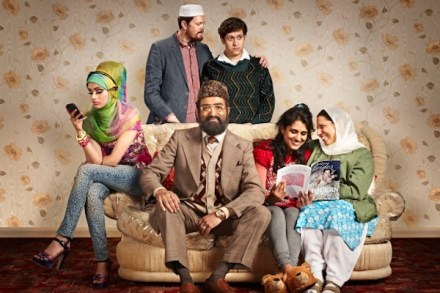
I took the opportunity yesterday to catch up with the BBC’s new comedy ‘Citizen Khan’. Focusing on a Muslim family based in my hometown of Birmingham, it lampoons the trials and tribulations of the self-appointed, self-important, and self-obsessed Mr Khan. Anyone with even a cursory knowledge of British Muslim communities will recognise the basic truths on which the programme’s characters are premised. Alia, daughter of the eponymous hero, seems to have provoked the most controversy. Alia is a shrewd young girl, doting before her parents but defiant behind their backs. There are complaints she portrays a disrespectful daughter, affronting not just her myopic parents but also a stylised vision of ‘British Islam’.

Jeremy Vine’s survival guide

From our UK edition

I first knew Jeremy Vine as a very young, charming, earnest and totally driven political correspondent for the BBC in the 1980s. So when I started reading It's All News to Me, I was dreading a rather worthy read. I was delightfully disappointed. This is a wonderful bitchfest of not quite malicious gossip and the power struggles at the BBC. In politics it is dog eat dog. At the beeb it is the other way round. Any aspiring broadcaster should use this book as a survival manual. There are some wonderful quotes. From former political editor Robin Oakley: ‘The people at the top of the BBC don't have very much power, so when they act, it tends to be very violent.’ The legendary John Sergeant has some crackers.

The Hamlet of the trenches: Parade’s End reviewed

From our UK edition

Ford Madox Ford’s Parade’s End is being republished as well as adapted for the screen by the BBC.  I first discovered the tetralogy when, in an attempt to improve my chances, I asked my future mother-in-law for a list of must-read novels.  Parade’s End and The Good Soldier featured near the top of the list. The Good Soldier is Ford’s most remembered work and at one time he considered it his first and last novel.  In his memoirs, Return to Yesterday, he recalls that on the 28th of June 1914, ‘there was to be no more writing for me—not even any dabbling in literary affairs.’  But then there was the war and he found himself in the Welsh Regiment, at forty-one years of age, living through what he termed ‘Armageddon.

The skewed priorities of the BBC’s abortion investigation story

From our UK edition

Did anyone else notice anything weird about the BBC’s coverage of the story last week about the 14 NHS trusts that a government health watchdog found to be breaking the law in providing abortions? Those 14 clinics used pre-signed abortion referral forms to authorise abortions, which flouts the bit in the Abortion Act that requires two doctors to allow them. But for the BBC, as, inevitably, for The Guardian, the real scandal about the investigation was that it took place at all, at a cost of £1 million and with the result that the watchdog, the Care Quality Commission, the CQC, had to delay or cancel pre-planned investigations in order to carry out this one. And how do we know that? Why, as a result of a BBC Freedom of Information Request.

My advice to the BBC’s new DG

From our UK edition

The job of George Entwistle, the new Director General of the BBC, will be to manage a gentle decline, rather than hurtling with great enthusiasm towards a state of inexistence. A very ticklish balance needs to be maintained on the issue of the BBC’s moral cross subsidisation – that is, the extent to which the corporation justifies its &"special” existence by doing intelligent and worthy programming which nobody else does and which pulls in few viewers, and the extent to which it justifies its mass appeal by broadcasting cretinous pap which every other broadcaster can do and which drags in lots of viewers. Good luck with that one.

Transcript: IDS on Today

From our UK edition

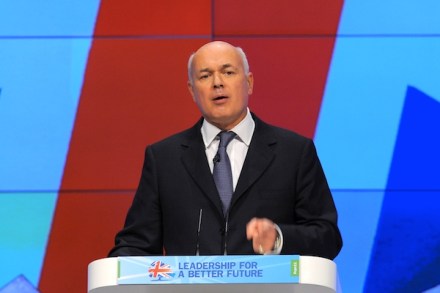
Iain Duncan Smith appeared on the Today programme this morning. In a heated interview with Evan Davis, the work and pensions secretary was interrogated about David Cameron’s radical welfare proposals. Conversation ranged from cutting rental payments for under-25s to protecting non-means tested pensioner benefits. The bulk of the exchange was devoted to discussing Cameron’s intentions, as he seeks to make welfare reform a central part of the 2015 election. Here is a transcript of those passages: Evan Davis: Okay, I’m going to quote a couple of things that you wrote in your green paper. ‘Successive governments have made well-intentioned but piecemeal reforms to the system.

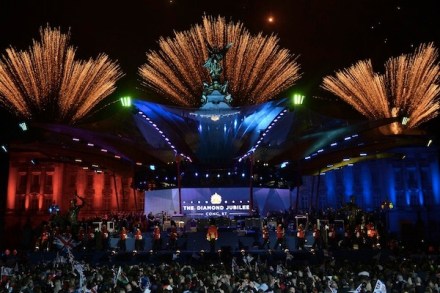
A final word on the BBC’s Jubilee

From our UK edition

A very lively and enjoyable Any Questions last night from the beautiful town of Aldborough in North Yorkshire. The question which seemed to bring out perhaps the most passion from an already very passionate audience concerned the BBC’s coverage of the Jubilee celebrations. I didn’t envy Jonathan Dimbleby having to chair that one. No least because the question included a reference to his own reported criticism of the BBC’s coverage. I mentioned that I had simply turned over to Sky and others on the panel went on to attack the BBC’s management. But there are two points which I didn’t get a chance to air last night which I thought I might note here: one ‘for’ the BBC and one ‘against’.

Tune in tonight

From our UK edition

I thought Spectator readers may like to know that I will be one of the panellists on BBC Radio 4's 'Any Questions' tonight at 20.00. The programme is coming from Aldborough, North Yorkshire and my fellow panellists are Alan Johnson (Labour), David Davis (Conservative) and Salma Yaqoob (Respect).

Why the Jubilee Coverage was so bad

From our UK edition

One of my objections to monarchy is that it is a vulgar institution that encourages verbosity, prurience, sycophancy and banality. I was not therefore surprised that the BBC’s jubilee coverage was vulgar, verbose, prurient, sycophantic and banal. Others were, however, and the papers are full of condemnations of the corporation. You should always remember that the BBC’s rivals have a commercial interest in doing it down, just as the BBC has a commercial interest in doing down News Corporation at the Leveson Inquiry. No journalists are as compromised as writers who write about their employer’s rivals. As a rule, you should never believe a word they say.     That said, no one can deny that the BBC offered itself as a target to its enemies.

Was the BBC’s Jubilee coverage terrible?

From our UK edition

Was the BBC’s coverage of the Jubilee celebrations really as awful as all the papers seem to say it was? I’ve always rather liked Sophie Raworth, yet she and her colleagues come in for a terrible pasting — especially from the Mail of course. But I’d be interested to hear your views. Also on the subject of Kate Middleton, who I thought looked rather fit in that scarlet tunic, although she’s got it in the neck too. Thing is, I’m out of the country — in Austria — and can therefore experience the joys of this jubilee holiday vicariously, i.e. through the papers and with your assistance for clarification and correction. This is a sort of reverse blog, then, where I look to you for news.

Let’s show Eurovision some respect

From our UK edition

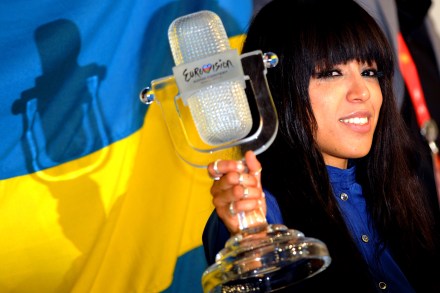
There are calls for Britain to pull out of the Eurovision Song Contest, after Engelbert Humperdinck finished second-last on Saturday, with Norway bottom. The Mayor of Leicester has today denounced Eurovision, saying: ‘The politics of Europe — which countries are friendly with which others — has a lot more to do with it than the quality of the songs.’ I agree: politics are involved and it is outrageous. Had George Osborne not given Ireland that £3.2 billion loan we would not have had its four points and Britain would be where it deserved: at the very bottom. We were dismal, and in the eyes of half a billion people. But the solution is not to withdraw from Eurovision. The solution is to properly compete.

Spinner unspun

From our UK edition

UPDATE: The below video has now been taken down from YouTube, but Guido has another copy here. Guido was first to this video of Downing St’s Director of Communications, Craig Oliver, remonstrating with the political correspondent Norman Smith about the tone of a BBC report — but it’s worth posting again here.

Why reason doesn’t apply to the Eurozone

From our UK edition

The Eurozone is a kind of lunacy if you look at it as an economic project. But this isn’t about economics, or rationality — it's about emotion, as the leader in today’s Telegraph says. The Brits and Americans often fail to understand this fully because we judge a currency union in terms of its economic merits. But many European nations see it as part of another, wider, agenda. For the Spanish and Portuguese it’s about not going back to dictatorship. For Greece it’s about being Western rather than Eastern (and not being run by the military).

Osborne brings it back to the economy

From our UK edition

It wasn’t, as expected, Nick Clegg on Marr this morning but George Osborne as the coalition attempted to move the argument back onto the economy. Osborne kept stressing that the government would focus on the things that ‘really matter’ to people; code for we’re not going to spend too long on Lords reform. Indeed, given that Nick Clegg has turned down a compromise on that, we now appear to be heading for — at most — a referendum on the subject. Osborne defended his deficit reduction programme, arguing that the lack of growth was a result of the Eurozone crisis and the oil price spike. But he did concede that a Tory government would be going far further on employment law reform than the coalition is.

Just in case you need another reason not to vote Benita, she’s now being backed by Jonathan Ross

From our UK edition

I doubt that many CoffeeHousers are planning on voting for the independent candidate for Mayor of London, Siobhan Benita. As Leo McKinstry said in this magazine recently, she’s really the civil service, establishment candidate. But fair play to her for standing for election unlike her mentor Gus O’Donnell, Jeremy Heywood or any other members of the permanent governing class. But if any Spectator reader was contemplating voting for Benita, another reminder of why you shouldn’t comes today from Jonathan Ross who has endorsed her on Twitter.

Boris drops the f-bomb (again)

From our UK edition

More ‘colourful language’ from Boris Johnson today. Interviewed by the BBC about his reported attempts to secure sponsorship from News International while they were being investigated for phone hacking, he dismissed the claims as ‘f***ing b****cks’.

Did Balls cause the recession?

From our UK edition

We take a close interest in Ed Balls and his use of figures here at Coffee House, and it seems that this interest is reciprocated. The Shadow Chancellor has just been on Daily Politics where he revealed himself as a regular reader. He was confronted with some of the facts about spending and the deficit — and whether there have been ‘deep, harsh cuts,’ as he has falsely claimed. When Andrew Neil presented him with the numbers from our earlier blog, he replied that this was cash terms. He’s right, but adjust for inflation and core government spending (that is, stripping out debt and dole) is down just 0.8 per cent. Is that really what caused the crash, asked Neil. Really? Balls then changed tack.

Cameron tries to return to the big picture

From our UK edition

David Cameron is out doing the media rounds today. He wants to, in his words, get back to the ‘big picture’, the argument over deficit reduction. Indeed, Danny Alexander’s speech today saying that departments have to indentify additional saving seems to have been timed to tee up this argument. Cameron’s Today Programme interview, though, was dominated by Abu Qatada, tax avoidance, Lords reforms and whether or not — in John Humphrys’ words — the PM is ‘a bit lazy.’ On Qatada, Cameron was insistent that the Home Office had ‘checked repeatedly’ with the European Court of Human Rights on the deadline. I expect that the Home Office will have to release details of these contacts today.

Boogie aahhhnnnn

From our UK edition

There was a sort of interesting documentary on BBC4 last night about a genre of popular music called 'Southern Rock' — ie what we, back in the 1970s, called Southern Boogie — Lynyrd Skynyrd, the Allman Bros, Charlie Daniels, and so on. It was interesting for mainly two reasons. First it reminded me of how truly, staggeringly, awful most of the music was — perhaps as much as 98 per cent of it. I am a catholic sorta guy when it comes to music, open to any genre, by and large. But this stuff, with its endless, interminable, identical guitar solos over the same three chugging chords and vacuous lyrics which veered between the swaggeringly and bone-headedly macho and the lachrymose and saccharine...oh, just awful.

Previewing my Week in Westminster

From our UK edition

I’m presenting Week in Westminster at 11am on Radio Four today, and get to choose four topics for discussion. My political nodes were, of course, amputated for the purposes of this production. Here are the topics I chose: 1. Young vs Old. Osborne stepped on a landmine on Thursday: he didn’t expect his pension tax (minor, as Charles Moore argues in the Telegraph) to cause such a reaction. But I suspect he hadn’t realised the depth of feeling in this emerging clash of the generations. Osborne’s idea for freezing pensioners’ tax threshold was lauded on Twitter but lambasted in (most of) the press.