Bbc

The BBC saga distracts from Abu Qatada deportation and bail decision

From our UK edition

The decision to award George Entwistle a £1.3 million payoff appears, as my colleague Rod Liddle notes, to have misjudged the public mood (and indeed the mood of the majority of hard working and underpaid BBC staff). It is the sort of development about which the government feels it ought to comment, to provide a source of moral leadership. There is an added complication because the government must do so without infringing the BBC’s independence. There is even more danger in this case because the Chairman of the BBC has launched a very spirited assault on the corporation’s detractors in the Murdoch press and elsewhere; this is a possible culture war in the making.

George Entwistle’s parting gift

From our UK edition

Have to say, I wish I’d got a year’s salary plus pension when I made an, er, dignified resignation from the BBC. The outgoing DG, George Entwistle, will receive an entire year’s salary plus various other stipends, amounting to more than a million quid. He’s had a horrible time of it recently, for sure – but this is another example of the BBC, and in particular Fatty Pang Patten, neither understanding what happens in commercial organisations nor indeed understanding the mood of the public. Nor, still further, understanding the BBC’s vast majority of employees. They are for the most part underpaid and have no secure tenure, working on short term contracts.

Chaos at the BBC

From our UK edition

The BBC crisis continues to dominate the airwaves. George Entwistle’s £1.3 million payoff has set outraged tongues wagging. Tim Montgomerie has collected the furious comments made by several Tory MPs. Much of the rest of the press pack has followed suit, saying that the severance deal is yet another self-inflicted wound by BBC management. Meanwhile, Helen Boaden and Stephen Mitchell, who are respectively the director and deputy director of BBC News, have stepped aside pending the results of the Pollard inquiry. David Dimbleby told the Today programme that he couldn’t understand why George Enwistle resigned, adding that the continuing fallout from the Savile scandal is not the greatest disaster to befall the BBC.

Another BBC scandal: hiding their climate change agenda

From our UK edition

While the BBC struggles to deal with its recent bout of self-proclaimed ‘shoddy journalism’, there’s another ethical scandal simmering away. The simple question of 'who decides how the BBC covers climate change' has a rather complicated answer. In 2006, the BBC Trust held a seminar entitled ‘Climate Change - the Challenge to Broadcasting’. As m’colleague James Delingpole has written at Telegraph Blogs, the seminar appeared to be far from a healthy debate.

A crisis, yes. But let’s not all shoot the BBC.

From our UK edition

I have just returned from two hours of broadcasting on the BBC World Service. It is an odd time to be inside the BBC, not least because reporters from the organisation itself, as well as its rivals, are standing outside the studio doing pieces to camera about what is going on inside. Anyhow – having dealt with some web and print-press troubles in my last post, I wanted to jot down a few thoughts on the BBC's troubles. 1) The first is that the Newsnight McAlpine story is devastating. How any news organisation, let alone the publicly-funded (and compared to its commercial rivals extremely well-funded) BBC could have run such an amateurishly flawed piece of investigative journalism is appalling.

Chris Patten claims he has a ‘grip’ on the BBC’s crisis

From our UK edition

Chris Patten has just appeared on the Andrew Marr Show to discuss the resignation of George Entwistle and to evaluate its fallout. Patten conceded that the BBC is mired in a mess of its own making and that it was inevitably under pressure as a result. He opened a media war while defending the BBC’s independence, saying that the corporation was ‘bound to be under fire from Rupert Murdoch’s newspapers’ and sceptical (Tory) MPs, adding later in the interview that Murdoch’s papers would be happy to see the BBC diminished.

BBC in turmoil as George Entwistle quits as director-general

From our UK edition

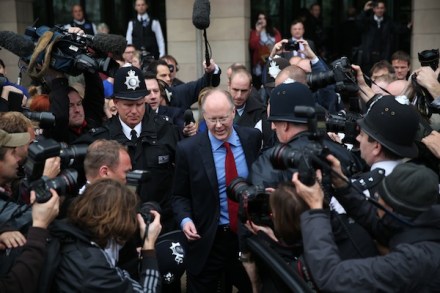
After his Today Programme interview this morning, it seemed almost inevitable that George Entwistle would have to resign as director general of the BBC and this evening, in a dignified statement, he has. I suspect that Entwistle’s won’t be the last resignation before this saga ends. Chris Patten, the chairman of the BBC Trust, appears on the Andrew Marr show this morning and he will have to show grip. The time is fast approaching when Patten will have to pick between his BBC job and his various other roles, including being Chancellor of Oxford.

Now that George Entwistle has quit, the BBC needs an outsider

From our UK edition

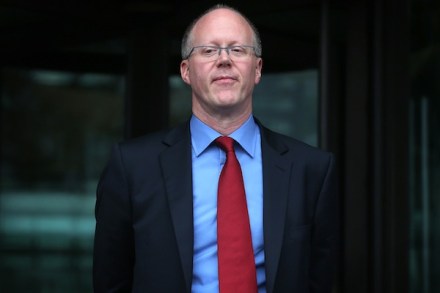
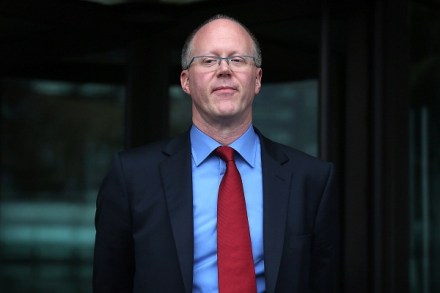
After just 54 days in the job, George Entwistle has quit as BBC director general. In a career-ending interview with John Humphrys this morning, Entwistle admitted that he didn't know in advance about, or even watch, the Newsnight investigation which which led to Lord McAlpine being falsely named as a child abuser. Nor did he read Friday's newspapers which revealed the Newsnight claims were false. ("Do you not read papers?' asked Humphrys. "Do you not listen to the output?").

The end of the road for Newsnight?

From our UK edition

Oddly enough, re the latest Newsnight/BBC debacle, Esther Rantzen got it right. She was talking on Newsnight. She made the point that her old programme That’s Life regularly did investigative stuff, but that there was always a lawyer involved, all the way along, right from the off. Absolutely. I did the same thing at the Today programme – when both Andrew Gilligan and Angus Stickler were on my books and we did an investigative piece at least once a week. No question: the reporter would be told what he needed to get to stand the story up at the commissioning point. There would usually be a lawyer in then. Then we’d regroup half way through the piece and review what else was needed for the piece to stand up to scrutiny.

US election 2012: the broadcast election

From our UK edition

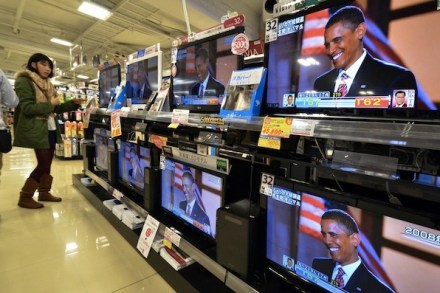
One product of the modern communications age is that we can all follow what US outlets and Twitter are saying while watching the BBC coverage’s of the US elections. This creates a whole host of challenges for the Beeb. Back in the day, few would have noticed that there was a gap between the US networks calling the key state of Ohio for Obama and the BBC catching up. But this time, it stuck out like a poor thumb. The other great challenge for any international broadcaster is the sheer quality of the coverage on US television. One can chuckle at NBC and their political editor having a ‘Command Centre’. But their understanding of the key swing counties in each state is unrivalled.

The politics of poppies

From our UK edition

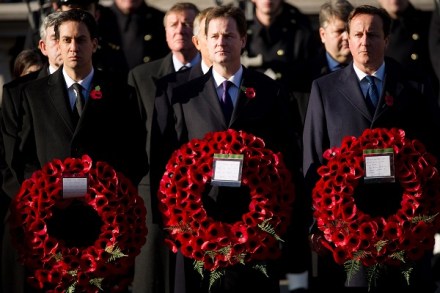
The politics of poppy-wearing shift slightly each year. The unofficial rule used to be that poppy-wearing began at the start of November. In recent years this has crept forward further and further into October, largely, I think, because of politicians and the BBC. The BBC lives in terror of someone appearing on one of its programmes without a poppy and thus sparking a round of ‘BBC presenter in poppy snub’ stories in the papers. If you appear on the BBC during this period you will find people on hand to pin a poppy on anyone not already sporting one. To my mind this slightly misses the charitable, not to mention voluntary, purpose of the exercise. But politicians have also fuelled this poppy mission-creep. Each year they begin to wear their poppies earlier.

Chasing Jimmy Savile’s chums

From our UK edition

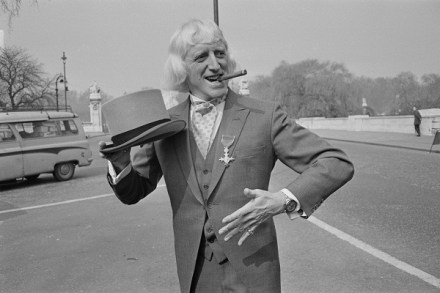
And still it goes on and on. Apparently Jimmy Savile was banned from Children In Need because it was thought he was a bit creepy. Did he try to touch up Pudsey, or something? I think we are getting ourselves into a self-righteous frenzy here. Savile was unspeakably ghastly. He was unspeakably ghastly before these latest allegations and he’s – probably, almost certainly – even worse now. But are we really going to exact revenge on pop stars who may have fondled a fourteen year old girl forty years ago? Were there any of those glam rock stars – Gilbert O’Sullivan excepted – who didn’t fondle fourteen year old girls? How many of the girls, at the time, were discomfited by this?

The View from 22 — BBC in crisis, a Major problem for the Conservatives and Lost in Europe

From our UK edition

What is going to happen next with the BBC Jimmy Salvile saga? In this week’s magazine cover, Rod Liddle blames institutional problems within the organisation and predicts there will be plenty of buck-passing to come. Fraser Nelson says in this week’s View from 22 podcast that although he sympathises with the decision the BBC took, he believes there are more scalps to come: ‘As an editor myself, I know that if you are to come up with a story that makes an explosive allegation it has got to be absolutely nuclear-proof nowadays and if it’s not, if there is a slightest bit of chink in your armour, it could sink the whole publication or programme. ‘…I think we are going to end up with a great long list of resignations — a domino chain.

The Beeb’s self-inflicted wound

From our UK edition

And so the Savile stuff rumbles on with George Entwistle’s singularly unimpressive performance before the House of Commons Culture, Media and Sport Committee. It still seems to me that the bosses are being evasive over the issue of pressure applied, or otherwise, to the Newsnight editor Peter Rippon. Someone is hiding something, I think. But this whole catastrophe need not have occurred. There is no great crime in a senior manager quizzing a programme editor about a controversial investigation. There is no crime at all in a programme editor deciding not to run a story because he has doubts about it.

George Entwistle’s quietly savage attack on Newsnight editor Peter Rippon

From our UK edition

George Entwistle seemed rather mild-mannered at his first appearance before the Culture, Media and Sport select committee this morning. But after listening to him for two hours, MPs were starting to suggest that the BBC director general was making a quietly savage attack on one of his juniors. It will be astonishing if, after Entwistle's evidence, Newsnight editor Peter Rippon is not called before the committee. Entwistle told the committee that he had asked Rippon to 'step aside because of my disappointment at the inaccuracies in the blog… he hasn't stepped aside to prepare or the Pollard review, he's stepped aside because of it'.

Five questions for George Entwistle about Jimmy Savile

From our UK edition

George Entwistle is appearing before a select committee for the first time this morning. It won't be a gentle start for the new BBC Director General, though. He is giving evidence to the Culture, Media and Sport committee from 10.30 on the Jimmy Savile scandal, and will face a slew of awkward questions from MPs. Here are five of the most pressing: 1. Why did he hold such a brief conversation about the implications of the Newsnight investigation for the rest of the BBC's output? Entwistle held a conversation with Helen Boaden last December in which she warned that the report would impact on the BBC's tribute to Savile. He will be grilled on the content of that conversation: particularly whether he asked for more details on the allegations themselves.

The BBC regains its honour

From our UK edition

I hope that the entire editorial staffs of the Times, Sunday Times, Sun, Mail, Mail on Sunday, Telegraph and Sunday Telegraph (oh and the Express newspapers if they are still around) along with Alastair Campbell, the Parliamentary Conservative Party and Rupert Murdoch are going to be gracious enough to praise the BBC today. How many other institutions would allow junior staff to carry out a forensic examination of an internal scandal and broadcast it to the world? How many others would allow employees to expose a manager who made a self-serving decision? If you think you could do what Panorama did last night in any other media organisation, ask yourself, where were the journalists in the press warning their employers of the dangers of phone hacking?

The BBC can’t fix it like this

From our UK edition

The BBC management cannot have it both ways. They cannot simultaneously insist that the decision to drop the Newsnight investigation into Jimmy Savile was made by the editor of the programme, Peter Rippon, and Peter Rippon alone without pressure from above – and then announce that Peter Rippon’s blog which explained why he had made that decision was inaccurate and misleading. This is the first point upon which the DG, George Entwistle, should be questioned when he comes before the Commons Culture, Media and Sport committee. The second is his puzzling lack of interest when told Newsnight would be investigating Savile – at a time when his Christmas schedules were chock full of Savile tribute programmes.

Preposterously, the BBC has taken my advice

From our UK edition

I may sue for plagiarism. In my failed bid to become Director General of the BBC I suggested that the corporation should henceforth cover no news stories, nor commission any drama or comedy and instead simply occupy itself by debating, in public, its manifest incompetencies. I thought that this would be an entertaining and cheap way of filling up air time. Annoyingly, for me, this is exactly what the BBC is now doing. Friday’s edition of Newsnight debated at great length the culpability of the editor of Newsnight in scrapping a documentary about Jimmy Savile.

Iraq and the BBC revisited

From our UK edition

Just finished reading a book by Kevin Marsh, the editor of the Today programme at the time of the whole Gilligan-Campbell-Kelly business which saw the director general of the BBC kicked out of the corporation. It hasn’t aroused very much interest, largely because it contains no new information which would either exonerate the programme or the government. And because stylistically it is not an untrammelled pleasure. I think Stephen Robinson, in the Sunday Times, got it about right: “It takes a particular type of journalistic incompetence to cede the moral high ground on the Iraq war to Alastair Campbell and Tony Blair, but this book…….