Bbc

Greg Barker: BBC gives too much coverage to climate change sceptics

From our UK edition

If you asked most people about the BBC, few people would describe it as a hotbed of scepticism about global warming. But the coverage that the BBC gives to those who have doubts about the orthodoxy on the subject is too much for Barker. He, as the Press Association reports, told the Science and Technology Committee, ‘In the case of the BBC they have a very clear statutory responsibility. It's in the original charter to inform. I think we need the BBC to look very hard, particularly at whether or not they are getting the balance right. I don't think they are.’ Barker did say, ‘I'm not trying to ban all dissenting voices but we are doing the public a disservice by treating them as equal, which is not the case.

Tony Hall hosts BBC version of Friends Reunited

From our UK edition

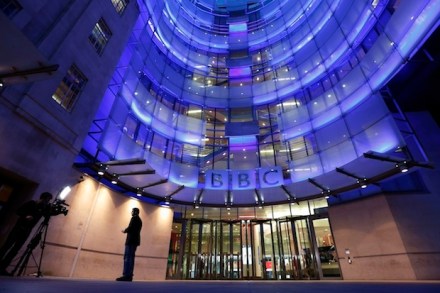
Mr Steerpike was sitting in the auditorium at New Broadcasting House, waiting for Tony Hall to unveil his plans for the BBC. Lord Hall was expected to announce further cuts to the corporation's vast bureaucracy, as part of an efficiency drive necessitated by the decision to freeze the licence fee until 2017. Mr S was, therefore, amused to overhear the following conversation between two BBC employees as they took their seats: ‘Hello Rodney.’ ‘Hello Charles.’ ‘Haven’t seen you for twenty years!’ ‘No. What have you been up to?’ Mr S wondered how many other members of the corporation were taking part in this version of Friends Reunited.

Tony Hall’s digital vision for the future of the BBC

From our UK edition

listen to ‘Tony Hall on the future of the BBC’ on Audioboo Tony Hall, the Director General of the BBC, has just laid out his vision for the next 10 years of the BBC. He opened humbly, arguing that the culture of the BBC had to change in the wake of the Savile and pay-off scandals. The corporation had to serve the licence fee payer to justify the extraordinary privilege of public funding. The BBC must remember that it is publicly owned, he said. Warming to his theme, Hall said that managers had to remember that theirs was a 'creative job, an enabling job and an inspiring job', and that the corporation must celebrate creativity.

Alastair Campbell, moral arbiter? Pull the other one.

From our UK edition

Has there been a more emetic sight than Alastair Campbell touring the radio and TV studios lecturing the world on moral probity? I can’t think of one, offhand. The BBC, an institution he once tried to destroy, if you recall, is more than happy to shove him on air whensoever he feels like it. I assume that this is because, like Campbell, they are intent on turning the Daily Mail-Miliband farrago into a post-Leveson issue about the nature of journalism. As some of us said at the time of Leveson, the metro-liberal left does not really give a toss about intrusion into the lives of drug-addled slebs. It wishes instead to stop newspapers saying stuff with which they fervently disagree.

Vultures are circling Britain’s free press. Again.

From our UK edition

My first job in journalism was with the Glasgow Herald, which then had a bar built in to the complex. I was taken under the wing of the legendary James Freeman, who taught me the ways of the jungle. 'You see that journalists always drink in groups of three?' he told me in the bar one lunchtime. 'That’s so, when one goes to the toilet, the other two can slag him off.' And it’s true: my profession is notoriously bitchy. I was reminded of this when switching on the BBC news to find, yet again, that the transgressions of the Daily Mail and its spat with Ed Miliband is deemed the most important story of the day. I look at this in my Daily Telegraph column today. The intro to Rod Liddle’s column in the magazine this week will strike a chord with many commentators on Fleet St.

Autumn shake-up in Radios 2 and 3 scheduling

From our UK edition

This time round in the autumn shake-up of the schedules it’s Radios 2 and 3 who are on the frontline of change. They have had to face ‘tough decisions’ and to address ‘the financial challenges due to the licence-fee freeze’. Radio 3 has lost most of its ‘live’ Saturday-night transmissions from the Metropolitan Opera in New York, on the grounds that they cost too much to set up. It’s also given the chop to one of my favourite weekend programmes, World Routes, because of the ‘high costs’ of sending its presenter Dr Lucy Duran to far-flung places round the globe in search of unusual music. But this was never travel for the sake of it.

‘Atlantis’ shows our civilisation is doomed

From our UK edition

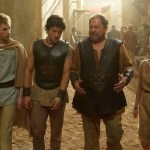
This week saw the final episode of possibly the greatest television series ever. Breaking Bad wasn’t made by the BBC, of course. Nor, so far as I know, did it make any attempt to buy the broadcast rights. That’s because, obviously, the Beeb has far more important, special things to spend your compulsory licence fee on, in keeping with the Reithian tradition. Stuff like Atlantis (BBC1, Saturday). Atlantis was designed to fill the Saturday evening family entertainment slot that has previously been occupied by Merlin. And I do mean ‘designed’. It’s so crudely manufactured it makes One Direction look like Led Zeppelin.

Rod Liddle: Ever since I criticised a leftist icon, the Beeb hasn’t stopped calling me

From our UK edition

Ring, ring goes the telephone every minute God sends. Sometimes I pick it up and say hello, sometimes I don’t. I know who is calling, anyway. It is one or another media representative from the bien-pensant absolutist liberal left, and they are all in a dither about a man called Ralph Miliband, of whom they had probably never heard until a few hours ago, and whom they have most certainly not read. Their sense of excitement, these youngish callers from a multiplicity of BBC news stations and, of course, Channel 4 News, is palpable; it fizzes and crackles down the line, their outrage and their delight at possibly finding someone who might add to their outrage, perhaps cube their outrage. Unless it’s just the jackdaws hacking away at the telephone lines again. It could be that.

Samuel Huntington’s ‘Clash of Civilizations’ is still upsetting the complacent

From our UK edition

It is twenty years since Samuel Huntington’s essay ‘The Clash of Civilizations?’ was first published in Foreign Affairs. On Monday night I took part in a discussion on BBC Radio 3’s Nightwaves about the article (and the resulting book) which turned oddly nasty. I have always been a qualified admirer of Huntington’s most famous work (‘qualified’ because like most people who have read the book I admire its range and grasp while disagreeing with certain of its conclusions). But broadly admire it or not, it appears to be a difficult work to discuss. This is largely because it suffers the double-bind of being misunderstood by people who have not read it.

Robbie Fowler’s simile was bad, not sexist

From our UK edition

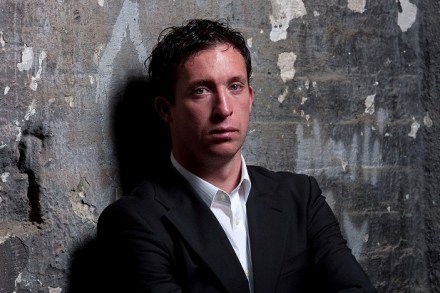
Viewers of Saturday’s edition of Final Score on BBC 1 would have seen former Liverpool and England striker Robbie Fowler apologising (doubtless after a prompt from the voice in his ear-piece) for using the expression ‘like a couple of girls’. He was referring to Jan Vertonghen and Fernando Torres’s silly tussle during the 1-1 draw between Tottenham Hotspur and Chelsea, in which Torres was harshly sent off. Mr Steerpike is all for war on clichéd simile (and for telling preening footballers where to get off), but ‘like a couple of girls’ is not sexist. Fowler was picking at the pettiness of Vertonghen and Torres; he was not damning the massed ranks of the sisterhood or women’s football.

Spectator Play: The highs and the lows of what’s going on in arts this week | 27 September 2013

From our UK edition

When you hear the words ‘English art’, there are very few people who would immediately think of embroidery. As Dan Jones said when he was asked if he would like to present a programme about ‘the golden age’ of English embroidery, ‘Embroidery? What, like sewing?’ But accept the offer he did, and found that there’s a lot more to embroidery, as an art form, than ‘just’ sewing. In this week’s magazine he writes about everything he learnt about ‘one of English history’s most underappreciated art forms’. Here's a clip from one of the previous 'Fabric of Britain' programmes - this one on knitting. Downton Abbey has returned to our screens for its fourth season. Is that a reason to crack open a bottle?

English embroidery: the forgotten wonder of the medieval world

From our UK edition

Think of an art at which the English have excelled and I doubt you would come up with the word ‘embroidery’. As I muttered when my agent asked whether I should like to make a film for BBC4 about the golden age of this forgotten but brilliant native art form: ‘Embroidery? What, like sewing?’ But no, not like sewing. Or, actually, only a little bit. During the ‘high’ Middle Ages, English embroidery was one of the most desired and costly art forms in Europe. It was known as opus anglicanum or ‘the work of the English’ — a generic name that instantly conjured notions of craftsmanship, beauty, luxury and expense in the minds of those who heard it.

Bet on Royal Mail, not Twitter

From our UK edition

Royal Mail delivers to 29 million UK addresses; last year it generated £9 billion of revenues, of which £324 million remained as profit before tax; and it is likely to be valued at £3 billion in its privatisation share sale, indicating a price-earnings ratio modestly below ten. Twitter — the microblogging phenomenon beloved of self-admiring celebs, but now so ubiquitous as a mode of communication that it is compulsory for British ambassadors abroad — has 200 million users and is expected to generate revenues of just £365 million this year, maybe twice that next year. Twitter says it’s profitable but has so far kept its accounts private, and is nevertheless likely to be valued at £6 billion-plus in its forthcoming flotation.

James Delingpole: As a Brummie, I am aggrieved with Peaky Blinders

From our UK edition

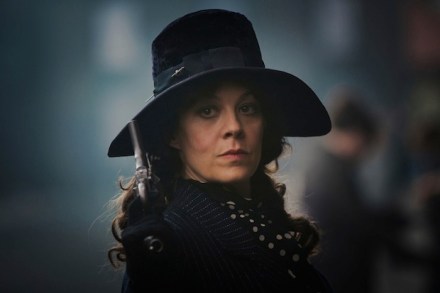
You wait a whole lifetime for a lavishly shot, starrily cast, mega-budget gangster drama set in Birmingham to come along. Then when it does, it’s absolute rubbish. Well, I’m sorry but it is and as a Brummie — near enough: I grew up in a village called Alvechurch, just outside, and I come from a long line of Midlands industrialists — I feel particularly aggrieved by the entirely unjustified acclaim being heaped on the dismal Peaky Blinders (Thursday, BBC2). Let’s start with the accents. Some sound like a mélange of Liverpool and generic northern; others sound Irish, even when spoken by characters who aren’t supposed to be Irish. The series is set in Small Heath in 1919. Times have changed a bit since then, I’m sure, but Brummagem accents?

Spectator Play: The highs and the lows of what’s going on in arts this week | 13 September 2013

From our UK edition

As the new artistic director of the Royal Shakespeare Company, Gregory Doran might be expected to lie low as he settles into his new role. But on the contrary – Doran is full of ideas about how to develop the company, as Robert Gore-Langton finds when he interviews him in this week’s Spectator. As well as a plan ‘to stage every play Shakespeare wrote over the next six years’ – that is between now and 2018 – he has also banned Shakespeare from Stratford’s Swan theatre, deciding instead to put on plays ‘by his contemporaries’. Top actors and top ideas are all part of his plan – which you can read more of in the full interview, here. How do you know when you're a real fan of a band?

Why the BBC couldn’t see any serious problem with its huge pay-offs

From our UK edition

‘Corruption’ is a subtle word, because it describes a process rather than an event. It does not merely mean bad behaviour: it means behaviour that becomes rotten out of something which was once good. That is why it often afflicts high-minded organisations more than ordinary businesses. People who think they are collectively moral are more self-deceiving than the average market trader. Hence the current embarrassments of the BBC about huge pay-offs.

Sketch: Dancing on the head of a BBC pin

From our UK edition

The BBC’s managerial superstars, past and present, arrived at the Public Accounts Select committee yesterday afternoon to answer questions about executive pay. Like a frightened flock of geese they all began waddling in the same direction. Away from responsibility. Up first was Mark Thompson. The former D-G had jetted in from New York and his aim was to exonerate himself with a bulldozer strategy. ‘I paid senior staff fortunes to remove them swiftly. Delay would have cost more. I saved the BBC millions. I was brilliant. No one can touch me. Beat that.’ The Thompson tank was very effective and flattened all questioners. The issue then turned to the BBC Trust’s ability to hold the executive to account.

The BBC Trust is a classic New Labour horlicks

From our UK edition

Nobody is ever 'invited' to appear before Margaret Hodge and the Commons public accounts committee. They are always 'hauled' before her. Thus it was with a whole phalanx of BBC executives, past and present, this afternoon. There are really two things which came out of the appearance of Lord (Chris) Patten, Mark Thompson et al. The first is the obvious reminder that the BBC has become a strangely upside-down organisation of late. Rich in senior management, it has spent recent years farming out major portions of news and other programme-making, apparently so that it could concentrate on the really important task of management. Of course the BBC is not the only public body to have suffered this upside-down-itis.

Spectator Play: The highs and the lows of what’s going on in arts this week | 23 August 2013

From our UK edition

For many people, stories and story-telling formed the basis of their childhood. But there are others whose childhood is devoid of books, and it’s these children that Oxford’s new Story Museum aims to help. As Robert Gore-Langton puts it, ‘beyond [Oxford’s] dreaming spires is an urban hellhole of burning cars, despair and unemployment’, and, he points out, ‘it is ranked number 32 in Crap Towns: The 50 Worst Places to Live in the UK.’ In his piece, he talks to Anne Fine, Amanda Mitichison, Terence Blacker and Keith Crossley-Holland on the joy - and importance - of reading aloud. Below is just one of The Story Museum’s attempts to get children reading.

Is David Starkey God?

From our UK edition

‘Somerset. Winter 877,’ said the subtitles below an arty, BBC-nature-doc style close-up of a coot paddling amid the reeds on the eerie black waters of the Somerset levels. ‘Yes!’ I went, mentally punching the air. ‘I’m in safe hands here, I can tell. Bet they’re going to get all the costume details totally right. There might even be battle scenes. Not crap three-men-with-shields-filmed-over-and-over-again-from-different-angles-with-a-shaky-camera like in the bad old days. But totally convincing CGI-enhanced ones. The Battle of Ashdown, done even more realistically than it was in 871. Yay!’ Then it got even better.