Bbc

The Spectator’s Notes: Quangos – a world of perfect hypocrisy

From our UK edition

The accusation that the Tories have been installing their people in public appointments should evoke only a hollow laugh. They have been comatose on the subject. One of the greatest skills of New Labour was putting its allies in positions of control across the public sector. A great many are still there, and yet the Tories wonder why their efforts at reform are frustrated. Maggie Atkinson, for example, was imposed by Ed Balls, when in office, as Children’s Commissioner, against the recommendation of the relevant selection committee. She lingers on in her useless post. Lord Smith, the former Labour cabinet minister who has been flooding the Somerset levels, is still at the Environment Agency.

Radio 3 needs to stay relevant, and world music is just the ticket

From our UK edition

When my colleague Charles Moore first began accusing Radio 3 of becoming ‘babyish’, and talking down to us as if we’re too ignorant to understand anything complicated, I had to agree. The constant twittering between items, the gimmicky brainteasers and Classical Top Ten are irritating. Those emails and texts from clever-clogs listeners determined to show off what they know, or have performed themselves, or seen on stage are as annoying and pointless as Christmas round-robin letters. But these are all merely sideshows, not the main performance. The real test for the station is whether our musical palates are still being tested, educated, stretched.

Jeremy Paxman’s Great War is great. But is 2,500 hours of WW1 programming too much?

From our UK edition

Why are we so fascinated by the first world war? As its 100th anniversary approaches, we’re already mired in arguments about whether for Britain it was a ‘just war’ or a ‘pointless sacrifice’ of millions of lives. I don’t see why it has to be one or the other. Surely this huge and horrific event held elements of both, and more. If ever there was a time when glory ran alongside absurdity, when courage marched lockstep with catastrophe, this was it. We’re looking back at the Great War as if it were a mental exercise — should it or shouldn’t it have happened? But maybe our fascination is emotional as well as intellectual.

Spectator letters: Aid, Arabs and how to spot a gentleman

From our UK edition

The battle over aid Sir: Why Nations Fail, the book rightly lauded in The Spectator (‘Why aid fails’, 25 January), is one of the inspirations for many of the changes this government has made in international development policy. Those changes can best be described as driving value for money through the system, tackling conflict and instability, and building prosperity. Bringing together defence, diplomacy and development — not least through the mechanism of the National Security Council — has made a significant difference to the success of British development policy. Buried in the article is the sentence: ‘We do not argue for its [the aid budget’s] reduction.

What medieval farmers knew – and the Environment Agency doesn’t

From our UK edition

Our neighbour Philip Merricks is a farmer on Romney Marsh, 90 per cent of whose land is below sea level. The marsh would not exist without the medieval ingenuity which ‘inned’ it from the sea. Phil is therefore well placed to understand the interests of farmers on the Somerset Levels who have now been inundated for a month. But he is also a conservationist, owning and running two bird reserves, so is pro-farming and pro-wildlife, which too few are. Last week, he went to the Somerset Levels as chairman of the Hawk and Owl Trust, which has a reserve down there. He tells me that while the usual winter waterlogging is good for wildlife, what is happening in Somerset now is as terrible for wildlife as it is for farmers — too deep, too widespread, too prolonged.

A solution to the BBC problem – break it in two

From our UK edition

Monday’s episode of The Unbelievable Truth, in case you missed it, featured comedians Marcus Brigstocke and Rufus Hound. I did miss it, partly because I read about how Hound thinks David Cameron wants to kill your children, and I just couldn’t face the jokes about the Daily Mail and ‘hoards of Romanians!’ Even Charlie Brooker’s Weekly Wipe has become unbearable. I gave up half-way through the last two episodes I attempted, one of which was entirely about how stupid and neanderthal Ukip are and the other which contained a slot just as big explaining how anyone hostile to further migration from eastern European was simply an idiot and that’s it.

The Spectator’s Notes: French presidents used to have a touch of the monarch. Not any more

From our UK edition

When I interviewed Valéry Giscard d’Estaing, the former president of France, for my biography of Margaret Thatcher, I asked him why, when she lunched with him at the Elysée Palace for the first time, he had been served before her: she had been offended. M. Giscard explained that no slight had been intended. It was a matter of protocol — the president is the head of state, the British prime minister only the head of government. ‘You must remember,’ he added, ‘that the president is in the line of sovereigns.’ I recalled these words when reading about President Hollande and his amorous adventures in his helmet. To the British, it is a puzzle that French presidents are protected from the media scrutiny we inflict on our own leaders.

Gendercide, abortion and hypocrisy of the pro-choicers

From our UK edition

There was a lovely little ultrasound picture of a foetus to illustrate the Independent’s splash today about the incidence of sex-selective abortions in Britain. According to the paper’s analysis of ONS statistics, the incidence of second daughters among immigrants from Pakistan and Bangladesh and possibly those from other countries such as India isn’t quite the same as in the population at large. Either immigrants from these groups are, more than the rest of us, having child after child until they have a boy or they are simply aborting second pregnancies where the foetus is a girl in order to ensure their next child is a boy: most probably, according to a statistician used by the Indie, the latter. The cull of pre-natal girls could have cost between 1,400 and 4,700 lives.

Overrated Strauss vs underrated Gluck

From our UK edition

This is the first of my more-or-less monthly columns, the idea of which is to report on operatic events other than those that take place at the two major London venues, with occasional trips to those areas (i.e., everywhere other than London) where the annual government grant for the arts is £4.80 per head, while in London it is £69.00. This fact was widely reported a few weeks ago, but while I thought for an hour or two that it might lead to a revolution, there was no widespread articulate reaction to it of any kind, nor, so far as I know, any indication that this gross inequity would be addressed. So if conspicuous consumption is what you’re after, you’ll know where you have to be. That’s not my main topic for this particular column, however.

Mugabe envy in Scotland

From our UK edition

Who owns Scotland? The people who most commonly ask this question believe that the land has been wrested from ordinary Scots by evil lairds and rich foreigners (by which they chiefly mean the English). Now the Scottish government is bringing out a report on how to correct this alleged injustice. It may recommend extending community ‘right to buy’ powers and allowing tenants to buy their holdings even if the owners do not want to sell.  This would have the unintended effect of ending all new tenancies. But the SNP’s misunderstanding of the situation is even more radical than that. It believes that big Scottish landowners are rich because they own the land. For a long time now, it has been the other way round. They own the land because they are rich.

The BBC isn’t Left-wing as such, it’s elitist

From our UK edition

The BBC made a ‘terrible mistake’ in not reflecting public concern about immigration, Nick Robinson has said. This is the latest case of BBC self-flagellation. (Now I think about it, a sort of Maoist-themed programme in which Beeb executives denounced themselves would make great TV.) BBC bias is a subject I know a bit about, having written a pamphlet on it last year. I thought that, while the BBC is a much-loved institution, it must carry at least some of the blame for the mistakes most people feel were made over immigration under New Labour.

Fisking George Osborne’s ‘hard truths’ speech

From our UK edition

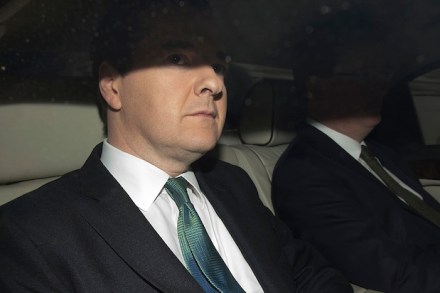
Today, George Osborne used a speech to administer what he called ‘hard truths’ about the economy. But in some cases, the truth was even harder than he let on. Here is a Fisk of his speech... 1. Size matters — ‘Government is going to have to be permanently smaller – and so too is the welfare system.’  This phrase — 'permanently smaller' — is designed to appeal to Conservatives. But in isolation, it's pretty meaningless: smaller than what? The Brown peak? The below graph tells the story. The size of the British government (in red) used to be around average for a developed country (in blue).

The Pollard penny drops for Lord Patten

From our UK edition

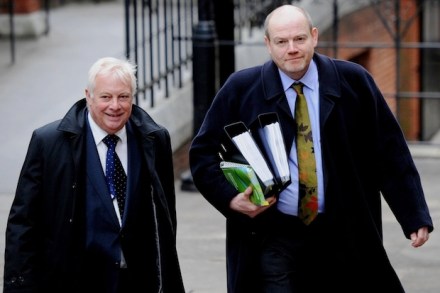
When the Pollard Report into the BBC Jimmy Savile abuse affair was published in December 2012, BBC Trust Chairman Lord Patten confidently told a press conference: 'As far as we’re concerned the report is an excellent account of what happened. We’re totally in support of the recommendations, and that as far as I am concerned is that.'  But that has not been that. Readers will recall that Helen Boaden’s testimony, relating to a conversation that she had with Mark Thompson about the Newsnight investigation into Jimmy Savile, was omitted from the report. It should be noted that Mr Thompson has ‘slightly different recollections’ of this conversation than does Ms.

Just imagine what BBC schedules might look like in Christmas Future

From our UK edition

Is it time to scrap the licence fee? That’s a question we’re going to hear more and more about in the next couple of years. Why should the BBC retain its archaic monopoly over the airwaves? Why not abolish the royal charter that grants the BBC the right to collect the fee (worth £3.6 billion a year) when it comes up for renewal in 2017? A change is long overdue, throwing open the broadcasting market, giving the independent production companies more opportunities to succeed and enabling the new digital online stations to expand, build audiences, create more original audio experiences. Or is it? Just imagine what would happen to radio in the UK if the BBC could no longer guarantee its funding.

Jeremy Clarkson brings Yuletide joy to the Delingpole household

From our UK edition

So I’m looking at the seasonal TV schedules trying to find something — anything — to watch. Britain and the Sea? Probably very well done, but David Dimbleby is such a dangerously feline, OE-manqué, Flashmanesque, living-embodiment-of-the-BBC closet pinko that reviewing it would feel wrong, somehow, like chipping into a fund to buy Chris Huhne an eighth home. The Doctor Who Christmas Special? But it always makes me want to kill myself. I hate the idea that a Dalek garlanded in tinsel might burst into the Cratchit household with a fat goose dangling from its exterminator gun while the White Witch’s frozen heart melts and all the crippled children are released from the snowy mountain — or whatever mawkish crap they’ve got planned for us this year.

Jimmy Carter talks sense about the late Nelson Mandela

From our UK edition

Rod Liddle’s observation about the death of Nelson Mandela, cut off, alas, at the age of 95, hardly needs supplementing but I was struck by one aspect of the blanket coverage, viz, its quasi-religious character. The Mirror, the day after the sad event, observed that Mr Mandela was as near as we get in this fallen world to a saint. And this morning, the Today programme brought the thing to its logical conclusion when one presenter, Justin Webb posed the question (1.15): given the moral example of Nelson Mandela, 'why is the world not a better place?' So it was over for an answer to former US president Jimmy Carter, a member of a group known as the Elders, who travel the world to spread the Mandela message. This was the question: 'Some people have compared Nelson Mandela with Jesus.

Nelson Mandela dies, aged 95

From our UK edition

Look; I’m sorry Nelson Mandela is dead. It happens quite often to people in their 90s who have been very ill, even famous people, but I’m sure that doesn’t lessen the sadness for many of us. I never met the man but, on balance, I came to the conclusion that he was a force for good rather than ill. I think I came to that rather banal and broad brush conclusion twenty years ago, or maybe fifteen. So, I’m sorry he’s dead, I wish it were otherwise. But for Christ’s sake BBC, give it a bloody break for five minutes, will you? It’s as if the poor bugger now has to bear your entire self-flagellating white post-colonial bien pensant guilt; look! Famous nice black man dies! Let’s re-run the entire history of South Africa.

James Harding’s right: the BBC must do some ‘accountability journalism’, but on the Savile scandal report

From our UK edition

Director of BBC News James Harding made a fascinating speech on Wednesday, setting out his mission statement for the Corporation's newsroom: ‘Let’s start with holding people to account. In the offices of our local radio stations and regional TV operations – the places where the BBC does so much of its best work – we should play to that particular strength: accountability journalism.’ Mr S lives and breathes 'accountability journalism'; it’s his eau-de-vie. But Harding seems to have a different understanding of the term than your humble correspondent.