Bbc

BBC vs newspapers – who wields the power?

From our UK edition

David Yelland, a former Sun editor turned a PR director, is today giving a lecture to Hacked Off’s parent group lamenting what he sees as the absence of proper press regulation. He was invited on the Today programme to talk about it, and they kindly invited me on afterwards.

Mishal Husain’s diary: Sachin, women secret agents, shipbuilding .. and telling the time.

From our UK edition

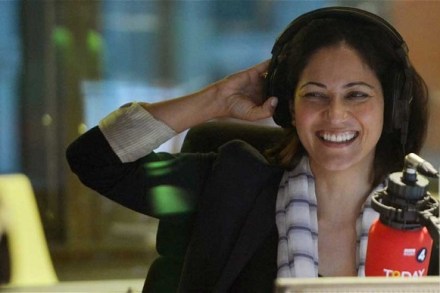
I’ve worked for the BBC for years and have been listening to the Today programme all my adult life, but joining it as a presenter feels like exploring a new frontier. Being on top of your brief is one thing; the mechanics of a three-hour live radio programme quite another. Take the junctions leading up to the ‘pips’ at the start of each hour. From television, I’ve been accustomed to directors counting presenters down to these junctions while they ad-lib on air — the idea being to stop talking as the voice in your ear says ‘zero’. But radio presenters are pretty much on their own, watching the clock and navigating to a precise target of five seconds to the hour. To my presenter colleagues, all this comes naturally.

The Paul Flowers scandal exposes the rotten heart of the Labour movement

From our UK edition

There has naturally been plenty of unfavorable comment on how the Revd Paul Flowers, the ‘crystal Methodist’, was allowed by the Financial Services Authority to become chairman of the Co-op Bank. But the story does not reflect very well on the media either. If you look at Robert Peston’s BBC blog on the subject, for instance, there is a lot of ‘I am told’ and ‘according to the Manchester Evening News’. Is there no one in the BBC’s enormous staff who could have done a bit of work years ago on the Revd Mr Flowers?

Charles Moore: State broadcasting allows fascism — and we’re paying the fees for it

From our UK edition

There has not been much good news out of Greece since the eurozone powers decided to crush the country, but it is heartening that the state broadcasting company, ERT, has been closed down. All such broadcasting systems, including the BBC, are attempts to impose certain political and cultural norms upon the population, and force them to pay for them. ‘This is how fascism works,’ protested one ERT ex-employee, as the riot police evicted her colleagues — who were trying to keep the service running — ‘slyly and in darkness’. She has got it back to front. Fascism (or communism) can prevail only if a state broadcasting system exists.

James Delingpole: Is the fight against environmentalism the new Cold War?

From our UK edition

Gosh it isn’t half irksome when someone who went to the same school as you but is considerably younger than you ends up doing dramatically better than you. But hats off to Dominic Sandbrook: his new series Cold War Britain (BBC2, Tuesday) is an absolute delight. Sandbrook has that rare gift of making things you thought you knew pretty well already seem startling and fresh. Take Churchill’s Fulton, Missouri speech. ‘Ah,’ I said expertly to the Fawn, a good five minutes before the programme reproduced the famous recording, ‘From Stettin in the Baltic...’ But what Sandbrook does is both put it in context and give it a human dimension that brings the whole business alive.

The Tories should pledge to cut the BBC’s licence fee

From our UK edition

There has not been much good news out of Greece since the eurozone powers decided to crush the country, but it is heartening that the state broadcasting company, ERT, has been closed down. All such broadcasting systems, including the BBC, are attempts to impose certain political and cultural norms upon the population, and force them to pay for them. ‘This is how fascism works,’ protested one ERT ex-employee, as the riot police evicted her colleagues — who were trying to keep the service running — ‘slyly and in darkness’. She has got it back to front. Fascism (or communism) can prevail only if a state broadcasting system exists.

Should state education be abolished?

From our UK edition

These days I find myself so drifting away from the bounds of acceptable opinion that I don’t even shout at Radio 4 for being biased, because I don’t even understand the basis of what the arguments are about. Take this morning’s schools feature (occasioned by Sir John Major's comments about the 'truly shocking' dominance of a privately educated elite in public life), in which Harry Mount argued in favour and Owen Jones against the motion that grammar schools lead to more social mobility than comprehensives.

Scandal ridden BBC admits camera trickery

From our UK edition

Our Parliamentarian of the Year awards continue to makes the news. I’m reliably informed that this item in Dominic Lawson’s Mail column is the result of a jolly exchange at last Thursday’s lunch: ‘There are two television programmes which I watch regularly: Newsnight and University Challenge — both presented by Jeremy Paxman. But which Jeremy Paxman? On Newsnight he wears a beard.  On University Challenge he is clean-shaven.  I am unsettled by the divergent appearances of the presenter in my life — though I know it is because the current series of University Challenge was filmed before he abandoned his razor.

John Cole: ‘An institution cherished by the viewing public’

From our UK edition

The BBC’s former political editor, John Cole, has died aged 85. As their political reporter during the Thatcher era, he covered many major stories concerning her, including the miners' strike and the Brighton bombing. We have dug up from the archive a review, by John Campbell, of Cole’s memoir, ‘As it seemed to me’, from April 1995.  John Cole's Ulster accent was a shock to metropolitan ears when he became the BBC's Political Editor in 1981. Scottish or Yorkshire voices were no problem, but there was unfamiliarity amounting almost to incongruity in hearing that particular accent discoursing on subjects wider than the tribal politics of Northern Ireland.

You lost Aled Jones and Catherine Bott, Radio Three — but all is forgiven

From our UK edition

It’s hard to stay cross with Radio 3 for long. Just when I thought the network had stretched my loyalty too far by not only allowing Aled Jones to decamp to Classic FM but also saying goodbye to the great Catherine Bott, I had a comeback conversion. I’ll explain how that happened later. First, we should bewail the loss of Bott, who made The Early Music Show her own, with her enthusiasm, her practised authority, her ability to convey insights without being ponderous. She drew us in to share her passion for music and composers we’d never even heard of, let alone felt any desire to hear.

Brave, non-denominational freedom fighters

From our UK edition

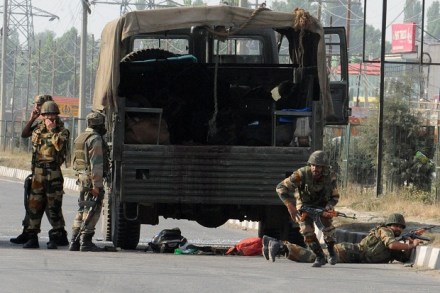
Those of you who wonder why the BBC is so politically correct, so craven in its expressions regarding, for example, Islamic terror, may find a partial answer here:  Stephen Whittle Director of Editorial Policy at the BBC Dear Stephen, We have received many complaints over the last 24 hours from British Muslims regarding the use of the phrase 'Islamic terrorists' by your news reporters in connection with the struggle for Kashmiri independence. We believe this phrase is totally inappropriate and adds nothing to the story and even distorts what is a long-standing struggle by the Kashmiri people to gain control of their own destiny. We have noticed that your news reports are also failing to adequately report the background to this conflict.

‘When Tommy met Mo’ revealed how far we have to travel before Islamism is uprooted

From our UK edition

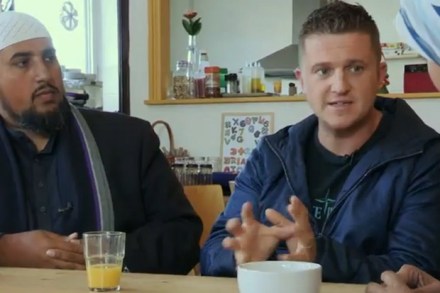
Last night the BBC screened a documentary called ‘When Tommy met Mo’. It was good television, challenging and thought-provoking in a way that public broadcasting ought to be, is often said to be, but too rarely is. I would urge you to watch it. The programme followed Tommy Robinson during the period in which he was stepping away from the organisation – the English Defence League (EDL) – which he founded. It showed Robinson travelling around the country with a Muslim ‘spokesman’ called Mohammed Ansar.

Didn’t the BBC know that Will Straw is a PPC before his dad told them?

From our UK edition

Former Foreign Secretary Jack Straw was on today’s Daily Politics, gushing with pride that his son Will is Labour’s prospective parliamentary candidate for the seat of Rossendale and Darwen in Lancashire. Yet it seems that this piece of dynastic info was news to Auntie. Will Straw was on the BBC News Channel this morning, discussing energy prices, and there was no mention of his being a PPC. The presenter simply said, ‘Will Straw is Associate Director of the centre-left think tank the Institute for Public Policy Research.’ Mr S would have forgiven the presenter had he not asked: ‘the Labour Party is talking about a freeze on energy prices for two years. Would you go along with that?

Kuenssberg, Pym, Yueh, Davis, Kennedy, Islam or Perry — who will be the BBC’s next business editor?

From our UK edition

My Any Other Business item this week on who’s in the frame to succeed Robert Peston as BBC business editor seems to have caused a bit of a stir. The strong rumour is that the appointment must go to a female candidate, and there’s clearly support for the delightful Laura Kuenssberg, who came to fame reporting the 2010 general election for the BBC but has been a lot less visible since she moved to ITV News as business editor in 2011. Does Pesto think she’s given him a run for his money these past couple of years? I suspect he’d say not, and if I were Laura’s career adviser I’d say play to your strength and get back to covering politics as soon as you can.

James Delingpole: Why can’t the BBC be impartial in the climate change debate? 

From our UK edition

 ‘Well, you’re arguing facts against opinions. OK, I mean, the fact that the amount of carbon dioxide in the air has rocketed up since the Industrial Revolution, and continues to rocket up, is a fact. Now, it’s so much a fact that even the climate change deniers look away from it and don’t deny it.’ — Professor Steve Jones, Feedback, BBC Radio 4, 18 October Have a look at that last sentence. It represents such a cherishably stupid, rude, fatuous, crabby, bigoted, ignorant, petulant, feeble, fallacious, dishonest and misleading argument that if it turned out the speaker in question was a professor of logic or philosophy you really might want to shoot yourself in despair. Can you see what the problem is? Let me explain.

A mysterious Patten emerging

From our UK edition

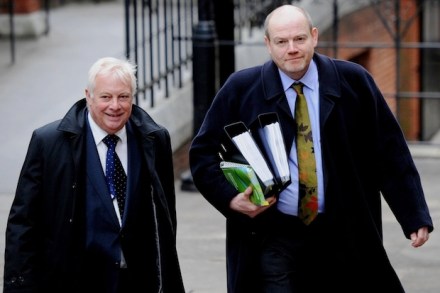
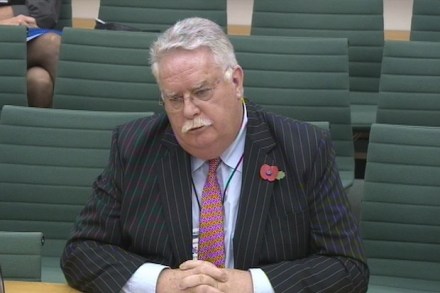
Lord Patten, the Chairman of the BBC Trust, rarely looks thrilled when being scrutinised, but he was particularly grumpy in front of the Culture Media and Sport Select Committee today. He said sullenly that Rob Wilson, the tenacious Tory MP, has written to the BBC some 64 times in the past year with Savile-related questions. Wilson is famed in Westminster for his Watsonian commitment to letter-writing and truth-seeking, so Patten's jibe fell flat. Meanwhile, Patten was unable to answer questions regarding the continuing mystery over why key evidence about ex-BBC Director General Mark Thompson was excluded from Nick Pollard's £3 million review of the BBC's handling of the Savile affair.

Radio is more representative of middle England than TV

From our UK edition

Greetings from the 2013 Radio Festival, in Salford. I’m here to take part in a debate about whether or not radio reflects the opinions and concerns of a broad enough tranche of the public. It certainly does a better job of this than TV; Radio Five (especially Nicky Campbell) and some of the local stations seem to reflect the views of middle England pretty well. Still, on Radio Four, you get the bien pensant toss rammed down your throat, almost without variation, which is a shame. There are problems enfranchising the silent majority, though: they tend to be silent. This is most obviously evident on BBC1 Question Time, for example, despite the pretty rigorous lengths they go to in order to find a sort of “representative” audience.

The BBC’s bias on abortion in Northern Ireland is breathtaking

From our UK edition

The establishment has a target in its sights; you can always tell from the tone of the Today programme. In this case, it's Northern Ireland’s abortion law. The occasion is the genuinely tragic case of Sarah Ewart, who travelled to Britain this week in order to abort a foetus with the most severe case of spina bifida, which meant it didn’t have a head. She didn’t want to carry the pregnancy to term and Northern Ireland’s abortion laws at present don’t allow for abortions where the foetus does not actually threaten the life of the mother. Not unlike the intention behind the 1967 abortion law here, then, which is meant only to sanction an abortion where the risk to the mental or physical health of the mother is greater than if the pregnancy continued.

Edward Snowden and the Guardian have started a debate…in the Kremlin and Beijing

From our UK edition

I was on the Daily Politics earlier, discussing the Guardian / Snowden leaks and debating against a representative from the campaign group 'Liberty'. The 'Liberty' representative kept saying what a lot of apologists for the actions of the Guardian (now including Vince Cable) have been saying - that Snowden and the Guardian should in some way be respected because they have started 'a debate'. They appear incapable of realising that while such leaks may be simply fascinating to them, they are infinitely more fascinating to the Kremlin, Chinese Communist Party, al-Shabaab et al. One other thought.

Sometimes Radio 3 tries to be too clever by half

From our UK edition

Why are we still listening to the radio in 2013, to an outdated technology that has hardly changed in manufacture or output since it first appeared in the 1920s? How come TV did not wipe it out, as CDs wiped out the cassette and DVDs put paid to video? My guess is that it’s because sound was more important to us when we first came into the world and our eyes were still too blurry to take in much of what was going on. Our ears, though, were straightaway alert. Listening now, making connections through sound, keeps us in touch with that first consciousness, that initial awareness. It takes us back to the womb, to the prenatal state of hearing our mother’s heartbeat long before we could actually see her.