Bbc

Newsnight of the long knives

From our UK edition

The controversy over the appointment of TUC economist Duncan Weldon as Newsnight's economics correspondent has taken a surreal twist. The former Labour Party adviser appears to have used his blog to deaden the impact of a Sunday paper exposé about his connections with the extreme right. Weldon admits to a 'brief and misguided flirtation with the ideas of the far right,' yet denied that he had joined any organisation. However, when he was a student he wrote an anonymous piece about this 'flirtation' for a student newspaper, under the headline 'I was a fascist'. All water under the bridge, he now says: 'None of this should be read as a plea for sympathy.

MH370 isn’t the only flight that’s still missing

From our UK edition

Plane vanished Some other planes, besides Flight MH370, which have disappeared without trace: — A Boeing 727 cargo plane that was being prepared for a flight in Luana, Angola, on 25 May 2003. It took off without permission and when last seen was headed south-westwards over the Atlantic. — An Antonov An-72 cargo plane with a crew of five on a flight from Port Bouet, Côte d’Ivoire to Rundu Airport, Namibia, on 22 December 1997. — A de Havilland Twin Otter operated by Merpati Nusantara Airlines with four crew and ten passengers on an internal Indonesian flight from Birma to Satartacik on 10 January 1995. Baby bills Does Britain have particularly expensive childcare?

First look at the BBC’s BBC mockumentary W1A

From our UK edition

So, OK, here's the thing with W1A: it's just as brilliant as 2012. So that's all good. By which I mean the two most memorable characters from the BBC's Olympics mockumentary - Siobhan Sharpe and Ian Fletcher, whose catchphrases bookended the paragraph above - are back in the BBC's BBC mockumentary. Last night's first episode saw Fletcher (Hugh Bonneville) appointed as the corporation's new Head of Values, reunited (against his will) with brand expert Sharpe (Jessica Hynes). Their first crisis was who should present Britain's Tastiest Village, after Clare Balding had to pull out due to filming commitments on ITV's How Big Is Your Dog?

Menuhin is the world’s toughest violin competition. Why is it packed with Asians, and no Brits?

From our UK edition

‘The truth is,’ says Gordon Back, lowering his voice, ‘that if the violin finalists from the BBC Young Musician of the Year were to enter the Menuhin Competition, they wouldn’t make it to the first round.’ Not through the first round, note, but to the first round: they wouldn’t be good enough to compete. Back is artistic director of the Menuhin, held every two years in a different country. In effect, it’s a search for the next Yehudi Menuhin, who recorded the Elgar concerto with the composer at the age of 15. Some critics think Menuhin never quite fulfilled that astonishing early promise — but I wouldn’t dare suggest that to Gordon Back.

So now we know – the BBC is more scared of offending Muslims than gay people

From our UK edition

Are there enough black and minority ethnic people on our television screens? The comedian Lenny Henry thinks not and has proposed targets to ensure better representation. Lenny means stuff like Midsomer Murders, I think, which famously avoided using people of colour for a very long time in its absurd but strangely comforting dramas. I think this was to cater for people like me who enjoy watching affluent white people bludgeon each other with candlesticks in the library. In fairness, even Midsomer Murders once had some gypsies play a pivotal role in one episode — they lived in a gaily painted horse-drawn caravan, and were scrupulously tidy and probably filed their income tax returns ahead of schedule. But in general, Lenny has a point, I suppose.

The BBC’s march to war

From our UK edition

Perhaps we are growing war-weary – weary, that is, of the gathering storm of World War One documentaries on the BBC. There have been so many, not just Max Hastings (for) and Niall Ferguson (against), but Jeremy Paxman keeping the home fires burning and the reheated I Was There interviews with veterans of the conflict whom age withered, unlike those who left their corpses to stink in the mud of Flanders. For all that, 37 Days, the corporation’s recent reconstruction of the events leading up to Germany’s invasion of Belgium, was utterly compelling, once again confirming the place of docudrama in the history schedule.

Owen Jones: ‘the BBC is stacked full of right wingers’

From our UK edition

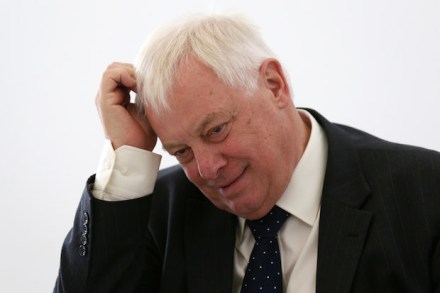
Owen Jones has denied that Newsnight's appointment of former Labour adviser and TUC official Duncan Weldon as economics correspondent is more evidence of 'left wing bias' at the BBC. On the contrary, Jones says that complaints about Weldon arise from 'myths and deception' and that the 'BBC is stacked full of right wingers'. Now, now, no laughing at the back please – we ought to take the Guardian's star columnist seriously. Jones names 10 people who are connected to the right (some of them very tenuously so): Chris Patten, Nick Robinson, Robbie Gibb, Thea Rogers, Guto Harri, Will Walden, Andrew Neil, Kamal Ahmed, John Humphrys and Craig Oliver.

Yes, of course the BBC is biased against you

From our UK edition

And it doesn't matter who you are. Conservative, Labour, Liberal, Nationalist, Green or UKIP it's all the same. The BBC is hopelessly prejudiced against you. As it should be. Why only this morning we see Owen Jones complaining that, contrary to what the Daily Mail would have you believe, the BBC is instinctively biased against the left and Lesley Riddoch suggesting  the corporation is reflexively biased against the very idea, let alone the prospect, of Scottish independence. Well, up to a point. But asking whether the BBC is inclined to the left or right is the wrong question. It is a kind of category error. Adding up the number of (presumed) right-of-centre - or Unionist - journalists or presenters on the BBC and supposing this "proves" anything is a fool's mistake.

The sound of growing rhubarb

From our UK edition

When the BBC proposed to do away with 6 Music a few years ago, the media-savvy fans of the station created such a fuss on Twitter and Facebook that the Corporation caved in. Threat of closure was exactly what the station needed to grow its listener-base, now almost as big as Radio 3, and growing (up to 1.96 million per week in the latest Rajar figures, as opposed to Radio 3’s 1.99 million). The Asian Network, too, has flourished after suggestions that it would also have to be shut down if the BBC was to survive financially in the new digital age. But what’s good for them has now spelt doom for BBC3 (at least as a ‘linear’ channel) and further cuts are forecast. Which station will face the chop next time?

When Free Speech isn’t free

From our UK edition

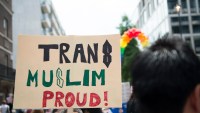
BBC3’s Free Speech programme is a good example of why the channel deserves to be shut down. Aimed at giving a voice to young people it is endlessly dumbing-down, seeks validity through instant Twitter reactions and all in all is a very degrading programme to appear on. I know because a couple of years ago I was on the first series and spent an evening at an ice rink in Doncaster debating the key issues of the day with a ‘Page 3 model’ and Owen Jones. Even now it makes me shiver. Anyhow – last night the show came from outside the Birmingham Central mosque. The panel included Mehdi Hasan and Julie Burchill’s friend, Paris Lees, who complained in the early part of the show that nobody had given her a job.

Culture House Pick of the Week: Minogue, Mahler, Strauss and Johansson

From our UK edition

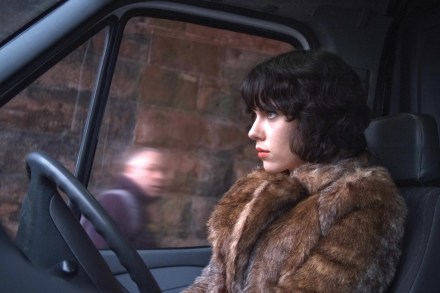
FILM: Under the Skin (dir. Jonathan Glazer)  Critics who saw it at the Venice Film Festival thought it either ‘laughably bad’ or a ‘masterpiece’. This week you get the chance to decide whether Jonathan Glazer’s Under the Skin, in which Scarlett Johansson plays a kind of alien butcher on the hunt for human meat to ferry back to a group of extraterrestrial gourmands, is in the mould of Glazer's Oscar-nominated Sexy Beast or, like his Birth, will sink without trace. OPERA: Die Frau ohne Schatten, Royal Opera House Richard Strauss’ barmy opera about a part-human, part-gazelle Empress whose husband will turn to stone unless she can find a shadow for herself (and you thought you had problems) opens this Friday at the Royal Opera House.

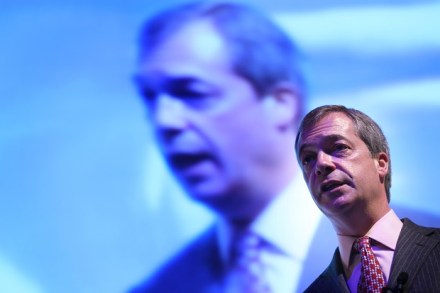
Nigel Farage keeps on about EU migration, but non-EU migration is the greater problem

From our UK edition

Last week, I spoke alongside Nigel Farage in a debate about immigration organised by the Evening Standard. It was good fun, as you’d expect, with David Lammy, Tessa Jowell and Simon Walker of the IoD on the other side, and David Goodhart alongside me and Mr Farage. You’d be startled, mind you, at the way Nigel Farage gets mobbed by an audience, and in a good way. I did get the chance to get to talk briefly to him myself and ask the question I’d wanted to put to him for ages: why it is that he keeps on about EU migration, when it’s non-EU migration that’s the greater problem. He was unfazed, of course, and said, look, when we meet again in the future to talk about all this, it’ll be EU immigration that’ll be the problem.

Behind the scenes at Spitting Image

From our UK edition

If Margaret Thatcher is remembered by many more as a caricature than as her actual self, then blame Spitting Image. The show, which ran from 1984 to 1996, portrayed her variously as a cross-dresser, a fascist and a bully but, to her credit, she never complained. Or, if she did, there’s no record of it. Of course it wasn’t just politicians who were targeted; anyone in the public eye was also ripe for a takedown, from Kylie to the Queen. Deference — what’s that? To mark the programme’s 30th anniversary, BBC4 has created an Arena documentary that takes viewers behind the scenes of the Spitting Image process; introducing us to the people who made the programme come to life, and the hellish hours they worked keeping the show on the road.

Was Liz Wahl’s on-air Russia Today resignation brave or self-serving?

From our UK edition

It's hard not be cynical about these TV presenters on Russia Today making such bold on-air declarations against their network. The eye-catching Liz Wahl sensationally quit RT yesterday saying she would no longer work for a channel that 'whitewashes' President Putin's actions (see video above), and she is being widely lauded. 'I'm proud to be an American and believe in disseminating the truth,' she said. 'And that is why after this news cast I'm resigning.' Liz was going one step further than her colleague Abby Martin, who had said the day before that Russia's invasion of Crimea was wrong. Lots of other journalists are saying that they are both very brave. Maybe they are.

An announcement for Tony Hall: BBC3 was already dead

From our UK edition

Two words tell you everything you need to know about today's announcement that BBC3 is to become an online-only channel: ‘spoiler alert’. The phrase is now part of the cultural language, an everyday reality for consumers of all types of media. And that's because broadcasting - the notion that we all watch the same thing at the same time – is, for huge numbers of people, dead. Not dying – dead. That's why it doesn't matter that you'll now only be able to watch BBC3 on the iPlayer. Of all Auntie's channels it's surely the best one to be pushed off the terrestrial cliff first — it's aimed at the yoot, who are tableted and broadband-ed and 4G-ed up to the gonads. The idea that they'll be bothered by not being able to watch Pramface and Snog Marry Avoid?

Does Tristram Hunt think that choice in education should be only for the rich?

From our UK edition

At last - Labour has made its intentions over education clear. Throughout his interview on the Sunday Politics today, Tristram Hunt showed that Labour has switched allegiances to adults, not the pupils. On the side of institutions, not those who use them. Although the shadow education secretary stated he ‘doesn’t want to waste political energy on undoing reforms that, in certain situations, build rather successfully on Labour party policy’, he confirmed his party would not sanction any more free schools: 'I was in Stroud on Thursday and plans there for a big new style of school in an area where you’ve got surplus places threatened to destroy the viability of small local rural schools.

The millions in EU funding the BBC tried to hide

From our UK edition

Over the last three years the BBC has secretly obtained millions of pounds in grants from the European Union. Licence fee payers might assume that the Corporation would have been compelled to disclose the source of this money in its annual reports, but they bear no trace of it specifically. In the latest set of accounts, for example, these funds are simply referred to as ‘other grant income’. Instead of making an open declaration, the BBC’s successful lobbying for this money had to be prised out of it using a Freedom of Information (FoI) request lodged for The Spectator, proving that there was never any danger of the state broadcaster’s bosses volunteering it willingly.

What’s happened to Harriet Harman?

From our UK edition

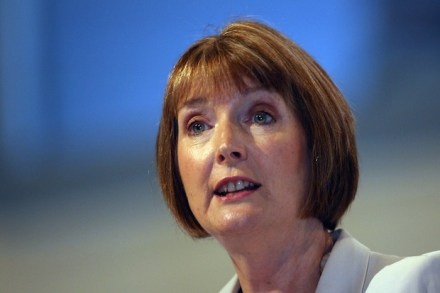
Watching Harriet Harman being interviewed by Laura Kuenssberg on Newsnight earlier this week was a strange experience. I felt as if I’d entered a political twilight zone where nothing was quite as it seemed. Was the deputy leader of the Labour party really saying these things? I knew she was, but it seemed so miscalculated — so unwise — it was as if Harman’s body had been taken over by someone else. A mischievous political demon, perhaps. Or Lynton Crosby. The entire interview was like a nine-minute party political broadcast for the Conservative party.