Bbc

I’ve had it with the insufferable London elite. Have you?

From our UK edition

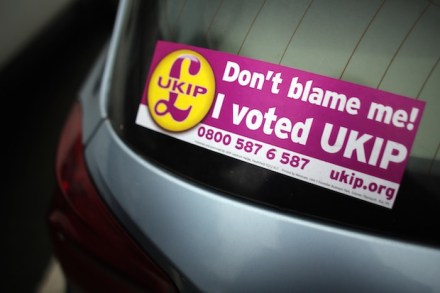
'I’ve had it with these people. They are so smug; they think they know everything and they know nothing. They want a good kick in the face.' So said a close friend of mine, more usually a Labour voter, before she went out to vote for Ukip earlier today. I think it was the Jasmine Lawrence thing which tipped her over the edge. Jasmine is, improbably enough, the boss of the BBC’s News Channel. She had 'tweeted' that Ukip was a sexist and racist party - yesterday. Of course, she should be sacked. Right now. The BBC’s News Channel is supposedly impartial – that’s what we pay for, an impartial service. Either that or the BBC should accept that all of its employees possess political views and there is no problem in having them aired.
Why should the licence fee payer fund the BBC’s cultural imperialism?

From our UK edition

Picture the scene. BBC executives convene in a glass think pod in Salford to consider the latest expensive external report commissioned by Director of News James Harding. The report states that Auntie, despite its vast budget and massive staff, is ‘punching well below its weight in the digital world.’ That was what Sir Howard Stringer’s report, published today, found. The fact that Buzzfeed gets 10 million more pageviews than the Beeb every month seems to be a particularly sore point: ‘Given Buzzfeed, for example, was only founded in 2006, this raises the question of why the BBC’s global digital reach is not more significant. It is impossible to escape the conclusion that the BBC is punching well below its weight in the digital world.

Why the BBC will never match Kenneth Clark’s Civilisation

From our UK edition

One afternoon in 1942, Kenneth Clark and his wife Jane called on two young painters for tea. The artists were John Craxton and Lucian Freud, then both around 20 and sharing a house in St John’s Wood. The visit was a success, as Craxton told me many years later, but not without its awkward moments. Jane Clark had to be headed off from helping in the kitchen, since the oven contained dead monkeys that were currently serving as models, placed there to restrict the smell. After consuming a flan cooked by Lucian’s mother and viewing the artists’ work, the Clarks decided to return to what Craxton described as ‘the Olympian heights of Upper Terrace House, Hampstead’, where they lived.

My application to be chairman of the BBC

From our UK edition

To: Karen Moran, HR Director, BBC Dear Ms Moran, I have decided to give up on the gardening this year, after a number of dispiriting setbacks. Last year I invested a fairly large amount of money, and about four hours per week, in trying to grow vegetables. But despite the fence and the pellets and the presence of a large plastic falcon called ‘Mr Roberts’, almost all of my crop was eaten by wild things. Woodpigeons, rabbits, caterpillars, slugs etc. I once saw a woodpigeon eating some of my kale while perched on Mr Roberts’s head, a terrible indignity for such a proud and fierce bird. In the end I had about 20 courgettes, and nobody in my family is fond of courgettes. So henceforth I will go to Morrisons for my vegetables, like I used to do.

If you’re after equality, don’t show women’s football. Show Badminton.

From our UK edition

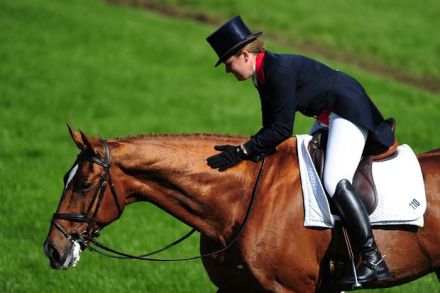
Over the next two days, one of the most important events in the British sporting calendar takes place. No, not the final day of the Premier League season. Badminton Horse Trials, obviously. This is one of only two annual horse trials in the UK (and six in the world) at which eventers compete at the top level. Oh, and one of the favourites to win is British. So of course the BBC is broadcasting it on one of their main channels, right? Wrong. During the London Olympics, equestrianism was one of the most popular sports on the BBC red button channel, with the freestyle musical dressage (aka horse dancing) in particular attracting a wide audience.

Without Paxman, the BBC will have just one interrogator: John Humphrys

From our UK edition

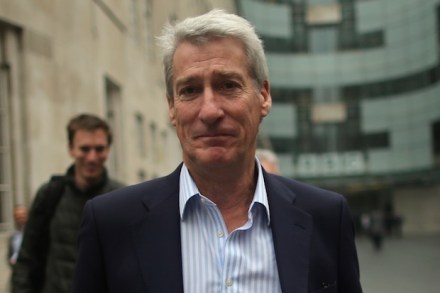
In a double blow for the beleaguered BBC, the corporation has lost three of its most compelling attractions in little more than a month: the Newsnight presenter Jeremy Paxman, and Susanna Reid’s legs. Paxman has said he has had enough and announced his retirement from the thinly viewed current affairs programme. Susanna Reid’s legs have made their way over to ITV for its even more thinly viewed breakfast show called ‘Phwoar, Wake Up and Have a Look At This’ or whatever. The legs have attracted criticism for spending a substantial proportion of the show hidden from view under a desk while the rest of Susanna Reid jabbered about something with a slight smirk on her face in full view of the camera.

Ukip isn’t a national party. It’s a Tory sickness

From our UK edition

It can happen that something ought to feel wrong yet somehow doesn’t; and you wonder whether this means that in some deep way it could be right. Take for example a discussion on BBC Radio 4’s Today programme on Saturday last week. The subject was the rise of the ‘Teflon’ United Kingdom Independence Party. I ought to have found the programme’s handling of this to be inappropriate; yet it felt both appropriate and natural. In this column I shall discuss why. Radio presenters do not give explanatory headlines to political interviews. At about 8.20 a.m.

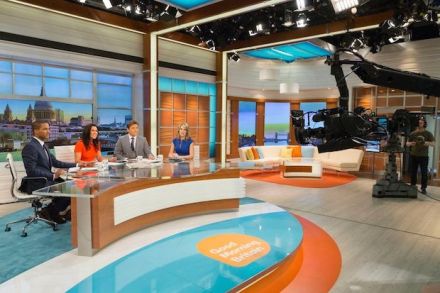
Good Morning Britain: news, sport, showbiz and blithering nonsense

From our UK edition

Some of the greatest minds of our generation have struggled to get to grips with the thorny conundrum of breakfast television. Should it be fluffy, should it be tough, should it do sofas or puppet rats or news? Back in the 1980s, many believed it shouldn't do any of them, and shouldn't exist at all. As Nick Ross, one of Frank Bough's acolytes on the BBC's pioneering Breakfast Time, put it, 'television in the morning was outrageous - it was just decadence beyond belief.' Judging by the opening salvo from Good Morning Britain, ITV's latest revamp to the redeye slot kicking off this week, today's state-of-the-art thinking is that it should be everything at once, presented with almost intimidating professionalism.

Russell Brand cannot let BBC row slide

From our UK edition

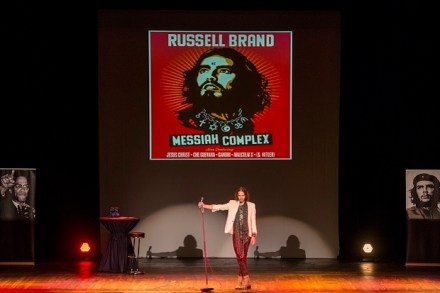
Russell Brand won’t let go of his row with the BBC. He popped up as the mystery guest at Letters Live (a spin off from the wonderful Twitter account @LettersOfNote, where assorted luvvies read great letters from the past). Inevitably, Brand screwed up his reading. He tried to rescue the situation by quipping: ‘Is this like when I broke the BBC?’ This was met by assorted groans and the odd clap. Brand’s references to his suspension and departure from the BBC over the ‘Sachs-gate’ affair in 2008 are getting very tiresome indeed. Mr S was under the impression that Brand was busy plotting a revolution.

The lefty liberals may be losing their hold over the arts world

From our UK edition

If you happen to be reading this column at breakfast, I’d recommend you skip to something more agreeable like Dear Mary and save mine till a bit later. It concerns the ugly details of one of the most revolting mass murderers in US history. His name is Kermit Gosnell — a doctor who ran a particularly dodgy clinic in Philadelphia specialising in late-term abortions for mostly poor black women. When police raided it in 2010, they encountered a scene of quite appalling horror. In a flea-ridden, blood- and faeces-stained basement, Gosnell had been operating on women using unsterilised equipment, killing babies well over the legal term limit, sometimes by sucking out their brains with a machine.

Paxo turns fire on the Beeb

From our UK edition

Is Mr Steerpike alone in thinking that Jeremy Paxman can’t be bothered anymore? First there was his wet rag interview with the ‘Chrystal Methodist’ Paul Flowers, the former Co-op chairman. Now he’s turned his (still potent) guns on the BBC itself. In an interview with the Guardian, the well-remunerated Newsnight presenter has slammed Aunty’s ‘closed corporate culture’: ‘It is smug. I love the BBC in many ways, but at the same time it has made me loathe aspects of it, and that’s a very odd state of affairs.

Gas gangrene, shell shock and flinty women: BBC One’s new Sunday night offering is no soother

From our UK edition

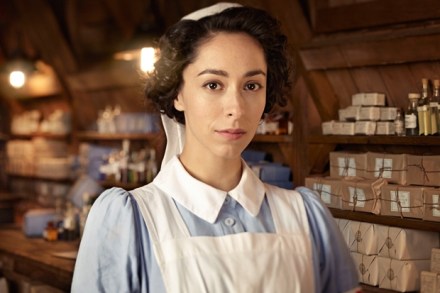
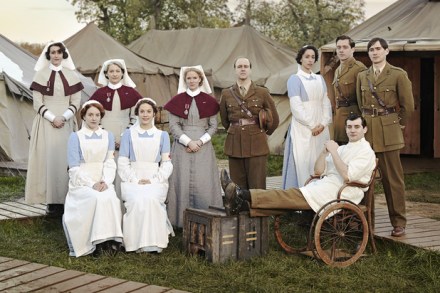
Sunday nights. What are they for? Eggs. Tea. Toast. Nerves about the week ahead. Something comforting on TV.  But comfort comes in many forms. For some, it’s twee life at Downton Abbey. For others, it’s the thrill of Homeland. With the BBC’s latest Sunday-night offering, comfort takes on a new guise: one that includes gas gangrene, shell shock, flinty women and war-damaged men. It won’t rock you to sleep. The Crimson Field, BBC1’s latest six-part drama, took us to the support system that existed behind the front line during the first world war. It’s 1915, and young women from Britain’s upper and middle classes have been drafted in as VADs — Voluntary Aid Detachments — to nurse casualties from the trenches.

BBC1’s The Crimson Field: manipulative, saccharine, shallow – and addictive

From our UK edition

Thanks to BBC1’s new World War One drama The Crimson Field, I know now how to fake the symptoms of syphilis. All you need is a red hot needle, to create a genital blister, and some condensed milk, for realistic-looking discharge. You had to do this if you wanted to get sent home from the front, because the horrible public school officers didn’t believe in namby-pamby mental illnesses like shell-shock, and had absolutely no sympathy for the poor privates who wept when they listened to Madame Butterfly. Is it possible to make a WWI drama without resorting to cliché? Yes, actually: the BBC’s adaptation of Parade's End managed it a couple of years ago. Still, they at least had a book to go on.

The major parties don’t get UKIP, and neither does the BBC

From our UK edition

So, in the second debate between Nigel Farage and Nick Clegg the UKIP leader won by 69% to 31%, according to the post-debate polls. That, you would think, should be the top line of the story, but it was not the way in which the BBC News reported events. The corporation’s “package” of the debate showed Nick Clegg winning four-nil and the spoken introduction, at the top of the programme, simply stated that the debate had taken place. It is true that at the end of the sequence the BBC’s political editor, Nick Robinson, delivered a fair and honest assessment of proceedings. There are plenty of reasons for me, at least, not to vote UKIP.

Michael Craig-Martin pokes a giant yellow pitchfork at the ordinary

From our UK edition

Visitors to Chatsworth House this spring might wonder if they have stumbled through the looking-glass. The estate’s rolling parkland has been invaded by an army of vibrantly coloured, outsized garden tools, whose outlines seem to hover, mirage-like, over the landscape. These painted-steel 2D ‘sculptures of drawings’ are the brainchildren of the conceptual artist Michael Craig-Martin. Craig-Martin finds poetry in the everyday and here he has taken 12 commonplace objects — a wheelbarrow; a spade; a lightbulb — and transformed them into something extraordinary. He also believes that context is everything when it comes to art and the works have been carefully positioned.

Radio that makes you feel the wind on your cheek

From our UK edition

After a walk in Richmond Park beset by rush-hour traffic, the Heathrow flight path and a strange swarm of flying ants (strange because so early in the year), it was unsettling to come back in and switch on and listen to Kirsty Gunn’s spring walk for this week’s The Essay on Radio 3 (which I heard as a preview but you can now catch on iPlayer). Gunn lives in Sutherland in the far north of Scotland close to the River Brora, and has a view from her back windows that stretches for 500 square miles with no other house or sign of human life in sight. ‘There’s nothing out there,’ Gunn told us, ‘except space and emptiness, light and land — and the weather.

An ex-fascist or two isn’t the BBC’s problem. Its boss class is

From our UK edition

We live in a recriminatory age, one in which we are only ever a step away from the cringing, self-abnegating apology. Take the case of BBC Newsnight’s latest appointee, as economics editor, a chap called Duncan Weldon. Duncan is doing the tail between the legs thing right now, desperately attempting to excise part of his past in case it puts paid to his promising career in a fusillade of political accusations and an appalled reaction from the general public. The problem is, in his younger days, it seems Duncan worked as an adviser for the deputy leader of the Labour party, Harriet Harperson. ‘It is embarrassing. I was young and naive and didn’t properly understand what a mendacious and potentially dangerous bint she was.

FGM is a shaming indictment of multiculturalism and mass-immigration

From our UK edition

A number of interesting things have happened recently: The Law Society has provided legal guidance to ensure that Muslims in Britain can have their wills judged according to Sharia. BBC Newsnight hosted an in-studio row between three Muslims over whether one Muslim should be allowed to say or do anything that is deemed religiously insensitive by any other Muslim. Majority opinion seemed to be ‘no’. Then there has been huge excitement that, after decades during which tens of thousands of girls in Britain were genitally mutilated, charges have for the first time been brought against some suspected perpetrators of this horrific crime. Just in case anyone is lost in all this – this is Britain in 2014. So what do these things have in common?

Tony Hall’s new vision for BBC Arts: waffle, stale buns and chief execs

From our UK edition

I can’t remember the last time I turned to the BBC for cultural guidance. That’s not to say that the BBC doesn’t provide an extremely valuable public service on the arts. It does. It’s just I doubt it’s the public service they ever wanted it to be. For the BBC has become an absolutely fantastic bet-your-bottom-dollar benchmark for what not to see, listen to, go to or respect. It is the finest cultural mortuary we have. You’re wondering whether Jarvis Cocker has any creative juice left in him, just switch on BBC Boring - I mean, BBC Four. Spot him? You have your answer. The BBC is where once talented, once creative beings go to die. And they were all packed into one gaudy room for Tony Hall’s first major speech on the future for BBC Arts.

Silk vs The Good Wife

From our UK edition

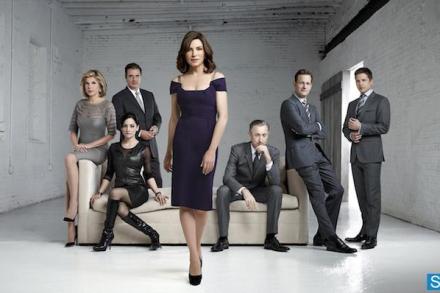
American TV drama trumps British TV drama – it’s a well-worn but unfair cliché. It’s not that British drama is necessarily bad – some of it is very good – it’s that American drama is often better. Compare and contrast Silk (BBC One) and The Good Wife (CBS/More4). Neither show is a blockbuster. Both are law/political office dramas: a staple of TV networks down the years, from the dog days of Judge John Deed all the way back to the glories of Rumpole. Viewers love the format of these wig and gown shows: a question is raised and resolved in every episode, while a wider, character-driven drama rumbles on for years. Each generation adds its own factors to the basic equation: Silk and The Good Wife are concerned primarily with female lawyers.