Bbc

Many more Germans were displaced in 1945 than Indians during partition

From our UK edition

What Radio 3 needs is a musical version of Neil MacGregor. The director of the British Museum and now a stalwart of Radio 4 is an intellectual powerhouse but his talks on radio are so clear, so crisp, so deceptively easy to follow that he draws you in and makes you feel that you too can understand the world in the way he does, with his enormously broad vision and his deep understanding of the way things connect.

Russell Brand: Newsnight’s tragic solution to its plummeting ratings

From our UK edition

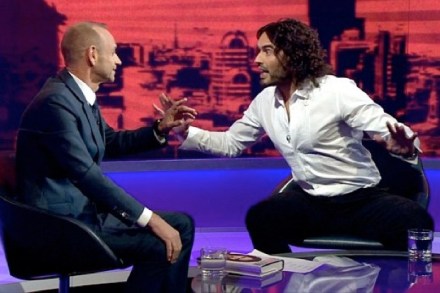
The issue is not that Russell Brand seems to believe that 9/11 was some sort of joint effort between George W Bush and the bin Laden family – that’s sort of a given, no? The man is a drug-addled idiot with the geopolitical knowledge and awareness of a tub of 'I Can’t Believe It’s Not Butter'. The issue is, given these facts, what he’s doing on Newsnight, again. The BBC, defending the decision to interview the fool, said that he is representative of the 'anti-politics' movement with which Westminster is trying to engage. No. He’s. Not. But even so, what utter cant – he’s on there because he’s famous and Newsnight, with its plummeting ratings, is these days in thrall to celebrity.

First look at the new Dad’s Army

From our UK edition

Back in the last century, when people still watched television rather than computers, I fulfilled the lifetime ambition of every comedy nerd when I finally got to meet David Croft and Jimmy Perry. Whoever said ‘don’t meet your heroes’ clearly never met any sitcom writers. I was working on a BBC series about the history of British sitcom – since eclipsed by countless cheap clip shows, but actually quite a novelty back then – and though the actors were interesting, it was the writers who really shone. Like Galton & Simpson (Hancock, Steptoe) and Clement & La Frenais (Porridge, The Likely Lads), Croft & Perry were enchanting.

Dylan Thomas: speeches for Hitler, balderdash for Walton and the true meaning of Under Milk Wood

From our UK edition

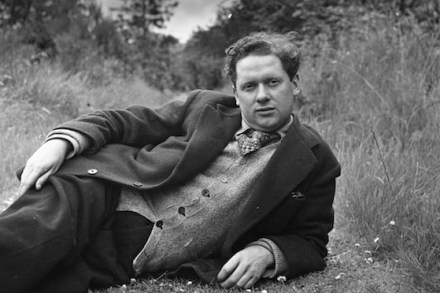
My father came across Dylan Thomas in a Swansea pub in 1947. ‘Chap over there,’ said one of the regulars ‘is a poet.’ ‘What’s his name?’ asked my father. ‘No idea.’ That Thomas’s celebrity was rather patchy, even in his hometown just a few years before his death, illustrates how much his fame owes to the fans and memorialisers who have stoked the legend ever since. His centenary falls on 27th October. He was morose, shy, florid-faced and hyper-sensitive. He described himself as having ‘the countenance of an excommunicated cherub'. His first poems, published in the 1930s, were greeted with cautious interest. Edith Sitwell championed him. So did Cyril Connolly. Sceptics found his imagery inscrutable or meaningless.

Hooray for Homeland – Carrie’s back blasting America’s enemies to pieces with drones

From our UK edition

One of the more welcome and surprising things about television at the moment is that Homeland (Channel 4, Sunday) is good again. As I’m not the only person to have pointed out, the first series was great. After that, though, the show suffered badly from the diminishing returns which so often afflict a deserved American hit that’s obliged for financial reasons to just keep on going — usually by serving up increasingly minor variations on a theme. (Exhibit A: Lost; exhibit B: most of mid-period 24.) Fortunately now that Damian Lewis’s Brody is dead, Homeland no longer has to think up any more ways to make us wonder which side he’s on. Instead, to the obvious relief of all concerned, it can start again with a different story.

The one economic indicator that never stops rising: meet the Negroni Index

From our UK edition

This dispatch comes to you from Venice — where I arrived at sunset on the Orient Express. More of that journey on another occasion, I hope. Suffice to say that if you happen to have been wrestling with the moral choice of bequeathing what’s left of your tax-bitten wealth to ungrateful offspring or spending it on yourself, don’t hesitate to invest in a last fling on this time capsule of elegant extravagance. Made up of rolling stock built in the late 1920s, the train itself symbolises everything that 20th-century Europe was good at — engineering, craftsmanship, style, cross-border connections — when not distracted by political folly and war.

John Humphrys and the BBC’s disdain for market capitalism

From our UK edition

Last week’s market tremor, provoked by renewed fears of eurozone stagnation and a slowdown in global growth, was serious enough for IMF chief Christine Lagarde to feel the need to pronounce, in her most soothing tone, that it was ‘maybe at this stage an over-reaction’. But if you were listening to the Today programme on Saturday morning, you might have thought it was all a bit of a joke — and one that served irresponsible investors right.

The Rwandan genocide story that the BBC didn’t tell

From our UK edition

On Saturday 200 UK-based Rwandans, including many genocide survivors, protested outside the BBC offices in response to the documentary ‘Rwanda’s Untold Story’, which aired earlier in October. The demonstration followed a letter of complaint sent to the BBC's director general, written by the survivors’ organisation Ibuka. They point out that despite the BBC’s commitment to upholding truth and objectivity, the programme contained factual inaccuracies and seemed intent on reopening wounds in Rwanda. They expressed disbelief and disappointment that: '[A] few people who have their differences with the current government or the country were given a platform to politicise the Genocide and deny the planned and systematic killing of over one million people.

Can Radio 3 escape the digital squeeze?

From our UK edition

The new controller of Radio 3 has at last been appointed. Alan Davey (not to be confused with the former bassist from Hawkwind) comes to the BBC from the Arts Council and a career in the Civil Service. This will be his first job in broadcasting, and will be no small challenge. These are tough times for Radio 3, squeezed between the commercial charms of Classic FM and the trendy allure of BBC’s 6 Music, and, worryingly, in the last quarter its audience numbers went below 1.9 million for the first time since 2010. The BBC’s home of classical music and ‘culture’ is often criticised for being too off-putting, too elitist, not in tune with the current mood.

Fellow saddoes rejoice: BBC4 has made a comedy-drama about metal detecting

From our UK edition

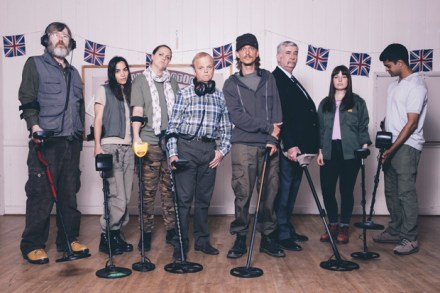
Detectorists (BBC4) is a sad git’s niche comedy that would never have been commissioned if it hadn’t been written and directed by Mackenzie Crook (who sort of counts as a Hollywood star, now, because after making his name in The Office he went on to appear in the Pirates of the Caribbean series). But I’m glad it was because I’m one of the sad gits it’s targeting: desperate blokes who spend their every spare weekend at this time of year scouring ploughed fields for non-existent treasure. We’re a fairly eclectic bunch, we detectorists.

Mary Beard vs Jeremy Paxman

From our UK edition

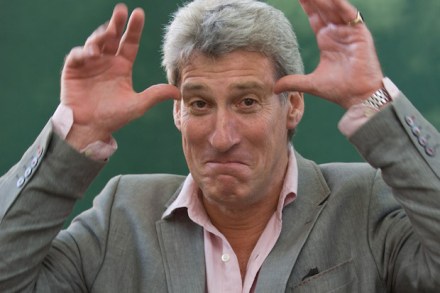
‘Did you find it a good read?’ asked Harrriett Gilbert. An incredibly long drawn-out sigh from Mr Paxman. ‘I think it’s really unsatisfactory,’ he at last replied. ‘But Jeremy,’ retorted Professor Beard, ‘I don’t think you’ve read it carefully enough.’ The eminent classicist from Cambridge is not afraid of conflict. She must eat her students for breakfast, loving an argument, which she of course will always win. Mary Beard didn’t just disagree with Paxman but insisted that her way of seeing, her interpretation, was the right one. She and Paxman were Gilbert’s guests on the first of a new series of A Good Read (Radio 4), in which the guests are expected to choose their favourite book and to persuade us to read it too.

In praise of #WorldBalletDay, Ivan Vasiliev and beautiful butts

From our UK edition

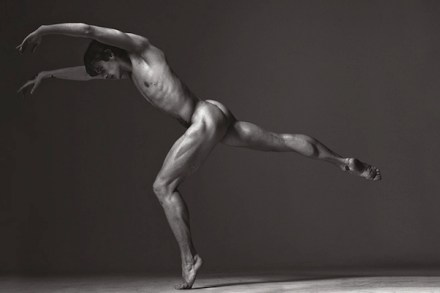
The Twittersphere never fails to surprise but it’s still hard to believe that last week #WorldBalletDay actually beat #HongKong and #Windows10 in the Twitter popularity stakes, on a day of barricades in the Chinese territory and Microsoft’s announcement of a new operating system. Twitter is a solid barometer of a vast and assertively 'engaged' segment of society whose demand to be noticed can sometimes be quite serious (see #HongKong).

Hunting is history – so why would the BBC pretend otherwise?

From our UK edition

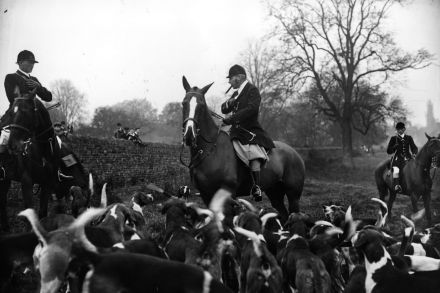
Of all the BBC’s output, the Antiques Roadshow is one of the programmes least likely to cause a row. Alright, so you might disagree with the odd estimate, or argue that some of the ‘treasures’ unearthed from attics aren’t bona fide antiques. But on the whole, it tends to be pretty inoffensive. Well it was, at least, until the Earl of Lonsdale claimed that programme makers had banned him from showing off his family’s collection of hunting memorabilia when filming at his home in Cumbria. So what happened here then? The Earl suspects that the decision was made due to the Beeb’s fears of offending animal rights campaigners; the BBC, on the other hand, has stated that they ‘do not have a general policy on hunting antiques.

Could the Kenyan mall atrocities happen here?

From our UK edition

So you’ve just popped down to the supermarket for the weekly shop, toddlers in tow, when the grenades start to fly, the air lights up with tracer bullets and you realise to your horror that unless you find a suitable hiding place in a matter of seconds these are the last moments you’ll spend with your kids on earth. This was the awful crisis that faced Amber Prior and her children, who were among the numerous innocents caught up in the al-Shabaab suicide attack on the Westgate shopping mall in Nairobi, Kenya, last year. Their tale was told in the BBC2 documentary Terror at the Mall, and I make no apologies for reviewing it late because it is surely one of the most gripping and important pieces of television any of us are likely to see this year.

Marriage and foreplay Sharia-style

From our UK edition

Needless to say, it’s not uncommon to hear single British women in their thirties and forties saying that all the good men are married. But in The Men with Many Wives (Channel 4, Wednesday) this came with a twist: it turned out to be precisely the reason why you should marry them too. Polygamy may be illegal in Britain, but it’s permitted under the Sharia law that many Muslims here apparently live by — and, as several of the programme’s participants told us, there’s no better guide to whether a man is husband material than the fact that he’s a husband already. Take Nabilah, who came to Britain from Malaysia to do a PhD in engineering at Cambridge. By then she was divorced and wanted someone with a proven track record of staying with his spouse.

Paxo to Channel 4

From our UK edition

Poor Jon Snow. The veteran presenter has some serious competition from the latest BBC defection to Channel 4; it's the big one. After months of speculation about his future, and a dire sojourn into stand up comedy, Jeremy Paxman has joined the channel to front their general election coverage, but there is a full ego damage limitation operation underway: ‘A source at the channel insisted broadcaster Jon Snow would remain the "main man" in terms of its overall news coverage, after fronting Channel 4 news for years.’ Mr S does wonder just who that source may have been. Anyway, we at The Spectator are big fans of Jon Snow - a leftie who is commendably honest about the principles behind his journalism.

Are Syria air strikes legal? Perhaps not, but why should we care?

From our UK edition

‘Are Syria air strikes legal?’ asks the BBC as part of its lead story today. The answer is that nobody is very sure. But personally I do wonder: ‘Why should we even care?’ Is beheading people legal? Is crucifying people illegal? Probably not. But aside from some vague talk last month of international inspectors being sent in to Isis-controlled areas to try to collate evidence of war-crimes I have seen very little written about this. This debate over the ‘legality’ of hitting Isis reminds me of nothing so much as the conversation after Osama bin Laden was shot in the head.

I love that people assume I’m gay

From our UK edition

At a birthday dinner over the weekend I was introduced to this delightful party girl of a certain age whose diet for the evening consisted of chips and Grey Goose vodka on the rocks with lime. She launched straight into the praises of this marvellous gay couple she knew in the area who were mad keen on hunting, kept getting injured but didn’t care, and who she was sure I’d get on with like a house on fire. They did indeed sound like my kind of people. But it was only later, after my new friend had had a few more and she had expressed surprise at the existence of my wife across the table, that she fessed up. ‘I had no idea you weren’t gay. Those clothes. Your manner. That gaunt look...’ I didn’t mind, obviously.

Former Newsnight hack slams Beeb’s referendum ‘propaganda’

From our UK edition

Former Newsnight correspondent Paul Mason seems rather happy to be free of Auntie, especially since the Scottish independence referendum campaign sent the establishment to panic stations: ‘Not since Iraq have I seen BBC News working at propaganda strength like this. So glad I'm out of there,’ he writes on his Facebook page, to the consternation of former colleagues. ‘It's on my friends-only Facebook page so not meant as any great statement other than weariness,' Mason tells Mr S, 'it says what it says.' Lucky, then that he is now at Channel Four News – that famed bastion of slant free news.

How independence will impoverish Scottish culture

From our UK edition

[audioplayer src="http://traffic.libsyn.com/spectator/TheViewFrom22_11_Sept_2014_v4.mp3" title="Fraser Nelson, Tom Holland and Leah McLaren discuss how we can still save the Union" startat=50] Listen [/audioplayer]An explosion of confetti will greet the announcement of Scottish independence. This isn’t another one of Alex Salmond’s fanciful promises, but an installation by a visual artist named Ellie Harrison. She wants Scotland to become a socialist republic. She has placed four confetti cannons in Edinburgh’s Talbot Rice Gallery. They will only be fired in the event of a Yes vote. Most artists in Scotland favour independence. Harrison’s installation is typical of the pretentious agitprop they produce. This isn’t a uniquely Scottish problem.