Bbc

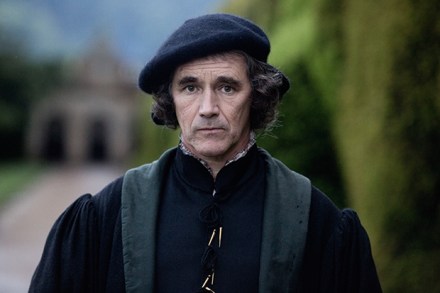
Wolf Hall upsets horticulturists with its ‘historical plant inaccuracies’

From our UK edition

First, Wolf Hall upset a number of members of the Catholic faith with its depiction of St Thomas More. The Bishop of Shrewsbury went so far as to claim that it inaccurately depicted More as a villain. Now, the show has managed to anger ardent gardeners too. In today's letters page in The Telegraph, a reader writes in to point out a discrepancy in one of the plants used on set. 'Those worrying about historical inaccuracies in Wolf Hall need to get out more: there's plenty to entertain them outside. The best example was in last week's episode, when Anne Boleyn went gliding past a mature specimen of Wisteria sinensis, a plant that only arrived from China in 1816.' Nothing gets past Telegraph readers pic.twitter.
Assad is hoping Isis will make his regime look moderate. This is no accident

From our UK edition

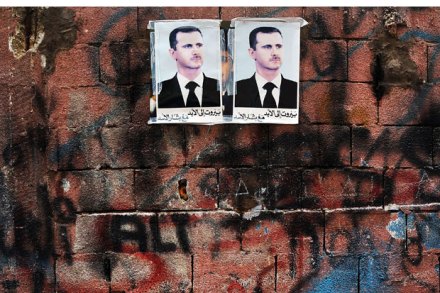
Jeremy Bowen's half-hour long interview with Bashar al-Assad is being heavily trailed by the BBC this morning.  And while it has little that is new it does provide an interesting insight into the Syrian President's current situation. The main story from it is Assad's confirmation that there is some line of communication between the Syrian regime and the Americans. Bowen put to Assad that there are American planes over Syria all the time engaged in the fight against Isis and that there must be some contact between them. While confirming that they do not speak directly, Assad did confirm that Iraq and other countries act as intermediaries.  But it was the way in which Assad said this that was most interesting. Assad: 'There's information but not dialogue.

Arabian Motorcycle Adventures review: enthralling and constantly surprising

From our UK edition

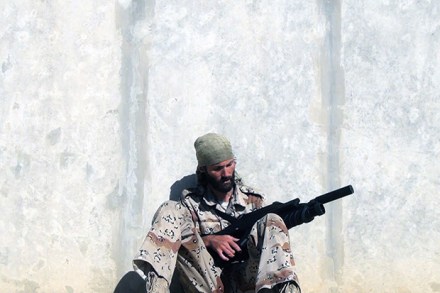
There were great numbers of young men who had never been in a war and were consequently far from unwilling to join in this one.(Thucydides, 5th century BC) I love that quote, inscribed on the walls of the Imperial War Museum, because it tells you so much both about the reason wars happen and about the nature of men. Most of us go through a phase where we think it would be terribly exciting to ‘see the elephant’. And for a lucky few, it’s everything they hoped it would be and more. One of those lucky few is an extraordinarily jammy sod called Matthew VanDyke. By rights this young American filmmaker from Baltimore ought to be dead a thousand times over.

Why BBC Arabic is booming

From our UK edition

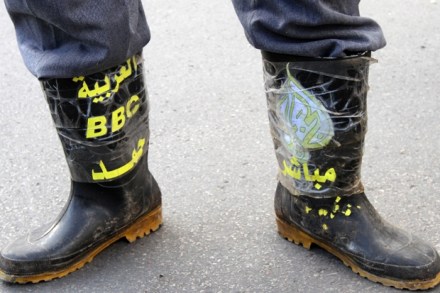
Last weekend BBC Arabic celebrated 77 years since John Reith (as he then was) launched the first foreign-language service of the fledgling BBC Empire Service with an announcement (in English) in which he declared that the programmes would always be ‘reliable, accurate and interesting’, values that have become virtually cast in stone as the Reithian model of broadcasting. ‘You have to remember the BBC was very, very young at this time, but there was no limit to its ambition,’ says Tarik Kafala, the current head of BBC Arabic, which now broadcasts on radio and (since 2008) on TV also, 24 hours each and every day. Reith’s statement was ‘a fabulous declaration of intent’, an intention which has meant 77 years later that BBC Arabic reaches 36.

Is Ian Lavender not keeping up with who Catherine Zeta-Jones is?

From our UK edition

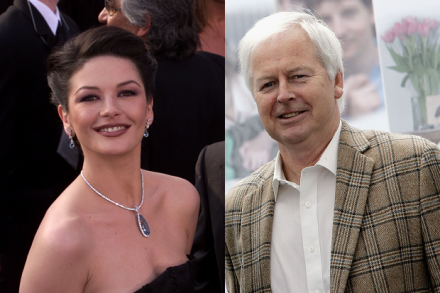
As the last surviving member of Dad's Army's main cast, Ian Lavender will be the only actor to appear in both the BBC series and the upcoming film adaptation. Although Mr S hears a whisper that Lavender failed to recognise his co-star Catherine Zeta-Jones on the set of the film, he does think that the movie could be onto something with its addition of female leads. 'That collection of ladies, Sarah Lancashire, Annette Crosbie, Alison Steadman and Catherine Zeta-Jones, is wonderful,' the 68-year-old actor tells Steerpike at the Oldie of the Year awards. 'When you think of Dad's Army, the lady parts are tiny parts and now you've got this terrific cast, perhaps we should have had more women back then.

A modern-day lynching for BBC’s North America Editor Jon Sopel

From our UK edition

The news that Harper Lee has her long-awaited second novel on the way (just a casual 55 years after her one hit wonder To Kill a Mockingbird) came as a surprise to those who did not realise she was still even alive. Once that news had settled in, it came as an even bigger shock to the BBC's North America Editor Jon Sopel that Lee was a woman:   Sopel swiftly becoming acquainted with the modern-day equivalent of a lynching: the fury of the Twitter mob. Sopel soon deleted the original tweet and seems to have recognised the error of his ways: good point everyone.... — Jon Sopel (@BBCJonSopel) February 3, 2015 Mr S presumes Sopel never saw the film Capote then...

Plot thickens over which Tory MP planned to push over cameraman

From our UK edition

After Mr S's disclosure that a Tory MP plotted to knock over a BBC cameraman to cease filming for Inside the Commons, speculation is rife as to who the backbencher could be. Steerpike was curious to hear the show's presenter Michael Cockerell deny that the culprit was Bill Wiggin. The Tory MP had very publicly lost his rag with the crew back in September 2014, when he could not hear the PM speaking about Iraq: Bill Wiggin (North Herefordshire) (Con): On a point of order, Mr Speaker. You will have noticed that the House is very full. My constituents expect me to be able to get into the Chamber and hear my Prime Minister. No such obligation rests on this poor man behind me. Will you find a safe place for this camera crew, so that he can film without getting in our way?

Tory MP ‘plotted to knock over’ BBC cameraman

From our UK edition

Michael Cockerell's new documentary series inside the House of Commons saw the reporter gain unprecedented access to parliament. However, while many MPs were keen to be involved, a group of Tory MPs plotted to knock over a BBC cameraman in order to stop them filming. The astonishing claim was made by Cockerell at a press screening today of Inside the Commons ahead of its release next Tuesday. 'There was a plan by some backbenchers to knock our cameraman over so that proceedings would be suspended and we would be blamed for it,' he revealed. 'But it was thwarted by the man in charge of security. The doorkeepers are the eyes and ears and the internal security system.' The backbenchers in question were Conservative. 'It was a Tory group.

Could it be that Wolf Hall is actually the teeniest bit dull?

From our UK edition

In January 1958, the British government began working on the significantly titled Operation Hope Not: its plans for what to do when Winston Churchill died. The plans, it turned out, wouldn’t be needed until January 1965 — but the intervening seven years were obviously well spent, because, as Churchill: A Nation’s Farewell (BBC1, Wednesday) made resoundingly clear, the farewell in question was a triumph. London came to a standstill and Big Ben fell silent as huge crowds watched the procession of the coffin from Westminster to the spectacular state funeral in St Paul’s — and its boat journey along the Thames afterwards. For the 50th anniversary, Jeremy Paxman talked us through the day with the aid of some of those who took part.

Robert Harris: BBC’s books coverage is a ‘disgrace’

From our UK edition

Lord Hall will be glad that he didn't attend last night's Costa Book Awards. Robert Harris, who chaired this year's judges, took the opportunity to criticise the corporation's book coverage when announcing the winner. Harris says that it is 'an absolute disgrace' that there is 'no dedicated book programme' on television. The 57-year-old author urged Tony Hall to do more given that the BBC is a 'monetary funded organisation'. 'The Costa Prize attracts people into the trade and it has being doing that for 44 years ever since 1971 and one thing I would just like to say is that in the 1970s books had it a bit easier,' he told guests at the champagne bash at Quaglino's, Mayfair, which saw Helen Macdonald win the gong for H is for Hawk.

My four great loves were unrequited (though I had a chance with Ginger Rogers)

From our UK edition

I had a short chat with BBC radio concerning the actor Jack Nicholson, whom I knew slightly during the Seventies and Eighties. Alas, it had to do with age, his and mine, 77 and 78 respectively. No, the man on the other end of the telephone did not ask me anything embarrassing. All he wanted to know was if women still come on to an oldie, or are they, as Jack Nicholson claims, a thing of the past. Well, for starters I do not believe that Nicholson is telling the truth, that he’s now alone and fears he will die alone because women have abandoned a sinking ship. He has a sense of decorum and knows how ridiculous a man our age sounds when talking about women, especially younger women, something Jack and Taki have in common.

Shirley Williams: Saving my mother from the scriptwriters

From our UK edition

Shirley Williams sits at the head of a table in a large conference room in Lib Dem HQ. She will be 85 this year, but still has a finger in many a pie, most of which we’re not to talk about here, including the predicted wipe-out of a generation of her party’s MPs at this year’s election. It’s one of the reasons she never made it to see the Tower of London poppies. Too busy. She also had to dash to Russia where she is on the board of the Moscow School of Political Studies. ‘It is all about teaching people about democracy and has fallen under the frown of Mr Putin, which is why I had to go.

‘Religion of peace’ is not a harmless platitude

From our UK edition

The West’s movement towards the truth is remarkably slow. We drag ourselves towards it painfully, inch by inch, after each bloody Islamist assault. In France, Britain, Germany, America and nearly every other country in the world it remains government policy to say that any and all attacks carried out in the name of Mohammed have ‘nothing to do with Islam’. It was said by George W. Bush after 9/11, Tony Blair after 7/7 and Tony Abbott after the Sydney attack last month.

Channel 4’s Cyberbully: an unashamedly old-fashioned drama in being both well made and moral

From our UK edition

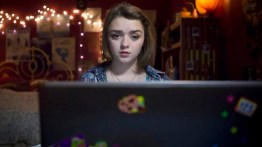
Channel 4’s Cyberbully (Thursday), written by Ben Chanan and David Lobatto, turned out to be a brilliantly gripping drama, even if the average middle-aged viewer might have found the early scenes as baffling as Finnegans Wake. Teenage Casey Jacobs (Maisie Williams) was alone in her bedroom, although not in the way we used to be: with an LP playing and the latest NME to hand. Instead, she was skyping her friend Megan (‘Hey, bitch,’ they greeted each other cheerfully), while also tweeting, texting, instagramming and wondering who’d hacked into her Spotify playlist and replaced all the good stuff with dreary old Led Zeppelin. But then she saw a tweet from her ex-boyfriend Nathan: ‘I’m not surprised Casey Jacobs is on anti-depressants.

Everyone says they’re Charlie. In Britain, almost no one is

From our UK edition

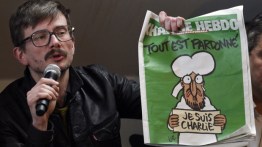
Je suis Charlie indeed. This is the problem with placards — there is rarely enough room to fit in the caveats, the qualifying clauses and the necessary evasions. I suppose you could write them on the back of the placard, one after the other, in biro. Or write in brackets and in much smaller letters, directly below ‘Je suis Charlie’: ‘Jusqu’a un certain point, Lord Copper.’ Then you can pop your biro into your lapel as a moving symbol of freedom of speech. Only a few of the British mainstream national newspapers felt it appropriate to reproduce the front cover of the latest, post-murder, edition of Charlie Hebdo, which shows the Prophet Mohammed (PBUH, natch) saying: all is forgiven.

No dry January for the BBC’s finest

From our UK edition

It was no expenses spared last night at One Great George Street to toast the departure of long-time Andrew Marr Show editor Barney Jones. Most ‘leaving dos’ in journalism involve a few beers down the Dog and Duck but Aunty was an extremely kind benefactor, providing fine wines and canapés as well as music from Nick Lowe across three of the most expensive function rooms in Westminster. Three cheers for the licence fee! Ed Miliband and George Osborne were there, alongside half the cabinet including Danny Alexander and Michael Fallon. Andrew Mitchell and David Davis plotted in the corner while Harriet Harman and Peter Hain represented Labour.

Nick Robinson vs Russell Brand: Round Two

From our UK edition

Last week Nick Robinson took a swipe at Russell Brand's call for the public to refrain from voting, claiming that it could undermine democracy. He went so far as to say that in a choice between quitting the BBC and defending democracy he would choose the latter. Happily it didn't come to that and instead the BBC's political editor got to pester Brand on Radio 4 in the first episode of Can Democracy Work? During the programme Brand is asked by a member of the public why if he has such a problem with today's politicians, he won't stand for parliament himself. ‘I’d stand for parliament but I’d be scared that I’d become one of them,’ the comedian replies.

The BBC: Blaming the Jews for attacks on Jews

From our UK edition

Heaven forbid that such an atrocity should happen, but suppose white racists attacked a mosque today, murdering four people. Crowds gather to show solidarity with the dead. They profess support for their friends and families and their horror at sectarian murder. The assassins killed their victims for no other reason than they were Muslims. That was it. All they had done was stick to their faith. A BBC reporter called Tim Wilcox joins the mourners, and buttonholes an elderly and not very articulate Asian lady. 'The situation is going back to the days of 1930s Europe,' she says, as she recalls the last time racist murders swept the continent. 'Do you think that can be resolved before it is too late?' the reporter asks. Cheeringly, the woman refuses to let despair overcome her.

BBC to revise its restrictions on depicting Mohammed

From our UK edition

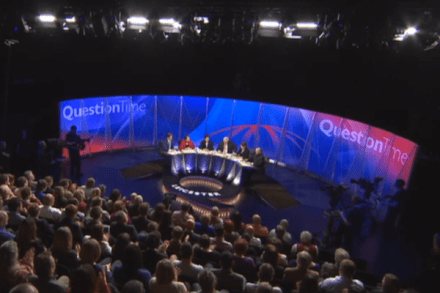
Last night's Question Time saw David Dimbleby chair a debate on freedom of expression following the Charlie Hebdo shootings. During the programme, Dimbleby stated that the BBC’s policy with regards to representations of Mohammed was to not depict the Prophet in any shape or form. This policy was met with criticism from panel and audience members alike. @bbcquestiontime that is utterly disgraceful bbc. #shamefulbbc — IAN REA (@ianrea7) January 8, 2015 Here is the part of the BBC Editorial Guidelines that Dimbleby read out on #bbcqt http://t.co/qFOxuMVws2 pic.twitter.com/nRc6Y43zKk — BBC Free Speech (@BBCFreeSpeech) January 8, 2015 So, Mr S was curious to learn that the website page detailing its guidelines is now down.

Without childhood traumas, how did Alan Bennett ever become a writer?

From our UK edition

‘So — take heart,’ said Alan Bennett, sending us out from his play, Cocktail Sticks, on a cheery note. The treatment for cancer had been gruelling, but that was 15 years ago, so... This Radio 4 production was adapted (and produced) by Gordon House from the stage version at the National Theatre but was perfectly made for radio, a monologue interrupted by dramatic scenes that take us back into Bennett’s childhood. Why, he wonders, is there nothing from that past for him to write about — no trauma, no deprivation, no disappointment? Surely, his parents could have done more to help him become a writer?