Bbc

The BBC sitcom Citizen Khan isn’t Islamophobic – it’s just idiotic

From our UK edition

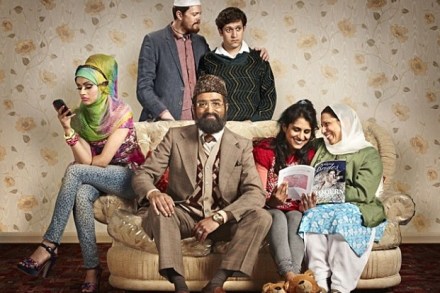
If you've never watched ‘Citizen Khan’, then count yourself lucky. It’s a sitcom in the loosest sense of the word and a prime example of a comedy show which would only ever appear on the BBC: achingly unfunny, contrived and featuring entirely unbelievable characters. Crucially, though, if the show is one thing, it’s politically correct, in that it centres around a family of Muslims living in a deprived part of Birmingham. But Labour's Rupa Huq has decided otherwise.

Fit to print

From our UK edition

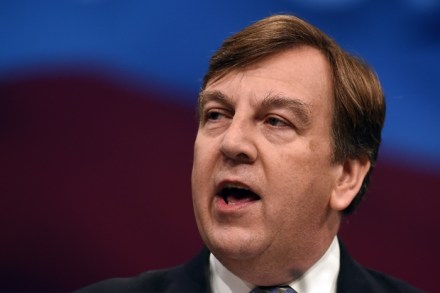
For weeks, Westminster has been full of rumours about the private life of a certain cabinet member. It was said he had started to visit a dominatrix in Earl’s Court but ended up falling in love with her and taking her to official functions. Like a Westminster remake of the film Pretty Woman, in fact, but with the Culture Secretary, John Whitting-dale, playing the part of Richard Gere. There was much comment in Parliament about this, and jokes about what London is coming to if an MP has to travel all the way to Earl’s Court for such services, when they used to be available a stone’s throw away from the Commons. And on it went. The story did not appear in the press for a simple reason: it was, in most part, an invention.

The BBC must address its lack of diversity – or risk losing viewers

From our UK edition

Growing up in my Mum’s house, Wogan was king. Throughout the 1980s leading lights like Stevie Wonder, Diana Ross and Sammy Davis Jr sat on his sofa and - vicariously - in our living room in Tottenham too. As well as its historic duty to 'inform, educate and entertain', the principle of universality has always been at the very heart of what the BBC stands for. Our most cherished cultural institution is at its root a universal service that must reflect all of Britain by virtue of the simple fact that it is funded by all Britons. In a multi-platform, digital age where more content is available than ever before and is being consumed online, on demand and on the move, viewers can now flick between Netflix, Amazon Prime and a multitude of other sources at the click of a button.

Singing Ireland into being

From our UK edition

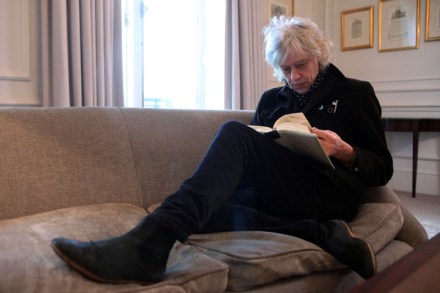
In recent years there’s been a fashion for arts documentaries presented by celebs rather than boring old experts — presumably on the grounds that knowledge and insight are no match for vague enthusiasm and a touch of showbiz glamour. (In a particularly gruesome episode of ITV’s Perspectives, Pop Idol winner Will Young established his credentials for discussing the life and works of René Magritte with the words, ‘I’ve been collecting bowler hats for 12 years now.’) Even so, one channel you might have expected to hold out against such frivolity is BBC4, the natural home of resolutely untelegenic academics telling us stuff they really know about. But then on Sunday came Bob Geldof on W.B.

Crossing continents | 31 March 2016

From our UK edition

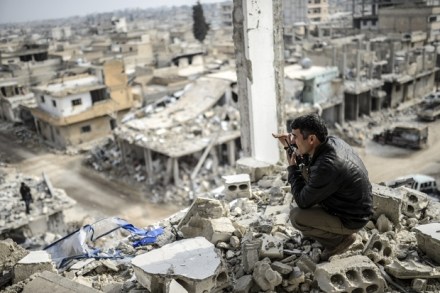
Could radio, and in particular a weekly soap, have a role to play in the Syrian crisis? You might think, no chance, given the levels of violence and terror that have overtaken the country. How can a mere broadcast signal have an impact compared with all that destruction? But, says the director of Radio Alwan, a station operated by Syrians living in exile in a western suburb of Istanbul, ‘radio is effective’. It’s a ‘weapon’ because it ‘allows you to enter the houses of people and talk to them’. It’s also so easy. ‘You don’t need power, you don’t need electricity — just two small batteries.

Watch: Norman Smith’s live BBC broadcast interrupted by Parliament security

From our UK edition

While PMQs took place in the Commons this lunchtime, outside in the Central Lobby a protest could be heard. Disability campaigners  had gathered outside Parliament to protest the benefit cuts in the Budget. Not that the powers that be want you to hear about the protest. The BBC's Norman Smith was interrupted live on air by a member of Parliament security who told him he was not allowed to film while the protest was taken place: PS: You're going to have to stop, you can't film with this going on in the background NS: We're not allowed to film this? PS: No NS: Why not?

Born again

From our UK edition

Six years ago, on Good Friday, the journalist Melanie Reid was thrown off her horse while on a cross-country ride in Stirlingshire where she lives. The accident broke her neck and back and left her tetraplegic, paralysed from the armpits downwards. On Easter Sunday on Radio 3 she’s Michael Berkeley’s guest on Private Passions, a timely guest, as he says, because she has recently written in her Sunday Times column about being ‘surprised by a small epiphany of happiness’, of experiencing a ‘rebirth’, if ‘rather cruel’. ‘You find joy in little things ...

Good cop, bad cop | 23 March 2016

From our UK edition

Which is better, British TV drama or American? A couple of years ago, merely asking the question would have had the hipsters chortling into their obscure US box sets — and even now a strange cultural cringe seems to persist. Nonetheless, I’d suggest, British television drama these days really is in the midst of an era that will have commentators in 20 years’ time routinely (if a bit unimaginatively) reaching for the adjective ‘golden’. Already in 2016 we’ve had War and Peace, Murder, The Night Manager and Happy Valley — and that’s before the hugely welcome return of Line of Duty (BBC2), Jed Mercurio’s riveting thriller about a police anti-corruption unit.

Cock

From our UK edition

On the Radio 4 news at 11 o’clock last Saturday morning there was a joky report about roosters in Brisbane. The cocks, it said, were annoying people with their crowing. The news at noon called them not roosters and cocks, but cockerels and fowls. I wrote here in 2005 about the advent of the ‘Year of the Cockerel’ and suggested that cock would soon be unusable because it put everyone in mind of a rude word for penis. Things have got worse since then. Mealy-mouthed folk who say cockerel simply ignore its meaning, which is ‘a young cock’. It’s like calling all cats kittens. Oddly enough, the Oxford English Dictionary says that cockerel is ‘archaic or dialect’.

Home and away | 17 March 2016

From our UK edition

Four programmes, four very different kinds of radio, from a classically made drama to weird sonic ramblings, via the best kind of all: first-person narrative, straight to mike. On Syrian Voices this week on Radio 4 (produced by David Prest), Lyse Doucet has been talking to Syrians whose lives have been utterly changed by the war, now passing its five-year mark. On Monday we heard from Sam, a 22-year-old student who lives in the government-controlled area of Daraa and studies English literature at the university. It was here that the uprising began after some students scrawled graffiti on a wall, ‘It’s your turn next, doctor’, calling for their country to be the next in the Arab world to overthrow its government.

Greedy greenies

From our UK edition

‘We have a problem. Yes. At the wind farm.’ Any conspiracy thriller with lines like that has definitely got my vote. Possibly most of you are unaware of this, because it’s not something I talk about often, but I happen to be not too fond of the things I call bat-chomping, bird-slicing eco-crucifixes — nor of the charlatans, crooks, liars and parasites who make their living out of them. Indeed, whenever I try to think of an industry that’s worse than wind farms I keep coming unstuck. At least landmines serve a useful purpose for force protection; at least Albanian prostitutes make a few men very happy.

Labour’s former election star distances himself from Jeremy Corbyn

From our UK edition

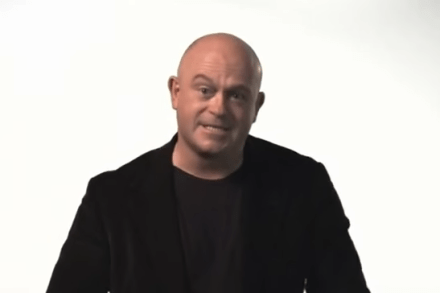
In 2010, Ross Kemp appeared in a party political broadcast urging the public to vote for Labour in the General Election. In this, the EastEnders actor, who plays Grant Mitchell in the BBC soap opera, warned the nation against voting for David Cameron: 'It only takes around 60 seconds to cast your vote. 60 seconds to protect the economy, 60 seconds to protect your jobs, 60 seconds to protect the services your family relies on. And a lot is at stake during those 60 seconds, David Cameron and George Osborne would cut child credits and tax funds. They would put police numbers and schools at risk. With George Osborne at the helm, we would risk driving us straight back into recession by taking billions out of the economy at the wrong time.

Girl power | 10 March 2016

From our UK edition

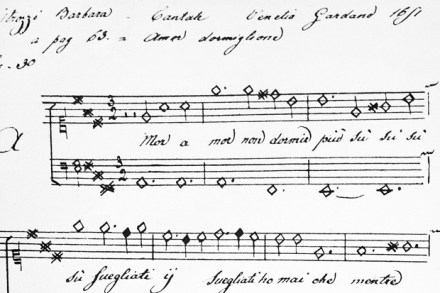
Hurrah for Radio 3 and its (long-overdue) efforts to give us music not just performed by women but composed, and conducted, by them too. Last year’s innovative day of programming for International Women’s Day introduced us to composers many of us had never heard of, such as Elisabeth Jacquet de la Guerre and Barbara Strozzi, Charlotte Bray and Anna Clyne. Yet to the surprise of even the most sceptical critics, the day was a huge success, proving that some of this music is really good. As Edwina Wolstencroft, producer last year and responsible for this year’s celebration of women in music, says, ‘We know that as many as 6,000 women composers have been identified in history.

Andrew Marr accused of EU bias over Boris Johnson interview

From our UK edition

This week Nigel Farage revealed that he had been left 'worried' about Boris Johnson's ability to campaign for Brexit after his 'slightly shambolic' North London press conference. While the Ukip leader insists he has since come round to Johnson's involvement, Mr S wonders what he will make of the Mayor of London's turn on The Andrew Marr show. Johnson appeared on the BBC show to put forward the case for leaving the EU. However, what followed was a tense exchange between Johnson and Marr as each tried to set the interview agenda. With Boris keen to speak about the single market and sovereignty, he clashed with Marr when the presenter attempted to change topic: AM: Let's move on to tipper trucks just for a second.

Portrait of the week | 3 March 2016

From our UK edition

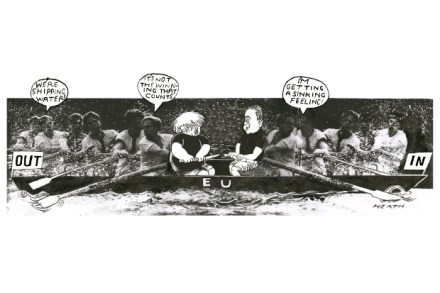
Home An official analysis by the Cabinet Office said that if Britain left the EU it would lead to a ‘decade of uncertainty’. Opponents of Britain remaining in the EU called the report a ‘dodgy dossier’. George Osborne, the Chancellor of the Exchequer, said that the economy would suffer a ‘profound economic shock’ if Britain left, echoing a communiqué of the G20 which referred to ‘the shock of a potential UK exit’. Boris Johnson revised his suggestion that a vote to leave could bring about a better deal from Brussels; ‘Out is out,’ he told the Times. Sir Jeremy Heywood, the Cabinet Secretary, declared that ministers opposing government policy on the referendum should not be shown government papers on the matter.

Northern exposure | 3 March 2016

From our UK edition

Some things I have learned about Iceland after watching six episodes of Trapped (BBC4, Saturdays). 1. They seem to feel much the same way towards the Danes as the Irish or the Scots do towards the English. 2. Some typical Icelandic first names: Andri, Ásgeir, Dagný, Hjörtur, Hrafn, Þórhildur. But even if you did Anglo-Saxon at university and know what a ‘thorn’ looks like, they’re still pronounced nothing like they’re spelt. 3. They drink more coffee than booze, even at night. Only tourists, millionaires and politicians can afford alcohol. 4. If it weren’t for the excitement provided by the swimming-pool, the kids in remote Icelandic towns would die of boredom. 5. Everyone in Reykjavik is poncy, effete, synthetic.

What do all these evil maniacs have in common?

From our UK edition

More bad publicity for the Islamic State’s ‘Kafir Tiny Tots and Babycare Service’. A burka-clad madwoman wandering through the streets of Moscow swinging a decapitated toddler’s head while shouting ‘Allahu akbar’ is just the kind of image the company wished to dispel. You begin to doubt its vetting procedures for potential nannies, and also whether or not it has a valid Investors In People certificate. The less than conscientious nanny was from Samarkand in Uzbekistan (which last had a half-decent government in about 1990). ‘I want your death,’ she screamed at the Muscovites, waving the poor child’s head about.

The BBC has forgotten that journalism is a trade

From our UK edition

This is written from a small and dank room in the state of Arslikhan, as Private Eye calls it. My boss at the Sun, Tony Gallagher, has done an interview with the Press Gazette. His two chief points are that a) journalism is a trade not a profession and b) the BBC does not break stories, or does not break many stories. You will be unsurprised to know that I make the bloke right on both points. But are these two facts not related? Here’s what Gallagher had to say about journalism: 'You become a journalist by practising it not by learning it in a classroom.

Video: feisty Brexit teenager leaves Cabinet member Liz Truss speechless on Question Time

From our UK edition

Despite the In campaign's best efforts to reach the youth vote with the help of Britain Stronger in Europe board member June Sarpong, some youngsters still find themselves leaning towards Brexit. Both Liz Truss and Diane Abbott learnt this the hard way on last night's Question Time when a young audience member offered up her argument for leaving the EU. Responding to the Environment Secretary's claim that the Prime Minister's EU negotiation deal will reduce the 'pull factors' attracting migrants to Britain, Lexie Hill -- a 16-year-old schoolgirl -- explained why she disagreed: Audience member: I'm sorry but I can't accept Liz's arguments. What is increasing the living wage to £9-per-hour in 2020 going to do?

The Spectator’s notes | 25 February 2016

From our UK edition

One of the oddest features of the cabinet majority for staying in the EU is that almost no one in it admits to being a Europhile. How is it, then, that the very last-century ideas of Edward Heath, Ken Clarke, Michael Heseltine and Chris Patten can still exercise so much power over those who have so strongly and, in some cases, consistently criticised the EU in the past — Philip Hammond, Theresa May, Michael Fallon, Sajid Javid, Oliver Letwin, Liz Truss, Stephen Crabb, and, of course, David Cameron himself? Obviously one factor is that Tory MPs have found it convenient in recent years to adopt Eurosceptic protective colouring in their constituencies. But I think there is something deeper.