Bbc

Why did the BBC give a platform to Anjem Choudary?

From our UK edition

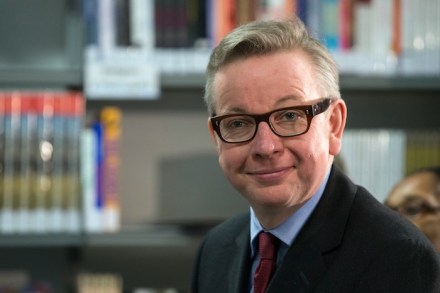
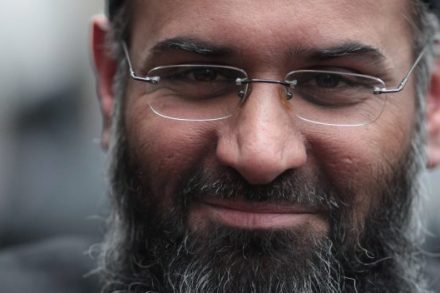
Anjem Choudary's arrogance eventually led to his downfall. He was convinced he could stay one step ahead of the authorities by picking his words carefully. Until now, that is. The hate preacher finally came unstuck when he encouraged others to join Islamic State. Yet whilst his extremist rants were always marked with an alarming confidence, his manner belied a somewhat different reality: Choudary was a man with few followers. His appearance in YouTube videos inevitably showed him with a tiny handful of half-witted acolytes alongside him. His 'protests' were of a kind likely to be greeted with indifference by passers-by. So why have we all heard of Choudary? Many media outlets have questions to answer for giving him a platform in order for him to spout his views.
Is there something that the BBC isn’t telling us about these Norwegians?

From our UK edition

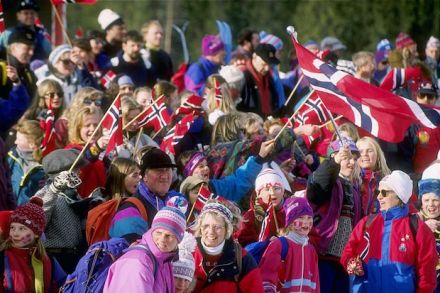
A man has set fire to a train in Switzerland and stabbed lots of people. On the BBC News last night the perpetrator was described as 'a Swiss national'. Similarly on the BBC News online today: 'The suspect, described as a Swiss man aged 27, was also taken to hospital after the incident near Salez in St Gallen canton, close to Liechtenstein.' Do you know, I think there is something the BBC – and the Swiss authorities – are not telling us. This attack was quite similar in some respects to one carried out in London recently, in which an elderly American woman was murdered. Then, at least, the BBC and the authorities told the truth – the perpetrator was Norwegian. It seems highly likely to me that the pyromaniac stabber in Switzerland was Norwegian too.

Northern exposure | 11 August 2016

From our UK edition

As the festival grows, the good acts are harder to find and the prices keep rising to meet the throngs of showbiz refugees who surge north in the belief that the glory, this year, will be theirs. Arriving at my one-star hovel (no breakfast, no towels, shared bathroom), I was given a security key and a disc of see-through soap that I could have hidden beneath a tea-bag. The bill, payable in advance, was a third higher than last year. Glory in this city belongs to the landlord. Marcel Lucont’s Whine List is performed by a suave, self-adoring Frenchman who starts by asking if anyone in the crowd is new to his act. ‘Lucky bastards. What I would give to see myself for the first time.

The Spectator’s Notes | 11 August 2016

From our UK edition

Those who want to revive grammar schools are accused of ‘bring backery’ — the unthinking idea that the past was better. But many of their accusers suffer from the rigid mindset of which they complain. They say that grammar schools ‘condemned most children to failure at the age of 11’, and that, even at their peak, grammars catered for less than 20 per cent of the school population. Why assume that the return of grammars must re-create either of these things? Grammar schools grew up, historically, in different ways and at different times. Then, in the mid‑20th-century mania for uniformity, they were standardised and, in the later 20th-century mania for comprehensives, almost completely abolished.

Funny is dangerous

From our UK edition

‘I’m off now,’ says Michael Heath, signing off from his selection of Desert Island Discs on Radio 4, ‘to go and do a gag about God knows what. I haven’t the foggiest idea.’ You’d think at 80 he might want to stop, or have to give up because he’d somehow lost his touch. But not the cartoon editor of this magazine, and chief creator of wicked skits on the idiocies and affectations of contemporary life. What’s it like working as a cartoonist after the attacks on the satirical magazine Charlie Hebdo? asked Kirsty Young. ‘It adds a certain frisson to your drawing,’ Michael replies. ‘But I never wanted to be a political cartoonist… I wanted to be funny.’ ‘People take offence,’ he says.

1966 and all that

From our UK edition

In the song ‘All the Young Dudes’, David Bowie gamely tried to reassure the youth of the Seventies that, despite what their Sixties elders were always telling them, they hadn’t been born too late after all. On the contrary: it was the ‘brother back at home with his Beatles and his Stones’ who was missing out. Sadly, for those of us growing up at the time, even Bowie at his most thrilling wasn’t quite as persuasive as we’d have liked. OK, so it was definitely annoying to be surrounded by people banging on about how great the Sixties were. But once we’d heard the music, there was an uncomfortable sense that they might also be right.

Fever pitch | 28 July 2016

From our UK edition

It cost just £4/10s for 19-year-old Alan Dryland to buy a season ticket that would take him inside the stadium for all ten of the World Cup matches held in London in that magical summer of 1966. The pound was falling, the Vietnam war raging, but England made it through to the final and the Beatles and Rolling Stones were battling it out to top the charts. If nothing else, 66: We Were There, Radio 5 Live’s affectionate look back at that tremendous victory, proved that Sixties music was brilliant. The producer’s choice on Saturday was pitch-perfect, from the Lovin’ Spoonful’s ‘Summer in the City’ to Chris Farlowe’s ‘Out of Time’. I was there.

BBC staff ‘whoop and cheer’ John Whittingdale’s sacking

From our UK edition

During John Whittingdale's tenure as Culture Secretary, the Tory MP has proved to be the thorn in the BBC's side. So, it's safe to say that some Beeb employees will be breathing a sigh of relief that Whitto has today been sacked from the Cabinet. However, it appears that staff at the Beeb have actually gone a bit further than just expressing mild relief. A BBC journalist claims that the newsroom actually erupted into 'whoops and cheers' on hearing the news that Whitto had lost his job: Although the hack has since deleted his tweet, this will only fuel concerns that the impartial Beeb isn't so impartial after all when it comes to the Conservative government. Update: The journalist now claims it was all a joke https://twitter.

Accentuate the positive | 7 July 2016

From our UK edition

Fifty years ago on Monday the World Service programme Outlook was launched as an innovative news and current affairs programme presented ‘magazine style’ with live interviews featuring ‘star’ guests. Such ‘soft’ journalism was highly suspect back in 1966, as England won the World Cup, Russia landed the Lunar 9 mission on the moon and China embarked on its Maoist cultural revolution, because it relied not so much on factual truths or reportage but on the emotional truth of what it felt like to be there in that place at that moment in time.

And your point, Professor?

From our UK edition

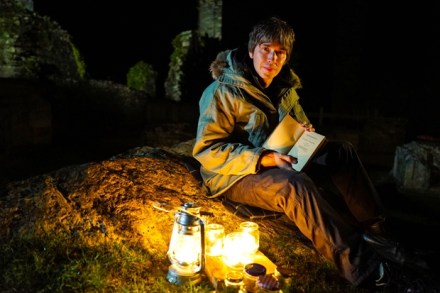
Pop idol turned top boffin Brian Cox doesn’t shy away from the big issues. With programmes such as Wonders of the Solar System, Wonders of Life and Human Universe, Cox, the heir apparent to His Eminence Sir David Attenborough, has dared to dream on a cosmic scale. Are there any limits to his mighty intellect? In his latest adventure, Forces of Nature (BBC1, Monday), the ambitious prof boldly seeks to illustrate the workings of ‘the underlying laws of nature’. As wistful electronic music tinkled Eno ishly in the background, he assured us, in a metaphysical tone, that ‘the whole universe, the whole of physics, is contained in a snowflake’.

The big chill | 30 June 2016

From our UK edition

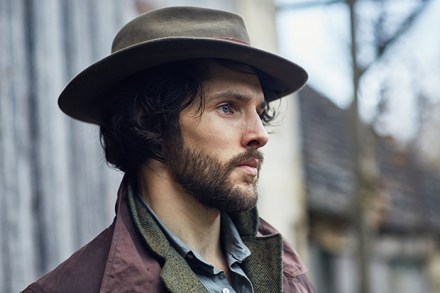
It’s sadly possible to imagine that The Living and the Dead was sold to BBC1’s commissioning editors as ‘Poldark meets The Exorcist’. Yet, while that wouldn’t be a completely inaccurate summary, the overall result is a lot more coherent, clever and ambitious than that. At heart, in fact, Tuesday’s first episode was a nifty twist on another genre: the one where a retired detective/gunslinger/master criminal comes out of retirement for one last job. The programme began in Somerset in 1894, where we met Harriet Denning, an unusually bright 16-year-old, whose intellectual curiosity alarmed her mother but who was encouraged in her reading of Ibsen, Zola and Darwin by her proud father.

Refuge from the referendum

From our UK edition

A brief encounter with Radio 4’s Any Questions to gauge the measure of opinion in the shires after the referendum result was enough to convince me we are entering even more torrid times than during the campaign. For some mysterious reason both Harriet Harman and Alex Salmond, billed in Radio Times to appear on the panel alongside Ken Clarke and Chris Grayling, had reneged on their promise and been replaced by Emily Thornberry, the Labour MP who got into trouble in 2014 for her white van man tweet, and Steven Woolfe, an oxymoronic Ukip MEP.

Keep an eye on BBC journos injecting their political agendas into the Brexit debate

From our UK edition

A quick update on the BBC TV News. At ten o clock last night the programme ran a report from its idiotic northern correspondent, Ed Thomas, which attempted to suggest that the Leave campaign was responsible for nasty things being said to immigrants. Thomas is an appallingly partisan correspondent and presumably has his job because he is only person within the BBC with a vaguely northern accent. He chose to interview two neanderthals. Then over to the inestimable Laura Kuenssssberg, who referred to the UK’s 'likely' exit from the EU. No, Laura: exit. We have to keep watching these patently parti-pris buggers. The subtle and not so subtle way they attempt to drive the political agenda. Keep an eye out especially for Thomas.

Animal crackers

From our UK edition

The other evening I was driving back in heavy rain from my pilates class when I noticed something rather upsetting in the gated road that goes through our estate. I stopped and got out of the car for a closer look. Yes, as I feared, it was a dead duck. Some bastard had squished her flat. What made me more upset still was that I could see her mate — a mallard drake — swimming forlornly in the ditch next to the road. I loved those ducks like Tony Soprano used to love his ducks. Especially the stupid way they waddled blithely across your path, forcing you to slow down and always making you smile whatever mood you were in. But clearly the tosser who did this was in too much of a hurry: either a van driver or someone in a 4 x 4, I guessed.

Absolutely Fabulous

From our UK edition

Absolutely Fabulous, which is about to make its cinema debut, is a comedy about women being useless. I watched it obediently in the 1990s — mostly for the clothes — and realise now, with more jaded eyes, that I was invited to laugh only at female failure. Failure is not a bad subject for comedy — it is actually one of the best, as Edmund Blackadder and Alan Partridge and David Brent tell us — but Absolutely Fabulous is too unsophisticated to be funny, and comedy without wit is spite. Absolutely Fabulous is based on a single sketch from Dawn French and Jennifer Saunders who were, then, the only female sketch double act on TV.

Was there any way not to traduce Cliff Richard?

From our UK edition

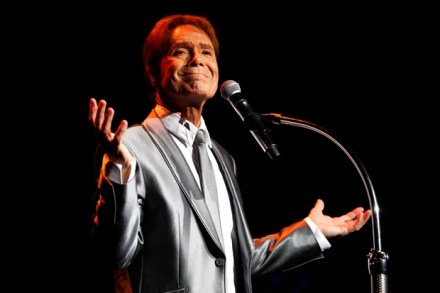
Sir Cliff Richard will not be charged with historic sex offences, say the police and Crown Prosecution Service. There is ‘insufficient evidence’. You, reader — yes, you: I cannot reveal your name because I’m making this up, but let’s call you Alan, and let’s suppose my reader-ship know very well who you are… you, Alan, respectable, hitherto-well-regarded Alan, are not going to be charged with smuggling into Britain a stash of sadomasochistic scatological pornography as a young man in 1983 because there is ‘insufficient evidence’. How do you feel about that announcement, Alan?

Rise of the atrocity exhibitionists

From our UK edition

Life is speeded up. It used to be that when a hideous atrocity occurred people waited a day or two, even a week, before co-opting it into their political armoury. Now it happens while the smell of cordite is still in the air and before the blood has dried. There is a breathtaking shamelessness about it and a certain narcissism, if not outright solipsism and an eagerness to demand a sort of acquired victim status. The revolting murders in an Orlando nightclub are a case in point. Some 49 people dead and 53 injured after a Muslim, presumably what we are enjoined to call a radical Muslim, ran amok with a gun.

My big fat Gypsy fortune

From our UK edition

In his latest documentary for the This World series, the Romanian film-maker Liviu Tipurita could have been forgiven for treading carefully — and not just because it meant him entering the world of organised crime. After all, his previous film in the series, the uncompromisingly titled Gypsy Child Thieves, was ferociously denounced by Roma groups for showing how some Roma parents send their children into European cities with strict instructions to beg and steal — the charge being not that this was necessarily untrue, but that it might confirm ugly prejudices. So how would Tipurita tackle the equally awkward facts behind The New Gypsy Kings (BBC2, Thursday)?

Gove wouldn’t support Osborne’s ‘punishment Budget’

From our UK edition

One consequence of David Cameron’s refusal to take part in any ‘Blue on Blue’ debates is that he and Michael Gove are appearing several days apart on BBC Question Time. Tonight, it was Gove’s turn to face the studio audience. In reply to the first question, Gove made clear that—in the event of Britain voting to leave—he wouldn’t support the so-called ‘punishment Budget’ that George Osborne set out today. Gove said that the Remain campaign were ‘turning it up to 11’ on the scare stories as polling day approached. Though, interestingly, he studiously avoided any personal criticism of Osborne. With the polls tightening the Remainers are getting more passionate, and Gove faced some fairly hostile questions from the audience.

Barometer | 9 June 2016

From our UK edition

Boxing brains Muhammad Ali died aged 74, after more than 30 years with Parkinson’s Disease. How many boxers suffer brain damage? — A 1969 study by A.H. Roberts examined 250 retired boxers and found 17% had lesions of the nervous system. Many had started out in the 1930s, when a professional boxing career could involve over 300 bouts; it’s fewer than 20 now. — However, brain examinations are now much more sensitive. A 2012 study by the University of Gothenburg of 30 Swedish boxers found that 80% had protein changes indicating brain damage. Hideously white? A BBC memo revealed it was seeking an ‘ethnically diverse’ presenter with a ‘northern accent’.