Bbc

Jacob Rees-Mogg: We need to stop the ‘Ukip-isation’ of Brexit

From our UK edition

The star of Conservative party conference so far can't be found in the main hall. Instead, they are best spotted at fringe events – each of which ends up being an oversubscribed event that involves a massive queue. Step forward Jacob Rees-Mogg. The arch-Brexiteer has been causing a scene wherever he goes with activists stopping him for photos. At today's Policy Exchange fringe event – titled 'Can the Conservatives win in Canterbury and Middlesbrough at the same time?' – the Moggster only needed to take his seat on the panel to trigger cries of 'Mogg for PM!' from the audience.

High five

From our UK edition

What a load of utter tripe Bodyguard (BBC1, Sundays) was. Admittedly, I came to it late having missed all the sex scenes with Keeley Hawes and Robb Stark, which may have dazzled me in the way they seem to have dazzled many impressionable viewers. Sex scenes in TV drama are a bit like the chaff used by fighters to distract radar-guided missiles. You’re so busy feeling simultaneously awkward and embarrassed and half-titillated, covering your eyes with your fingers, wishing your other half wasn’t watching with you because then it would be proper porn and you could enjoy it, that you sometimes forget to notice what convoluted, implausible tosh the surrounding drama is. That, I seem to recall, was how I managed to waste at least three hours of my life last year on Apple Tree Yard.

Whose truths are they anyway?

From our UK edition

Transcription, Kate Atkinson’s 11th novel, sees her returning to the detective fiction she honed in her series about Jackson Brodie, the haunted private eye who, after the murder of his young sister, chased the killers of girls. It also pursues some of the themes of her more recent fictions, Life After Life and A God in Ruins, which explored the ambiguities of war, and questions of chance and fate, with lives played out in multiple permutations. There is, however, no professional detective in Transcription. Instead it falls to an ordinary young woman to fathom the meaning of her life and, by extension, what it means to be caught in the net of history.

Let’s talk about sex | 6 September 2018

From our UK edition

This week was bad news for fans of good television drama series — mainly because there’s now three more of the things to keep up with if you don’t want to feel left out of office conversations. The one that stirred up the most advance media excitement was Wanderlust (BBC1, Tuesday), on the traditional grounds that it promised to be unusually explicit about sex. And in that, it certainly didn’t disappoint. The first episode began with a flurry of masturbation (not a phrase I can remember using in a TV column before). First, Joy, a middle-aged therapist, slipped a hand beneath the morning bedclothes — until her teenage son came in to ask where his shoes were.

The BBC’s anti-white rhetoric

From our UK edition

Cassian Harrison, the editor of BBC Four, told the Edinburgh International Television Festival last week that no one wants to watch white men explaining stuff on TV any more. ‘There’s a mode of programming that involves a presenter, usually white, middle-aged and male, standing on a hill and “telling you like it is”,’ he said. ‘We all recognise the era of that has passed.’ I’ve been puzzling over this. Why would one of the Beeb’s most senior executives, himself a white, middle-aged man, say something likely to antagonise such a large number of the people who pay his £170,000 salary, i.e. licence payers? After all, 87.

Listening habits

From our UK edition

Here’s a thought. Matthew Bannister, former Radio 1 controller turned presenter of programmes such as Outlook on the World Service and Radio 4’s The Last Word, has just announced that he’s leaving Outlook, which goes out several times a week, to ‘join the world of podcasting’. In fact, he’s already launched his own podcast, Folk on Foot. It’s as if he now believes that podcasting is where the exciting new challenges in audio (note, not broadcasting) can be found. We wireless-lovers should pay attention. Bannister is a radio man through and through. Does he really believe that podcasting is the future? We’re still waiting for the podcast that truly challenges the best of conventional radio.

Shark treatment

From our UK edition

All the good non-fiction things that were ever on TV — from Kenneth Clark’s Civilisation to David Attenborough’s Planet Earth (the bits where he’s not proselytising about climate doom, I mean), from Andrew Graham-Dixon’s arty jaunts to Italy to Jonathan Meades’s bizarro forays into architecture, from The World at War to all those more recent war porn documentaries narrated by Sam West, from Werner Herzog’s Little Dieter Needs To Fly to Louis Theroux doing a number on Jimmy Savile — have one thing in common: they were all made by middle-aged men. Middle-aged men are the business.

Is there any point infiltrating the Tory party?

From our UK edition

The recurring story of the summer recess – aside from allegations of anti-Semitism and Islamophobia within the main two parties – has been reports of an influx of Ukip-esque members to the Tories. Today tensions reached boiling point. Following reports that pro-EU Tory MPs are seeing sharp rises in applications to join their local parties amid fears of deselection attempts, Anna Soubry called on Tory chairman Brandon Lewis to suspend a membership drive. He is yet to do so – but a leaked memo to Guido shows CCHQ officials have been offering advice to local Tory organisers on the best methods for refusing membership requests. The whole incident is curious for a number of reasons.

Rubbish on TV

From our UK edition

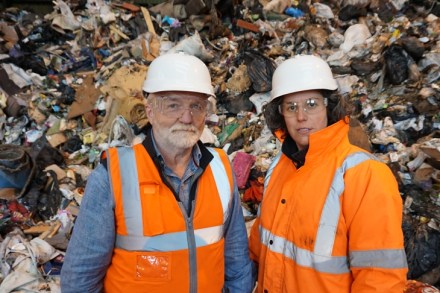
Not the most beguiling of titles, I admit, but The Secret Life of Landfill: A Rubbish History (BBC4, Thursday) was a genuine eye-opener. The programme began with Dr George McGavin proudly announcing that ‘What we’re about to do has never been attempted on television before’: a claim that it’s usually best to treat with some scepticism, but that here seemed hard to deny. Certainly, I can’t remember another TV documentary in which the presenters spent 90 minutes digging through (non-metaphorical) rubbish. At first, the mood was one of rather determined excitement.

The problem with Siegfried

From our UK edition

There’s one big problem with Wagner’s Siegfried, and the clue’s in the name. None of Wagner’s mature works hangs so completely upon a single individual. The character himself isn’t really the issue either, however troublesome he might superficially appear (a ‘randy overgrown schoolboy’, if you believe the misguided programme note for this Usher Hall performance). As so often, confusion falls away once you assume that Wagner — who, after all, wasn’t a complete amateur — knew what he was doing, and take Siegfried as the life-force his creator intended. Someone’s still got to sing the damn role, though, and that’s an Olympian challenge.

His dark materials | 16 August 2018

From our UK edition

Apparently there’s a new ‘character’ on University Challenge. I wouldn’t know. Last year, I vowed never again to raise my blood pressure by exposing myself to its new, gender-balanced questions: ‘Your starter for ten: which composer of Serenade for My Cat, rated by her father as the equal of Bach’s Goldberg Variations…’ Don’t know. Don’t care. You bastards ruined it, just like you ruined Sanpellegrino and Lucozade. Same applies, now I think about it, to all the other programmes on the BBC.

Is the BBC scared of the transgender debate? | 15 August 2018

From our UK edition

I like the BBC. I like the idea of a national broadcaster and I like a lot of BBC output. I admire many BBC journalists – the Corporation employs some of the very best. I am not a Beeb-basher, not least since so many of the people who bang on relentlessly about the BBC’s supposed biases are stupid or horrible or both. I say these things because for all my affection for it, this is an article about an area where the BBC is sometimes getting things wrong. Some recent BBC coverage of transgender issues fails to meet the usual standards of its journalism. Those failings, in turn, raise some wider questions for the BBC on this topic. The first piece that isn’t up to scratch is this Reality Check about transgender prisoners, published earlier this week.

Why Boris is wrong about burkas

From our UK edition

Were you aware that men who transition into women can suffer period pains, despite not having a uterus? Oh, they can, apparently. There is of course no scientific explanation for this phenomenon, nor could there be, other than perhaps that the transitionee is mentally ill. But it is no longer enough simply to accept that a bloke who has had his scrotum turned inside out is as authentically female as a, um, female — you have to accept his right to a whole plethora of imagined victimhoods which are real enough in proper females but couldn’t possibly pertain to him (and which may, further down the line, include this new thing ‘period poverty’).

The BBC’s new female panel show is patronising to women

From our UK edition

Where’s the F in News, new on Radio 4, is ‘an energetic, intelligent female-anchored show with a female panel’, according to its BBC description, of ‘fresh and funny challenges’. I listened to the latest episode. The panel of two comedians, one restaurateur and the Labour MP Jess Phillips were unanimous in their prejudices. The subjects were: vegetarianism (good, unless producing food that tastes like meat), Brexit (bad), Jacob Rees-Mogg (bad), Theresa May (bad/robot), parliamentary traditions (bad), Sir Christopher Chope (bad), new Girl Guide badges (good because they’ve abolished the ones for ironing and vermin control and introduced ones for ‘protesting’).

Top Trump

From our UK edition

The thing I most regret having failed ever to ask brave, haunted, wise Sean O’Callaghan when I last saw him at a friend’s book launch was ‘So tell me about Shergar.’ It has long been known, of course, that the legendary racehorse — one of the five greatest in the last century, according to Lester Piggott who rode him to victory in the Irish Derby — was kidnapped in 1983 by the IRA and never seen thereafter. What I didn’t realise, till after O’Callaghan died last year, was that the ex-IRA man is the only insider ever to have gone on the record as to his fate. Turns out that poor Shergar was executed within hours.

Channel 4 doesn’t do ‘news’ in any meaningful sense of the word – it’s pure propaganda

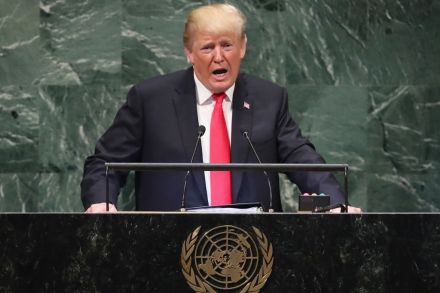
When President Trump refused to take a question from a CNN reporter at the Chequers press conference last week, I imagine a lot of British viewers thought —as Theresa May clearly did — that he was being graceless, capricious and anti-freedom of speech. But I think we’re in danger of underestimating the extent to which the media landscape has changed in the past few years. Gone are the days — if they ever existed — when political interviewers were dispassionate seekers-after-truth on a mission to get the best out of their subjects. Now, it’s mostly activism-driven, the aim being to advance your preferred narrative while showing up your ideological opponents in as unflattering a light as possible.

Profit and loss | 19 July 2018

From our UK edition

There’s been a lot of fuss and many column inches written about levels of pay at the BBC, as revealed in its latest Annual Report. Who gets too much? Why are women presenters still paid less than their male counterparts? What can be done to create more equality at the BBC? But all this controversy about money and gender is a red herring, diverting attention away from what we should be far more concerned about. Quietly, without fanfare, the BBC has been changing the way it makes and delivers its programmes.

Bearers of bad news

When President Trump refused to take a question from a CNN reporter at the Chequers press conference last week, I imagine a lot of British viewers thought —as Theresa May clearly did — that he was being graceless, capricious and anti-freedom of speech. But I think we’re in danger of underestimating the extent to which the media landscape has changed in the past few years. Gone are the days — if they ever existed — when political interviewers were dispassionate seekers-after-truth on a mission to get the best out of their subjects. Now, it’s mostly activism-driven, the aim being to advance your preferred narrative while showing up your ideological opponents in as unflattering a light as possible.

Blue on Blue: Nadine Dorries attacks Anna Soubry – ‘they’ve lost the plot’

From our UK edition

Oh dear. As No 10 attempt to stop more Commons rebellions today on the customs bill, relations between Tory Remain rebels and Tory Brexiteers have hit an all-time low – and that's saying something. Appearing on the Daily Politics, Nadine Dorries launched a broadside against Anna Soubry over her comments in the Chamber on Monday – when the Tory MP accused her Brexiteer colleagues with a 'gold-plated pension and inherited wealth' of backing Brexit to the detriment of people's jobs. One such Brexiteer colleague's response? Dorries just described it as 'one of the worst moments that we have ever seen or witnessed in the chamber'. https://twitter.

Gary Lineker tops the BBC pay league

From our UK edition

Whether or not England win their World Cup semi-final tonight, one thing is guaranteed: Gary Lineker has plenty to be happy about. The Match of the Day host, who flogs crisps and virtue signals on Twitter when he isn’t on the telly, has topped the BBC’s pay league for the first time. Lineker’s earnings last year of at least £1.75m means that he has overtaken Chris Evans to bag the top spot in taking home licence fee payers’ cash. The last time his earnings were published, Lineker doubled down by suggesting that he could earn more elsewhere. Will he do the same this time?