Bbc

Up close and personal | 2 May 2019

From our UK edition

‘Can you fly down this evening?’ she was asked by her boss in the Delhi office of the BBC. ‘Yes, of course. I have to,’ replied Ayeshea Perera, a Sri Lankan journalist. She was talking from Colombo to David Amanor of the World Service’s The Fifth Floor, which looks at current news stories from the perspective of those intimately involved with them and is always worth catching for its alternative, less formal approach and Amanor’s gentle probing to find the real story. Perera described the chaos on arriving at the airport in the Sri Lankan capital on the evening of Easter Day and the weirdness of going to see the Church of St Anthony next morning to find that from the outside it looked just as she had always known it.

The sense of an ending | 25 April 2019

From our UK edition

It was never given the choicest slot in the schedule, airing first thing on Sunday morning with a repeat at the end of the day. But in its 24 years Something Understood, guided and often presented by the esteemed foreign correspondent Mark Tully, has gathered an impressive audience. Its blend of poetry, prose and music from a huge variety of thinkers, theologians, scientists, poets and composers, carefully (but not artificially) edited around a theme, is for many listeners the best of Radio 4, challenging yet always accessible, highly selective but broad in content. I didn’t always manage to hear it but was glad to know it was there. Yet on Easter Day Tully presented the last ‘live’ programme, his final script, and in its ending perhaps gave the clue to its success.

Off the Boyle

From our UK edition

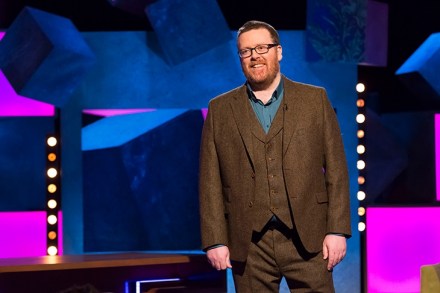
‘I spend a lot of time helping teenagers who’ve been sexually abused…’ — beat — ‘…find their way out of my house.’ You’d scarcely imagine, listening to Frankie Boyle now, that this was the kind of joke he was telling on TV as recently as this decade. I wouldn’t believe it myself if I didn’t have written evidence of it, in the form of a 2011 TV review of his now-forgotten shocker of a Channel 4 show, Tramadol Nights. Boyle was great back then because he went to places few other comics dared to tread. He joked about everything from cancer (‘What is it about people with cancer thinking they’re suddenly going to run a marathon?

What David Attenborough’s climate change show didn’t tell you

From our UK edition

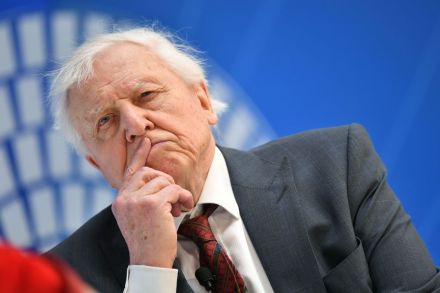
Given the reception that awaited Richard Madeley when he ventured last week that David Attenborough is “not a saint, just a broadcaster” – something which is evidently true, though I haven’t formally checked with the Vatican – one delves into this subject with some intrepidness. Nevertheless, great documentary-maker though he may be, Attenborough cannot be allowed to get away with the propaganda element of his latest piece, his documentary Climate Change: the Facts which went out on Thursday evening.    Before I get going, don’t even bother thinking of calling me a climate change denier in the pockets of oil companies, or whatever.

The transgender agenda is collapsing

From our UK edition

It is a great disappointment to me that my phrases don’t get picked up by other writers and then society in general before ending up in the Oxford English Dictionary. Chuck Palahniuk is credited with the use of ‘snowflake’ as a pejorative term, for example, and James Bartholomew claims (despite some evidence to the contrary) to have made up ‘virtue-signalling’. Both are now very familiar and even overused — but mine all get ignored.

People power | 11 April 2019

From our UK edition

He is said to ‘have changed the sound of speech radio’, not just by giving voice to those who until then (the 1960s) had not been given air time, the richness of their county accents too far removed from Broadcasting House’s Received Pronunciation. He won awards for his pioneering use of the new midget tape recorders, taking his microphone out of the studio and down the mines, to the fishing harbours, into the boxing rings and talking to teenagers. He was also a genius at editing, able to cut away an errant ‘s’ or insert a single note into the soundscape with the rudimentary tools then available, a sharp razor blade and a steady hand.

Planet propaganda

From our UK edition

If you liked Triumph of the Will, you’ll love this latest masterpiece of the genre: Our Planet. The Netflix nature series exploits the prestige, popularity and swansinging poignancy of Sir David Attenborough to promote an environmental message so relentlessly dishonest and alarmist it might have been scripted by the WWF. ‘Walruses committing suicide because of global warming.’ That was the nonsense from episode two repeated uncritically by all the newspapers, none of which seems to have been much interested in questioning the veracity of the claim. You’ll never guess what it was that really drove those walruses over the edge of the cliff...

The wisdom of the crowd

From our UK edition

On Sunday a drama began with ED905 being stolen by an OCG who’d faked an RTC that required IR, little realising that they had a UCO in their midst. So yes, Line of Duty (BBC1) is back in all its jargon-laden glory — and, judging from the first episode, it’s lost none of its ability to grip either. For those a bit rusty on their police abbreviations, that opening scene featured the female member of an organised crime group pretending she’d crashed her car with a baby inside, causing the woman in charge of a passing police convoy to stop and help. The rest of the gang then appeared in regulation Line of Duty balaclavas, killed three officers and drove off with the lorry-load of heroin the police were escorting.

Seeing things

From our UK edition

At its best audio can be a much more visual medium than the screen. Making Art with Frances Morris (produced by Kate Bland), which I caught by chance on Radio 4 last week, gave us insights into the work of the French conceptual artist Sophie Calle that were so vivid it was almost as if we had been to an exhibition of her work. Calle, now 65, is known for her unconventional approach to what art can be. In 1980 she was invited to show one of her first works, The Sleepers, a collection of photographs, in New York. ‘I asked people to give me a few hours of their sleep. To come and sleep in my bed. To let themselves be looked at and photographed,’ is her explanation of the project.

The secret of their success

From our UK edition

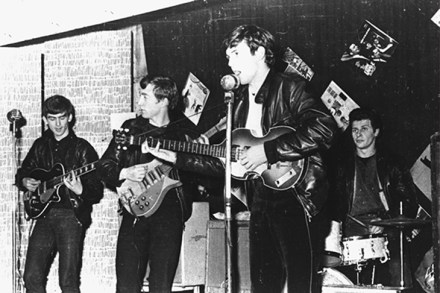
Which of the Beatles would you most like to have been? Not either of the dead ones, presumably. Nor the one continually derided for his alleged lack of talent. Definitely not the embarrassing, gurning, two-thumbs-up uncool one… Anyway, it’s a trick question. The correct answer, at least it is for me after watching The Beatles: Made on Merseyside (BBC4, Friday), is Pete Best — the drummer who got ousted just before the band got big because he was too good-looking, too quiet and, some say, because Brian Epstein couldn’t handle his mum’s pushiness. Best, I’d always imagined, was the unluckiest man in history.

Foreign exchange | 28 March 2019

From our UK edition

As the ravens circle around Broadcasting House in London’s West End, presaging difficult times ahead for BBC Radio, with less money to play with at a time of increased competition from its commercial rivals, a very different kind of listening experience was on offer last week in an upstairs room above a café in Canterbury. The UK International Radio Drama Festival is in its fifth year, gathering dramas from across Europe and beyond for a week of intense and unusual audio, transmitted in 18 different languages. Thirty or so of us sat around as the plays were broadcast through a number of old-fashioned radio sets, listening to monologues, musicals, character studies, experimental sound art in Czech, German, Farsi, Spanish, Slovene, Serbian, Romanian, Russian and more.

Black magic | 21 March 2019

From our UK edition

‘You’re thinking these girls all wrong,’ Miss Mai tells Enid in Winsome Pinnock’s play Leave Taking, adapted from the recent Bush Theatre revival for Radio 3 (and produced by Pauline Harris). ‘They don’t know where they come from.’ Miss Mai continues: ‘These girls got Caribbean souls,’ but they’re living in south London. Viv and Del have been taken to see Miss Mai, known locally as an obeah woman, by their mother Enid for a palm reading, a prediction, or perhaps a casting out of demons. Del has got into bad company, has lost her job at the burger bar for being cheeky, and fears she must be pregnant. Viv was the studious one, her mother’s great hope, but is now beginning to wonder what Shakespeare has to say to her.

Mummy porn

From our UK edition

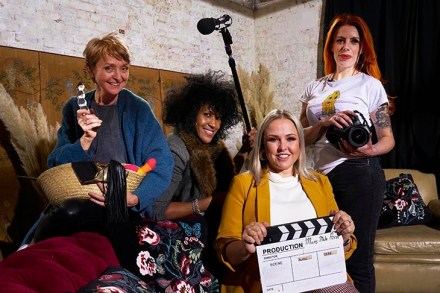
What can parents do about the avalanche of pornography available to their children on tablet, phone and laptop? This question was the starting point for a documentary series that began on Wednesday — and the answer proved unexpected. Having gathered five mothers together and shown them a hair-raising selection of online filth, the programme blithely declared that the best way for these women to ‘make a change’ was ‘by making their own mum-approved porn film’, which they’d then screen for their families and friends. If this premise struck anyone involved in Mums Make Porn (Channel 4, obviously) as at all questionable, they didn’t mention it.

Everyman

From our UK edition

Toby Jones shuffles into the café in Clapham where we are meeting. He’s wearing a duffle coat and a hat and carrying a rucksack. He looks just like one of those unsung characters that he specialises in, the kind of person you don’t take much notice of unless you have to. Today we are talking about his new ‘vehicle’ (sorry), Don’t Forget the Driver. It’s an everyday tale of an everyday coach driver (Peter Green) from Bognor Regis, his daughter Kayla, who turns ennui into an artform, and mother Audrey, who’s going downhill fast with Alzheimer’s. It is going to twang the nation’s heartstrings. What makes it different is that it is Jones’s first go at writing a TV comedy — or co-writing one.

Secrets and lies | 14 March 2019

From our UK edition

Halfway through the first part of Channel 4’s extraordinary documentary Leaving Neverland (Thursdays), I flicked through the comments on social media in order to gauge the global reaction. Surely, I thought, Michael Jackson’s reputation will never recover from these bombshell revelations. If you sat, squirming, though Dan Reed’s excruciatingly prurient documentary you’ll know what I mean. Lots of those who didn’t have been justifying their decision to ignore it with excuses like ‘Yeah, but we knew this already. Michael Jackson was a paedo. It’s hardly news, is it?’ But this strikes me as glib and dishonest.

Comedy returns

From our UK edition

BBC2’s MotherFatherSon announced its status as a classy thriller in the traditional way: by ensuring that for quite a long time we had no idea what was going on. At first it looked as if the focus would be on a missing teenager whose phone we saw abandoned in the woods. But then we cut to an American called Max (Richard Gere, no less) arriving in London by private jet on an apparent mission to choose our next prime minister. Then to a younger man running fast and screaming. Then to a veteran female journalist being sacked — and not only because she’d just lit a cigarette at her desk. Then back to the young screamer, who by now had revealed himself as the newspaper’s coked-up editor. Then to a woman working in a homeless centre.

Accidental hero | 28 February 2019

From our UK edition

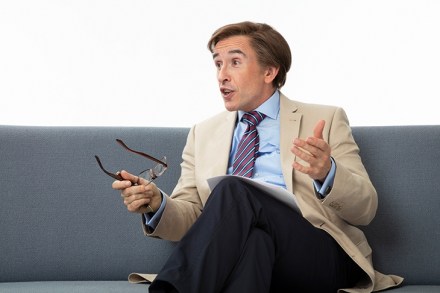
Steve Coogan is back as Alan Partridge but frankly who cares? Like Ali G, I’ve long thought, he’s one of those ‘classic’ 1990s comedy characters funnier in recollection than ever he was in reality. He should have been confined to brief sketches — like Paul Whitehouse and Harry Enfield mostly did with their cheesy has-been DJs Smashie and Nicey — not cruelly exposed in endless TV series where you’ve got the joke in the first five minutes and the rest is pure cringe. Actually, though, This Time with Alan Partridge (BBC1, Mondays) is genuinely funny, clever and enjoyable because finally he has scriptwriters who don’t hate him.

Points of view | 28 February 2019

From our UK edition

Is it me or are we now faced (or perhaps I should say fazed?) much more often by stories in the news that test our moral and ethical principles to the limit, forcing us to question ourselves and what we think to such an extent that it becomes impossible to be sure of what is right? I can never understand the high-minded righteousness and full-blown convictions of the panellists on Radio 4’s Moral Maze, who each week are given a topical issue and who then spend 45 minutes tossing it about, testing the pros and cons and questioning a group of often baffled witnesses who are invited on to the programme to provide evidence for differing points of view.

Friendly fire | 21 February 2019

From our UK edition

With the upsurge of listeners to Classic FM (now boasted to be 5.6 million listeners each week) and the imminent launch of a new commercial station, Scala Radio, dedicated to classical music and fronted by the former Radio 2 DJ Simon Mayo (who has said about his new home: ‘Some of it will be familiar, some new and exciting but all timeless, beautiful and all absolutely relevant to today’), Radio 3 badly needs to regain our attention. Last weekend’s focus on Berlioz, ‘The Ultimate Romantic’, could have been such an opportunity, but either because of funding cuts or a confusion about its purpose (to find new audiences, to teach or just to entertain) there was little buzz about the weekend.

Let’s twist again

From our UK edition

What’s the best way to start a six-part thriller? The answer, it seems, is to have a bloke of a certain age pottering about at home when he’s suddenly and shockingly murdered by asphyxiation. You then roll the opening credits, forget about the dead guy and introduce the main character, who’s asked to take part in some sort of mission — and agonises about whether to accept or to leave the whole series somewhat stranded. At least, this is exactly what happened in both of this week’s big new Sunday-night dramas: BBC1’s Baptiste and Channel 4’s Traitors.