Bbc

Incoherent and conspiracy-fuelled: Adam Curtis’s Can’t Get You Out of My Head reviewed

From our UK edition

‘History,’ wrote Edward Gibbon, ‘is, indeed, little more than the register of the crimes, follies, and misfortunes of mankind.’ In this respect, though, history has nothing on the work of Adam Curtis, whose latest documentary Can’t Get You Out of My Head has now arrived on BBC iPlayer — all six episodes and eight and a half hours of it. Anybody who’s seen Curtis’s previous series (including The Century of the Self, The Power of Nightmares and The Trap) will know what to expect. Once again, he mixes terrific news footage, short clips of more or less anything, mood-inducing songs and a lordly commentary to remind us just how hopeless — in both senses — human beings are.

The BBC licence fee hike adds insult to injury

From our UK edition

In these chill winter days it’s good to know that at least one old lady is warmly wrapped up. The announcement that the BBC licence fee will rise in line with inflation is another modest, but comforting, layer of financial insulation wrapped around Auntie’s well-padded frame.  The new cost will be £159, up by about £1.50; so nothing to get excited about perhaps. But each time the licence fee is raised it focuses attention on the funding privileges that the Corporation enjoys and fuels the debate about whether those privileges should continue. The BBC, in its defence, makes what at first glance seems a very sound ‘value for money’ argument.

What’s the problem with BBC Arabic?

From our UK edition

It’s easy to forget that your BBC licence fee does not only fund content that you and your family consumes. In addition to the output aimed at domestic audiences, your annual payment of £157.50 funds a host of foreign language services aimed at projecting British impartiality and soft power overseas. The largest of these is BBC Arabic. Launched as a radio station in 1938, it was the first of the BBC’s non-English experiments, and the most successful. Today encompassing television, radio and online, the channel reaches more than 40 million people every week. That’s both an influential audience and a shedload of British money.

Gripping – if you skip the non-stop Yentobbing: Dancing Nation reviewed

From our UK edition

Thank God for the fast-forward button. Sadler’s Wells had planned a tentative return to live performance last month but the renewed lockdown forced a rethink and the programme was niftily reconfigured for the small screen. The result, Dancing Nation, is a generous serving of old, new and borrowed work from 15 UK dance-makers. Unfortunately the BBC’s three hour-long iPlayer films pad out the dance content with interviews and mission statements plus non-stop Yentobbing from the inevitable talking head. Brenda Emmanus, one-time frontwoman of BBC’s The Clothes Show, speaks fluent presenterese, emphasising every other word and greeting each number with kindergarten delight: ‘What a treat we have for you!

Just not cricket: the BBC is failing the Test

From our UK edition

Michael Vaughan might disagree but — putting aside 2005 and all that — was there a more thrilling and satisfying series than India’s evisceration of the Aussies which ended at the Gabba? Especially after being rattled out for 36, their lowest ever score, in Adelaide in the first Test, when no one, not even extras, reached double figures, and then losing many of their best players to injury or absence. They’ve pulled off a skilful trick, the Indians, in making the world see them as underdogs despite them being a cricket-mad country of more than a billion people, which already runs and owns the game. Now there can’t be a cricket fan on the planet who isn’t excited about England’s upcoming Test series against Virat Kohli’s multi-talented team.

The BBC needs to face up to the truth about the licence fee’s future

From our UK edition

It won’t come as much of a surprise to learn that the National Audit Office thinks the BBC faces 'significant' uncertainty over its financial future due to changes in viewing habits. The NAO’s findings are about as ground-breaking as your average anodyne Beeb drama, but they do tighten the cilice on a funding model that is impossibly outdated in the 21st century.  In the past decade alone, there has been a 30 per cent decline in BBC TV viewing; on average, the amount of time an adult spent watching broadcast BBC TV fell from 80 minutes per day in 2010 to 56 minutes in 2019. When it comes to younger viewers, the NAO’s findings are ever more troubling for the BBC: in the UK, 18-34 year olds now watch seven times as much Netflix and YouTube as BBC1 content.

The truth about the new BBC chairman? He won’t make much difference

From our UK edition

The ‘pre-appointment hearings’ system overseen by parliament’s select committees doesn’t exactly set the heart racing; a pale imitation of the American system, where presidential nominees (to the Supreme Court for instance) are savaged by senators sitting as a kind of hanging jury, our version is generally bloodless. Certainly Richard Sharp, the government’s candidate for chairman of the BBC, who dutifully presented himself for cross-questioning last week, emerged with never a scratch on him.

Sell bitcoin, buy Tesla

From our UK edition

Which is madder, bitcoin at $41,500 — oops, make that $31,000 on Monday — or Tesla shares at $880 apiece? Don’t get me started on the crypto-mania in which the Financial Conduct Authority has warned gamblers ‘they should be prepared to lose all their money’. But Tesla, relatively speaking, is a real thing: a California-based carmaker which has expanded the frontiers of the electric vehicle market that’s going to become huge in the next decade and could soon make carbon--fuelled road transport extinct. Put that way, it’s not so surprising — in tech stock terms — that investors should value Tesla higher than the rest of the US auto industry combined.

Englishness vs California dreaming: Meghan and Harry’s Archewell Audio reviewed

From our UK edition

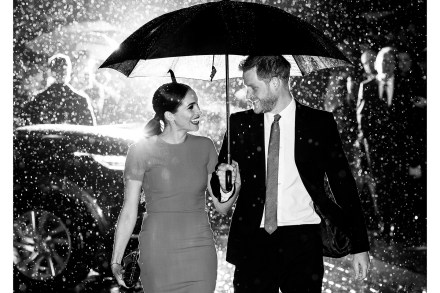
On Archewell Audio, Harry and Meghan’s new podcast, ‘love wins’, ‘change really is possible’, and ‘the courage and the creativity and the power and the possibility that’s been resting in our bones shakes loose and emerges as our new skin’. There’s no room for Christmas — the first episode dropped as a ‘Holiday Special’ — but there is for kindness, compassion and more than a few bromidic interjections of ‘So true!’ The podcast purports to ‘spotlight diverse perspectives and voices’ and ‘build community through shared experiences, powerful narratives, and universal values’.

Richard Sharp will not lead a BBC revolution

From our UK edition

If you wanted to start a revolution would you choose an Oxford educated multi-millionaire banker to lead it? Not the obvious choice is it? Which is why the news that the next chairman of the BBC Board is to be ex-Goldman Sachs banker Richard Sharp looks very like a retreat from any serious attempt to reform the Corporation. Tim Davie, the Director-General (DG) and the rest of the BBC executive board will be breathing sighs of relief; it looks very much like ‘business as usual’ at New Broadcasting House. The Revolution is postponed. In choosing Mr Sharp, a walking caricature of the Establishment, the Johnson government is signalling that it’s opting for a quiet life rather than conflict with the BBC. It is also demonstrating a continuing fondness for moneymen.

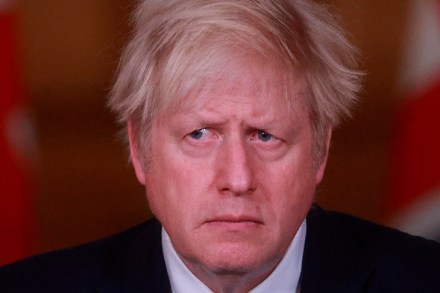
The comment that baffled Boris

From our UK edition

Real men are not supposed to confess to feeling fear. But I am frightened, second time round, about the plague. There is superstition involved. Back in March, I had an underlying belief that I would be somehow immune. This time, I feel differently. It’s partly those vertiginous graphs and partly my gloomy streak, a ‘just-my-luck’ sense that if I did succumb, it would happen with the vaccine only a hand’s-grasp away. So I’m cautious. For many people, the latest lockdown is atrocious, job-destroying, family-wrecking news. For me, it’s more of the same.

What’s the truth about the farmer who fell victim to a media hate-fest?

From our UK edition

Have you heard about John Price destroying a stretch of the river Lugg? If not, you have led a sheltered existence.  This month, Mr Price, who lives in the Luggside farm he was born in 66 years ago, in Kingsland, Herefordshire, has been attacked by the BBC (who ran denunciations of him unnamed), the Wildlife Trust (‘extreme vandalism’), Monty Don (‘it breaks my heart’), the Daily Mirror etc. He is said to have destroyed habitats by dredging, and by laying waste the bank on one side.  Something about the media unanimity aroused my suspicions, so I followed up. Mr Price, clearly a determined man, has spoken out in the Herefordshire Times.

The miraculous rise of June Sarpong

From our UK edition

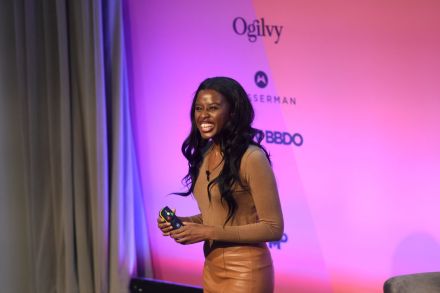
In this season for miracles, the rise of June Sarpong continues: she has been made a trustee of the Donmar Warehouse, that London theatre attended by City snoots and funded partly by taxpayers. Every era has its Widmerpool, the slaloming careerist in A Dance to the Music of Time. Who is our Widmerpool? Gove? Sir Peter Bazalgette? James Purnell? I’d plump for Sarpong. This London-born daughter of aspirational Ghanaians forewent university to work at Kiss FM radio. She became a teenagers’ TV presenter, appeared on Blankety Blank and was David Lammy’s girlfriend. Soon she was a Prince’s Trust ambassador and pals with Alastair Campbell. She now writes, adorns the British Fashion Council and does corporate gigs.

The BBC’s Christmas schedule is a tawdry disappointment

From our UK edition

Along with holly wreaths, unfeasibly large poultry and popular carols played on an endless loop, there is another ritual at this time of year; the BBC unveils its Christmas schedules — followed immediately by a chorus of sour complaint about the fare on offer. The Corporation published details of its programming at the start of December and, true to form, the Daily Mail and its readers were far from pleased: ‘Deja View’ ran the headline ‘BBC Christmas schedule in slammed by viewers’. In uncertain times it’s good to see time-hallowed traditions kept alive.

The BBC should be ashamed of its reporting on trans teenagers

From our UK edition

This is an article about some difficult, complex subjects: suicide, mental health, support for transgender children. It’s also about something very simple: a horrible failure of journalism by the BBC. I’ll come to the BBC in due course, but given that this is about the potential for self-harm among young people, I think it’s important to take some time to offer some context and background facts. The first thing to do is to note the longstanding advice to the media from the Samaritans on how to report responsibly on the issue of suicide, in order to avoid the risk of adversely influencing the behaviour of vulnerable people. 'Steer clear of presenting suicidal behaviour as an understandable response to a crisis or adversity.

What was the point of the Vicar of Dibley’s BLM sermon?

From our UK edition

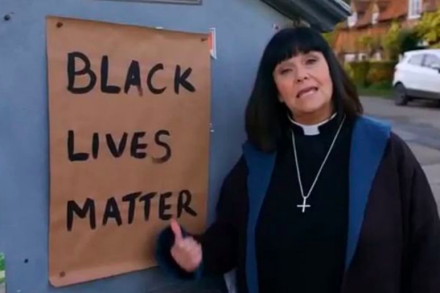
The first rule of preaching is not to be preachy – and it’s here that the Vicar of Dibley slips up in lecturing her parishioners on Black Lives Matter in an episode broadcast last night. When I am training curates, I show them Alan Bennett’s skit ‘Take a pew’ from Beyond the Fringe (1961), where a clergyman’s painful attempts at being hip are sunk by the rising of his sing-songy parsonical voice. Dawn French’s character would have been wise to watch too. The normally inoffensive sitcom, which is being broadcast this Christmas in a series of ten minute specials, features the TV vicar ‘taking the knee’. Surely this year, more than ever, we could have done without sermonising like this in a sitcom.

Nick Robinson could learn a thing or two from Plato

From our UK edition

Today presenter Nick Robinson has been reflecting on the political interview. He contrasts his interviews with scientists about Covid with those with politicians about policy, and thinks that it is the politicians’ fault that he never gets very far with them. It seems not to have crossed his mind that it might be his. Perhaps Plato (d. 348 bc) can help. Plato’s dialogues are the first examples the West has of extended discussions between interested parties on big topics — what we mean by justice, knowledge, goodness and so on. Socrates is at the centre of most of them, and is presented as a most delightful interlocutor — kindly, encouraging, gently ironic, rarely (one senses) even raising his voice, let alone hectoring his fellows.

The existential threat facing the BBC

From our UK edition

Less impartial than Channel 5. That will be the headline generated by Ofcom’s latest annual report on the BBC. In fact, what the regulator’s research finds is that, over the last two years, the percentage of BBC viewers who deem the Corporation’s output ‘impartial’ has fallen from 61 to 58 per cent, while Channel 5 has driven up confidence in its impartiality from 57 to 61 per cent. Indeed, Auntie is still ‘the most-used news source in the UK’ and 70 per cent of regular viewers still say it is ‘accurate and trustworthy’. Nor does Ofcom find the Corporation’s news service breached the Broadcasting Code’s requirements for due impartiality or due accuracy in 2019-20.

The BBC’s real diversity problem

From our UK edition

Another day, another breast-beating confession from a BBC news-wallah about how the Corporation has sinned against diversity. This time it was ‘head of newsgathering’ Jonathan Munro lamenting the fact that most of the editors who labour under him are highly-educated, middle-class white men: 'I don’t think anyone can think that is right or justifiable,' he declaimed piously in a Media Masters podcast. He added: 'We don’t want all our editorial meetings to be dominated by what white people think. We don’t want any single group in society to dominate our editorial thinking, because we are not being diverse in our thought process.

The truth about me and Dominic Cummings

From our UK edition

It is such a relief that Dominic Cummings has gone. Not for the sake of the country or the government — you can make your own mind up about that. No, no, I’m talking about me. Over the past year or so, the abuse I’ve received on Twitter and Facebook for reporting anything perceived to have originated anywhere near Cummings has been wearing. I’ve never endorsed anything he said or did. That’s not my job, as you well know. My job is to tell you the thoughts, plans, hopes and dreams of the most powerful member of the government (which he was for a period last autumn). Sometimes that was briefed by him, often it was gleaned from old-fashioned reporting.