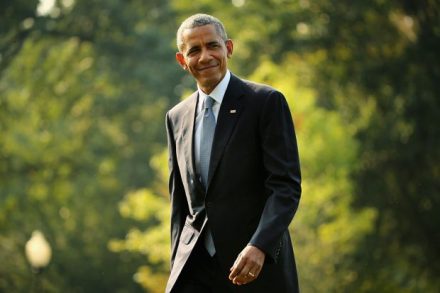
Barack obama

Obama’s decision to free Private Manning disgraces America

From our UK edition

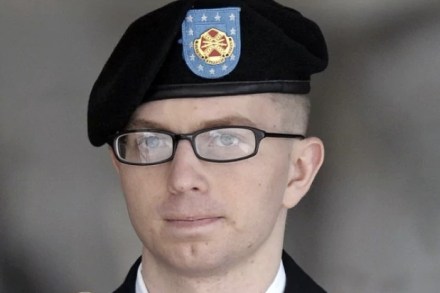
Barack Obama's decision to commute the prison sentence of Private Manning is a final, disgraceful undermining of American interests by the outgoing US President. Manning's decision to dump vast swathes of stolen information with the Wikileaks organisation, which then published them, caused untold and untellable damage to America and her allies. It revealed operational details which should never have fallen into the hands of America's enemies. Manning ensured that they were available not just to such groups and nations but to the entire world. And of course leaks encourage leaks.

Long life | 12 January 2017

From our UK edition

Mark Zuckerberg, the founder of Facebook, likes making and keeping New Year resolutions. In recent years he has learnt Mandarin, read 25 books, run one mile every day, and created a robot-butler to organise his home. But this year his New Year resolution is more high-minded than usual. ‘My personal challenge for 2017,’ he writes, ‘is to have visited and met people in every state in the US by the end of the year.’ Why should he want to do a thing like that?

No, he didn’t

From our UK edition

The irony of Barack Obama’s presidency is that while it began at a time when it seemed America’s fortunes could only improve, his inauguration day turned out to be his personal high water mark. The retiring President’s speech in Chicago this week contained flashes of the optimism that he brought to a country and a world which was reeling from the banking crisis and mired in the deepest recession since the 1930s. It recalled the sense of hope that he would lift America’s reputation abroad, shattered as it was by the Iraq war. Yet eight years on, even Obama’s keenest supporters are struggling to answer: what exactly is his legacy? ‘Yes, we did,’ he roared to the crowd, in reply to his old rallying cry of ‘Yes, we can.’ But did what?

America won’t forget Obama’s message of hope

From our UK edition

Those who sneer at Obama for promising more than he could deliver have little understanding of the nature of moral idealism. They accuse him of naivety but they are themselves naive. They fail to grasp that Obama expressed the basic moral idealism that unites the vast majority of people in the West. He expressed it more eloquently than anyone else had for decades. To say that he created unrealistic hopes is inept. Those ‘unrealistic hopes’ are intrinsic to the basic creed of the West – ‘liberty and justice for all’ sums it up. Such intense idealism is a crucial aspect of the politics of the West, however awkward this is. It’s risky for a politician to express such ideals with real verve, for a backlash is pretty likely.

What the papers say: Donald Trump hits back

From our UK edition

Donald Trump is dominating the headlines once again after he hit back furiously at reports that Russia had compromising videos of him in a Moscow hotel room. The president-elect denied the claims, branding BuzzFeed, who revealed the dossier detailing the allegations, a ‘failing piece of garbage’. So should the claims have come to light? No, says the Sun, which attacks the website for publishing the unverified allegations and in so doing making a ‘mockery of journalism’. The paper questions why the website - whose editor-in-chief admitted they could not stand up the claims - gave the go-ahead to release the information anyway.

Obama fell for his own myth

From our UK edition

Barack Obama’s farewell address was not one for the ages. Like his presidency, it was full of hope yet ultimately disappointing. When Obama rode into office eight years ago, he had two mandates from the public: to right the economy after the Great Recession and to end the wars that George W. Bush had started but couldn’t finish. Beyond that, yes, his voters hoped this first black president would usher America into a post-racial future. Even many Americans who had voted against him wished him well. He was enormously popular, and he had majorities in Congress to prove it. He was in a position to make good on his promises. https://www.youtube.com/watch?v=H1O4iOoZxjg But he didn’t, and he doesn’t seem to realise it.

Will we see a different Donald Trump at today’s press conference?

From our UK edition

When Donald Trump steps from his golden elevator in Trump Tower to address the assembled ranks of the world's media later today, it will be 167 days since his last press conference - the one, you’ll remember, when he encouraged Russia to hack Hillary Clinton’s emails. After November’s election he did say he would announce how he planned to reconcile his business interests with holding the post of world’s most powerful man on December 15. But that was cancelled and since then the accusations, concerns and questions have simply piled up. Another bombshell came last night when reports emerged that US intelligence officials believe Russia may have collected compromising information about the President-elect.

Get ready for a wild ride

From our UK edition

Every American president since Harry Truman has arrived in the White House committed to globalism — a belief that America must lead always and everywhere — as the central organising principle of US foreign policy. In recent years, we have seen Barack Obama’s faith in globalism waver. The prospect of President Donald Trump abandoning globalism altogether is real. For US allies as varied as Britain, Japan, Saudi Arabia and Israel, American globalism has been the gift that has never stopped giving. Nations enjoying a ‘special relationship’ with Washington have relied on American power to shield them from danger and, to some extent, from bearing the consequences of their own folly, past and present. Listen to Andrew J.

Britain was wrong to back the U.N’s anti-Israel resolution

From our UK edition

Like all the best mistakes, it was done for the right reasons. Knowing that for once the US wouldn’t veto, the UN Security Council passed a resolution condemning settlement building in the occupied Palestinian Territories. The UK was no doubt keen to be with the consensus but we were wrong to back the Resolution. This time was different. Not because Israel has changed, nor the expansion of the settlements is exacerbating the efforts towards a settlement, but because the world has changed and so have we. The Arab Spring showed that the Israel-Palestinian conflict doesn’t matter. This may sound harsh for a country generating more news than any people can reasonably be expected to cope with but the medieval mapmakers were wrong. The Holy Land isn’t the centre of the world.

How Donald Trump emerged as Israel’s unflinching champion

From our UK edition

On Wednesday John Kerry managed to attract more attention with what amounted to a declaration of failure than any success he has achieved during his tenure as Secretary of State. In his speech blasting Israeli Prime Minister Benjamin Netanyahu, which came on the heels of US abstention on a United Nations resolution condemning settlements, Kerry all but conceded that a two state solution is as dead as the Dodo bird. Leading Democrats such as Senate minority leader Charles Schumer criticised the speech and want nothing to do with anything that might drive traditionally Jewish Democratic voters to the GOP. Obama himself had long washed his hands of any attempt to broker a grand Middle East peace, humouring Kerry's diligent but Sisyphean efforts of the past few years.

Long life | 8 December 2016

From our UK edition

While American conservatives, including Donald Trump and the Cuban exiles in Florida, whooped with joy at the news of the death of Fidel Castro, and while millions of America-haters throughout the world extravagantly mourned his passing, Barack Obama was circumspect. ‘History will record and judge the enormous impact of this singular figure on the people and world around him,’ he said. This was a restrained comment by an American president about a foreign leader whose 47 years of dictatorship had been sustained almost entirely by stirring up hatred of the United States; and we won’t have to wait for history’s verdict on his impact on that particular country, for we know already how enormous it was. He not only humiliated JohnF.

Another mad day in Trumpland

From our UK edition

Yesterday was another mad day in Trumpland — or America, as it used to be called. The president-elect started the morning off by promising, somewhat mystically on Twitter, that 'Great meetings will take place today at Trump Tower concerning the formation of the people who will run our government for the next 8 years’. But the most fascinating event of his day —for us saps in the self-immolating media, at any rate —was his showdown conference with the New York Times. The meeting was nearly cancelled in the morning, after both parties failed to agree on its terms and conditions, and then put on again after a bit of confusing back and forth between the Trump team, NYT, and the Donald’s multi-personality Twitter account.

Italy’s Brexit moment

From our UK edition

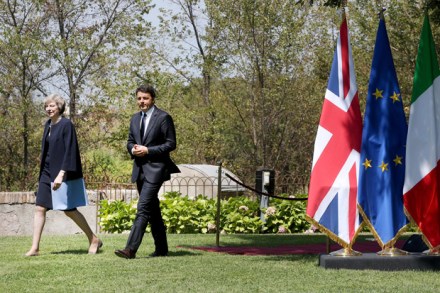
Though he is a big fan of the European Union, Barack Obama brings bad karma to it. So perhaps he should not have chosen Greece and Germany, the two countries which illustrate so poignantly why the euro is doomed, for his last foreign tour. His farewell visit is, if not a kiss of death, surely a bad omen for the EU and most immediately for one of those present in Berlin to bid him goodbye: Italy’s prime minister, Matteo Renzi, who has called an all--important referendum on constitutional reform for 4 December. If he loses, as looks ever more likely, it could cause a run on Italy’s sclerotic banks that could engulf the eurozone.

Trump will be much, much better for Britain

From our UK edition

The deplorables are rather wonderful people, aren’t they? Both here and in the United States. The people’s revolution continues apace, defying the odds each time, defying the pollsters, defying the elite. I cannot tell you how pleasurable it was to scamper downstairs on Wednesday morning to check out the reaction on the Guardian’s website. It kept me cackling for hours. The previous morning the paper had concluded its fatuous leader column with the words: ‘Americans should summon a special level of seriousness and display a profound responsibility when they go to the polls.

Liberal ideology created Donald Trump

From our UK edition

Dear Democrat voters, You are probably the most influential and powerful segment of the human race today. In terms of cultural reach, you are supreme; politically you are masters of the universe; you have the ability to shape our world for good or evil, and for most of the past century you and your forebears have done a pretty good job of it. I'm addressing this to Democrats in particular because in the US, as in Britain, liberalism is the prestige faith; the ratio of Democrats to Republicans in American academia is now five to one, and up to forty to one in some social sciences. Eight of the ten richest zip codes voted Obama in 2012; at Harvard College, 96 per cent of political donations go to the Democratic Party.

Trump’s big mistake? Turning the election into a personality contest

From our UK edition

If, on the night of Monday September 26, a US presidential election had been held instead of a televised debate, Donald Trump would likely now be America’s president-elect. That morning the reliable on-line poll analyst Nate Silver, sympathetic to Clinton, had tweeted, 'It’s a dead heat,' and then, a few minutes later, 'State firewall breaking up. Trend lines awful.' In retrospect, one simple task stood between Trump and the presidency: he had to look like some version of a rational human being. He failed. As Conrad Black has put it, the office of the presidency has been seeking Donald Trump. That night, Trump essentially picked up the phone and told the presidency it must have the wrong number. A classicist would call it a peripeteia. A sports fan would call it a choke.

The Spectator’s Notes | 27 October 2016

From our UK edition

World leaders are preoccupied nowadays with what is known as their ‘legacy’. In practice, this means being linked with moral-sounding projects, rather than embedding clear achievements. Barack Obama is even more obsessed with legacy than his predecessors. What might be his final way of showing this? Some suggest he will order the United States to abstain if France brings forward its planned UN Security Council resolution calling for a Palestinian state, thus permitting the resolution to pass. If so, he will bring no peace, but who cares? He will have signalled his virtue.

Hillary will beat Trump. But her presidency will be hamstrung just like Obama’s

From our UK edition

The more you study history, the more you realise how hopeless it is to try predicting the future. Even sophisticated polling can’t prevent surprises like the two recent whoppers in the UK: the wrong prediction of a razor-thin margin for David Cameron in 2015, followed by the wrong prediction of a Brexit defeat in this summer’s referendum. I’m a history professor. If anyone knows better than to make predictions, it’s me. Nevertheless, I predict that the Democratic Party will win the presidency and the Senate in November, but will continue as minority party in the House of Representatives. Let me explain why.

What next for Barack Obama?

From our UK edition

What is to become of Barack Obama when he retires from the US presidency at the age of 55? I have a suggestion. There is a vacancy on the US Supreme Court, which the Republican majority in Congress has blocked him from filling. Obama, a constitutional lawyer, is ideally qualified. And he might have more influence as a Supreme Court justice than he ever did as President. This is an extract from Chris Mullin's diary from this week's Spectator magazine.

Diary – 6 October 2016

From our UK edition

Any day now, the government will make its long delayed announcement on whether a third runway should be built at Heathrow or Gatwick. Personally I am against both. During my 18 undistinguished months as an environment minister, I learned one thing about the aviation lobby: their appetite is voracious. They want more of everything. Runways, terminals, you name it. I also learned that in the end, often after initial resistance, governments always give way. Although from time to time industry representatives hint that they would be prepared to make concessions on the handful of night flights that come in over central London each morning, disturbing the sleep of several million people, this is soon forgotten once they have got their way.