Barack obama

Barack Obama’s decision to consult Congress pays David Cameron the highest compliment

From our UK edition

When seeking election, both David Cameron and Barack Obama promised to seek a vote before going to war. Until an hour ago, it seemed that the Prime Minister was as good as his word but the president was not. His decision to follow Cameron's example and consult Congress has stunned Washington, not least because popular support for a missile strike is even lower in America than in Britain (about 20pc). So what helped shift opinion in Washington? Obama did not attempt to disguise it. Those asking him to recall Congress, he said, were... "undoubtedly... impacted by what we saw happen in the United Kingdom this week when the Parliament of our closest ally failed to pass a resolution with a similar goal, even as the Prime Minister supported taking action.

Obama follows Cameron by seeking Congressional approval for Syria strike

From our UK edition

As he licks his wounds after this week's Commons defeat on Syria, David Cameron will have been given a huge boost this evening to hear that President Obama has decided to seek approval from Congress before starting any strikes. Obama said: 'Over the last several days, we've heard from several members of Congress who want their voices to be heard. I absolutely agree.' This suggests that those who tried to certify the special relationship dead probably need a refresher course in vital signs as it clearly isn't headed for the mortuary, rather an acute unit (and Fraser explained why that assessment was wrong this morning). Perhaps it shows that Obama is aware of the trouble the US caused Cameron in initially setting out a tight timetable for strikes.

Why the US is striking Syria

From our UK edition

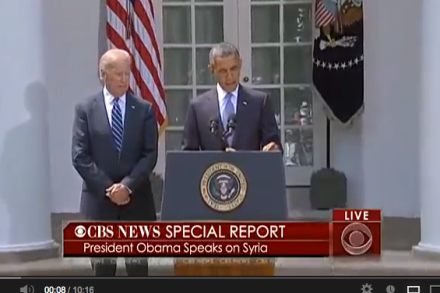
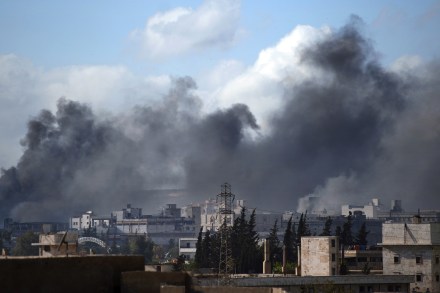
The US strikes against Syria haven’t started yet. President Obama’s Rose Garden statement and the fact Congressional leaders are being briefed on the intelligence tomorrow suggest that there’ll be no strikes today. (Update, 19.00: Obama has now said he's going to seek authorisation from Congress before acting, meaning they'll be no strikes until both chambers have voted in favour). When assessing the consequences for the ‘special relationship’ of Britain not being involved, we need to remember why the Americans are acting. They’re doing so largely because Obama declared that chemical weapons use by Assad was a red line. For the sake of America’s credibility in the world, he has to show that crossing the red lines he imposes has consequences.

Cameron and Obama: our relationship is still special

From our UK edition

David Cameron and Barack Obama spoke this evening about their special relationship. Normally when people start talking a lot about their relationships in public, it's because something is wrong (or they've just started out and like to hold loud and impressive conversations about whether to cook the salmon or the homemade ravioli in front of as many people as possible). So the fact that the importance of the special relationship was not just raised in the call, but included in the Number 10 readout suggests the pair were calling in the marriage counsellors. A No 10 spokesperson said: 'The President stressed his appreciation of his strong friendship with the Prime Minister and of the strength, durability and depth of the special relationship between our two countries.

David Cameron and Barack Obama’s latest call on Syria – a readout

From our UK edition

David Cameron and Barack Obama spoke last night again about the situation in Syria. Below is a readout of the call from Number 10: 'The PM spoke to President Obama last night to further discuss the serious response to last week's chemical weapons attack in Syria. 'Ahead of today's NSC, it was an opportunity for the PM to hear the latest US thinking on the issue and to set out the options being considered by the Government. 'Both leaders agreed that all the information available confirmed a chemical weapons attack had taken place, noting that even the Iranian President and Syrian regime had conceded this. And they both agreed they were in no doubt that the Assad regime was responsible.

Cameron and Obama warn Assad of ‘serious response’

From our UK edition

David Cameron spoke to Barack Obama yesterday about the situation in Syria. A Number 10 spokesman gave the following read-out of the call: 'They are both gravely concerned by the attack that took place in Damascus on Wednesday and the increasing signs that this was a significant chemical weapons attack carried out by the Syrian regime against its own people. The UN Security Council has called for immediate access for UN investigators on the ground in Damascus. The fact that President Assad has failed to co-operate with the UN suggests that the regime has something to hide. 'They reiterated that significant use of chemical weapons would merit a serious response from the international community and both have tasked officials to examine all the options.

The Thin Red Line

From our UK edition

The elasticity of President Obama’s 'Red Line' on Syria seems to be being stretched to breaking point following this week’s chemical weapons attack by Bashar Assad in a Damascus suburb, Ghouta, where up to 1,200 people, including many women and children may have died. What we all have seen on our screens is not an episode from ‘Wag the Dog’ as Assad and his chief cheer leader Putin would have us believe. In fact this is likely to have been the worst chemical attack on civilians since Saddam Hussein gassed up to 5,000 Iraqi Kurds in Halabja 25 years ago. Fortuitously the UN has a team of chemical weapons inspectors on the ground 15 minutes away from yesterday’s attack.

David Cameron and the D Street Band

From our UK edition

The Prime Minister’s love in with President Obama is blossoming. Not only has he recruited Barack’s campaign manager, but he’s also become one of those annoying acquaintances who jumps on your music taste and tries to make it their own. Hip Dave has declared that Bruce Springsteen, who was a key Obama fundraiser, is his ‘guilty pleasure’. Apparently, he has to hide his enthusiasm from his wife, who, outrageously, ‘doesn’t like The Boss’. He said, ‘When Samantha is not around there is a little bit of Dancing in the Dark or Born in the USA’. Interestingly, Dave described Springsteen’s 1982 album Nebraska, which was about the economic depression of the early eighties, as ‘grim’.

The Tories bag Jim Messina

From our UK edition

It’s a good time to be a Tory in Westminster at present. Labour is under pressure. The backbench dissenters have been quietened. Aides, hacks and spinners exude an air of confidence when you meet them in SW1’s watering holes. Even Boris Johnson reckons that David Cameron could yet pull it off in 2015. Speaking of which, the party has captured the services of Jim Messina, a strategist who has worked with Barack Obama. He will whip CCHQ’s mercurial digital assets into shape and help to sell the government's economic record. Aside from enjoying the benefit of Messina’s gifts, this is a PR coup for the ‘nasty party’. Observe the reaction of certain Labour figures: Jim Messina either doesn't know or doesn't care what a malignant thing the Tory party is.

The View from 22 — Osborne’s spending review, the return of America and goodbye to Mervyn King

From our UK edition

George Osborne's latest spending review has demonstrated how little progress he has made on pushing Britain towards fiscal sanity. On the latest View from 22 podcast, James Forsyth and Isabel Hardman analyse Osborne's statement to the Commons yesterday, the political significance of his plans and how Labour managed to fluff their response. Colleen Graffy, a former US state department official under George W. Bush, also joins Fraser Nelson to discuss our cover on the return of America as a significant presence on the world stage. How has the superpower regained its economic clout and what role, if any, did Barack Obama play in this miraculous recovery? Plus, Martin Vander Weyer discusses Mervyn King's departure as Bank of England governor. How was his final Mansion House speech received?

Why can’t we be honest about Syria?

From our UK edition

Wouldn’t it be nice just once in a while to have a war in the -Middle East that wasn’t predicated on outright duplicitous nonsense? Just occasionally? There are, after all, any number of sincere reasons one could advance for intervention now in Syria. (If one thought that was a good idea, which as it happens one doesn’t.) One could say, for example, that Bashar Assad is a nasty murderous bastard, and that now he’s gained the upper hand he’s almost certain to indulge in some even nastier, more murderous murdering than he’s been enjoying hitherto. Pretty good, that. Pretty hard to argue against.

Ben Fountain interview: Lies are an affront to writers because lying is the corruption of language

From our UK edition

Ben Fountain's debut short story collection, Brief Encounters with Che Guevara, was published in America eighteen years after he left his job at a Dallas real estate law firm to become a writer. It would appear that it was well worth the wait, as it immediately met with praise, awarded both the PEN/Hemingway and Whiting Award. This success continued when his first novel, Billy Lynn's Long Halftime Walk, was published five years later. In the last six months alone, it has won two awards in America, including the prestigious National Book Critics Circle award, and nominated for a further two here in the UK.

The Worst Argument Yet for Intervening in Syria: If We Don’t, Other Countries Will Snigger At Britain

From our UK edition

We should, I suppose, be grateful to Benedict Brogan for his column today examining some of the reasons for why Britain should become more heavily involved in the Syrian civil war. Grateful, that is, because Mr Brogan's article reveals how pitifully inadequate these reasons are. Here's Mr Brogan's conclusion: The coalition against intervention in Syria appears to have all the arguments on its side. It is, by any measure, a terrible idea, and on current standings the Prime Minister would struggle to secure necessary support in the Commons. But Mr Cameron says he wants to save Britain from international relegation. In which case, membership of the league of front rank nations comes with a price that is sometimes quite awful.

Just Give War A Chance: Obama’s Realpolitik Approach to the Syrian Civil War.

From our UK edition

Boris Johnson makes a strong case in today's Telegraph that even if the west wanted to intervene in the Syrian civil war the point at which is was plausible to do so has long since passed. The benefits of intervention no longer outweigh the risks. Meanwhile, Paul Goodman reiterates that there's no obvious British national interest in intervening. It is difficult to disagree with either analysis. Across the Atlantic, meanwhile, Andrew Sullivan is appalled by the Obama administration's decision to offer a modest quantity of modest weaponry to the Syrian opposition. This isn’t just unwise; it’s close to insane, he suggests. Don't be fooled into thinking this will shorten the conflict or save lives, he argues.

UK finds ‘credible evidence’ for chemical weapons in Syria. But is there a credible case for arming the rebels?

From our UK edition

David Cameron was pressed on Barack Obama's decision to give assistance to the Syrian rebels when he spoke to journalists in the Downing Street garden this afternoon. He gave a long answer, the transcript of which you can read at the bottom of this post, along with the audio. But here are the key points on the Prime Minister's current thinking on Syria. 1. He agrees with the American stance. He told the press conference: 'I think it is right that the Americans have said what they have said and I wanted to back that up with the information and the involvement that we've had in that assessment.' That included Britain seeing 'credible evidence of multiple attacks using chemical weapons in Syria'. But this is as much about America moving towards Britain's position on Syria.

Obama’s decision to arm the Syrian rebels will do little to address the Hezbollah threat

From our UK edition

Two years too late and with less than full conviction President Obama has finally announced that his administration will aid the Syrian rebels with lethal force. This follows confirmation by the White House last night of what was already well known – that Bashar al-Assad has been using chemical weapons against his own people. Obama’s intervention will be of limited utility. Supplying rebels with heavy arms and anti-aircraft missiles principally help civilians exposed to air raids and scud missile attacks, but will not help the rebels make significant gains. This might be precisely what Obama wants, but he will struggle to limit the extent of American involvement now.

After Obama’s intervention, will level playing fields in Syria become level killing fields?

From our UK edition

Now that Barack Obama has decided to arm the 'good' rebels in Syria, it's more likely than ever that Britain will follow suit. The G8 summit next week in Northern Ireland may well turn into a pre-war summit, which will certainly be interesting seeing as Putin will also be there. The Russians may respond by giving more arms to Assad and the level playing field may quickly turn into a level killing field. The Wall St Journal says that Obama has pretty much decided on a no-fly zone enforced by allied aircraft based in Jordan which will allow rebels to train. But which rebels? There are more than a dozen of them, some already fighting with each other.

What, exactly, is a ‘red line’?

From our UK edition

Last August President Barack Obama said that the use of chemical weapons in Syria would cross a red line. He repeated the phrase in December: red line. Why should the line be red and what happens if it is crossed? A simple, unhelpful answer is that the metaphor is taken from a safety gauge indicating a maximum speed, for an aeroplane perhaps, or for an engine’s revolutions. The big fat Oxford Dictionary in 20 volumes traces that figurative use back to the 1970s. But it seems at odds with a warning against chemical weapons. If Assad loosed off clouds of deadly gas, Mr Obama wouldn’t shout ‘Hey, slow down!’ Nor is the Obama red line related to the thin red line presented by the British Army to the Russians.

Syria: when ‘red lines’ make the headlines

From our UK edition

What is a red line, exactly? We've been hearing a lot of talk about 'red lines' from our politicians in recent weeks in relation to Syria, chemical weapons, and western intervention. 'Red Line' has become a sort of post-Iraq diplomatic catchphrase. It translates, roughly, as  the 'point at which we, the West, will definitely — and we really mean it — intervene, so take us seriously, ok?' But where has it come from? Is it connected to 'redline', the mechanical word for the maximum engine speed at which an internal combustion engine can operate without overheating? Is it to do with the red laser lines that alarm systems use? The thin red line? 'Redlining' in Microsoft Word? Or has it actually been around for ages?

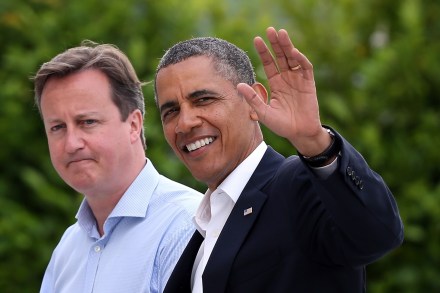
Barack Obama appears happy to help a leader in a spot of bother

From our UK edition

Barack Obama just threw a protective arm around David Cameron at their joint press conference, stressing that ‘you have to see if you can fix what's broken in an important relationship before you break it off '. The instant retweeting of this line by the Tory leadership’s communications channels  shows just how grateful they are for Obama’s verbal support for Cameron’s EU strategy. It is also worth noting, as they have gleefully tweeted, that Obama’s words also appear to be an endorsement of renegotiation as an approach. But does this actually matter? I suspect not. On this issue, Tory MPs are more worried about what their associations are saying and the concerns of their former voters than those of the President of the United States.