Bankruptcy

What Mark Twain owed to Charles Dickens

From our UK edition

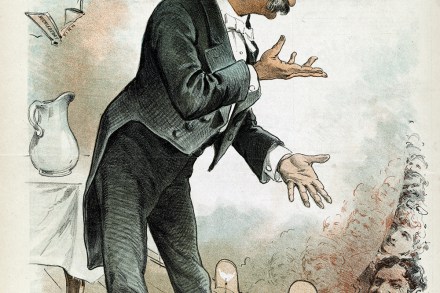
You know Mark Twain’s story. You’ve got no excuse not to; there have been so many biographies. Starting in the American South as Samuel Clemens, he took his pen name from the call of the Mississippi boatmen on reaching two fathoms. His lectures, followed by his travel pieces and novels, enchanted America and then the world. As a southerner, his principled stance against slavery gave him moral authority. The famous ‘Notice’ to The Adventures of Huckleberry Finn – ‘Persons attempting to find a motive in this narrative will be prosecuted; persons attempting to find a moral in it will be banished’ – was swept aside, so that persons like H.L. Mencken could straightfacedly describe it as ‘the greatest novel ever written in English’.
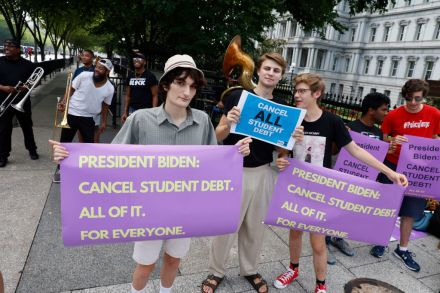
The unforgiving history of student loans

Republicans in the House are considering a bill to make major changes in federal student loans for college, and President Trump is floating the idea of making colleges responsible for borrowers who fail to repay. For decades student loans and their repayment are never far the center of controversy, but it wasn’t always that way. I grew up in the era before massive student debt. Student loans were available in 1971 when I went off to college, but they didn’t dominate the terrain like a Tyrannosaurus rex. They were more like Barney, the joyful purple denizen of PBS, who had a ferocious appetite for public funds but had not yet evolved into the carnivore who preys on the livelihoods of college graduates.   But the student-loan monster had already been born.

student loans

Never pour scorn on Croydon

From our UK edition

‘So f-ing Croydon,’ was the worst insult David Bowie could think of to describe a person or thing that revolted him. ‘Less of a place, more of a punchline,’ was a recent swipe by Sue Perkins, the Croydon-born comedian who grew up at the tail end of the town’s golden era of rampant employment, ambitious cultural venues and well-endowed private schools. London’s outermost, southernmost, most populous borough is an easy target for condescension: too brash, yet too poor; too try-hard, yet too lethargic; too ambitious, yet not ambitious enough. As the Croydonian author John Grindrod has written, locals are accustomed to Croydon’s ‘very existence – our existence – provoking outrage’. Croydon, neither London nor suburb, can’t win.

How VICE lost its cool

Last week I was at a writers' party in Miami, a city at the cutting edge of tech, finance, the creator economy and nightlife. Naturally the writers were talking about themselves. I asked someone what he would do if he didn’t have to worry about pageviews or proprietors or the other pressing concerns of the modern media. “Think VICE, when it was good,” he replied. To me, VICE when it was good is the girl’s bum on the fiction issue from 2008. It’s Michael Moynihan’s raspy voice reporting from South Korea. It’s the floppy hair of the one super-hot reporter I knew that smoked filterless roll-ups. VICE was where the cool kids at the back of the bus would grow up to write, the place that you would daydream about working for as a young reporter.

vice

The tragedy of Lebanon — from safe haven to bankruptcy

From our UK edition

Mountains are humanity’s most comforting topographical feature. Wherever you find them you will also find those who have flocked to them for refuge. The Kurds, the world’s largest stateless people, span the most mountainous areas of their host states, while ‘Lebanon’ referred originally to the mountains in the eastern Mediterranean that for centuries served as a haven for all the region’s minorities. First came the Christian Maronites, fleeing the persecution of the Orthodox Byzantine Empire in the 7th century; then in the 10th and 11th centuries the Shiite Muslims, persecuted by the Sunni powers; followed by the Druze, persecuted by the Shiites.