Baghdad

Should family history, however painful, be memorialised forever?

From our UK edition

Be under no illusions: this is not a food memoir. Chopping Onions on My Heart is a linguistic exploration of belonging; a history of the Jewish community in Iraq; and an urgent endeavour to save an endangered language. Above all, it is a reckoning with generational trauma. The subjects of Samantha Ellis’s previous books include the life of Anne Brontë, heroines of classic literature, feminism and romantic comedy. She is the daughter of Iraqi Jewish refugees, and the language she grew up around, the language of her people and culture, is dying. Judeo-Iraqi Arabic ‘came out of the collisions of Hebrew-speaking Jews and Aramaic-speaking Babylonians, and then absorbed linguistic influences from all the other people who conquered Iraq’.

A shocking claim about the Baghdad bombings of 1950 and 1951

From our UK edition

Avi Shlaim’s family led the good life in Baghdad. Prosperous and distinguished members of Iraq’s Jewish minority, a community which could trace its presence in Babylon back more than 2,500 years, they had a large house with servants and nannies, went to the best schools, rubbed shoulders with the great and the good and sashayed elegantly from one glittering party to the next. Shlaim’s father was a successful businessman who counted ministers as friends. His much younger mother was a socially ambitious beauty who attracted admirers, from Egypt’s King Farouk to a Mossad recruiter. For this privileged section of Iraqi society, it was a rich, cosmopolitan and generally harmonious milieu. And for the young Shlaim, born in Baghdad in 1945, these were halcyon days.

Marking twenty years of America’s most endless war

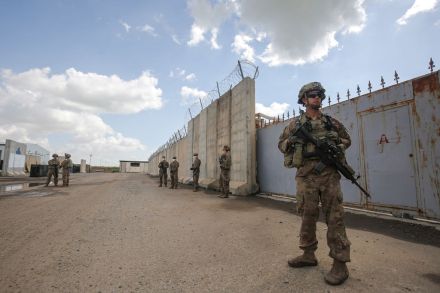
The Iraqi people have been through plenty over the last twenty years: a regime change operation against Saddam Hussein; a jihadist insurgency against American occupation forces; a sectarian civil war between Shia and Sunni armed groups; Iranian political interference; an Islamic State rampage; a US-organized counter-ISIS coalition that destroyed the terrorist group’s territorial caliphate. According to Brown University’s Cost of War Project, at least 275,000 Iraqi civilians died in war-related violence between 2003 and 2019. On March 19, the US will mark the twenty-year anniversary of Operation Shock and Awe, the massive air campaign against Saddam’s Iraqi army that paved the way for the ensuing armored drive to Baghdad.

foreign policy

The shock and awe-inspiring art of Iraq

The road from Erbil consists of one large, tarmacked lane, no separation marks, no shoulder, despite seemingly never-ending ascents and descents and a barrage of trucks carrying huge oil tanks. As soon as the mountains of the Iranian border appear, the cars form a bottleneck into Sulaymaniyah, the “cultural capital of Kurdistan.” It leads to a maze of circular streets, where finding anything — let alone an old tobacco factory turned arts center — becomes a challenge, even for two journalists armed with Google Maps and a local fixer. Yet after some circling, a phone call, a bit of translating and the opening of two twelve-foot, light-beige metal gates, the artist Tara Abdulla appears, smoking a cigarette.

What happens to US fighters captured in Ukraine?

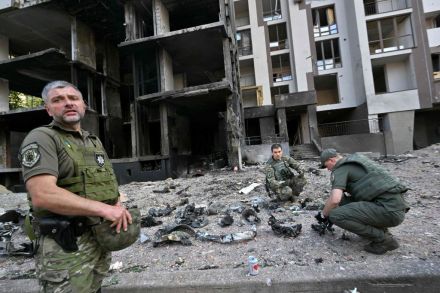
Alex Drueke and Andy Huynh are two former American military members now in Russian custody, captured by the Russians in Ukraine, where they were fighting for the Ukrainian government. What is going to happen to them? The most likely thing is that both men will eventually be traded to the US in return for captured Russians. Prisoners are very valuable and rarely wasted in executions unless those carry much more value than the prisoners held by the other side. The deal may be public or secret, and the US can expect to pay a premium. Israel usually releases ten or more Palestinian prisoners in exchange for one of its captured troops.

Masters of the opium trade: the fabulous wealth of the Sassoons

From our UK edition

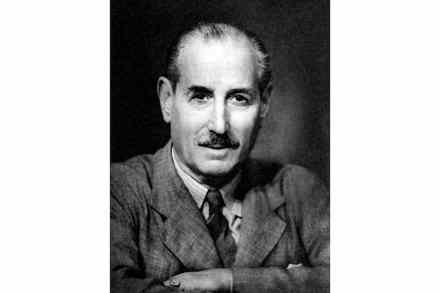
Just before I started to read this book I had been immersed in the letters written by Jewish merchants based in Cairo from the tenth to the 12th centuries describing the trade they conducted across the Indian Ocean all the way to the Malabar coast. These letters are written in a difficult cursive Hebrew script and in a Judaeo-Arabic dialect, so one needs greater expertise than I possess to read them in the original. It was therefore with what was almost a sense of dejà vu that I encountered Joseph Sassoon’s fascinating account of the rise and fall of the Sassoon family, from the beginning of the 19th century to the disappearance of their trading name in 1978.

What could go right for Trump in 2020?

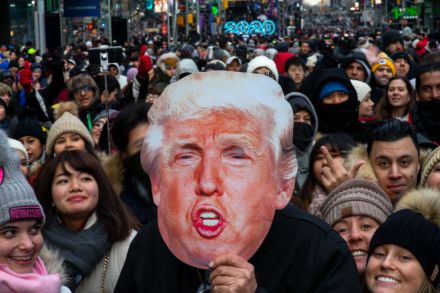
It’s starting to dawn on Democrats that Donald J. Trump might stand on the steps of the Capitol in January 2021 to swear his oath of office for the second time. A new Gallup poll indicates that he and Barack Obama are tied as the most popular men in America. So what are the four things that might help further smooth Trump’s oath to reelection? First, despite the preposterous pearl clutching of Freddy Gray on this website, Trump’s hardline against Iran could pay off. He’s steadily raising the military and economic pressure on Tehran. Contrary to all the naysayers, Trump could end up showing that Iran, not America, is the paper tiger.

right
baghdad iraq foreign policy

Trump’s foreign policy isn’t working

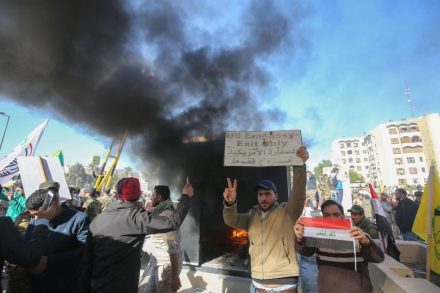
An end to endless wars? Get real. America’s foreign policy since the end of the Cold War is a never-ceasing tragedy. One front improves, another worsens. On Sunday, it emerged that the Taliban council had agreed a ceasefire in Afghanistan, a development that could at last end America’s longest war, its 18-year military engagement in the graveyard of empires. Maybe President Donald Trump really could make good on his promise to end America’s hopeless and destructive foreign entanglements. At the same time, however, Iraq has fallen into greater chaos again — because America can’t stop meddling. George W. Bush’s other great disaster continues. The failure cycle whirs.

Who knew that Arabic has more than 30 words for wine?

You know you’re in good hands when the dedication reads: ‘To the writers, drinkers and freethinkers of the Arab and Islamic worlds, long may they live.’ Abu Nuwas was all three, and a complete hoot. Why he is so little known in Britain should be a mystery. But outward-looking as we are as a nation, we remain peculiarly parochial in our literary tastes outside the Western canon. Born in the late 750s in Ahvaz, Abu Nuwas came to Baghdad during the reign of the Abbasid caliph Harun al Rashid in what was Islam’s golden age. In and out of favour as much as he was in and out of prison, he led a free-spirited, wine-drenched, sex-filled life, recorded in electrifying verse.