Auctions

Sotheby’s latest gamble

From our US edition

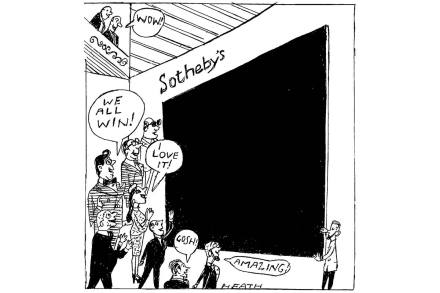
On February 1, 2024, Sotheby’s auction house announced a new fee structure that came as something of a surprise to the art world. For decades, Sotheby’s and its competitors have been one-upping each other with respect to the fees charged to buyers and sellers. While these fees have unquestionably increased the profitability of the auction houses themselves, in their complexity they have often bewildered auction participants and market observers alike. In theory at least, that may be about to change. Beginning this spring, Sotheby’s new fees will be both lower and potentially easier for all parties to understand. They apply to sellers consigning lots for auction after April 15, and to buyers beginning on May 20.

Sotheby's

The rise of the independent watchmakers

From our US edition

Over the last four years, one of the biggest trends in watch collecting has been the rise of the “independents” — the independent watchmakers with eponymous brands like Philippe Dufour, F.P. Journe, Roger Smith, as well as the new kids on the block like Rexhep and Xhevdet Rexhepi and my friends Petermann Bédat. These independent watchmakers typically have years of experience working for other watch companies such as Patek Philippe, Audemars Piguet and A. Lange & Söhne before starting their own brands.

independent watchmakers watches

The genius of Frans Hals

Since art auctions were invented, they have served to hype artists’ prices. It can happen during an artist’s lifetime — Jeff Koons’s ‘Balloon Dog’ — or half a millennium after their death — Leonardo’s ‘Salvator Mundi’. And it can sometimes restore a lost reputation, as happened with Frans Hals. When the picture now famous as ‘The Laughing Cavalier’ came up for auction in Paris in 1865, Hals was all but forgotten. A successful portraitist in his lifetime, he never made much money — with a wife and at least ten children, he remained a renter throughout his career — and after his death his reputation, overshadowed by Rembrandt’s, was tarnished by claims that he was a piss artist.

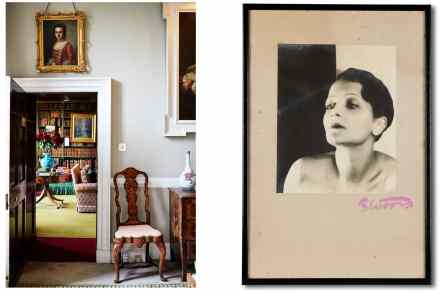
Sale of the century: the contents of the Sitwells’ mansion are going under the hammer

In my bedroom there is a small lidded laundry basket. It was designed by Geoffrey Lusty for Lloyd Loom, a company that has, since 1917, been producing surprisingly durable furniture made from lacquered woven paper fabric for the middle classes. The basket is globular and stands on three spindly legs. It is weatherbeaten, and slightly worn, because it was produced in 1957, at the dawn of the Space Era. Indeed, it is a Sputnik wicker linen basket, designed in the style of the famous satellite. Only 100 were ever produced. Why is this double design classic not in a museum? It may be that one is. As far as this one is concerned, however, I bought it at an auction in Bedfordshire last month for just over two hundred quid.