Arts

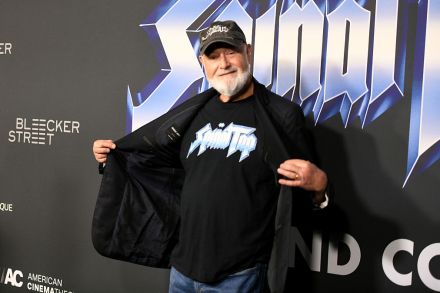
Spinal Tap II is an amusing, honorable successor to the original film

The story of the made-up English heavy-metal band Spinal Tap is, in every way but its particulars, the story of Joe Biden. Consider the parallels: a group of not-very-bright Baby Boomers – or, in Biden’s case, a single not-very-bright old man – manage, through sheer dumb luck, to reach the peak of their professions – selling out stadiums, in the case of Spinal Tap, or being elected to assorted high offices, in the case of Biden. Essential to the film’s success is the characters’ persistent ignorance of their own deficits in intelligence and logic Then, as time marches on, neither the band nor the politician acquires wisdom or sagacity but merely becomes older, weaker, and ever more enfeebled.

Spinal Tap

Has Trump’s Kennedy Center overhaul worked?

When Donald Trump installed himself as chairman of Washington’s Kennedy Center, the progressive arts community reacted with predictable hysteria. Artists threatened boycotts and donors withdrew their support. The Guardian reported the news as “anti-woke MAGA populism on a collision course with America’s progressive cultural scene,” while the usual suspects emerged from their Brooklyn brownstones and Malibu beach houses to decry the “assault on democracy” and predict the death of artistic expression as we know it. But as with most things Trump, the reality has proven far more interesting. Since opening in 1971 as a memorial to John F.

Kennedy

Wise, passionate and soul-stirringly withering: remembering the great Michael Tanner (1935-2024)

From our UK edition

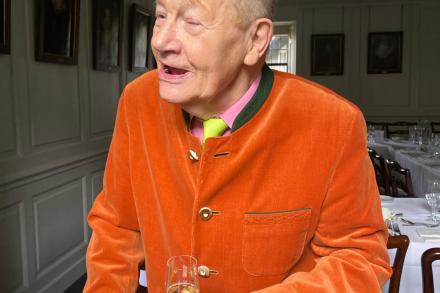
Michael Tanner, who died yesterday at the age of 88, lived two parallel lives. To many Spectator readers, he was the magazine's peerless opera critic: wise, passionate, thrillingly disputatious, intensely funny, extremely generous with the Semtex. Essential reading. He wrote The Spectator's weekly opera column from 1996 to 2014 and continued to review – and raze to the ground where necessary – concerts, books, albums and opera, whatever we flung at him, right up until 2022.  To countless others, however, he was one of the great philosophical scholars.

Why the coronation matters

From our UK edition

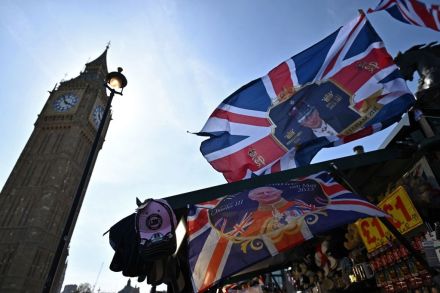
At one level, asking why the coronation matters is to slightly miss the point. Living as we do in a constitutional monarchy, the coronation doesn’t need to make a case for itself. It is simply an indispensable part, primarily in symbolic terms, of the installation of our new head of state. But setting aside for a moment its constitutional and religious significance, the coronation is important for another reason. Unlike almost every other nation state, the UK does not have an official national day. The patron saint days of the respective countries of the UK, of course, are celebrated to varying degrees ­– though St George’s Day far less so than the others.

Why universities are bad for the arts

From our UK edition

Members of the arts establishment have spent the past week outraged, following news that for the upcoming academic year funding for university courses in drama, dance, media studies and so on might have to be temporarily halved in order to better fund courses in medicine, nursing, pharmacology, the environment and the various sciences. Bearing in mind the state of the world, this shift in priorities might seem an unfortunate necessity. Nevertheless, toys are flying from prams. The arts education bubble is apparently livid that healthcare and the environment should be considered more deserving of funding than they are.

Most artistic careers end in failure. Why does no one talk about this?

From our UK edition

It is a standard narrative in all showbiz reporting, and one that arts hacks seem to be duty-bound to abide by. It is the fairy tale of ‘Making It’; the story of a star whose career took time to get off the ground but, thanks to perseverance and self-belief, went stratospheric. It goes like this: ‘I was a nobody, and I was turned down from everything. And I nearly didn’t go to that final audition, but whaddya know? I turned up and… Shazam! Oscars raining down and a mini-series on Netflix.’ There is an encyclopaedia of stars who toughed it out before making it big.

Theatre closures are not necessarily a disaster – they offer a chance to remake culture

From our UK edition

Theatre stands on the brink of ruin, says Sonia Friedman. And if you believe Twitter, so is my career. I'm apparently 'a disgrace to my profession'. 'Not fit to do my job'. I wear 'grubby' oversized T-shirts, dare to have 'an anagram for a name' (sorry for being foreign) and possess the face of an 'etiolated ferret' and, naturally, for all this, I should be fired.  Leaving aside for a moment my funny name, ferrety face and baggy clothes (all criticisms not without some merit), what was my crime? To suggest that theatre being on the brink of ruin might not be such a disaster. That tongue was firmly lodged in cheek was of course wilfully overlooked. Hey-ho. This is Twitter. Leaping on the most uncharitable interpretation of a tweet is the default setting.

From Middlemarch to Mickey Mouse: a short history of The Spectator’s books and arts pages

From our UK edition

The old masters: how well they understood. John Betjeman’s architecture column ran for just over three years in the mid-1950s. Yet during that short run he experienced the moment that comes, sooner or later, to every regular writer in The Spectator’s arts pages. ‘It is maddening the way people corner one and make one discuss politics at the moment,’ he wrote on 23 November 1956, clearly as bored of the Suez crisis as the rest of us were, until recently, by Brexit: Because I write in this paper, people assume that I share its Editor’s views about Suez… But I don’t know what the views of this paper about Suez are, because I never read the political stuff in front.