Artists

Bryan Garner has recovered a lost master

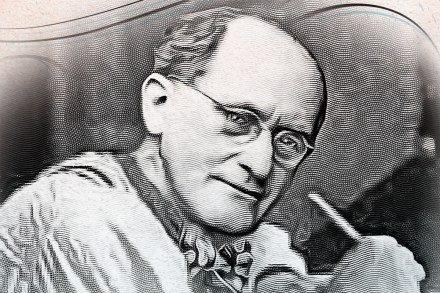
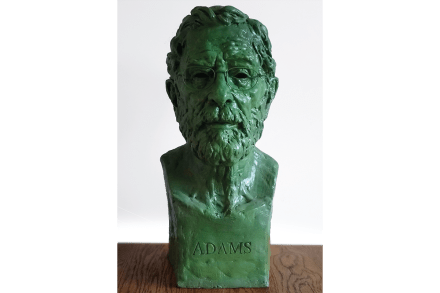
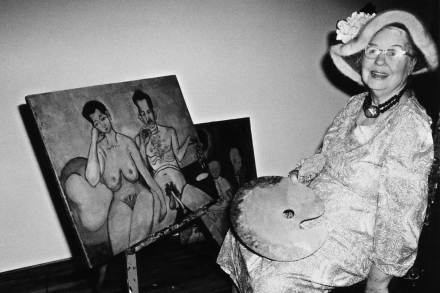
Bryan Garner has performed a remarkable act of cultural recovery with his vigorously written new book, The Etcher: The Life and Art of Oskar Stoessel, a long-forgotten Austrian artist who had total mastery of his form and deep understanding of the human face. Stoessel (1879-1964) attained success in the US in the 1940s after fleeing from the Nazis in 1938 with the help of US Minister to Austria, George Messersmith, who introduced him to elite American circles. Stoessel went on to etch portraits of Franklin Delano Roosevelt and Secretary of State Cordell Hull, among many others, and exhibited at the Corcoran Gallery in Washington, DC. He found his greatest supporters and subjects in the Supreme Court – he sketched all the sitting justices in 1941 and more in subsequent years.

bryan garner

Adam McEwen’s small masterpieces of the uncanny

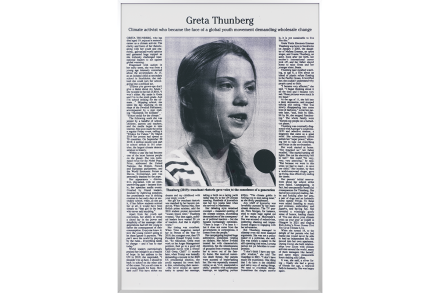
We meet at Adam McEwen’s apartment on the Upper East Side, a few hours before he makes a lightning trip back to London, where he was once a journalist working for the Daily Telegraph. After studying art, McEwen worked for a while writing obituaries, and his eureka moment came in 2000 with the decision to turn his day job into art. He began to write fake obituaries for living subjects, adopting the detached prose and visual design of a broadsheet newspaper. Each text was presented as a black-and-white C-print, and subjects included Jeff Koons, Marilyn Chambers, Macaulay Culkin and Nicole Kidman. McEwen’s fictitious obituaries are small masterpieces of the uncanny. In the instant of reading one, the hypothesized death seems real.

McEwen
Memorial

A classic monument for World War One

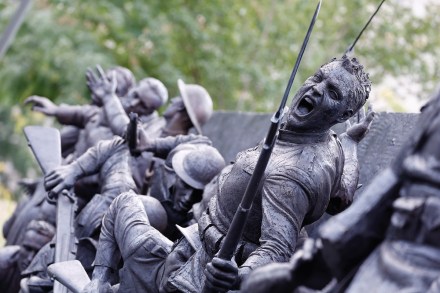
I was standing in front of “A Soldier’s Journey,” the centerpiece of the new National World War One Memorial in Washington, DC, chatting with its creator, sculptor Sabin Howard, when I raised a question. “So, are you the new Saint-Gaudens?” I asked. “No! No, God no!” exclaimed Howard. “That guy sucks.” Sabin Howard is nothing if not direct in expressing his opinions, which are refreshingly free of the artspeak that saturates most of the contemporary art world. It’s a frankness that is best appreciated by examining his current commission as well as trying to understand the artist himself.

Witnessing Humanity: The Art of John Wilson is a must-see show

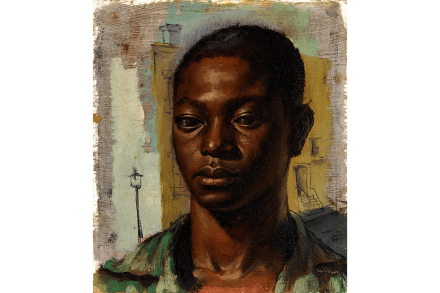
The Metropolitan Museum of Art’s Witnessing Humanity: The Art of John Wilson is a must-see show. Originating as an exhibition at Boston’s Museum of Fine Arts, the Met’s show is certainly the museum’s largest solo exhibition of an African-American artist’s work in recent memory, perhaps ever. It’s definitely the biggest-ever showing of Wilson’s work, but the Met is not patting itself on the back on these points. The show is a tribute to a fine artist of boundless talent, a painter of deeply felt and expertly rendered works, even if it will not rewrite any narratives of art history. Wilson (1922-2015) was an African-American artist of Guyanese descent who had a long and many-chaptered career.

Wilson

Ben Shahn’s work remains as timely as ever

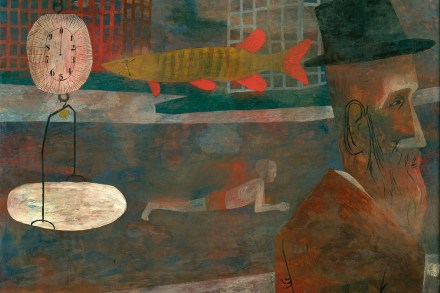
How can an artist express social and political dissent in a polarized, volatile time? Look no further than the sobering and rousing Ben Shahn: On Nonconformity. Throughout his decades-long career, Shahn (1898-1969) crafted paintings, murals, posters, drawings, photographs and prints chronicling the news of the world, with a focus on the suffering of society’s most wounded. This is the first major retrospective of his work to appear in the US since 1976. The country has changed, and yet Shahn’s work remains as timely as ever.  His social-realistic approach fell out of fashion as critics came to prefer abstract and pop art. But Shahn remained true to his own aesthetic, as the show’s 175 works demonstrate.

Shahn

Why does Irish art avoid the Troubles?

Almost three decades after the Good Friday Agreement was signed in 1998, it is possible, if not always easy, to see the funny side of the Troubles. Derry Girls, Lisa McGee’s coming-of-age television series, and Milkman, Anna Burns’s surreal novel, wring laughs as well as tears out of mayhem. There are few laughs in Steve McQueen’s Hunger, which did “for modern film” according to one critic, “what Caravaggio did for Renaissance painting.” For those who prefer horror unmediated by fiction, Patrick Radden Keefe’s Say Nothing is the best example of longform journalism since Capote’s In Cold Blood. But along with their setting, these dazzling creations have something else in common: to get made, they all needed the backing of a producer or publisher from the UK or US.

Irish

The sad decline of painting

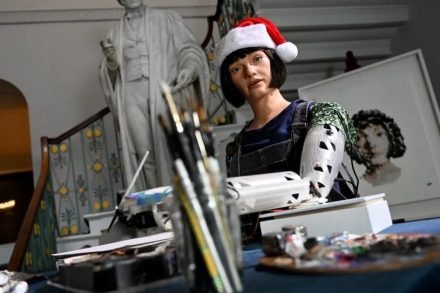
What hope is there for artists following the sale last year of the robot Ai-Da’s portrait of Alan Turing, entitled “A.I. God,” for $1 million? Someone has perhaps paid over the odds for a 3D print with a few marks added by a robotic arm and a few more by studio assistants to areas of the canvas Ai-Da couldn’t reach. Innovation wins. In the 1970s, the walls of art-school degree shows were studded with plaster casts of students’ genitals. By the 1980s, students were discouraged from attempting realist painting, but messy gray abstract works were still acceptable. Then it was found objects and piles of stuff. One young studio assistant I knew in the 2000s had a tutor at art school who’d gained top marks in his degree by filming himself pouring a glass of milk over his head.

painting

Why Alice Neel remains a vital presence

There is no portrait by Alice Neel quite as radical as her own. The artist was one of the first octogenarian women to exhibit a nude of herself with 1980’s “Self-Portrait.” In the painting, Neel grasps her paintbrush and sits exposed at the edge of a blue-and-white striped armchair. There’s no doubt about it; this is a woman of conviction who demands, “Look at me, in all my senescent glory: my silver hair, wrinkled face, sagging breasts, this is a life lived and here are its marks.” It’s only in the last decade or so that Neel has risen from relative obscurity to be acknowledged as one of the twentieth century’s greatest portraitists.

Neel

Böcklin brings out the dead

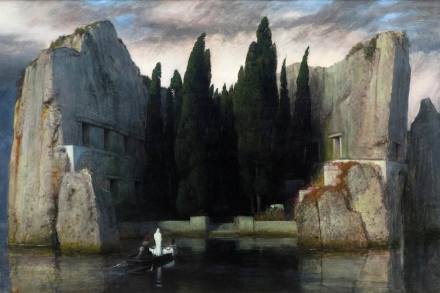
In the fall, a middle-aged man’s fancy turns to thoughts of death. As shadows lengthen, decay takes root in the raised beds, and the “spooky season” recalls the shortening of our days. It also provides an opportunity to reflect on how one artist embraced this time of year. Much of the life of the Basel-born Symbolist Arnold Böcklin (1827-1901) was haunted by the specter of death. His first fiancée died before they could marry; he himself nearly died of typhus. Of his fourteen children, five died in childhood; three others predeceased him. His daughter Maria was buried in the English Cemetery in Florence, where Böcklin spent much of his life. Scholars believe that the cemetery partly inspired Böcklin’s most famous work, 1880’s eerie “The Isle of the Dead.

Böcklin

In the studio with Merche Gaspar

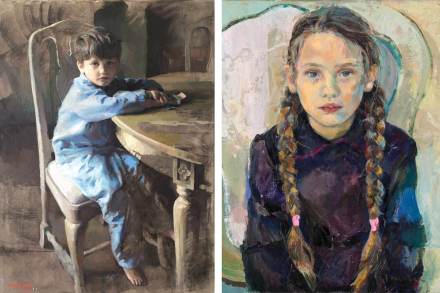
I was sitting cross-legged on the floor of artist Merche Gaspar Caro’s studio in Barcelona on a rainy Monday morning when I asked myself, “Why isn’t this artist better known?” We had met by chance some months earlier, when I passed by the Galeria Subex, which at the time was hosting a show of her recent work. I was initially drawn in by the exhibition poster, which displayed a stunning image of a young woman wearing a dark-blue dress and a white apron. Once inside the gallery, I was enthralled by canvases of mothers and daughters, drawings of birds and paintings of children playing or curled up in bed reading stories. Many featured a wonderfully cool, contemporary palette of mauve, gray and sapphire.

The divine Dalí and his ‘Christ’

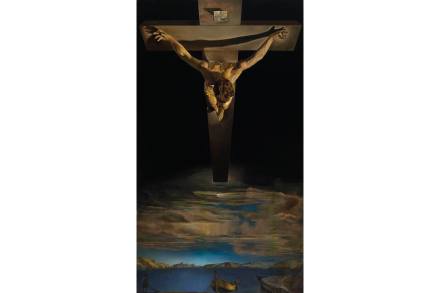
I arrived in the city of Figueres early one January morning to visit one of the most popular, and bizarre, art museums in the world, the Teatre-Museu Gala Salvador Dalí. It houses a dreamlike picture that, for the first time since it left over seventy years ago, has made a temporary return journey to Spain. Originally simply titled “The Christ,” the 1951 canvas depicting the giant figure of a man on a cross, shown at an overhead angle hovering over a moody seascape, was painted by the most famous son of Figueres, Salvador Dalí. Through April 30, it forms the centerpiece of a show exploring its creation, history, local connections and symbolism.

Dalí

The notorious feud between John Ruskin and James Whistler

It was too dark to see, and the painting was upside down. In 1877 John Ruskin, the leading art critic of Victorian England, attended an exhibition that included paintings by the American-born artist James Abbott McNeill Whistler. He hated them — and said so. In print. “I have seen, and heard, much of Cockney impudence before now; but never expected to hear a coxcomb ask two hundred guineas for flinging a pot of paint in the public’s face.” Whistler sued. The following year the argument came to court, on a dark day in a gloomy and gaslit courtroom. The canvases that Ruskin had so disliked were propped up against a wall and barely visible; one was the wrong way up, and another was dropped unceremoniously onto an elderly gentleman’s balding head.

ruskin

The demands and joys of contemporary art 

The career of artist Alberto Guerrero has been driven by an overarching desire to look for what is behind everything that we merely, and only dimly, perceive at present. The work of the forty-something Madrid-based Guerrero ranges from abstract, highly textured canvases and three-dimensional images which he calls “spherical paintings” to realistic presentations of daily life — such as his illustrated book Diary of a Quarantine showing life in the Guerrero household during Covid — and deeply reflective images of sacred art. There are few contemporary artists who have such a broad range and vision.

Guerrero

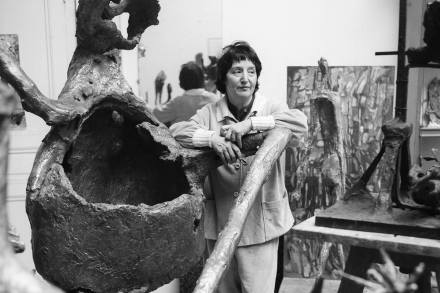
The brilliant, underappreciated work of Germaine Richier

In the spring of 1951, there was a commotion in Assy, a remote part of the Alps where France and Italy are only separated by mountains and valleys. In a town normally famed for its tuberculosis-healing properties and its winter sports, a debate about sacred art was beginning to make itself heard. After nine years of construction, the Église Notre-Dame de Toute Grâce du Plateau d’Assy was finally finished in 1946. A low, squat building, designed by architect Maurice Novarina and fashioned out of sandstone, it looked more like a chalet than a church.

Richier

What the Old Masters can teach us about contemporary life

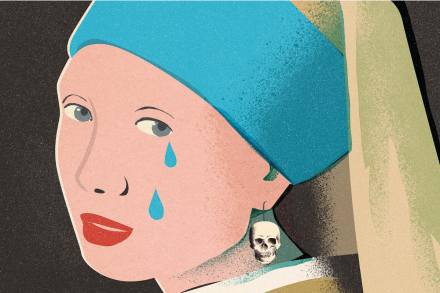
The seventeenth-century Dutch painter Johannes Vermeer is certainly having a moment, thanks to the enormous popularity of the retrospective of his work that concluded at the Rijksmuseum in June. Demand to see the gathering-together of twenty-eight of the thirty-seven currently known paintings by the Old Master far outstripped supply; the show sold out within two days of opening, and scalpers were allegedly reselling tickets online for hundreds, even thousands, of dollars. It’s certainly not difficult to understand why people would flock to see Vermeer’s work, thanks to his beautiful brushwork and sensitively lit compositions.

old masters
carrington

The surreal life of Leonora Carrington

"It’s the belief that nothing is ordinary, that everything in life is extraordinary. And being old is no more, no less, extraordinary than being young.” When the artist and writer Leonora Carrington was asked in 2006 what “Surrealism” meant to her, this was her reply. It was a remarkably frank statement from an artist who had, at other points in her career, declared that she “was never a Surrealist,” even memorably asserting that the Surrealist link between women (the femme-enfant) and the muse was “bullshit.” Perhaps it owes its frankness to the interviewer: sitting across the kitchen in Carrington’s house in Mexico City was her cousin, the journalist and author Joanna Moorhead.

Pet portraitist Mimi Vang Olsen marches to the beat of her own drum

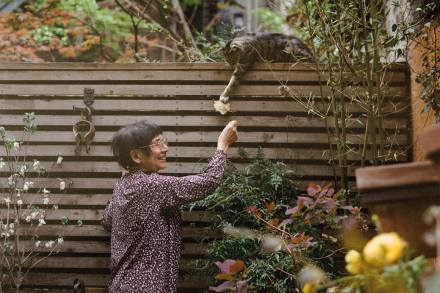
Mimi Vang Olsen operates in the West Village equivalent of a goldfish bowl. Every day, the eighty-five-year-old pet portraitist settles in a chair in her studio-cum-storefront on Hudson Street and gets to work, painting dogs, cats and the occasional guinea pig. Tourists stop to peer inside, cooing over a haphazard display of postcards and paintings. Locals tap on the glass to wave hello. During the pandemic, curiosity intensified: Vang Olsen’s shop became an Instagram sensation after she attached a blue mask onto a pug portrait hanging in the window for some much-needed levity. Vang Olsen, however, is nonchalant about the attention. She doesn’t have a cell phone or social media.

vang olsen

Drinking with Picasso

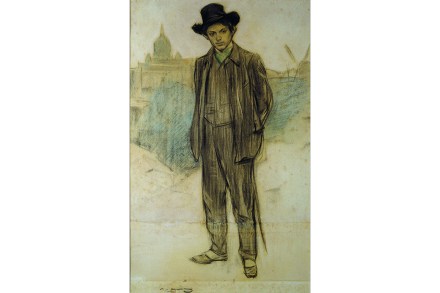
In February 1900, a critically acclaimed art exhibition went up at a Barcelona café called Els Quatre Gats. It was neither the first nor the last show mounted at the establishment, a popular drinking spot for avant-garde artists, writers and others. It was, however, the very first solo outing for one of the café’s regular patrons: a brash nineteen-year-old local art student named Pablo Ruiz Picasso. It has now been fifty years since Picasso died, on April 8, 1973, and even as that anniversary is being commemorated worldwide with new exhibitions and publications, he has never really faded from public consciousness. His art and even personal objects associated with him are avidly collected, and he continues to inspire filmmakers, musicians and other artists.

picasso

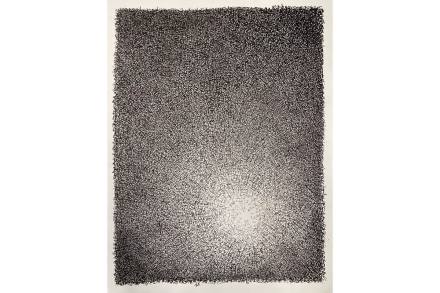
SoHo’s downtown drawings

Pity the poor Drawing Center. Founded in 1977 — or, rather, “born into the petri dish of the SoHo art scene in the 1960s and 1970s” — the Center was the pet project of Martha Beck, a former curator at the Museum of Modern Art. She felt that the medium of drawing, being underserved by the arts establishment, needed its own specialized venue. Over the years, this downtown gallery has proved its mettle, mounting a variety of historical and contemporary exhibitions, as well as making a point of reaching out to working artists, some of whom later went on to greater recognition. But that petri dish? It’s changed mightily since the heyday of industrial lofts rented on the cheap.

ornament