Architectural history

The punishing gluttony of Georgian high living

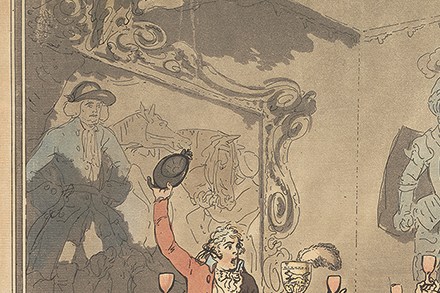
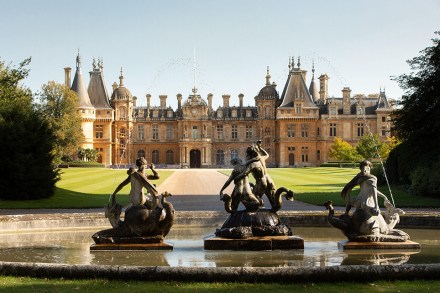
Georgian dining, if you were wealthy, was an incredible experience. Everything, from the location to the furniture, was carefully planned and meticulously executed to really hammer home the taste, status and impeccable education of the host. This was of course regardless of the actual likings, wealth and intellectual leanings of the party-giver. One of the delights of Amy Boyington’s book is the descriptions of the many, frequently ghastly, aristocrats whose country pads feature. There are murderers, adulterers, gluttons and spendthrifts. They did eat well, though. The Country House Dining Room is a Yale publication and, as such, can be expected to err toward the academic and the artistic.

What does it say about Britain that the Palace of Westminster is crumbling?

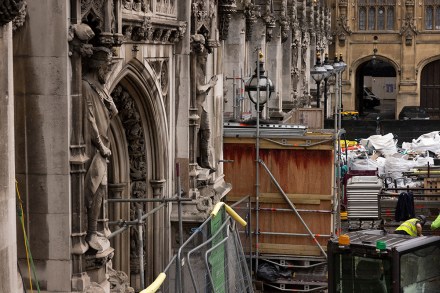
Many political scientists are oddly uninterested in politics. Their fascination is at a level of theory; but the means through which decisions are made in practice, through specific conversations and arguments and accommodations between actual people, strike them as so much gossip – or, worse, journalism. Jan-Werner Müller, a professor of politics at Princeton, best known to general readers for his trenchant, well-timed and comfortingly short What Is Populism?, here wanders like a niche flȃneur through the territory in between the personal and the theoretical: the ways in which people and politicians are variously welcomed, channelled, liberated and constrained by their concrete environments.

Only prigs and bores could object to the incongruity of Portmeirion

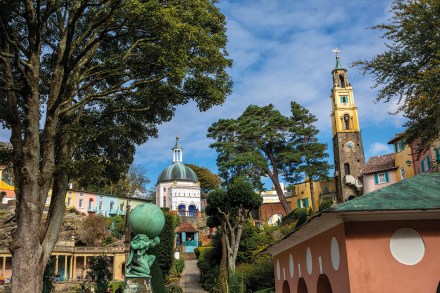
The only answer to the question ‘What connects Brian Epstein, Frank Lloyd Wright, Portofino and Stevenage?’ is ‘Portmeirion’, a conceptualised village on the north Wales coast. You could call it a folly, except it is living, not dead; and it exerts a lasting fascination. Traditional modernists deplore its flamboyant historicism – ‘retro-kitsch whimsy’ – but Jan Morris, a neighbour, said that only prigs and bores are truly hostile. Portmeirion needs a lot of explaining, as Sarah Baylis does in this first independent study of an enchanting project. It is well-researched, but not an academic reference book nor a continuous narrative. Instead, it is an eclectic album of comment and recollection, and thus perfectly sympathetic to its subject.

The glorious ventilation shafts hiding in plain sight

In the centre of London’s Paternoster Square there is a tall column on a heavy octagonal base that provides a few seats and shelter from the winds whipping around St Paul’s. If you look closely, you see a mishmash of styles, with the Corinthian column topped by a gold-covered flaming urn and various baroque flourishes. Passers- by might be surprised to find such an ode to eclecticism amid the rather modern neoclassicism of what was a highly controversial development in 2008 that attracted the attention of the then Prince of Wales. What few of them will know is that the column is not just a decorative addition to a dull square but has a function. It is a ventilation shaft (vent for short) whose primary use is to extract air and, crucially, fumes from the car park below.

The surreal drama of Helsinki’s history

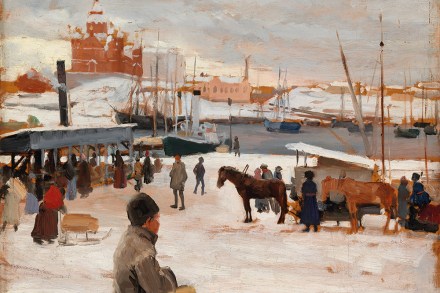
In 1920, the young Finnish architect Alvar Alto flew over Helsinki for the first time. He was aghast. ‘An aviator can see where the monkeys have been and destroyed so very much,’ he recalled. Alto’s aerial view reflected a story of fragmentation and occupation spanning some five centuries, now surveyed by the historian Henrik Meinander. The capital, explains the author, was bashed about by a series of bad actors – Swedes, Russians and Germans – until Finland stood its ground and became an independent nation in the early 20th century. Helsinki is ‘a city shaped by the sea, a city best seen from the sea’, writes Meinander. ‘Wherever you are in Helsinki’s inner city, you will always be close to the water.

Carlo Scarpa’s artful management of light and space

If Carlo Scarpa were as well known as Le Corbusier, modernism might not be so reviled. This architetto poeta grew up in Vicenza, whose 21 buildings by Palladio surely had a formative influence on his fast- evolving artistic intelligence. Scarpa studied building design at university, but, instinctively disobedient, never bothered with a licence to practise as an architect. So connected was he to his native territory that when Frank Lloyd Wright first visited Venice in 1951 he insisted on Scarpa being his guide. Most of Scarpa’s working life was spent in the Veneto, but he died in 1978, aged 72, in Sendai, Japan, after falling down a flight of concrete stairs. This added his own distinctive chapter to the story of curious deaths of great architects.

The mixed messages of today’s architecture – retro utopias or dizzy towers?

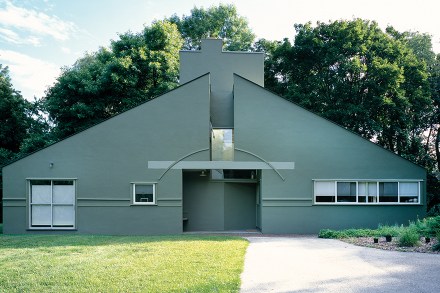
Only when history is decarbonised and decolonised will we understand how architecture should advance. For the time being, the art and science of building design are additionally hobbled by ‘systemic’ gender bias and ‘western-centric’ chauvinism.  If the dreary fugue of DEI rhetoric and the baffling clichés of archispeak make you want to scream, this book may not be for you. But get beyond the annoying tone – which combines dire waffle with apocalyptic prophecy – and Owen Hopkins has an important subject. The ‘Manifesto House’, he tells us, is evidence of a ‘deep and all-encompassing vision’ enjoyed by its designers. And these visions project themselves into the future, the place we are all going to live.

Wondrous treasure troves: the Jewish country houses of Europe

The words ‘country houses’ immediately make one think of England, yet only five of the 15 featured in this hefty, impressively illustrated book are in Britain. It is a compilation of essays: part histories of various Jewish families, part architectural descriptions and part stories of the chateaux, mansions, villas and, of course, country houses all over Europe, owned and sometimes built by these families. Each chapter is by a different author. The swimming pool was surrounded by such a profusion of lilies that the scent at night was overpowering  These homes had different functions. Some, like that of the German-born painter Max Liebermann, were built as traditional country retreats – his palatial town house was next to Berlin’s Brandenburg Gate.

How Margaret Thatcher could have saved London’s skyline

Looking around London on the eve of the millennium, it would have been difficult to think that the UK government had an adviser on architectural design. The 1990s had been a dismal decade. Yet such a body existed in the quaintly named Royal Fine Art Commission, refounded in 1924. The original Commission had been created as a way of giving Prince Albert, recently married to Queen Victoria, something to do – contriving the decorative scheme for the new Palace of Westminster. Fresco, the chosen medium, was not ideal in that damp position beside the Thames since the plaster took three years to dry; and the Duke of Wellington did not help the project by declaring he could not remember having met Blücher on the field of Waterloo, as depicted by Daniel Maclise.

Architecture for all occasions

Architecture is a public art, but public intellectuals tend to engage with more abstract stuff. The style-wars ructions excited by our new King nearly 40 years ago have been settled by gravity, but intelligent discussion about what makes a great building is still a rarity, especially in the Ministry of Levelling Up, where there is muddle. On the one hand, ‘generic’ is anathematised; on the other, ‘design codes’ and building regulations which stifle the original thinking necessary to good design are encouraged. Perhaps the Ministry should put in a therapeutic bulk order for Hugh Pearman’s About Architecture. ‘If these be the times, then this must be the man,’ as Andrew Marvell said of Oliver Cromwell. Pearman was the architecture critic of the Sunday Times for 30 years.

The country house is dead: that’s why we love it so

The true English disease is Downton Syndrome. Symptoms include a yearning for a past of chivalry, grandeur and unambiguously stratified social order, where Johnny Foreigner had no place unless perhaps as butler in the pantry or mistress in the bedroom. And the focus of the disease is the country house, Britain’s best contribution to the world history of architecture. Except often the architect was Johnny Foreigner. The typologies are well understood: from great halls with their Tudor feasts to Italianate palazzi, with Alexander Pope scribbling in the garden; thence to disturbing Victorian horrors corrupting their inhabitants (q.v.

Has Notre-Dame ever been a symbol of unity for the French?

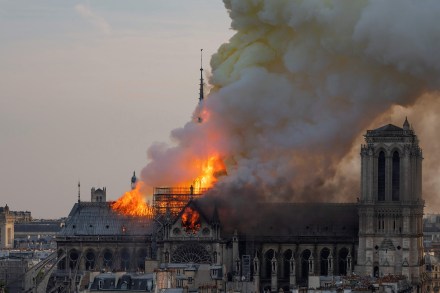
From the kitchen of her apartment on the Quai de la Tournelle in Paris, the journalist and broadcaster Agnès Poirier could see the bright yellow plumes of smoke rising into the sky. Notre-Dame de Paris was on fire, and suddenly, in that tourist-crowded, hyper-expensive ‘cradle of France’, nothing was certain — ‘democracy, peace and fraternity’ — any more. The following morning, children living on or near the Île de la Cité took to school little plastic bags filled with blackened bits of roof picked up from balconies and pavements (as well as probably quite a lot of lead dust) which ‘dated back to the Crusades’.