Anxiety

Small, skewed pictures that cast a spell: the art of Mollie Douthit

From our UK edition

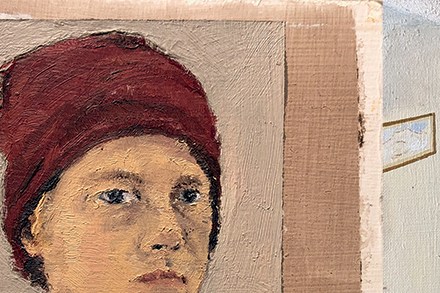
In this clever, moving mosaic of a book, Sara Baume tells us she originally wanted to be an art critic and that she wrote exhibition catalogue copy. It has served her well, as Opening Night is an evolved form of that genre – including 39 excellently reproduced images of paintings by the subject, and one extra – but it is also a form of memoir. By that I do not mean ‘life writing’ or ‘autofiction’, as it is a work of remembering and memorialising, even if that involves recording the gaps and lapses. The lacunae operate like an undercoat: the occluded thing that changes how you see. Just before the pandemic, Baume states in the opening sentence: ‘I met Mollie’s paintings before I met Mollie.

Disability is becoming the new normal

From our UK edition

Before I became confined to a wheelchair two years ago after an operation for a spinal abscess, I’d never read a book about disability. More remarkably, considering the tiny amount of time it would have taken, I’d never read a newspaper article about it either. The only media stories about disabled people I’d bothered with concerned famous sufferers, such as Christopher Reeve and Robert Wyatt. I’d also followed with voyeuristic revulsion the 2021 story of Giles Coren celebrating the death of the young, working-class, disabled journalist Dawn Foster after she’d had the temerity to cross him. So there you go. My concern with disability was confined to where it overlapped with showbiz and media.

The two faces of modern Japan

From our UK edition

Japanophiles, look away now. A country renowned for inspiring fascination, warm feelings and not a little envy in its rapidly rising numbers of visitors – from crime-free streets to clean and plentiful public toilets – is in the grip of problems deeper and darker than you might imagine. The classic Japan itinerary reveals little of those problems. You’ll enjoy hyper-modern Tokyo with its fabulous restaurants, flawless transport and non-stop shopping and entertainment. You’ll jostle tourists and schoolchildren for the perfect view of the Golden Temple in Kyoto without losing your enthusiasm for Japan’s ‘eternal city’. Then you’ll fly home with pretty much only good things to say about Japan and the Japanese.

A precocious protagonist: Vera, or Faith, by Gary Shteyngart, reviewed

From our UK edition

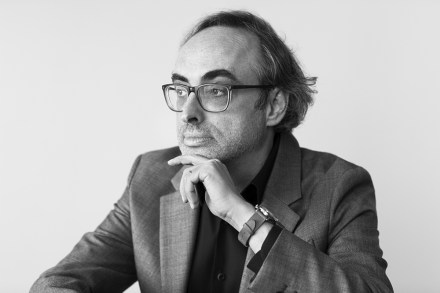
It’s impossible not to love Vera Bradford-Shmulkin, the whip-smart Jewish-Korean- American child narrator of Vera, or Faith, Gary Shteyngart’s sixth novel, which is a masterclass in the author’s sardonicism, set in a frighteningly realistic near future. School is awful and Vera’s world is on the brink of imploding because ‘Daddy and Anne Mom’, her stepmother, aren’t getting on, what with Igor’s evening ‘mar-tiny’ habit and crumpling status as a ‘leftist intellectual’. The wider American world is in similar turmoil, with an escalating campaign for the Five-Three amendment. This calls for ‘exceptional Americans’ who can trace their roots to before the Revolutionary War to get added voting weight, heightening tensions.

Haunted by my great-grandfather’s second wife – by Alice Mah

From our UK edition

Alice Mah didn’t enjoy finding her roots. Even though ‘ancestor tourism’ is increasingly popular among westernised descendants of Chinese émigrés like her, she felt a nameless sort of dread when visiting the village in the Cantonese county of Taishan where her great-grandfather came from. It didn’t help that she’d just attended the morbid Qingming festival, when the Chinese remember their dead by sweeping their tombs. Mah’s memoir opens here, and we nervously anticipate the tragedy or horror that will surely strike – and are left waiting. Other than the pushiness of Taishanese cousins, who demand ‘red pockets’ (a traditional way of gifting money in small red envelopes) and donations for the village from their richer compatriots, the trip seems uneventful.

Anxiety is good for you

From our UK edition

These are some of the things I worried about this morning. Should I brush my teeth while drawing the curtains, to save time? Should I get out of the bath at 7.40 a.m. or 7.45 a.m. to be fully clothed for the Tesco home delivery between 8 a.m. and 9 a.m.? Should I instantly pick up the coat hanger that fell off the door handle as I left my bedroom or wait till I return this evening? These are mind-staggeringly boring things to think about. They’re even more boring to write down. That is the life of the worrier: a new worry dropping into the brain roughly every five seconds. Life is one huge to-do list for us worriers.

The battle against phones in school

Should students be allowed to use their phones during school? The answer seems like it should obviously be no. But apparently this is has become a difficult subject for school districts to grapple with. Across the country, school boards and administrators recognize that phones distract students from learning, diminish attention spans and affect students’ mental health. But few have the gumption to remove personal devices entirely from schools.

Why today’s youth is so anxious and judgmental

From our UK edition

What’s not to like about a world in which youths are involved in fewer car accidents, drink less and wrestle with fewer unplanned pregnancies? Well, think about it. Those kids might not be wiser; they might simply be afraid of everything. And what has got them so afraid? A little glass rectangle, ‘a portal in their pockets’, that entices them into a world that’s ‘exciting, addictive, unstable and... unsuitable for children’. So far, so paranoid – and there’s a delicious tang of the documentary maker Adam Curtis about the social psychologist Jonathan Haidt’s extraordinarily outspoken and well-evidenced diatribe against the creators of smartphone culture.

Are hallucinogenic drugs losing their stigma?

From our UK edition

We are in the midst of a ‘psychedelic renaissance’. Not since the 1950s and early 1960s has there been so much interest in researching the therapeutic potential of psychedelics. The FDA approved a ketamine derivative for medicinal use in 2019, and has given both MDMA and psilocybin (the psycho-active ingredient in magic mushrooms) ‘breakthrough therapy’ status, putting the drugs on a fast track to approval in the US, with the UK likely to follow suit. Professor David Nutt is a neuropsycho-pharmacologist (say that three times fast) and head of the Centre for Psychedelic Research at Imperial College, London. He was the UK’s ‘drug tsar’ before getting sacked in 2009 for claiming that LSD and Ecstasy are less dangerous than cigarettes, alcohol or horseback riding.

Are we any closer to finding a cure for depression?

From our UK edition

Some years ago, the Harvard psychiatrist Leon Eisenberg commented that, in the course of his lifetime, his discipline had swung from the brainless psychiatry propounded by psychoanalysts to the mindless psychiatry of those enamoured of biological reductionism and neuroscience.  Camilla Nord, who runs a neuroscience laboratory at Cambridge, is firmly a member of the latter camp. Though in a few places in The Balanced Brain she is driven to concede that social factors seem to play a role in mental health or mental distress, she immediately insists that ‘the process by which social factors are able to cause mental illness is entirely biological’.

Elon Musk: innovator, CEO, ket head 

What’s your poison? All of the greatest minds have one. Freud loved cocaine, Charles Dickens dabbled with opium, Steve Jobs once claimed that LSD was “one of the two or three most important things I have done in life.” It turns out that Elon Musk’s drug of choice is ketamine, a controlled substance usually reserved for tranquilizing horses.  Elon Musk “microdoses” the substance, according to the Wall Street Journal. “The CEO has told people he microdoses ketamine for depression, and he also takes full doses of ketamine at parties, according to the people who have witnessed his drug use and others who have direct knowledge of it,” the report says.

elon musk ketamine

In defense of paranoia

Maybe it’s because I grew up during the “stranger danger” milk carton kid era (for those too young to know what I’m talking about, milk cartons were the original Amber Alert) or because of the burgeoning twenty-four-hour news cycle — or maybe I was just born neurotic — but I became convinced as a child that I was going to end up getting murdered by my bus driver in a schoolbus lot on the outskirts of town. Every morning, I’d ask my mom no fewer than a hundred times if she was going to be there when I got off the bus. My fear seemed irrational for a seven-year-old, but I was obsessed.

paranoia

Why after Covid does everyone drive like maniacs?

I’m cruising on an uncongested stretch of Interstate 80 when I see an eighteen-wheeler plodding up the hill ahead. I tap my turn signal, glance at my blind spot and coast smoothly into the passing lane. I’m gearing up my vocals for the “got runned over by a damned old trainnnn!” line of David Allan Coe’s song, playing on the radio, when I’m spooked out of my aria by a mid-size SUV barreling down on my bumper like a furious Pamplona bull. “Cop!” is my first thought, as my pursuer appeared out of nowhere. I let off the gas and check my speed: seventy-nine in a seventy. Too late to tap my brakes. Besides, he’s likely to smash into me if I try that. I rush to merge back into the other lane and await the flashing blue lights. Except the blue lights never come.

How I became a morning person

For most of my life, I was a night owl. Up-and-at-‘em types would tease me for my sleeping-in habits. I’d go on the defensive by saying, yeah, you get up at the crack of dawn, but you’re also in bed by dusk like a nerd, whereas I burn the midnight oil like some mad genius tinkering away with the romantic moon and my fellow nocturnal beasts. I preferred, until relatively recently, to work late rather than get up early to complete tasks. In college, I avoided 8 a.m. classes like Joe Biden avoids news conferences. But deep down, I always longed to be one of those people who was bright-eyed and bushy-tailed first thing in the morning, accomplishing half their to-do list before I had hit the snooze button for the third time. For years, I thought it just wasn’t in the cards.

A very demoralizing trip to Barnes & Noble

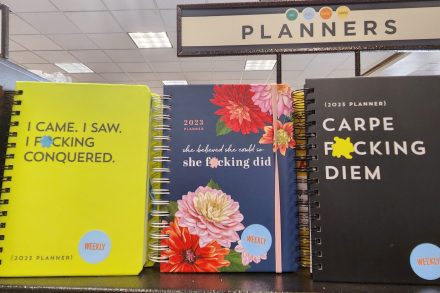
America is enduring a mental health crisis, and you need go no farther than your local Barnes & Noble bookstore to see evidence. I was an avid journal-keeper for years and love all things paper, so I get a little giddy perusing the “stationery and gifts” section. Last weekend, however, rather than being energized by the prospect of filling one of those gorgeous, gilded, supple leather books with my most brilliant thoughts and sweetest sentimentalities, I was left feeling sad about the message sent by so many of the journals, planners, and gifts for sale. Judging from the featured items, you’d be led to believe America is a nation of depressed, exhausted, anxiety-ridden alcoholics. And for the most part, you’d be right.

‘Father Stu’ and the merits of suffering

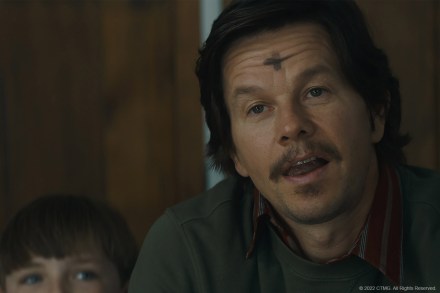
Father Stu opened in theaters this Holy Week. It’s a movie about a real-life man who led a depraved and reckless life, found God, became a priest, suffered greatly and died from an incurable disease. And did so — more importantly — with patience and good nature that inspired multitudes of those around him. The film’s message is essentially that suffering has value, and as we sit in the richest nation in history drowning in the highest levels of depression ever recorded, such a reminder could not come at a better time. It’s a curious thing that so many people are dissatisfied with life when the standard of living has never been higher.

Anxiety is killing parenthood

From our UK edition

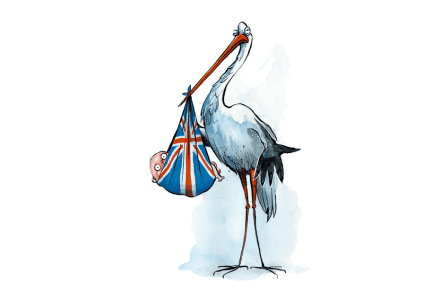
Britain is on a slow descent to oblivion. Scotland is even closer to the abyss, with a birth rate of just 1.29, well below the UK’s sub-replacement level of 1.65. It turns out the answer to the West Lothian question is that West Lothian will disappear. Doomsday demography should matter, but Whitehall is in no way prepared to deal with it. New research published this week found that mental illness in early adulthood could account for up to 60 per cent of future childlessness. A generation too worried to have children spells disaster for countries that need to support ageing societies. Researchers looking at the populations of Sweden and Finland have drawn a link between dozens of mental health disorders and later childlessness.

The truth about the anxiety epidemic

From our UK edition

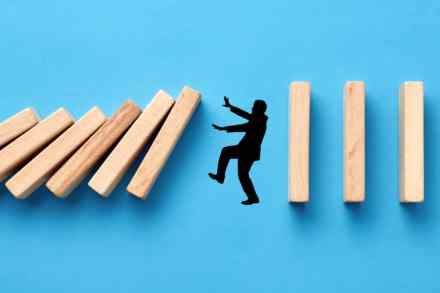
Knots in the stomach? An overwhelming sense of despair? Nervous, restless and tense? That'll be the anxiety talking and for good reason. What with the financial crash, austerity, Brexit partisanship, climate change catastrophising, social media derangement, pandemic pandemonium and now the possibility of a third world war, I'd be concerned if we weren’t all feeling a tad anxious. Indeed NHS leaders are now urging ministers to tackle what they are calling a 'second pandemic' of depression, anxiety, psychosis and eating disorders, brought about by recent events. Indeed, one study published in the British Journal of Psychiatry found that diagnoses of anxiety had tripled in young adults since 2008. It's right that we take mental illness seriously.

The stifling cult of self-care

From our UK edition

Baby, it’s cold outside. It’s dark. It’s January. It’s Lockdown III. There’s only one thing for it: stay home, snuggle up, save lives. Cocoon yourself in cashmere, treat yourself to silk pyjamas, invest in a lambswool throw. Lay the fire, warm the cocoa, watch Love Actually for the 30th time. Practise self-care. Be sure to put you first. You’ve heard of safe spaces and The Coddling of the American Mind. Well, this is the safe space as interiors trend, coddling as lifestyle choice. Call it the blanket cult.

MAGA exposure therapy is real

Hold the MAGA hat. Feel its embroidery. Try it on. Now look at yourself in the mirror. Tell me your stress levels right now. A California mental health professional believes a presumed joke on the internet is quietly being taken very seriously by colleagues. ‘I’ve seen this a few times over the last couple years, and I finally put two and two together,’ the mental health worker told me. The source, who requested anonymity citing workplace bigotry, was scrolling through a private message board for professionals in the field and saw a therapist asking where to find ‘Trump paraphernalia to be used in sessions with patients.’ ‘I realized, oh wow, they’re doing exposure therapy to treat TDS!’ the source said.

maga exposure therapy