Antibodies

Who really needs a third Pfizer shot?

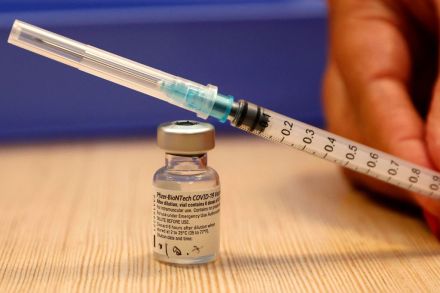
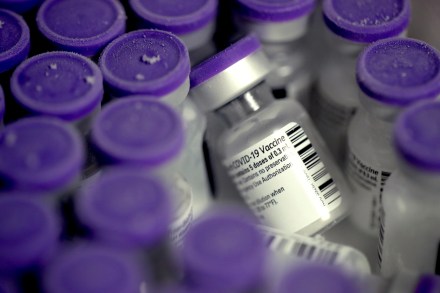
Do Americans need a third booster shot of the Pfizer vaccine? The question is the subject of a remarkable row between the drugs company and the government — the former of which is putting together an application for emergency use authorization for a third dose and the latter of which has so far proved unwilling to sanction it. The Department of Health and Human Services issued a statement after a meeting on Monday saying: ‘At this time fully-vaccinated Americans do not need a booster shot.’ For its own part, Pfizer cites evidence from Israel which, thanks to a deal with Pfizer, was able to get ahead in its vaccination program in return for the country effectively being used as a giant human laboratory.
third shot pfizer

Have we reached herd immunity?

From our UK edition

When the Office for National Statistics released the last antibody survey a fortnight ago, the results were underwhelming. After watching prevalence in the population shoot upwards for months, the figure had plateaued at 55 per cent. There were several reasons suggested for the stall, including the move to giving second doses and difficulties detecting fading antibodies (which the ONS is quick to point out does not necessarily mean a person no longer has immunity). But, regardless, it raised concerns that it might take longer to reach high antibody prevalence rates than previously hoped. Thankfully, today’s update has provided plenty of cheer. In the two weeks following the last update (taking us up to the week ending 11 April), antibody prevalence has risen across the UK.

Why do old people have fewer antibodies after the vaccine?

From our UK edition

The UK policy of delaying second doses of the Pfizer vaccine has been criticised by some as risky, with Pfizer warning that there is no data on the effectiveness of its vaccine other than for the dosing regime used in phase 3 trials: two doses, 21 days apart. But evidence is steadily trickling through. Earlier in the week I wrote here about the Scottish population-wide study which found that a single dose of the Pfizer vaccine reduced hospital admissions by 85 per cent between 28 and 34 days after the jab. This morning comes Imperial College’s React-2 study, which paints a picture that is, on the face of it, rather less flattering. It tested 154,000 people for the presence of antibodies to SARS-CoV-2, the virus which causes Covid-19.

Is this the key to understanding Covid immunity?

From our UK edition

Just how strong an immunity do Covid patients develop after they have acquired the infection and how long does it last? The question is vital to the likely future passage of the pandemic, and to how well vaccines will protect us in the long term. Several studies have suggested there is a sharp decline in antibodies to SARS-CoV-2 over time – a paper from Imperial College’s React study in October, for example, revealed that the proportion of the population showing antibodies to the virus declined from 6 per cent in June to 4.4 per cent in September. The researchers were at pains to emphasise that the presence of antibodies does not indicate immunity to Covid-19, but many people have taken it as an indication that immunity to the disease quickly declines after infection.

How to work out the real COVID death toll

Maybe the most important questions of all: how lethal is SARS-COV-2? Whom does it kill? Are the death counts accurate — and, if not, are they over- or understated? Estimates for the lethality of the coronavirus have varied widely since January. Early Chinese data suggested the virus might have an ‘infection fatality rate’ as high as 1.4-2 percent. A death rate in that range could mean the coronavirus might kill more than six million Americans, although even under the worst-case scenarios some people would not be exposed, and others might have natural immunity that would prevent them from being infected at all. As we have learned more about the virus, estimates of its lethality have fallen.

covid

Israel’s antibody breakthrough

From our UK edition

The Israeli government is reporting this morning that the country’s Institute for Biological Research has made a breakthrough in the development of a potential treatment against SARS-CoV-2, the virus which causes Covid-19. Scientists there have isolated a ‘monoclonal neutralising antibody’ which could potentially neutralise the virus after infection. The antibody was obtained from the blood of an infected patient. It is called monoclonal because it is generated from a single cell – which could allow vast quantities of the antibody to be produced quickly. Is it the breakthrough that could make all the difference? Treatment of novel viruses with monoclonal neutralising antibodies has been under development for some time, notably for Ebola, SARS and MERS.