Animal rights

From ferreter to animal-rights champion

From our UK edition

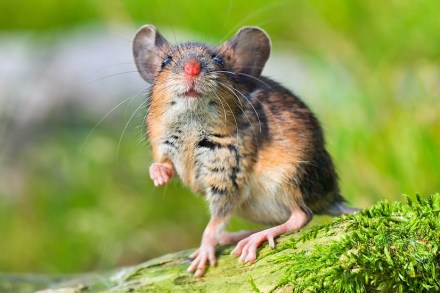
I was sitting quite still at the typewriter when a plump mouse emerged from under the fridge and crossed the kitchen floor, moving by monorail. Conscious suddenly of another presence, the mouse paused and cast a speculative and I thought conciliatory eye over me. His fur was a rich chocolate, his eye beady with interest. Catriona — thank God! — was in the room above reading the paper. I heard her laugh out loud. ‘This woman!’ she called down. ‘She’s totally amazing!’ ‘Oh yes?’ I said. ‘In what way amazing?’ ‘She’s had all her toes cut off,’ she said. ‘She’s a cousin of the Queen.’ I looked at the mouse and shrugged. A French country mouse is a pretty, guileless thing.
Boris’s animal rights laws could come back to bite him

From our UK edition

Boris Johnson wants to beef up animal rights. The new rules will include a ban on importing stuffed heads as hunting trophies, and possibly on fur as well; a mandatory microchip for every cat in the kingdom; no more exports of live animals for slaughter; a ban on keeping primates as pets; and, most bizarre of all, a law requiring government to accept that animals are sentient and feel pain and angst like the rest of us. This looks odd. There was no extensive pressure except from a small fringe for any of these measures. To most traditional conservatives, animal rights conjure up unattractive visions of young men in dirty anoraks smashing laboratory windows to rescue supposed vivisection victims.

The conservative case for opposing ‘ag-gag’ laws

Activists from the animal welfare group Direct Action Everywhere (DxE) last week released photographs taken on an Iowa pig farm. They claimed they had walked through an open door, photographed pigs suffering from hideous rectal prolapses and open sores, as well as what appears to be overcrowding. The photographs were taken last April, and the activists have claimed that they withheld the pictures to avoid the accusation that they had contaminated the living conditions and endangered the pigs. Ironically, they have received criticism both for endangering the pigs and for withholding evidence.The owner of the farm is Republican State Sen. Ken Rozenboom.

ag-gag

For duck’s sake: New York’s foie gras ban is classic political posturing

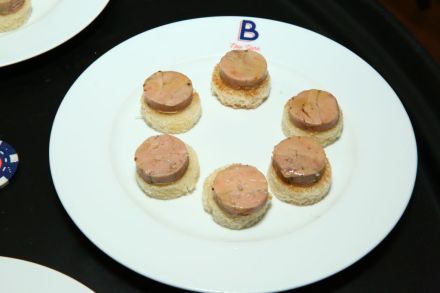
This article is in The Spectator’s December 2019 US edition. Subscribe here. Drown the Yquem and bury the Burgundy! Cover up the caviar! Abscond with the escargot, and for good measure lock away the langoustines! The class war is coming to New York City. On October 30, the city council, taking a break from doing nothing about the homeless and the garbage, passed a law prohibiting the sale of foie gras — fattened duck or goose liver — beginning in 2022. Of the 51 members, 42 voted in favor and 30 signed on as co-sponsors.

duck foie gras

Louise Linton: why I don’t like being ‘the wife of…’

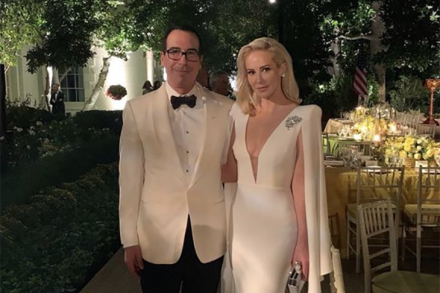
This article is in The Spectator’s inaugural US edition. Subscribe here to get yours. It’s a muggy afternoon in Los Angeles as I sit down to write this — in my bathroom; the AC’s broken everywhere else. My vanity is dusty, cluttered with books, storyboards, shot lists and Post-It notes scrawled in ALL CAPS with a frenzied thick black Sharpie: ‘LOCK PICTURE!!’ ‘BEAR!’, ‘BORN FREE!’, ‘DOG’, ‘STATE DINNER’, ‘DOCUMENTARY!’, ‘GRATITUDE’. It’s a bizarre medley, as is my life in general. I’m married to a Republican politician but I’m extremely liberal. I cannot say that I’m a Democrat either. These terms are binary and weaponized.

louise linton

It’s high time to butcher PETA

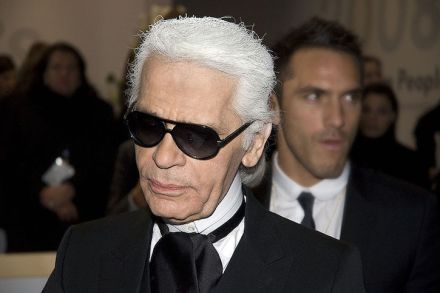
Animal liberation charity PETA (People for the Ethical Treatment of Animals) has gone and done it again. Notorious for using cheap shock tactics to make a noise and pull in more donations, the organization sent a press release and posted a tweet within an hour of the announcement that fashion icon Karl Lagerfeld (for whom I personally felt no love) had died: ‘Karl Lagerfeld has gone, and his passing marks the end of an era when fur and exotic skins were seen as covetable. PETA sends condolences to our old nemesis’s loved ones.’ Last year, Lagerfeld, who had long defended his use of fur, conceded to demands that that he stop using fur and crocodile, lizard, snake and stingray skins in his designs.

peta

Call of the wild | 19 April 2018

From our UK edition

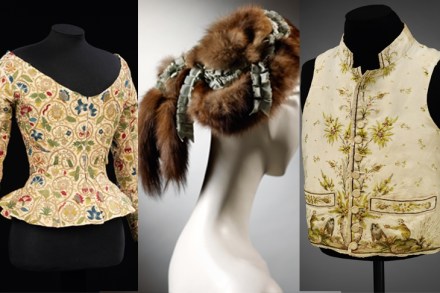
One of the prettiest pieces in the V&A exhibition Fashioned from Nature is a man’s cream waistcoat, silk and linen, produced in France before the revolution, in the days when men could give women a run for their money in flamboyant dress. It’s embroidered with macaque monkeys of quite extraordinary verisimilitude, with fruit trees sprouting all the way up the buttons. And what we know is that they were derived from the Comte de Buffon’s Histoire Naturelle, générale et particulière, of 1749–88.

Inside the animal mind

From our UK edition

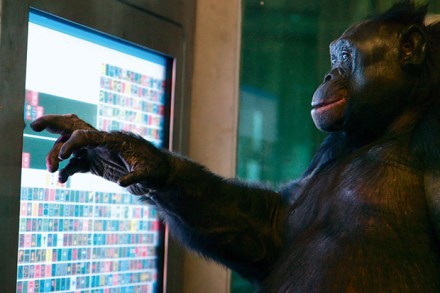
Whatever the government decides about post-EU regulations on animal sentience, the Greek biographer and essayist Plutarch (died c. ad 120) was fascinated by the comparisons between man and beast and, almost uniquely, argued for the ethical treatment of animals. Some earlier thinkers contended there was a ‘kinship’ between men and animals because animals had flesh, passions and (being alive) souls. Therefore man should neither eat nor sacrifice them. But then Aristotle (d. 322 bc), who invented the discipline of biology, stepped in. He agreed that animals had desires which caused them to behave in certain ways that looked human, but denied that this was evidence of the ability to reason.

Barometer | 14 September 2017

From our UK edition

Selfie-worth The animal rights charity Peta dropped a case claiming that a macaque which took its own photo was entitled to the royalties, rather than the camera owner (but only after the photographer agreed to donate a quarter of the royalties to animal charities). — The idea of animal property rights was advanced by Australian philosopher John Hadley in the Journal of Social Philosophy in 2005. He suggested animals be granted rights over territories and human guardians appointed to represent them in court. — There are issues still to be reconciled, however: what of non-territorial animals, and those which dispute each other’s territories? Would cats be expected to resolve differences in court rather than yowling at each other?

Animal crackers

From our UK edition

The other evening I was driving back in heavy rain from my pilates class when I noticed something rather upsetting in the gated road that goes through our estate. I stopped and got out of the car for a closer look. Yes, as I feared, it was a dead duck. Some bastard had squished her flat. What made me more upset still was that I could see her mate — a mallard drake — swimming forlornly in the ditch next to the road. I loved those ducks like Tony Soprano used to love his ducks. Especially the stupid way they waddled blithely across your path, forcing you to slow down and always making you smile whatever mood you were in. But clearly the tosser who did this was in too much of a hurry: either a van driver or someone in a 4 x 4, I guessed.

The clean and the unclean

From our UK edition

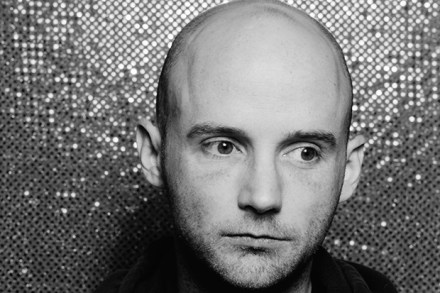
In 1991, Moby folded the theme from Twin Peaks into a remix of his dance track ‘Go’ and a diminutive, teetotal, vegan Christian abruptly became the American rave scene’s first pop star. He was not the obvious candidate: one critic dubbed him ‘techno’s crazed youth minister’. As a showboating entertainer in a culture sceptical of stardom, and a somewhat sanctimonious puritan surrounded by hedonists, he put a lot of noses out of joint. On one early online rave forum the phrase ‘Go away Moby’ became a mantra. In his first memoir, Richard Melville Hall (nicknamed Moby due to his famous ancestor Herman) unpicks this paradox with an unusual degree of self-awareness and deadpan humour.

Diary – 9 June 2016

From our UK edition

When an old friend X came to dinner in London, I sampled what it must have been like during the American Civil War, when families were split asunder from aligning on opposite sides of the Mason-Dixon. Lo, this warm-hearted, well-read, intelligent Midwesterner is backing Donald Trump. This was my husband’s introduction to X, whose electoral preference clearly queered the first impression. Our threesome didn’t talk long on the matter. The disconnect being so absolute, there was little to say. X is the only Trump supporter I wittingly know. But I was chilled by the difference between this and countless heated-but-civil suppers of yore, at which a dinner guest plumped rambunctiously for a candidate I opposed — Romney, McCain, even George W.

There will be blood | 17 September 2015

From our UK edition

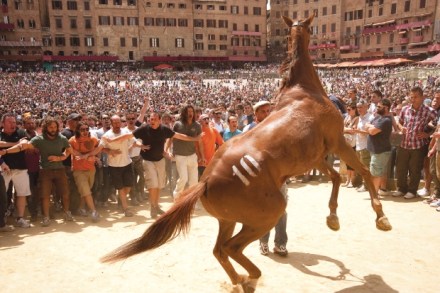
If you don’t want to spend hundreds of euros on a good seat, the best place to watch the Palio di Siena is by the start. For my first time — decades ago — I arrived early in the apron-shaped Piazza del Campo and sweated out the long afternoon as a tide of tension rose. By early evening, when the horses and jockeys finally entered from the courtyard of the towering Palazzo Pubblico, 50,000 spectators ached for release. I clambered on to a temporary fence for a better view. A Sienese woman who was maybe 19 hauled herself up and, for balance, grabbed me from behind. As the jockeys embarked on the long, casuistical process of lining up at the start rope, she began to moan, then weep.

The Tooting poisoner and the relentless rise of the urban fox

From our UK edition

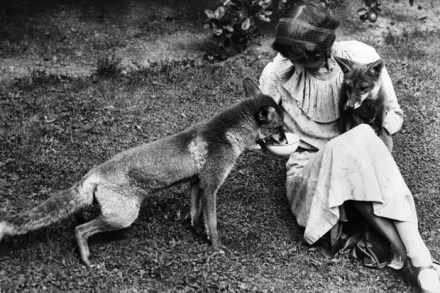
Cowering in the corner of a pet shop, I edged towards the door to try to escape as a stranger yelled at me. The man’s face was so puckered up and puce with anger that I feared I was moments away from being beaten to death with a ball-thrower or ham bone. I had only popped in to buy some dog food for the spaniel and now the spaniel was hiding behind me as a fellow customer shouted abuse. The lady who owned the pet shop was trying to appease the shouting man, who had his own dog with him, a scrappy little terrier who looked as terrified as the rest of us as his owner went tonto. And what, I hear you ask, was the issue that had set the man off on his barking mad rant? Well, it was all to do with the strange case of the Tooting fox poisoner. I say fox poisoner.

Do your patriotic duty and shoot wild boar

From our UK edition

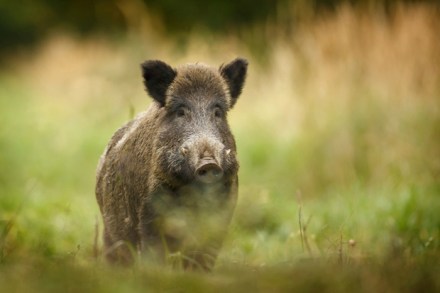
It’s 15 years since I first wrote an article about the threat to the nation of the wild boar; but only now, following the death of a driver in a collision with one of these fearsome beasts on the M4 in Wiltshire, is anyone taking any notice (and not very much notice at that). The government is planning to introduce the same kind of road warning signs for wild boar as those that already exist for deer, horses, toads and ducks. ‘Road safety in the context of wild boars is an emerging issue that needs to be addressed,’ says roads minister John Hayes. ‘The addition of a warning sign for wild boar in areas with populations of the animals would be a sensible step to encourage people to slow down and watch out.’ It is certainly a good idea to watch out.

I believe in animal research. But it’s time to draw a line

From our UK edition

Imagine, for a minute, that you’re a frog — a pro-science frog. You’re so pro-science that you’ve decided to donate yourself to it. You sign the consent forms, climb into the barrel and await your fate. It’s all quite exciting, you think, as you travel the bumpy road to the lab. A huge sacrifice, but a chance to expand the shores of human knowledge. You might be part of a cure for cancer, or the common cold, or help to eliminate polio. Finally you emerge — and for the first time, a doubt does too. You’re in a lab, sure, but instead of scientists, there are children everywhere — all dissecting frogs. ‘Dissecting’, though, is a loose description.

Why we should let Faroe islanders hunt whales

From our UK edition

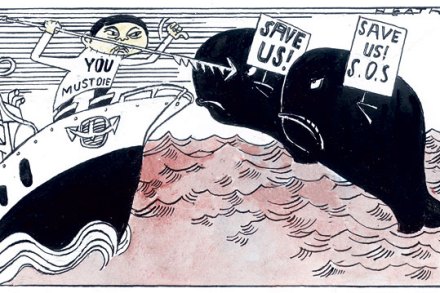
In Tórshavn, capital of the Faroe Islands, I met a man who first helped his father kill a whale with a sharp knife when he was eight years old. The spouting blood soaked his hair and covered his face like warpaint.  He remembered the warmth on his skin, a contrast to the cold North Atlantic in which they stood. These days we assume that people who kill whales and dolphins must be bad. Flipper and his cousins are our friends, and notwithstanding that unfortunate business with Moby-Dick, those who pursue whales for their flesh must be terrible human beings. We know now, as Herman Melville did not, that cetaceans are exceptional mammals, highly intelligent with elaborate social networks and close family relationships.

Since I moved to the country, I’m on the side of the squirrel-killers

From our UK edition

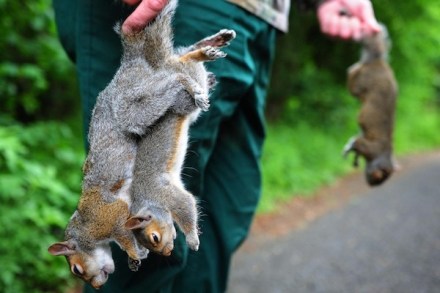
What is the correct expression to wear, I wonder, when you’ve just caught a squirrel in your squirrel trap? Guilt? Pain? Sorrow? Fear at the possibility of a 3 a.m. knock at the door from the boot boys of the RSPCA? The expression you definitely shouldn’t wear, apparently, is one suggestive that you might have taken any pleasure in poor, sweet, bushy-tailed Mr Nutkin’s death. This was the mistake made by Defra secretary of state Owen ‘Butcher’ Paterson, who was revealed over the weekend to have upset visiting Tory colleagues by showing pictures of himself cheerfully posing with the decapitated victims of his Kania 2000 squirrel traps.

Will the Guardian and the Independent kill the Grand National?

From our UK edition

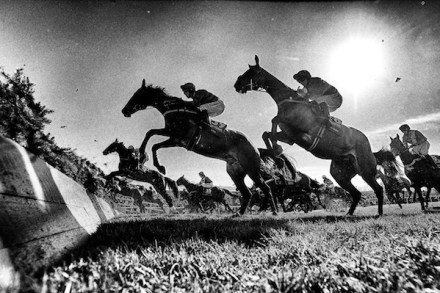
Over the past few years a new trend has emerged in British journalism. Our trade has become over-run with reporters or columnists who are not quite what they seem. They pretend to report objectively on events. In practice the true loyalty of these campaigning reporters or columnists is not just to their readers. Sometimes covertly, sometimes furtively, they also further the agendas of political parties and interest groups. This confusion of loyalties is a notorious problem at Westminster, but is now spreading beyond the political desks of national newspapers. Last weekend’s reporting of the Grand National was a very troubling example of the muddling of categories between straightforward reporting and campaigning journalism.