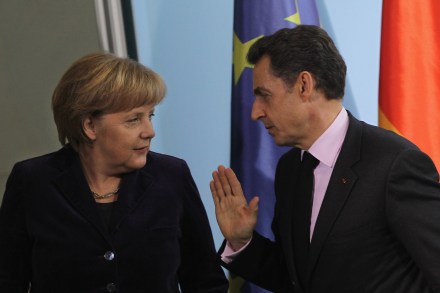
Angela merkel

Joining Harriet Harman’s feminist club

From our UK edition

If feminism is 'a creed of women’s solidarity', do you pick and choose about which women you’re in solidarity with? In the case of Harriet Harman, the answer is, well obviously. If you’re a Tory you can’t really join in the creed. In an interview with Total Politics magazine she was incredulous at the notion that the Home Secretary, Theresa May describes herself as a feminist. 'If you’re actually political, you can’t be a Conservative and a feminist,' she said. So there you have it. But why? Because it’s 'all about equality and fairness'. 'Ultimately, delivering for women in this country – in equality, childcare, helping with the elderly, maternity pay and leave – is Labour’s mission, not the Tories.
Europe’s illusory deal

From our UK edition

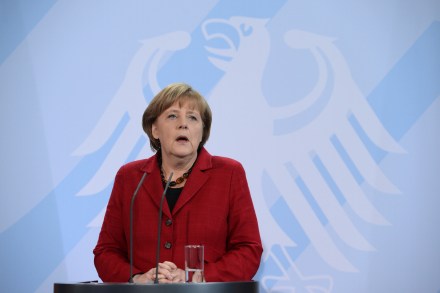
After Merkel’s decision to allow Eurozone funds to be used to bail out Spanish and Italian banks, the press tomorrow may declare – yet again – that some kind of breakthrough has been reached and that the Teutonic queen of austerity has been forced down from her throne. But, as ever with the Euro summits, there is less – far less – than meets the eye. Here’s my take:  1. Growth pact. Any pact representing no more than 0.0096 per cent of Eurozone GDP is hardly going to have a discernible effect, so let’s not pretend otherwise. 2. About those no-strings bailouts. It seems countries can access bailout funds without conditions forcing more austerity, as long as they comply with the Stability and Growth Pact.

Angela’s anguish on ESM vote

From our UK edition

This all feels rather miserably familiar. Eurozone leaders come to a dawn agreement about resolving the crisis. Markets react positively. The leaders appear on podiums to congratulate one another and themselves on reaching said dawn agreement. By lunchtime, something rather awkward has happened. Angela Merkel, perhaps inspired by George Osborne, had done a U-turn in agreeing to use eurozone bailout funds to support Italy and Spain, but did she have the authority to do so?

Italy and Spain put Merkel in the corner

From our UK edition

It took them 13 hours, but eurozone leaders have finally agreed to use bailout funds to recapitalise banks directly. The deal, which was reached at 4am (David Cameron had gone to bed at 1am because this is a eurozone, not EU matter), involved Germany giving in to the demands of Italy and Spain. You can read the statement from the euro area leaders here, but essentially what it says is that the refinancing will not take place until a single banking supervisor is set up, to be run by the European Central Bank. This was originally going to be a long-term project, but leaders have now set a deadline of the end of this year for everything to be up and running.

Of technocrats and democrats

From our UK edition

A former European leader was a guest at a private dinner in London recently. It was a polite and reverential occasion, but conversation grew lighter as Sauternes gave way to port. What, he was asked, is the most effective form of government? Easy, he replied, look at Europe: technocrats know best and they can ignore short-sighted voters. A battle between technocracy and democracy has broken out in Europe, as democratic Germany and technocratic Italy disagree over the next step in the euro-crisis. Last week’s G20 summit promised progress; Germany agreed to use EU bailout funds to reduce Spanish and Italian borrowing costs.

A turning point in Greece? Think again

From our UK edition

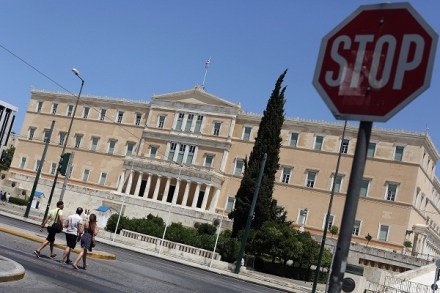
Things in Greece could have been worse after yesterday’s election, but that fact can’t be hailed as a ‘turning point’. Assuming that Greek political leaders form a coalition and push ahead with EU-mandated reforms, which is a very likely outcome given that Greece may only have enough cash in its coffers to soldier on for another month, any such government will inevitably include parties that completely disagree on how to resolve the crisis. The only glue would be the fear of economic catastrophe. This uneasy government would be ill-suited to withstand pressure from Syriza and the rest, who will spare no effort in blaming it for the inevitable economic pain.

The morning after the night before

From our UK edition

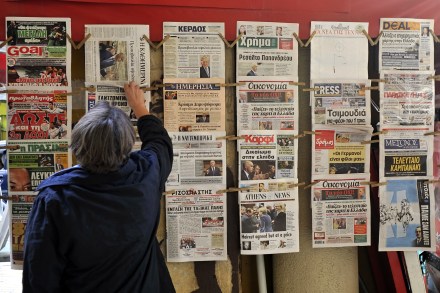
This morning’s front pages are devoted to Greece, and the consensus is that the result of yesterday’s election amounts to little more than a stay of execution for Greece and the euro. At the time of writing, markets have responded to the news positively; but, fundamentally, nothing appears to have changed, so expect further turmoil. The formation of a Greek government is the foremost problem. James explained last night that the pro-bailout party New Democracy is unlikely to form a coalition with the centre-left PASOK party, which had indicated that it would only join a coalition that included radical leftists Syriza. This impasse persists for the moment, but there is speculation that PASOK might support New Democracy on a supply basis.

Cameron defies increasingly isolated Merkel

From our UK edition

‘No’ used to be the French prerogative in matters of European integration. Charles de Gaulle made a late career out of it. But perhaps the title is passing to Britain. David Cameron indicated yesterday that he would veto any EU banking treaty that did not safeguard the City, as James said he would. Meanwhile, George Osborne joined Cameron in recognising that a European banking union, under design by ECB president Mario Draghi, is necessary if the euro is to survive. Angela Merkel agreed, saying that the answer to the present crisis was more Europe everywhere, only at a pace that suits weary German taxpayers. This sedate approach is becoming unsustainable.

Merkel heads to the G8

From our UK edition

I doubt that Angela Merkel is looking forward to the G8 summit very much. It will mostly consist of the other world leaders telling her to give ground on austerity. But I suspect that Merkel won’t budge much, if at all. She clearly believes that the Greeks can be whipped into line by telling them that the election is really a referendum on euro membership. Hence both her suggestion of a simultaneous referendum on election-day and her backing for the European Central Bank cutting off support to Greek banks which shows that while there’s no formal mechanism for ejecting a country from the single currency there are ways of doing it. The German government, intriguingly, seems more accepting of the idea of the Greeks leaving the Euro than others do.

Cameron vents his euro frustration

From our UK edition

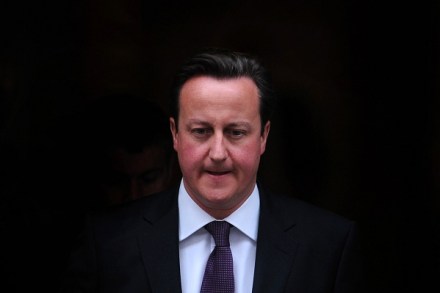
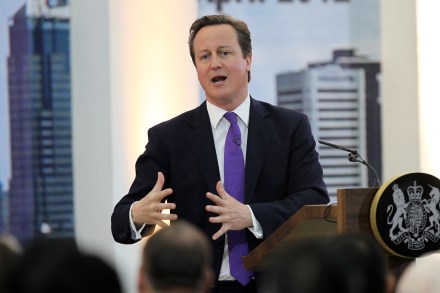
David Cameron’s speech today is a sign of his frustration with the eurozone. Numbers 10 and 11 are increasingly irritated by how eurozone leaders are refusing to accept the logic of their project. What Downing Street is keen to avoid is another wasted year as Angela Merkel gears up for her reelection campaign. So, intriguingly, we see Britain throwing her weight behind Hollande’s support for project bonds. Cameron also uses the speech to again back eurobonds, which Merkel is firmly opposed to as she knows that this would mean Germany effectively standing behind everyone else’s debt. I can’t see a resolution to this crisis coming anytime soon, though. The economics and the politics are, yet again, set against each other.

The staring contest over Greece

From our UK edition

Now that negotiations have broken down in Athens, and there will be another election, we face the prospect of an almighty staring contest. On one side, the Eurocracy, who will be urging Greek political parties — and particularly the left-wing coalition Syriza, which is ahead in the polls at the moment — to soften their anti-austerity stance. On the other, the Greek politicians, who might be hoping that the eurozone relents to some extent, and allows the cuts to be decelerated. The question is: who will blink first? As it stands, it’s difficult to come up with an answer.

Greece is still the word

From our UK edition

Remember when Europe’s leaders were basically saying, ‘Don’t worry, it’s all sorted’? Remember when they were putting out communiqués that started ‘The euro continues to rest on solid fundamentals’? No doubt they’ll do so again, but those past shows of certainty still look kinda funny this morning. Despite some last-minute concessionary efforts by Europe’s beancounters, it still appears that Greece’s main parties will be unable to form a coalition, and are heading for another election. And we know what that could mean: victory for the left-wing Syriza coalition, a severe swing against austerity, Greece’s exit from the euro, etc. etc.

Can Merkel and Hollande meet in the middle?

From our UK edition

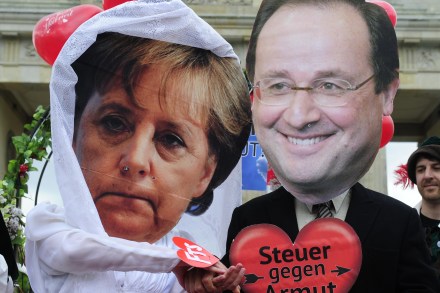
This afternoon, it’s even clearer that the French and Greek elections are a significant moment in the life of the Eurozone. It’s not just the nervous market reaction to yesterday’s results, but also the way how the supranational debate has now changed. More so than ever, there are now two clear oppositional fronts. On one side, broadly speaking, are those who say that austerity is a prerequisite for growth. On the other, those who say that austerity must be relaxed for growth to arrive. It’s a situation dripping with black humour. When David Cameron kept Britain out of Europe’s fiscal pact a few months ago, it was portrayed as a case of us against them. Now it’s more a case of them against themselves.

Will Germany let Greece stay in the euro?

From our UK edition

The German government is split on the biggest policy question of the day, according to the FT’s German edition. As Open Europe points out, the paper has a senior member of the CDU/CSU group in the Bundestag saying that finance minister Wolfgang Schäuble ‘supports the bankruptcy of Greece, Merkel wants to strictly avoid it… It goes back and forth, which is not very helpful.’ If true, this is a remarkable story. The British Foreign Office has been convinced since the beginning of the year that the Germans are keen to kick the Greeks out of the euro.

Greece is still the word ahead of today’s eurosummit

From our UK edition

How about this for a claim by Nicolas Sarkozy, made in a TV appearance yesterday? ‘Europe is no longer at the edge of the cliff.’ It's quite some statement, so let's hear it again: ‘Europe is no longer at the edge of the cliff.’ Of course, Sarkozy has reasons for saying it beyond mere pre-electoral braggadocio: the rates paid on Italian and Spanish 10-year bonds have generally been falling since the the beginning of the year; the euro has been making some tentative progress against other currencies; and so on. But it still constrasts heavily with much else that is being said around the eurozone. Only last week, Angela Merkel was talking of the overall failure to ‘stabilise the situation’ in Greece.

Dave in Davos

From our UK edition

https://www.youtube.com/watch?v=iWDdpmS89LQ Reading Cameron's speech to the suits in Davos, one thing stands out: he's in no mood to stop ‘lecturing’ the eurozone, as Nicolas Sarkozy would put it. The whole thing is saturated with firm advice for our European brethren, from generalities such as ‘Tinkering here and there and hoping we’ll drift to a solution simply won’t cut it any more,’ to specific policies that the Continent should introduce so that it can ‘recover its dynamism’. He even found space to attack the ‘madness’ of a Tobin tax, as well as to hawk the coalition's deficit-reduction plan. It's the sort of advice that could, of course, put Cameron further at odds with his fellow European leaders.

A taxing kind of spin

From our UK edition

The story being briefed out of the year’s first Franco-German Summit is that President Nicolas Sarkozy won the backing of Chancellor Angela Merkel for a tax on financial transactions, a levy that the British government objects to and that Ernst and Young say would leave a €116bn hole in Europe’s public finances. But before the City begins building barricades and the PM puts on his bulldog mask, it is worth taking another look at the news from Berlin. For no sooner had the agreement been announced than the tax was rejected by Chancellor Merkel's junior coalition partner, the pro-business Free Democrats, who say they will only back a Europe-wide tax scheme. They are not alone. The Netherlands and Ireland feel the same.

Happy New Year from world leaders

From our UK edition

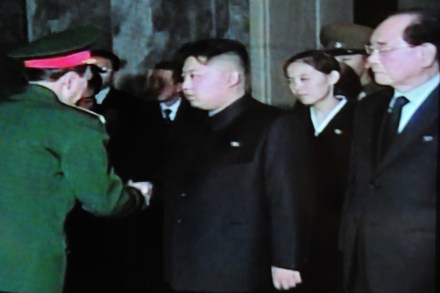
It’s the New Year — a time when politicians all over the globe get on their soapboxes and preach to their people. From Merkel’s pledge to do everything for the euro, to North Korea’s vow to defend their new leader unto death, to Putin’s speech laden with sexual innuendo, here’s a selection of this year's messages from world leaders: Barack Obama: ‘I promise to do everything I can to make America a place where hard work and responsibility are rewarded, one where everyone has a fair shot and everyone does their fair share. That's the America I believe in.’ Angela Merkel: ‘Today, you can trust that I will do everything to strengthen the euro. This will only succeed if Europe learns from the mistakes of the past.

26 versus 1 — really?

From our UK edition

Judging from much of the coverage in UK media, you would be forgiven for thinking that Britain is on the fast track to becoming the North Korea of Europe — eccentric and completely isolated from the rest of the world. Indeed, the media narrative over the past couple of days has largely treated the agreement reached at the summit as concrete, supported in full by everyone apart from Britain. Or ‘27-minus’, as Commission President Jose Manuel Barroso put it. The reality, of course, is quite different. Leaving aside whether Cameron could have played his cards better (he could have), as Gideon Rachman pointed out in yesterday’s FT, ‘the picture of an isolated Britain’ will become blurred as the rest of Europe grapples with the Merkozy deal.

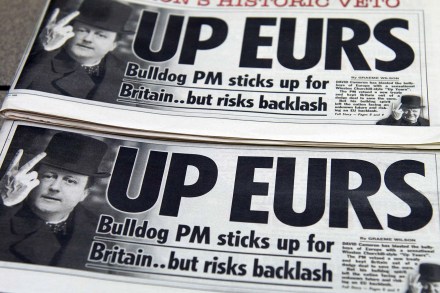
Ten myths about Cameron’s EU veto

From our UK edition

The EU veto that Cameron pulled in the early hours of Thursday morning has been widely misunderstood on all sides. Here are the 10 most common myths: 1. Because of Cameron’s veto, Britain lost a seat at the negotiating table. Not true. The UK was never itself going to take part in the Merkozy pact (and potentially be subject to EU sanctions), and therefore not in the monthly, parallel EU meetings that will begin in January, either. Even if he had approved the Treaty changes, Cameron still would not have had a seat at the table. Wider political challenges aside, the veto didn’t change anything structurally in terms of UK influence. 2. Cameron’s veto created a two-tier Europe.