Angela merkel

A dozen questions for after the Brussels summit

From our UK edition

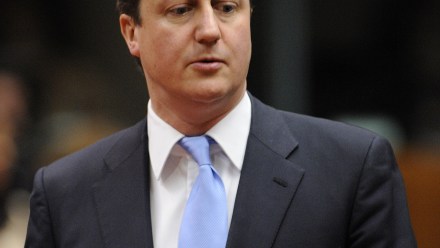
Cameron will be depicted in tomorrow's press as either a Tory Boudicca or an Essex Bulldog (© Tristram Hunt), depending on your point of view. I suspect the truth is somewhere in between. Cameron did not go in swinging a handbag, although it will suit No10 to make out that he did. But Labour's caricature of him storming off and wasting the veto certainly doesn't ring true to me. An EU27 deal was never likely, and EU17 deal always was. Cameron, on their account, just seems to be being blamed for what was going to happen all along. In any case, we are still trying to assemble the pieces of last night's drama, work out the demands and counter-demands, and see what sort of picture they produce. I'm still not sure.
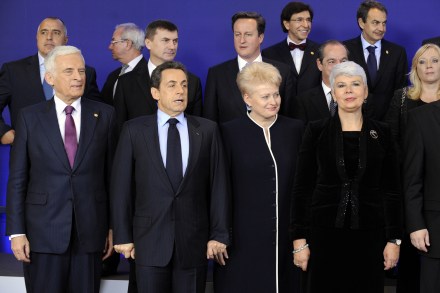
The Merkozy Plan fails to convince

From our UK edition

A day or so ago, the markets were rising in anticipation of what might be achieved at this Brussels summit. But this morning they're mostly either unmoved, or — as in the case of borrowing costs in Italy and Spain — shifting in unpropitious directions. No-one, it seems, has been won over by yet another night of political bargaineering in Brussels. And understandably so. None of the measures mooted this morning are particularly concrete; all have a sogginess about them. More cash will be transferred to the European Financial Stability Facility, but it's still some distance short of the €1 trillion that was, ahem, ‘announced’ at the end of October.

A defining moment

From our UK edition

David Cameron’s use of the veto in the early hours of this morning changes the British political landscape. The first thing to stress is that if the euro collapses it will not be because of the British veto. The deal agreed between the 17 eurozone countries and six of those nations who still want to join it does not address the single currency’s fundamental problems.   What is, perhaps, most intriguing about what happened in the early hours of this morning is that Sarkozy and Merkel chose to put Cameron in this position. In truth, Cameron was not asking for that much. But Sarkozy and Merkel were not prepared to take even small steps to accommodate his concerns. They had clearly decided that they were happy to do a deal at the level of 17-plus rather than 27.

Cameron says ‘No’

From our UK edition

It looks like Britain could be heading for renegotiation with the EU sooner rather than later. The UK, Hungary, Czechs and Swedes last night stayed out of a 27-member EU Treaty. ‘I don’t want to put it in front of my parliament,’ said Cameron. But in an historic move, the deal is going ahead anyway, with 23 members: the Eurozone, plus the six states who want to join. ‘We will achieve the new fiscal union,’ said Angela Merkel. Nicholas Sarkozy is upbeat saying it has been an ‘historic summit’ which will change the EU ‘radically’.  If so, then Owen Paterson is right in his interview with James Forsyth in the new Spectator: Britain will have to reassess its relationship with this ‘radically’ different EU.

Europe is the story again

From our UK edition

Today was one of those days when we saw just how divisive the European issue can be to the Conservative party. The sight of Malcolm Rifkind and Nadine Dorries treating each other with barely disguised contempt on Newsnight was a sign of just how poisonous relations in the parliamentary party could become. Intriguingly, the Daily Mail reports in its first edition that ‘Even some of Mr Cameron’s closest Cabinet allies are understood to be shifting to a much more Eurosceptic position, with a five-strong group of ministers planning to visit the Prime Minister as early as today to urge him to toughen his stance.

Cameron’s plan

From our UK edition

Much ado about a Cabinet split over Europe this morning. The Financial Times has interviewed Ken Clarke, whose europhile instincts are well known — something he shares with the senior Lib Dems. Clarke tells his eurosceptic colleagues not to expect powers to be repatriated from the EU at Friday’s summit. Meanwhile, David Cameron has written a piece in today’s Times (£), reiterating that he will veto any treaty that damages British interests. He also says that his ‘requests will be practical and focussed’. And therein, apparently, lays the split. The word ‘requests’ might open the possibility of repatriation.

Yes, Virginia, History Matters: Eurozone Edition

From our UK edition

Broadly speaking, there are two ways of viewing the eurozone crisis: it's a problem of economics or a problem of politics. Neither explanation quite suffices, of course, since it is both but the emphasis you place on economics vs politics plays a part in how you'll view the situation and how likely you are to think there's any kind of solution that can satisfy the politics and the economics of the situation. Which is by way of suggesting that plenty of American commentators seem to think the problem is easy to solve and the main thing lacking in europe is the political will to do something about it. (Exhibit A: James Surowiecki of the New Yorker).

The Gospel according to Delors

From our UK edition

An old enemy of England nestles in the pages of today’s Daily Telegraph. Charles Moore travelled to Paris to meet Jacques Delors, the architect of the euro and advocate of Europe’s ‘social dimension’. Moore found defiance where one might have expected humility, perhaps even repentance. Delors insists that the fault was in the execution not the design of the euro.

A tale of two cities | 2 December 2011

From our UK edition

Nicolas Sarkozy is grudgingly admired by French socialists as a political fighter, capable of thriving even in the most desperate situation. David Cameron is coming to understand what they mean. It is the best of times and the worst of times between Paris and London. Two months ago, David Cameron and Nicolas Sarkozy assumed the victor’s garlands in Benghazi; today, they met at odds, if not yet in animosity, over the contested logic of ever closer union in Europe. Sarkozy appears to have got his wish: the 17 countries of the Eurozone will deepen their economic and political relations in an attempt to save the single currency — and with it, he hopes, France’s economic and political strength on the international stage.

Merkel’s fiscal union won’t solve the euro’s problems

From our UK edition

Few people have been as vindicated about the failings of the euro as Marty Feldstein, who was chairman of the Council of Economic Advisers under Reagan. In 1997 he wrote a piece for Foreign Affairs called 'The EMU and International Conflict'. In it, he argued that far from furthering peace and stability in Europe, the Euro would actually endanger it. Watching the events of the past few months, few could disagree with him. Feldstein has now returned to the debate pointing out that none of the current fixes being suggested will solve the single currency's problems.

Meanwhile, in Europe…

From our UK edition

There probably hasn't been a meeting of European finance ministers as important as the one tonight. The euro is still at risk; with new governments in Spain, Italy, and Greece incapable of calming the markets, and Angela Merkel unwilling to let the ECB act. In a speech in Berlin, Polish foreign minister Radek Sikorski put it clearly: ‘I fear German power less than I am beginning to fear German inactivity.’ It is a fear shared in London and Paris as well. The 17 finance ministers will discuss the range of options on the table: from setting up an EU Treasury to the possibility of eurobonds or establishing a supra-national process to monitor national budgets.

The reasons for Angela Merkel’s popularity

From our UK edition

The British government is becoming ever more gloomy about the prospects for the euro, believing that Angela Merkel will not do what she has to if the single currency is to survive: namely, let the ECB intervene massively in the markets. Whether it's because of Germany’s inflation-scarred history, or the hope that market pressure will force reforms in many European states, the Chancellor is holding back. And, it seems, she is getting more and more popular by sticking to her policy.   Mrs Merkel’s popularity is, indeed, related to her handling of the Eurocrisis. In Germany she is seen as having shown the kind of leadership people want, and the recent CDU party conference cemented her status.  But there is more the Merkel's bounce than that.

Paying for justice

From our UK edition

To British ministers, the role that the International Criminal Court played over Libya was key – it made clear that Colonel Gaddafi's actions were unacceptable and would be subject to international law. Tory MP Dominic Raab even wrote a piece in The Times about the need for Libyans to rely on the ICC in The Hague, rather than seek retribution and revenge against Gaddafi and his loyalists. And it wasn't only the British government. German Chancellor Angela Merkel stated that the Libyan leader Muammar Gaddafi should be tried by the ICC: 'Gaddafi should have a trial according to the law, something he never did with his opponents,' Merkel said when asked by the weekly Bild am Sonntag whether she was in favour of such a trial.

The dangers of ever-closer union

From our UK edition

Yesterday, Fraser wrote that 'reporting of European issues tends to ignore public opinion'. Today, Philip Stephens has neatly illustrated Fraser's point in his Financial Times column. Musing on Britain's possible exit from the European Union, Stephens writes: 'I am not sure this is what the prime minister intends; nor, when it comes to it, that British voters will accept such an outcome.' Stephens' conjecture ignores the European Union's own polling, which, as Fraser says, shows most Britons to be hostile to the EU. That said, Stephens' article is substantial. He argues that 'fiscal union carries its own remorseless logic: the progressive exclusion of Britain from Europe’s economic decision-making'.

How ambitious is Cameron on Europe?

From our UK edition

Someone forgot to pack his handbag. We heard yesterday that David Cameron has agreed to let Merkel pursue full fiscal union – and in return she will... drum roll please... let him repatriate parts of the Working Time Directive. There's nothing official from Number 10, but the well-informed Ben Brogan suggests this morning that this could well be Britain's price for agreeing to Merkel's deal. If so, this would be an opportunity squandered on a massive – perhaps historic – scale. Let's recap. Cameron is in an incredibly powerful position: leading a government which is, in defiance of public opinion, giving £9 billion of overseas aid to EU member states each year.

The vote in Spain

From our UK edition

The expected triumph of the centre-right Popular Party in today’s Spanish elections promises to have some interesting consequences for British politics. The PP have been in close touch with the Tories here and plan to introduce an emergency budget based on the Osborne model: a clear deficit reduction plan combined with an increase in the retirement age. They hope that this will reduce the ever-upwards pressure on Spanish bond yields. Certainly, if the PP approach does succeed in gaining Spain credibility with the bond markets, it will bolster the coalition’s arguments about the importance of sticking to Plan A.

Cameron and Merkel: all smiles but no progress

From our UK edition

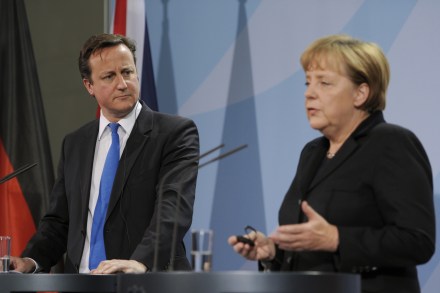
David Cameron and Angela Merkel were clearly keen to show that, whatever the tensions over the role of the European Central Bank, they still get on. I lost count of the number of times in their press conference that they used the word 'good' to characterise their relationship and their discussions. But there did not appear to have been any actual progress on how to deal with the current crisis. Certainly, there was no softening of Germany's opposition to using the ECB as the backstop for the Eurozone. Merkel conceded that she had raised a European-only financial transactions tax with the Prime Minister but that, unsurprisingly, no progress had been made on this front.

The debate over Europe’s future

From our UK edition

We've got two interventions by high-profile European politicians in the British papers this morning. In the FT, German foreign minister Guido Westerwelle lays out Germany's stance, providing a taste of what David Cameron can expect when he meets Angela Merkel in Berlin today. He begins by underscoring the importance of keeping the eurozone together: 'The eurozone is the economic backbone of the European Union. Its stability directly affects non-euro states and global financial markets. An erosion of the eurozone would jeopardise Europe as a political project, and with it the chance to make our values and interests be heard in the new power set-up of the 21st century.

Berlusconi: latest victim of Europe’s reverse Arab Spring

From our UK edition

Berlusconi has finally resigned – and so continues what seems to be the Arab Spring in reverse (a Gnirps Bara). In the Arab world, people rose up against undemocratic juntas and democracy ruled. In Europe, undemocratic juntas are springing up in Frankfurt opera houses and toppling democracy. All Sarkozy had to do was help the rebels who wanted to remove the targeted leader. The cover story of this week’s magazine has a piece by yours truly about the Frankfurt Group of eight people who are calling the shots. Only two members are directly elected: Sarko and Merkel (well, three if you count the Prime Minister of Luxembourg, which we shouldn't as it a population smaller than Leeds). The rest are the heads of the ECB, IMF etc.