American foreign policy

John Kirby’s Clean-Up on Aisle Kabul

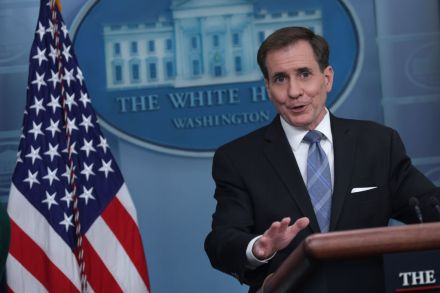
I almost feel sorry for John Kirby, the National Security Council spokesman tasked with tidying up after the icky messes deposited about the landscape by Joe Biden.  Let me emphasize the adverb “almost.” Kirby’s job is unenviable. Basically he has to lie and pretend that his boss and that excruciating, illiterate muppet of a press secretary, Karine Jean-Pierre, make sense. It’s always a horrible goulash that Kirby has to contend with. He has my sympathy for that.  But yesterday, when Kirby stood before the press to answer questions about the administration’s report on Ameirca’s humiliating flight from Afghanistan in August 2021, his performance was not just cringe-making. It was infuriating.

john kirby afghanistan

Biden should butt out of Israeli politics

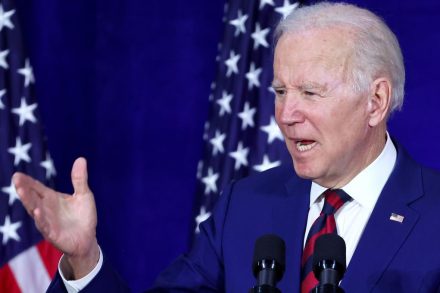
Two days after Israeli prime minister Benjamin Netanyahu postponed his government’s planned judicial reforms, President Joe Biden felt it necessary to go after his own country's ally. In an off-the-cuff comment, he said, “Like many strong supporters of Israel, I'm very concerned. And I'm concerned that they get this straight. They cannot continue down this road. And I've sort of made that clear.” “Hopefully the prime minister will act in a way that he can try to work out some genuine compromise,” he continued, “but that remains to be seen.” Later on Tuesday, the president added that he hopes Netanyahu “walks away from it [the reform].” There are plenty of reasons to be concerned about Israel’s judicial reforms.

joe biden women’s rights

Washington’s yes-men in Japan

It was nighttime in Davos, 8:31 on January 18 to be exact. Japanese journalist Ganaha Masako had been standing out in the cold for three hours near the entrance to a building which, she had heard, was being used as a venue for a World Economic Forum event that evening. Ganaha had picked up on some additional chatter. Klaus Schwab, the head of the WEF, was rumored to be inside. It was a long shot, but Ganaha wanted to ask Schwab some questions about globalism. And then, suddenly, Schwab appeared. Fleshy cheeks jiggling slightly as he shuffled along the snow-dusted sidewalk, he stepped cautiously out of the WEF event forum with a few handlers. Ganaha pointed her camera at Schwab and asked him for an interview. He ignored her and kept shuffling along.

One year of war in Ukraine: six experts predict what will happen next

As the war in Ukraine enters its second year, today seems as a good time as any to reflect on its first, and see what the future might hold. Six foreign policy experts from across the spectrum of opinion offered their thoughts to The Spectator. As the war in Ukraine enters its second year, how do you foresee the conflict ending? Ted Carpenter: There are several possible outcomes, but the most likely is a ceasefire without a formal peace accord. That move would end the bloodshed, but it would leave the underlying disputes unresolved. Such an outcome would be similar to the armistice that ended the Korean War. It also would create the world’s largest and most dangerous “frozen conflict.

ukraine war nato

The virtues of American ‘nation-building’

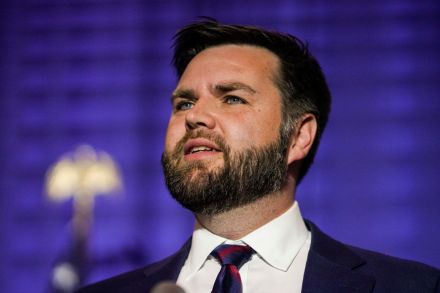
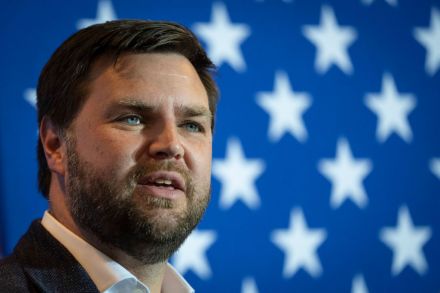
Newly minted senator JD Vance of Ohio has wasted no time in extolling the virtues of a soft isolationist foreign policy. In a January 31 op-ed for the Wall Street Journal, Vance endorsed Donald Trump for president largely because Trump isn't a hawk. A prominent member of the GOP's national conservative wing, Vance has made skepticism of American leadership abroad a centerpiece of his political identity. The senator attacks the “bipartisan foreign policy consensus that has led the country astray many times.” Never mind that the so-called "consensus" only really exists under extreme circumstances, such as after the 9/11 terror attacks. Think of the deep divide between right and left over how to deal with Cuba and Saudi Arabia, for example.

Shoot down the balloon!

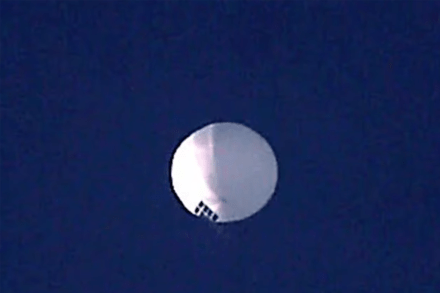
Like many of you, Cockburn has been following the developing story involving the Chinese spy balloon currently hovering over Montana. For those unaware, sometime over the last few days a spy balloon has floated over the Aleutian Islands in Alaska, across Canadian airspace and entered into Montana, where it's been for several days. It traveled at an altitude of around 50,000ft and is currently not far from the 341st Missile Wing at Malmstrom Air Force Base, which houses a portion of America's intercontinental ballistic missiles, among many other key military assets.

spy balloon

Venezuela’s anti-socialist opposition has faltered

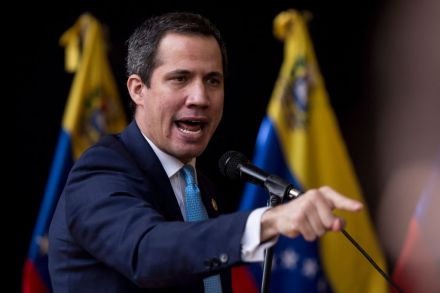
2019 was a banner year for Juan Guaidó, a relatively obscure Venezuelan lawmaker who announced to a crowd of thousands in the heart of Caracas that he, and he alone, was Venezuela’s new interim president. The United States and dozens of other countries in Europe and Latin America quickly followed up with official recognition for the fresh-faced head of the Venezuelan National Assembly. Nicolás Maduro, the man who took over the presidency after Hugo Chávez’s death, was for all intents and purposes relegated to the status of an isolated despot who had no legitimate claim to the Miraflores palace. 2022, however, has brought Guaidó and his international supporters back down to earth, with the opposition ditching his government in a 72-28 vote.

Juan Guaidó venezuela

Biden needs to stop ceding the initiative to Putin

Washington will provide Patriot missiles to Ukraine, bolstering Kyiv's air defenses in the new year. This is welcome news — but it should have happened a long time ago. One word best characterizes the Biden administration’s response to the war in Ukraine: reactive. The president’s lack of proactive measures both gives Putin an edge and prevents Ukraine from achieving a swift victory. US weapons began arriving in Ukraine in December 2021 from a $60 million package approved in August, with another package worth $200 million being approved in December and arriving in January. Both lacked the firepower needed to deter Moscow. The administration knew by October 2021 that Putin might invade — and that Russia had been building up forces around Ukraine since the spring.

putin

Edward Luttwak, the uncontained strategist

“Christ, Edward! No!” Edward Luttwak has just lunged at me with a knife in the study of the house he shares with his wife in a suburb of obdurate anonymity near Washington, DC. He is giving an unsolicited demonstration of how to most effectively stab someone. “Let your hand go limp, then feint a punch with your non-knife hand,” he says with gusto, his left fist fluttering around my face, “then stab into the diaphragm upwards. The air will go out of them like a balloon and they’ll drop to the floor. They may live another twenty years, but they’ll certainly be out of action for the next twenty minutes.” The demonstration has come after a brief typology of knives for my benefit — also unsolicited.

Luttwak

Republican support for Ukraine is fading

There is much that is uncertain about Tuesday’s elections, but it seems all but certain that the GOP will take the House. They may well do the same in the Senate. What the new majority will stand for, however, is far from clear, particularly on foreign policy — and it is foreign policy that will likely prove to be the most impactful area of the 118th Congress. With Biden in the White House, there is not much on the policy front that a GOP legislature can do beyond budgeting, but as the war in Ukraine drags on, the power to set budgets will be crucial. When the Congress is sworn in on January 3, Ukraine will be in the dead of winter, and — if Russia’s strategy remains the same — home to millions without access to heat and water.

Why Biden’s attempt to revive the Iran deal is faltering

Robert Malley may not technically be a diplomat, but he walks and talks like one. A specialist in the Middle East, Malley has extensive experience in government. He had an integral role in negotiating the Joint Comprehensive Plan of Action, or JCPOA, the deal that limited Iran's nuclear activities in exchange for sanctions relief. President Biden brought him into his administration as his special envoy to Iran in the hope he could find some way to bring both Washington and Tehran back into an agreement. Nineteen months later, Malley himself bluntly admitted that the talks were, if not dead, then frozen for the foreseeable future. Speaking at the Carnegie Endowment for International Peace, Malley said the Biden administration is no longer thinking much about the negotiations.

iran

Welcome to the age of nuclear blackmail

Vladimir Putin’s recent announcement that he was not bluffing about using nuclear weapons against the West in his war on Ukraine is one of the strongest indications yet of the risks the liberal world now faces in opposing authoritarian aggression. In the face of Russian aggression, or in committing the United States to defending Taiwan, as President Joe Biden did yet again recently, Washington and its partners face the possibility of direct confrontation with the world’s most powerful, nuclear-armed militaries. For the first time in a generation, Western powers risk being checked by adversaries willing to threaten massive conventional and nuclear warfare. The era of cost-free intervention to uphold the liberal world order is over.

nuclear

The right’s dangerous embrace of soft isolationism

Traditionally, the GOP has been the favorite of those concerned with safety and national security. The party of Ronald Reagan emphasized the need for strong engagement abroad, a willingness to project power when necessary, and a commitment to the free world. Yet the contours of the conservative movement have begun to change in recent years, calling into question the GOP’s credibility on the issue of security. The growing support for a sort of soft isolationism is a problem. It is also fundamentally not conservative. Prominent voices from the American right have been carrying the banner of soft isolationism for years, from Tucker Carlson and J.D. Vance to Senator Josh Hawley and former president Donald Trump.

Why expanding NATO is an America First idea

There is an open tug-of-war going on right now over the direction of foreign policy on the right. The attempts by various factions and individuals to seize and define the principles of an “America First” foreign policy has led to politicians and institutions using similar language and labels to defend very different positions. Yet the overarching direction of foreign policy on the right seems clearer in the results than in the conversations. Even as there are disagreements among Republicans in Washington — on Ukraine funding, for instance — they seem to have much more in common when it comes time to actually take a vote or make a decision.

america first nato expansion

2022 Biden contradicts 2001 Biden over action in Taiwan

Cockburn is not one to point fingers (as they are often preoccupied with his cigar), but he finds himself making an exception for President Biden over his apparent U-turn on the issue of the United States using military force to help defend Taiwan against China. Tyler Cowen, an economics professor at George Mason University, just unearthed a 2001 Washington Post op-ed then-senator Joe Biden wrote dissenting from President George W. Bush’s stance that the “United States had an obligation to defend Taiwan if it was attacked by China.” Biden wrote that “words matter,” and that Bush’s extreme language had "damaged US credibility with our allies and sown confusion throughout the Pacific Rim.” Speaking of confusion...

America the busybody neighbor

Imagine a neighbor who is constantly in everyone’s business. Perhaps you have such a person, or persons, in your own community. The neighbor complains about the paint colors of shutters, the height of lawn grass, and the number of cars parked on the street. You better hope he doesn’t find out about your backyard chicken coop if it's prohibited in your county. It’s bad enough to have neighbors like this, constantly on the alert, monitoring everyone’s behavior, and complaining to everyone in earshot. But imagine if an entire country was like this. Actually, you don’t have to imagine. For that is America — at least the foreign policy establishment and the powerful elite institutions like corporate media and the academy that influence it.

neighbor

In search of a Biden doctrine

Considering how likely we all are to be blown to pieces by it within the next five years, the atomic bomb has not roused so much discussion as might have been expected,” wrote George Orwell in 1945. The public conversation soon caught up with the lethal realities of the nuclear age. The possibility of annihilation loomed over politics, domestic and foreign, for much of the second half of the twentieth century. Then, with the fall of the Berlin Wall, it faded into the background. Thanks to Vladimir Putin, the threat has returned to the fore. The isolated and unpredictable strongman in the Kremlin is not shy when it comes to reminding the world of Russia’s nuclear arsenal.

biden
Putin

Why Putin won’t save NATO

Vladimir Putin’s invasion of Ukraine is the best thing to happen to NATO since 1989. No amount of cajoling by American presidents could get the Germans to increase their defense spending to 2 percent of GDP, as the alliance asks. The Russian president found a way to persuade them. Putin has also persuaded Finns and Swedes that joining NATO is a good idea. Not for the first time, a war is having the opposite of the effect its instigator intended. Putin may yet get what he demanded from Ukraine and the West right before his invasion. NATO membership may be on the table for everyone else but not for Ukraine. Russia wants its possession of Crimea to be acknowledged by Kyiv, and that too is within Putin’s reach.

presidents

How to avoid World War Three

The Russian assault on Ukraine has awakened the West to the fact that we may be back in a Cold War — or worse. After a few decades’ respite in which the United States did not find itself in conflict with any nuclear powers, presidents must consider a world in which nuclear-armed Russia and China actively oppose US interests and deliberately test American resolve. This reality will become even more complicated if a hostile Iran gets its hands nuclear weapons too. The return of Cold War-style geopolitics means the return of Cold War-style statecraft. Presidents will once again face the difficult task of calibrating their actions to advance US goals while avoiding escalation toward possible nuclear confrontation.

Has Biden lost his mind on Ukraine?

Has Joe Biden gone loco over Ukraine? In Warsaw, Biden proclaimed of Russian president Vladimir Putin, “For God’s sake, this man cannot remain in power.” Biden also called Putin a "butcher." Then, in a meeting with the Polish president, Biden said the US regards NATO’s Article 5 as a “sacred commitment.” Biden called Warsaw a “sacred place” in the history of Europe and in “humankind’s unending search for freedom.” Biden went on to describe the conflict in Ukraine as "a battle between democracy and autocracy, between liberty and repression, between a rules-based order and one governed by brute force.

biden ukraine