America

Did ‘gender studies’ lose Afghanistan?

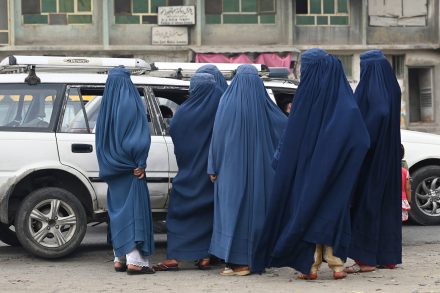
Twenty years of war in Afghanistan are over. What comes next is 20 years, or even more, of recriminations and blame for why the war ended as it did. Scholars and partisans still argue over the reasons America lost in Vietnam, so why should Afghanistan be any different? On the plus side, the debate promises to be far more interesting. When it comes to Vietnam, partisans debate rules of engagement, bombing strategies, funding levels and the Tet Offensive. With Afghanistan, the question could be: did gender studies cause America to suffer its most humiliating defeat ever? Cockburn wishes he was joking. Traditionally, nations have waged war by mustering armies, defeating their enemies in battle, and despoiling their lands and cities.

gender

Joe Biden and the grand battle of ideas

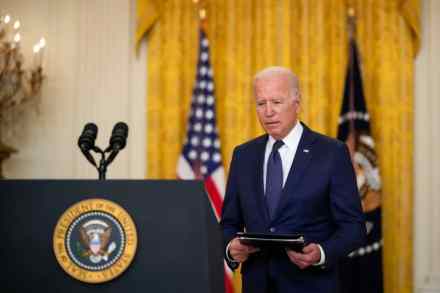
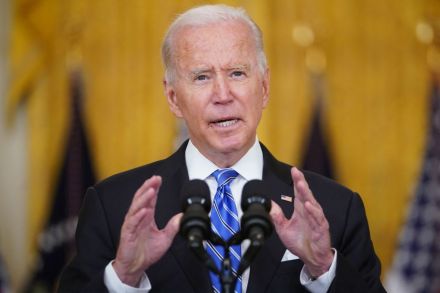
Well, Donald Trump doesn’t seem so bad now, does he? I don’t say that because Joe Biden has turned out to be as competent or less, but because at his press conference in reaction to the fall of Kabul, he sounded Trumpian. By which I mean, honest. Honest that staying in Afghanistan so long was a mistake, that their government was corrupt, that if its army wasn't prepared to defend itself then we shouldn't do it for them, and that this is what a withdrawal looks like: horribly, brutally honest. The endgame was a disaster because America’s intel was wrong, so the US had less time to get out than it thought, and because Biden lacks the acuity to respond to changing conditions. Biden looks like Brezhnev after heart-attack number seven.

biden

The hitch with Hitchens

From our UK edition

It hasn’t taken 20 years to work out that Christopher Hitchens was a dud, but this week’s collapse of Kabul obliges us to reexamine the Hitchens back catalog — because Hitchens had an outsized influence on debates about the supersised errors of post-9/11 foreign policy. The briefest of looks exposes the deficits of the neoconservative mind. An even clearer picture emerges of the hubris that led American policymakers, and the West in general, to justify the invasions of Afghanistan and Iraq as the spread of liberal enlightenment, rather than subjecting them to the tests of Realpolitik. Never trust a man whose favorite sport is politics.

Western deterrence now looks hollow

From our UK edition

The efforts of a 20 year war took only a few weeks to overturn: the Taliban has completed its takeover of Afghanistan. As parliamentarians return to Westminster on Wednesday to discuss the situation, the focal point of the debate should be damage control. One of the major challenges will be restoring deterrence. The withdrawal of troops, which was done hastily and without an organised exit strategy, gave the Taliban the opportunity to make quick advances, often even without the need to use violence. The last few days also saw images of western nations rushing to evacuate remaining personnel. The way these events have unfolded depicts the US and its European allies as weak, risk averse and war-weary — it undermines the West’s deterrence.

A new world order will emerge from America’s humiliation

From our UK edition

When America decided to save Afghanistan from the tyranny of the Taliban, it acted on two major beliefs. The first was that the US had the might, the tech and the ability to reshape Afghanistan — what could a superpower have to fear from a ragtag bunch of insurgents? — the second was a belief that this Kabul project was not about colonialism. History was moving America’s way and all it needed was a nudge. Both theories have now been tested to destruction. The humiliation that America has just inflicted upon herself (and her western allies) will reverberate globally and in a way that emboldens all the wrong people. To leave Kabul in such an undignified and callous manner is a victory not only for the Taliban but for both Russia and China.

Who’d want to move to America now?

From our UK edition

There’s a biopic released this summer, Roadrunner, about the late great chef, writer, bon viveur and TV presenter Anthony Bourdain. It recounts the many invaluable lessons Bourdain taught, such as: never eat the lower colon of a warthog; never order fish in a restaurant on Monday (it will probably be three days old); and, most of all, the American Dream is over. This last fact may seem jarring. Bourdain was a proudly patriotic American. However, I firmly believe he reveals this truth in the 36th episode of his splendid food-and-travel TV show, No Reservations. In this particular episode Bourdain visits Cleveland, Ohio. In his boyish, enthusiastic way, Bourdain tries all manner of nosh.

Cuomo, Trump and the secret of eternal political life

From our UK edition

There are many in Donald Trump’s inner circle who have tried to read his mind these past four years, together with a class of journalists who, on a daily basis, have catalogued his whims and outrages. But perhaps my attention to the former president, after writing three books about him, is unique. I now regard him as my own character, with an ever-so-fine line between what he actually does and what, in moments of inspiration, I imagine him doing. I am not always able to tell the difference in the Twitter of my dreams. We have a cottage in Amagansett, the most unHamptons Hamptons town (making it, in fashion’s dialectic, the most Hamptons town), that was bought with the proceeds from my books about Trump. Among its hoped-for benefits is to help me forget about him.

What we can learn from our mistakes in Afghanistan

From our UK edition

After two tours of Iraq as a soldier, I spent six months in Afghanistan in 2007 as part of Operation Herrick VI. My deployment came a year after the then Defence Secretary, John Reid, said we would be ‘perfectly happy to leave the country in three years’ time without firing one shot’. However, the very first night I arrived in Lashkar Gah, the capital of Helmand, troops were battling the Taleban across the province, with thousands of shots fired every day. Plans were being made about how we would evacuate our camp if it was overrun. Today, 14 years on, as the final US troops depart, left behind are more than 47,000 dead Afghan civilians, more than 3,500 dead soldiers from the coalition, and a country on the cusp of civil war.

The dirty truth about ‘wash-up’

From our UK edition

‘They asked me if I wanted to wash up before we even went in to dinner,’ my husband recalled with mock horror of a visit to America some years ago. He doesn’t get out much. It is true that Americans use wash up differently from us, to mean washing your hands (and perhaps face while you’re at it) rather than the plates after a meal. Of course washing your hands might be a euphemism for that other euphemism of going to the lavatory. Now there is an outbreak of wash-up in management lingo. We must learn to live with it. Annoyingly, management-speak turns perfectly good phrases into weapons of time-wasting theory. Anyway, after some team project, a meeting is arranged to see what went well, what went badly and what could have gone better.

What was the point of the war in Afghanistan?

From our UK edition

On 7 October 2001 President George W. Bush launched Operation Enduring Freedom – the invasion of Afghanistan. The operation sought to bring the architects of 9/11 to justice and reduce the threat of terrorism. Twenty years later, President Joe Biden has pledged to withdraw all troops from Afghanistan by 31 August, bringing to a close the United States’s longest-ever conflict – known colloquially as ‘the forever war’. But Biden, who supported the invasion, is pulling out at a time when the Taliban – the highly-conservative Islamic organisation that was harbouring al-Qaeda in 2001 – is sweeping through half the country, killing civilians and human-rights defenders and besieging three cities.

Is the airline ‘booking surge’ a load of hot air?

From our UK edition

Be glad you’re not in Dr Mike Lynch’s shoes. A London judge has ruled that the founder of the Cambridge-based software venture Autonomy can be extradited to the US to face multiple fraud charges in relation to the takeover of Autonomy in 2011 by Hewlett-Packard of California. This was, undoubtedly, a disastrous purchase: HP paid a huge premium over Autonomy’s market value, swiftly found all was not as expected, wrote off most of the $11 billion price and accused Lynch of having artificially inflated the company’s numbers. His fate now hangs in the legal balance. The Serious Fraud Office looked at the file but dropped it on grounds of insufficient evidence; meanwhile, judgment in a £3.8 billion civil action against Lynch is not due until September.

The EU is failing to stand up for eastern Europe

From our UK edition

Will the EU stand up for eastern Europe? This question is now being asked by Ukraine following the announcement of a deal between Germany and the USA which paves the way for the completion of the controversial Nord Stream 2 gas pipeline between Russia and western Europe. The deal reached by Merkel and Biden may have placated critics in Washington, but it has failed to allay eastern European concerns over the security implications of the project. The state most affected by Nord Stream 2, Ukraine, has now requested urgent consultations with the European Commission and the German government, adding an air of legal weight to its complaints by invoking provisions of its ‘Association Agreement’ with the EU.

Why Joe Biden’s Russia-bashing is a tactical mistake

From our UK edition

You might not think that Geoff Norcott, the self-proclaimed conservative comedian, has something to contribute to western relations with Russia, but you’d be wrong. And it’s a shame that President Biden doesn’t seem to have read Where Did I Go Right? (Norcott’s account of his estrangement from his leftist roots), because time and time again, he illuminates the way that progressives’ enthusiasm for demonising their opponents only entrenches them. Take Remainers characterising Brexiteers as racist xenophobes or gullible victims of obvious lies or Hillary Clinton’s claim that half of Donald Trump’s supporters were ‘deplorables… racist, sexist, homophobic, xenophobic, Islamophobic – you name it’?

Immigration is Joe Biden’s Achilles heel

From our UK edition

Having indulged an unhealthy interest in human migration for decades, I’ve been intrigued by how the number of illegal immigrants that journalists cite as living in the US never changes. For years on end, I’ve read that the population of America’s ‘undocumented’ — a euphemism that seems to upbraid the receiving country’s bureaucrats for failing to issue its woefully overlooked residents the proper papers — is 11 million. With the artificial precision that often attends these unverifiable figures, which derive their authority from sheer repetition, some journalists will quote the number as 11.3 million.

Cuba libre: why Cubans have reached breaking point

From our UK edition

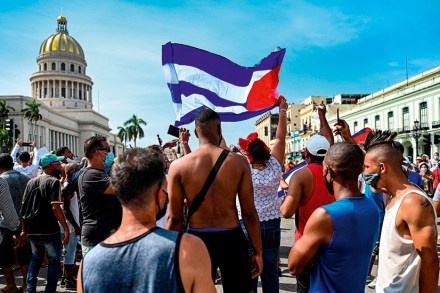
Havana There is an astonishing patience in the Cuban people, born of endless waiting. When a store has, say, chicken, people queue, often for days. But on Monday, outside the Zanja police station in central Havana, people weren’t waiting for food. They were waiting — patiently — for news of family members who had been arrested during unprecedented protests at the weekend. The demonstrations flared like a petrol fire. Cubans had settled down for lunch, many preparing to watch the Euro 2020 final, when news spread of a march in the town of San Antonio de los Baños on the outskirts of Havana.

The Soviet spectre haunting Afghanistan

From our UK edition

As US and British forces pull out of Afghanistan, further victims of the ‘grave of empires’, Russia is experiencing a mix of satisfaction, exasperation and trepidation. It has its own bitter memories of the country, after all. In 1979, as a friendly regime was falling back in the face of a mounting Islamic fundamentalist insurgency, Soviet forces rolled into Afghanistan. The idea was that by installing a new leader and mounting a brief show of force, the rebels would be intimidated back into line. Six months, the old men in the Kremlin told themselves, that is all it would take. And so began a vicious ten-year war that saw the deaths of 15,000 Soviets and hundreds of thousands of Afghans.

The Kremlin’s plan to destabilise the West

From our UK edition

On Sunday, Russia released its new National Security Strategy. In many ways, it picked up from where the 2015 version left off — on a crusade to politicise and polarise every aspect of Russian culture. This is not a strategy for the country’s security but for the government: the document sets out to mobilise the Russian nation, even Russian identity itself, against western bogeymen at home and abroad. Apart from some more sober references to ecology and partnership with China, most of the strategy reads as a paranoid diatribe against Russia’s oft-cited ‘internal and external enemies’. They loom large on nearly every page, lurking within discussions of national interest, societal cohesion, economics and strategic stability.

Triumph of the Taleban: the unfolding disaster in Afghanistan

From our UK edition

There’s an apocryphal story, told and retold by journalists many times over the course of America’s longest war. A Taleban prisoner is sitting, relaxed, across the table from an American interrogator: ‘You may have all the watches,’ the prisoner says, ‘but we have all the time.’ Now, the Taleban’s patience is finally paying off. President Joe Biden has promised that the last US soldier will be out of Afghanistan by the heavily freighted date of 11 September. In fact, all the troops may be back on American soil by the even more symbolic date of 4 July. Other Nato soldiers — including a small British training mission — are hastily lowering their flags and scuttling out. They leave in their wake an unfolding disaster.

Biden and Putin have left Britain out in the cold

From our UK edition

It would probably be wrong to say that Joe Biden and Vladimir Putin got on like a house on fire. But the results of the Geneva summit, which observed all the rules of Cold-War era summitry – from the venue to the formality of the arms-control and confidence-building agenda – far exceeded the deliberately doom-laden forecasts. In the space of around four hours at the Villa La Grange, the leaders of the United States and Russia effectively normalised relations that for the best part of four years had been bouncing around at rock-bottom, and dangerously so.

Why the Biden-Putin summit wasn’t a waste of time

From our UK edition

The meeting between U.S. president Joe Biden and Russian president Vladimir Putin in Geneva started cordially enough. A quick handshake, toothy smiles for the cameras, and some standard words of diplomacy. 'I would like to thank you for the initiative to meet today,' a slouching Putin told an attentive Biden. 'Still, U.S.-Russian relations have accumulated a lot of issues that require a meeting at the highest level, and I hope that our meeting will be productive.' Putin's words were something of an understatement. U.S.-Russia relations are scraping the bottom of the barrel and may very well be at their lowest point since the early 1980s, when Washington and Moscow were turning Europe into a parking lot for intermediate-range missiles.