Alexis de Tocqueville

The politicization of everything

“A number of observers of the political, moral and spiritual life in recent years have taken up the famous theme of the decline of the West,” the French journalist Luc Ferry wrote in Le Figaro at the end of January. “They recall that civilizations are mortal, like human beings, and that our own, far gone in decadence, is dying. Nevertheless, I fail to see how one can include the United States in this pessimistic reading of history. Not only does it remain the most powerful economic and military power in the world… politically speaking, whatever one thinks of [Donald] Trump, of his antics and his perverse narcissism, it is difficult to deny that he has given new life to the idea that politics can change the world, that action taken by a leader can have an impact on the real world.

Is everything political?

I first heard the slogan “Everything is political” from a left-wing reporter for Wyoming’s statewide newspaper in the mid-1980s, at least a decade before I became acquainted with the work of the revolutionary Italian theorist Antonio Gramsci, deviser of the strategy known as the “long march through the institutions” of the West. While the right clearly has no choice but to fight fire with fire in the struggle against its ideological and political adversaries, the fact remains that the left has substantially won the battle by having helped to transform a slogan into present reality. The idea of everything as politics, and politics as everything, is ideology in its purest form.

political

The classroom panopticon

Is it ironic to give a prize for encouraging “open discussion and debate in the classroom” and “creating an environment where all perspectives can be heard” in the name of William F. Buckley Jr.? Although best known today as the founder of National Review and longtime host of Firing Line, Buckley first came to prominence in 1951 with the publication of his book God and Man at Yale, subtitled: The Superstitions of “Academic Freedom.ˮ Buckley’s secular and secularized Protestant critics might well have considered the firmly Catholic young man, twenty-five years old at the time the book appeared, an apologist for something they regarded as superstition. But Buckley did not mean the term as a compliment when he applied it to academic freedom.

classroom

Tocqueville’s warning about the Democrats

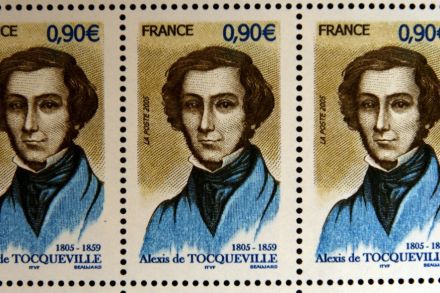
Cassandra was a Trojan princess with the gift of prophecy — or the curse. For while she could foresee the downfall of her city, she could not make anyone believe her. She wound up enslaved to the conquering Greek Agamemnon, but he too disregarded her warnings and met his own grisly fate when he returned home to find his queen and her lover prepared to kill him. America’s Cassandra was a Frenchman. His fate has been less cruel but more ironic. Alexis de Tocqueville and his family survived the French Revolution, for aristocrats like them an event nearly as calamitous as the sack of Troy. Like Cassandra, Tocqueville could see into the future, in his case through acute reason rather than supernatural gift.

tocqueville
democracy numbers

Democracy by numbers

The world of 2023, which scarcely speaks for the intelligence, the competence, or the success of the human race, does revive the age-old question of whether the individual is wiser than the species. One answer, stated in its simplest form, is the old saw that two heads are better than one. But is that true? And if so, are three heads better than two, und so weiter? Where do we come to the end of this? The key to the conundrum relates to government. Does oligarchy provide wiser rule than monarchy, aristocracy than oligarchy, and democracy than aristocracy? Consider the history of Britain and British government over the past centuries. Has democracy, in progressively greater measure, improved the management of British affairs since the eighteenth century?

Taking a page from Lenin’s playbook

I have often been struck by the number of pithy observations — revelatory, pointed or simply true — that were not said by the person to whom they are attributed. Vladimir Lenin apparently never said (in Russian or in English) that “the way to crush the bourgeoisie is to grind them between the millstones of taxation and inflation.” Mark Twain, to whom many amusing remarks have been falsely attributed, apparently did not contend that reports of his death had been greatly exaggerated. Edmund Burke neither said nor wrote that evil would triumph if good men did nothing.

inflation

An un-American accusation

Combatants within our nation’s political class never suffer for lack of insults — and in recent years they’ve taken to hurling back and forth a particular aspersion with increasing frequency: “un-American.” In recent weeks we’ve heard pundits and politicians declaim that it’s un-American to blame gas prices on Joe Biden, to tax billionaires, to let states decide their own abortion laws, to oppose admitting Ukraine to NATO, to forbid sex-change surgeries for ten-year-olds, and to treat Disney like any other Florida corporation. Still others have declared “whiteness,” the NFL draft and racial disparities in student debt to be un-American.

un-american

The foremost challenge facing Western democracies

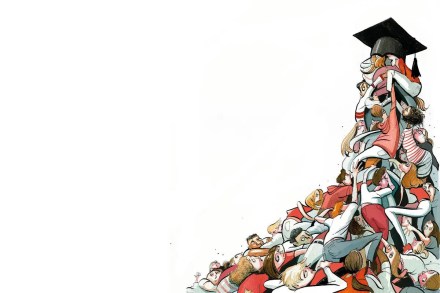
A few philosophers since ancient Greece have been wise, scarcely any humble. None at all, to my knowledge, has had the hubris — or maybe courage — to tackle the foremost challenge in political philosophy facing Western democracies today: how to achieve a demotic political system with an elite culture resting on top of the popular one, and the subordinate problem of how to prevent bad culture from driving out good, or making it impossible. Not even Tocqueville addressed the problem, which shows what a wise man the aristocratic Frenchman truly was.

class

Those emails seeking donations aren’t junk mail

It’s a small miracle, really, and it only happens in America. Every December, the mailboxes fill with requests for donations. They come from St Jude’s Hospital, the Salvation Army, the World Jewish Congress, Nature Conservancy, Feed America, the American Cancer Society and thousands more. They trickle in all year, but the deluge comes after the clock strikes 12 on December 1. And not just emails. Every day the postman brings more, most describing the charities’ good works, offering heart-warming (or heart-wrenching) stories of the people they help, and perhaps including a calendar for the coming year. Another request appears on Wikipedia pages, reminding us this invaluable service is funded solely by donations.

emails

Don’t tell your friends to quit their ‘problematic’ tech jobs

As civil unrest reverberated throughout virtually every corner of American life, culture, and industry this week, Reddit co-founder Alexis Ohanian announced that he was resigning from the company’s board of directors. He hopes that his seat will be filled by a black person. ‘I’m doing this for myself, for my family, and for my country,’ Ohanian (who is married to tennis legend Serena Williams) wrote on Twitter. ‘I’m saying this as a father who needs to be able to answer his black daughter when she asks, “What did you do?”’Later, Ohanian tweeted, ‘I'm seeing more and more people in tech who are frustrated and have been hitting a wall in their companies leaving!

tech

The lockdown list: books to read during quarantine

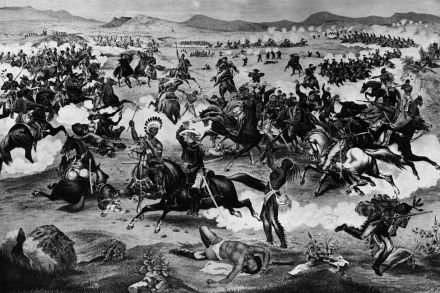
Now we’ve got time on our freshly cleaned hands, The Spectator’s literary luminaries are lubricating the wheels on time’s wingèd chariot and seizing the chance to boost their morale and brain function, reflect on the meaning of life and catch up on a good book or six. Each day, the Lockdown List carries our bibliophilic recommendations. Day 74: Indian summerRoss Clark The success of Black Lives Matter has deflected attention from a group which has no less a cause for grievance over its treatment throughout US history: native Americans. Indeed, to this day Native Americans, thousand for thousand, have an even greater chance of being killed by police officers as do African Americans.

custer