Aldous huxley

Our brave new world

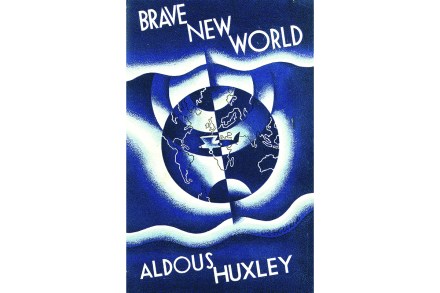
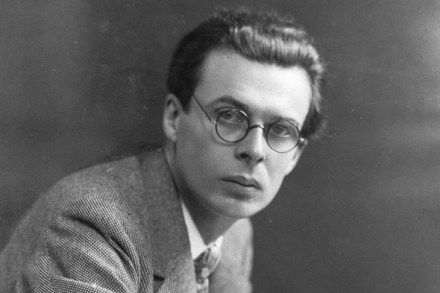
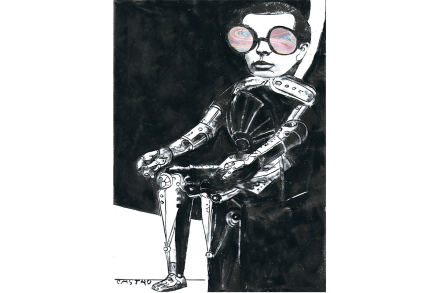
In 1961, just two years before he died in Los Angeles, the polymath, philosopher and novelist Aldous Huxley gave humanity a warning. Much of his prophecy about society in Brave New World had come to pass, he said, which made him even more certain that the standout problem of the future would be our inability to resist becoming enslaved to our own technology. Now, more than 60 years after his death – and with an entire generation of children frying their brains with smartphones and nobody able or willing to do anything to stop them – it is hard to deny that he was onto something. The man was destined to be a prophet for our gadget-addled age.

Technology

The 2024 regime referendum

The 2024 election will be a referendum on Joe Biden, but it’s also a referendum on a regime. This is how both sides see it. Liberal democracy itself is at stake according to progressives. For Trump supporters, the question at issue is legitimacy of the Deep State. These are different names for the same thing: a leadership caste and its ideology of government. In practice, liberal democracy means a democracy in which liberals never lose power.

regime

How science fiction novels read the future

The pandemic is not quite over, but we are getting used to its inconveniences. What disaster will be next? An antibiotic-resistant strain of the bubonic plague? Climate collapse? Coronal mass ejection? Will the next catastrophe be natural — perhaps a massive volcanic eruption, the likes of which we have not seen for more than two centuries, since Tambora in 1815? Or will it be a manmade calamity — nuclear war or a cyberattack? And might we inadvertently descend into a new form of AI-enabled totalitarianism in our efforts to ward off such calamities? To all these potential disasters it is impossible to attach more than made-up probabilities. So what can we do about them? The best answer would be that we should strive to imagine them.

science fiction

The deep state is no conspiracy theory

In 1958, Aldous Huxley foresaw a congestion of power able to shape and defy popular will. “Under the relentless thrust of accelerating over-population and increasing over-organization, and by means of ever more effective methods of mind-manipulation, the democracies will change their nature,” he predicted. “The quaint old forms—elections, parliaments, Supreme Courts and all the rest—will remain. The underlying substance will be a new kind of non-violent totalitarianism.” The changes, according to the author of Brave New World, would be almost imperceptible. “All the traditional names, all the hallowed slogans will remain exactly what they were in the good old days. Democracy and freedom will be the theme of every broadcast and editorial,” he continued.

aldous huxley brave new world

Dedicated to literature

The convention is that if you happen to meet authors and have just bought or acquired a book of theirs, you ask them to sign it. Particularly stuffy authors might refuse, but in most cases they feel flattered and duly inscribe your name and theirs on the title page or the flyleaf of the book in question. If the mood is right, they may add ‘with best wishes’ or something of the sort. At a superficial level, of course, such signatures are only the equivalent of an autograph album. There’s more to it than that, however. Added value perhaps, but association certainly. The human race lives by the stories we tell ourselves about our identity and our purposes, and that signature helps to make the author’s story part of the reader’s story.

signatures david pryce-jones

Brave New World Revisited, revisited

When the West’s Days of Reckoning came in 2016, we naturally turned to George Orwell, master of modern dystopia, to make sense of Trump, Brexit and the return of the far-right in Europe. We took to the streets — or rather Twitter — crying, ‘It’s just like 1984!’ Dystopia had made a comeback. We lapped up The Handmaid’s Tale, Black Mirror and Blade Runner 2049 with gleeful horror. Our concern shot Orwell’s novel to the top of Amazon’s chart. These are cautionary tales for dangerous times. Stories of science-fictional wastelands, malevolent totalitarian governments and vengeful AI that warn us of what we might become. Yet we often ignore Aldous Huxley’s Brave New World. This is curious.

aldous huxley brave new world