Alcoholism

Special K | 20 October 2016

From our UK edition

Our collective attention spans may not be as short as is widely cited, but they are pretty short. Take the case of the art historian Kenneth Clark. If anyone remembers anything about him, it is as the presenter of Civilisation, a TV series of the 1960s that rocketed him to stardom, and the author of the accompanying book, which sold over a million copies. He died in 1983 when he was a mythical figure, and any attempt to show his human dimensions was anathema, as I discovered to my cost. My own biography of Clark was published a year later. Nowadays, one can hardly get anyone to take him seriously. One reviewer dismissed Civilisation as a period piece, the narrator ‘a patrician’ in a tweed suit. Another spoke of ‘a figure of derision’.

This charmless man

From our UK edition

I was looking forward to going to Malcolm Williamson’s opera English Eccentrics set to a text by Edith Sitwell at the Peacock Theatre this week partly because my only experience of meeting the composer was so bizarre, not to say traumatic, that I haven’t been able to face listening to any of his copious output since. Not that there have been many opportunities, since he seems to be neglected in concert, on the radio and to a large degree on CD.

Desperate liaison

From our UK edition

Six years ago, the Canadian author Clancy Martin made a splash with his autobiographical novel How to Sell, based on the hard-drinking years he spent as a jewellery salesman before going to college and beginning the brilliant academic career he currently enjoys as a philosopher. Now he has come up with a weird, densely focused novella about an adulterous affair being pursued by an alcoholic female writer, who is the one doing the narrating. It’s beside the point to wonder if this too is autobiographical. In his acknowledgements, Martin thanks the people who ‘together convinced me to rewrite what began as a memoir into fiction’.

Riding high

From our UK edition

How’s this for a heartwarming set-up­­? Forty-something recovering alcoholic and aspiring artist Ginger copes with the disappointment of being unable to have children of her own by signing up to an organisation that sends underprivileged inner-city kids to the homes of middle-class couples in the countryside. When she is introduced to 11-year-old Dominican girl Velvet, the two bond over horses, with Ginger offering the girl a freedom denied to her by her domineering mother. It sounds perfect for book clubs, soon to be a life-affirming movie, and of little literary interest. But The Mare has much more merit than the synopsis suggests.

The clean and the unclean

From our UK edition

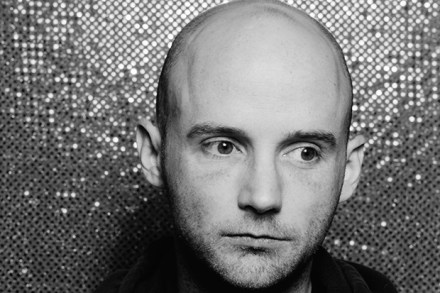
In 1991, Moby folded the theme from Twin Peaks into a remix of his dance track ‘Go’ and a diminutive, teetotal, vegan Christian abruptly became the American rave scene’s first pop star. He was not the obvious candidate: one critic dubbed him ‘techno’s crazed youth minister’. As a showboating entertainer in a culture sceptical of stardom, and a somewhat sanctimonious puritan surrounded by hedonists, he put a lot of noses out of joint. On one early online rave forum the phrase ‘Go away Moby’ became a mantra. In his first memoir, Richard Melville Hall (nicknamed Moby due to his famous ancestor Herman) unpicks this paradox with an unusual degree of self-awareness and deadpan humour.

Death and the Bard

From our UK edition

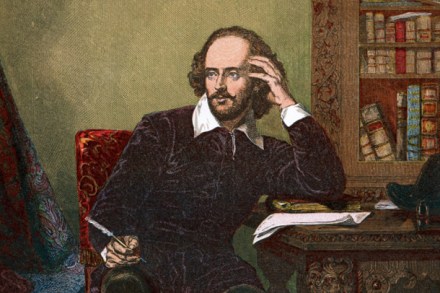
[audioplayer src="http://feeds.soundcloud.com/stream/260046943-the-spectator-podcast-obamas-eu-intervention-the-pms.mp3" title="Lloyd Evans and Dr Daniel Swift discuss how Shakespeare died" startat=1008] Listen [/audioplayer]How did the Bard kick the bucket? The 400th anniversary of Shakespeare’s death reignites interest in a great literary mystery. All we know for sure is that he was buried on 25 April 1616 in Holy Trinity Church, Stratford, and it’s a fair assumption that he died a couple of days earlier, around his 52nd birthday. A dearth of evidence compels us to sift the plays for clues to his lifestyle, which may, in turn, help with the autopsy. Historians condemn this kind of detective work but their reasons seem pretty unfair.

Mouldering hats and wedding veils

From our UK edition

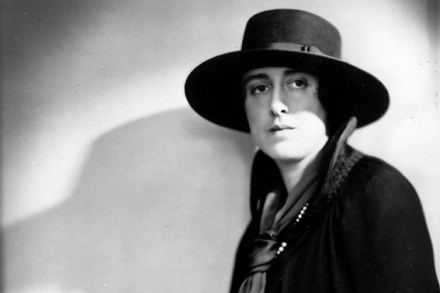
In deciding to write a book about her forebears and herself, Juliet Nicolson follows in their footsteps. Given that her grandparents were Harold Nicolson and Vita Sackville-West, and her father was Nigel Nicolson, that they all wrote copiously about themselves, that Knole and Sissinghurst are stuffed with family records, and that she is herself a publisher turned writer, it proved impossible to resist adding her voice to the already substantial record of her family’s powerful social and literary connections. For a long time she was impressed by something her grandmother’s lover, Virginia Woolf, once said to her father: ‘Nothing has really happened until it is written down.

Disgusted of X-ville

From our UK edition

Eileen is an accomplished, disturbing and creepily funny first novel by Ottessa Moshfegh, the latest darling of the Paris Review, which has published her stories and given her a prize. It recalls, half a century later, a week in the life of Eileen Dunlop, leading up to Christmas 1964. Her mother, whom she loathed, has died some years ago, and at the age of 24 Eileen is living in a dreary New England town she calls ‘X-ville’ with her father. He’s a demented, gin-sodden retired cop whom she also loathes, and whom she is supposedly looking after, though her care is limited to shouting at him, maintaining his gin supply and hiding his shoes to prevent him from terrorising X-ville in his pursuit of imaginary ‘hoodlums’.

A sex vampire on wheels

From our UK edition

The title of this book tells you a lot. Jack Sutherland, who grew up in London and Los Angeles, worked as a personal assistant to Michael Stipe, the singer in REM and, later, to Mickey Rourke. He also worked as a limo driver in Hollywood. A drug addict, he gravitated toward crystal meth, which can make you both wired and horny, sometimes for days on end. So we know to expect a particular brew of glamour, indignity and recrimination that perhaps some readers (including me) have come to enjoy. Sutherland certainly delivers — with a bit of glamour, an awful lot of indignity and not too much recrimination. But there’s something else going on here. This book is a collaboration between Jack the addict and his adoptive father John Sutherland.

Low life | 10 March 2016

From our UK edition

Nice airport was more or less deserted. Two-and-a-half hours early for the easyJet flight to Gatwick, I had a leisurely cup of tea and a bun at a café kiosk before going through security, sharing a counter with a couple of young gay Frenchmen who were bickering respectfully over the timing of some future arrangement. I took out my 99p 1987 charity-shop paperback, Mr Stimpson and Mr Gorse by Patrick Hamilton, and began to read. I love Patrick Hamilton’s novels, but until that moment hadn’t bothered to try the later ones, which he wrote when his alcoholism had taken a grip and he couldn’t get out of bed, as they are generally considered to be disappointingly bad. But for 99p I thought I may as well see for myself, and I read hoping to be pleasantly surprised.

Drying out in the Orkneys

From our UK edition

‘If I were to go mad,’ Amy Liptrot writes in her memoir of alcoholism and the Orkneys, ‘It would come as no surprise at all.’ One surprise of this book is its sanity, which is remarkable, given Liptrot’s beginnings. We open, unforgettably, with her parents passing each other on an island runway. Her mother is being flown home from hospital, holding the newborn Amy; her father, in the grip of a manic episode and a strait jacket, is heading the other way. Liptrot recalls another fit which drove him to smash all the windows of the family farm and hide with her, aged 11, from the police and doctors. ‘As his sedatives kicked in I crouched with my father in a corner of my bedroom, sharing a banana. “You are my girl,” he said.

Here’s to Bill

From our UK edition

Often, Christmas is a time for moaning after the night before, when the seasonal drinking is remembered (if remembered at all) with bewilderment and a degree of guilt. The illusion of drink-fuelled happiness — what James Joyce called ‘tighteousness’ — is familiar to most of us, even if the hangover seems a cruel price. The most effective remedy for a thumping head is to take a hair of the dog that bit you. Eddie Condon, the jazzman, recommended two quarts of bourbon; Samuel Taylor Coleridge swore by a breakfast of laudanum and fried eggs. By rights, the hangover should curb further drinking. Nobody wants to see their tongue pale and furry again in the bathroom mirror.

Cybersex is a dangerous world (especially for novelists)

From our UK edition

Few first novels are as successful as S.J. Watson’s Before I Go to Sleep, which married a startling and unusual premise to a tightly controlled and claustrophobic thriller. Its only drawback was that it was a hard act to follow. Novelists tend to dump all their brilliant ideas into their first book, and the white heat of originality compensates to some extent for any want of craft. Second novels lack both advantages, and have the additional problem that readers come to them laden with expectations. Like its predecessor, Second Life is a slice of domestic noir with a woman narrator. It is set mainly in affluent corners of London, with occasional trips to Paris.

Forgive us our Christmases as we forgive those who Christmas against us

From our UK edition

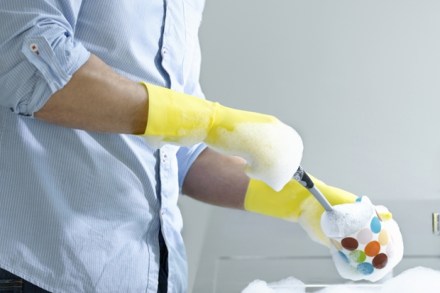
After lunch on Christmas Day my father always stood at the sink in his apron and yellow Marigolds and did the washing-up. Rolling up his shirtsleeves the gentleman’s way, as he claimed it was, with two turns maximum to just below the elbow, he couldn’t wait to get started. I can see him now, paper hat, suds up his arms. However, the underlying and perhaps most pressing reason for his doing the washing-up all afternoon was that he was a furtive drinker. When my father courted my mother, he led her to believe that he was a non-smoking, teetotalling Christian believer, when in truth he was the exact opposite of those three ideals; and though a long one, their marriage essentially foundered on the rocks of those discrepancies.

Eugene O’Neill: the dark genius of American theatre

From our UK edition

George Bernard Shaw called him a ‘Yankee Shakespeare peopling his isle with Calibans’. He was dubbed ‘a fighting Tolstoy’ and ‘the great American blues man of the theatre’. Before he was 35, Eugene O’Neill had emerged as the first real titan of American theatre, a preeminence he has never lost. When Sinclair Lewis was awarded the Nobel Prize in 1930, he responded that they should have given it to O’Neill, because he had done ‘nothing much in American drama save to transform it utterly… from a false world of neat and competent trickery to a world of splendour and fear and greatness’. O’Neill’s struggle to wrench American theatre into splendour, fear and greatness is the subject of Robert M.

Enjoy gin but don’t read books? Or read them only while drinking gin? This is the book for you

From our UK edition

Gin Glorious Gin: How Mother’s Ruin Became the Spirit of London is a jaunty and diverting history of ‘a wonderful drink that embodies the best of London’, which is a judgment that would raise eyebrows even at closing time in Soho. It is not a remotely scholarly book. There are no notes or index, and on the second page Olivia Williams informs us that the first citation for gin in the OED is from 1714, as ‘an infamous liquor’. It’s actually from 1723, as ‘the infamous liquor’ — mere details, but still. I stopped checking things after that.

Deserter, wifebeater, great poet: the shame and glory of Vernon Scannell

From our UK edition

Vernon Scannell was a thief, a liar, a deserter, a bigamist, a fraud, an alcoholic, a woman-beater and a coward. Plenty of material for a biography, then, especially given that he was also a novelist, a critic, a memoirist, a boxer, a teacher, a broadcaster, a loyal friend, a passionate lover and ‘a fun grandfather’. Most of all, he was a poet. Walking Wounded was the title of a Scannell poem and collection published in 1965, and James Andrew Taylor is right to use it as the title for this biography. Beaten viciously by a thug of a father, uncomforted by an unloving mother, by the time he was 19 he was himself a father (of a son he never met) and a soldier, and soon to be a deserter, wounded chronically in mind if not in body.

To see how good Journey’s End is, just look at who it’s offended

From our UK edition

‘You have no idea,’ wrote the publisher Ralph Hodder-Williams in 1929 to one of his authors, what terrible offence Journey’s End has given — and terrible pain too, which is a great deal more important. I think you will agree that the chronic alcoholic was extraordinarily rare. He was referring to R.C. Sherriff’s controversial tragedy of the trenches, which was then, 11 years after the war, enjoying an unexpected box-office success in the West End, where it played for nearly 600 performances. Its success came as a surprise, not only because Sherriff (1896–1975) was an unknown writer, and exclusively male war plays were not particularly popular, but also because audiences were expected to sympathise with an unusual war hero.

Jeremy Clarke: Running into Rachel

From our UK edition

I’d been trying to curb the habit — one day at a time — and then I felt a bit toxic and marched smartly into my favourite local charity shop as though I were on rails. I’ve been in this particular one a thousand times — a peasant enamoured with tat. I know all the volunteers by sight. One day it might be the big humble guy in the frock and with the devil-may-care approach to applying his lipstick.

In defence of binge drinking

From our UK edition

Such an ugly word, ‘binge’. Why can’t we talk about ‘spree drinking’ or ‘frolic drinking’ or ‘extravaganza drinking’? But no, it has to be ‘binge drinking’, a term loaded (pre-loaded?) with connotations. Well you can stick your connotations: it’s binge drinking for me every time. Or rather not every time. That’s the whole point: you don’t binge as a matter of habit, otherwise it’s not a binge. But the other thing you don’t do as a habit — and this is really what I’m getting at — is sit at home with a nicely acceptable Chilean merlot every night, tooting most of the bottle and patting yourself on the Boden-clad back for being totally in control.