Alcohol

How alcohol deaths hit a record high during lockdown

From our UK edition

Almost a year after the statistics were first published, the country remains horrified by the daily total of Covid 19-related deaths. Meanwhile, we are rather less apt to notice other statistics related to harm and death, which may be an unintended by-product of the fight against Covid-19.  The Office of National Statistics' (ONS) latest figures for the number of deaths related to alcohol-specific causes, published yesterday, received little attention. But they make for dreadful reading. There were 5460 such deaths in the first three quarters of 2020, a shocking rise of 16.4 per cent compared with the same nine-month period in 2019.

In defence of gambling

From our UK edition

Doing good doesn’t always work out as expected. A regular entering his local pub takes pity on an old lady seemingly fishing with a bent stick and string in a kerbside pool of rain. He invites her in for a drink. As she raises her gin and Dubonnet, he asks amiably: ‘So how many did you catch today?’ ‘You’re the eighth,’ she replies. Imagine another pub scene. As lockdown is relaxed, a customer’s order of three pints of bitter and two G&Ts is refused by the landlord: ‘Sorry, Squire, but according to my government boozometer that takes you over your permitted weekly Alcoholic Spending Limit of £100. You signed for two rounds on Sunday.

My neighbour’s dinner party was a near-death experience

From our UK edition

At dawn, starving, I drove to a commercial laboratory in the town centre where five phials of blood were taken from my arm. I was then handed a plastic jar and a refreshing wipe and directed to the nearest unisex lavatory to give a urine sample (mid-stream). Then a nurse stuck a long cotton bud up my nose as far as it would go and twiddled it this way and that. Blood, urine and Covid tests were preparatory to a hospital admission for a procedure involving a general anaesthetic. Then I drove home and ate a kipper for breakfast. While I was eating, Catriona stuck a hypodermic needle in my upper arm and injected me with a flu jab she’d bought at the village pharmacy — the last one in the shop.

The joy of drinking alone

From our UK edition

Thanks to a combination of night-time curfews, social-distancing rules, pubs closing, restaurants failing, the ‘rule of six’ and compulsory mask-wearing, that basic and necessary human need for people to meet for a drink has never been so difficult. Now, with the government’s new three-tier Covid strategy in place, anyone at any moment could find their local pub shut, their parties cancelled, and all forms of indoor mixing prohibited. Millions in the UK are already living under these restrictions. It’s a fair bet that millions more will soon join them. And if the government gives in to demands for a ‘circuit breaker’ — a short-term lockdown — it would in effect totally suspend social drinking as we know it.

Don’t listen to the health fascists — drink up

It was always likely that once the killjoys had done their work on smoking they would turn their attention to alcohol. Sure enough, with the Dietary Guideline Advisory Committee going through its twice-a-decade revision of what, and how much, Americans ought to be eating and drinking in order to look after their health, drinking alcohol is being subjected to the same demonization process that was once applied to smoking tobacco. There is a campaign to lower safe drinking limits in the US, in the same way that they have been lowered in other countries. Worse, there is pressure to eliminate altogether the concept of a ‘safe level’ of alcohol consumption — and make out that every drop brings a drinker a little closer to his or her demise.

drink alcohol

Jason Peters writes to entertain his friends and exasperate his enemies

Batavia, New York H.L. Mencken mocked the authors of I’ll Take My Stand, the classic 1930 manifesto of Twelve Southerners, as ‘typewriter agrarians’. The gibe was partly fair and partly not, but then a strict adherence to fact is a disability in a humorist — it is what adds those warning braces to his title and makes him that deadliest enemy of the lively reader: the ‘humorist’. Always self-reproving, never self-improving, Jason Peters, a scapegrace professor of something-or-other at Augustana College in Rock Island, Illinois, gemstone of the Quad Cities, is no ‘humorist’. Though his new book is titled The Culinary Plagiarist, he is no keyboard kebabist either.

jason peters

In defense of drinking in the street

A tiki bar opened across the street from my Upper West Side office shortly before all social life in Manhattan ground to a halt due to the pandemic. I visited once, had two to three of their specialty drinks and, despite a mild headache the next morning, could tell the place was going to be a hit. Then the shutdown came. Businesses of all stripes pulled and padlocked their security grilles. Helicopters and airplanes disappeared from the skies. Traffic, except for wailing northbound ambulances, all but disappeared. Genuine fear owned the spring.

lockdown drinking

How to save our nightlife after coronavirus

From our UK edition

The one certainty about crisis is that it makes bad situations worse. Anyone working in restaurants, pubs, cafes and clubs that depend on alcohol sales will have noticed ominous developments before Covid-19 struck. Like so much else that matters, government policy has had nothing to do with the cultural change. The drying out of Britain has been fuelled by changes the authorities never initiated: greater awareness of the dangers to health, the growth of British Islam with its religious prohibitions, and the young turning away from their parents’ addictions. 20 per cent of people said they did not consume alcohol in 2017. The amount drinkers reported consuming had fallen by around 16 per cent since 2004.

Lacking liquor in Northern Virginia

It’s been one day since Northern Virginia closed its liquor stores and already civilization has collapsed. Fires burn on the horizon as the cry of the sober mob reverberates through the streets. People nail boards over their windows and spray paint ‘NO VODKA’ on them. Yuppies have descended into the underground Metro stations, where rumor is they’ve become something less than human. Harvesters, we call them, and last night they came for my friend Bone Saw… That, of course, is not what’s happened in Virginia since the state ordered the temporary closing of some liquor stores last week. Life in the quarantined DC suburbs has mostly continued as usual.

liquor alexandria northern virginia

Beware the COVID-19 nannies!

COVID-19 has suddenly made much of the western public health establishment effectively redundant. Unused to dealing with infectious disease, we have a legion of epidemiologists who have never studied an epidemic and a horde of public health professionals who are more comfortable discussing soda taxes than virology.If you’ve spent your career believing that drinking, smoking and obesity are the real epidemics, a potentially fatal virus forcing billions of people into hiding could make you question your priorities. But if the nanny state lobby was disoriented at first, it has quickly learnt to adapt. The public are temporarily willing to sacrifice a bit of liberty for safety and the lifestyle regulators sense fresh opportunities.

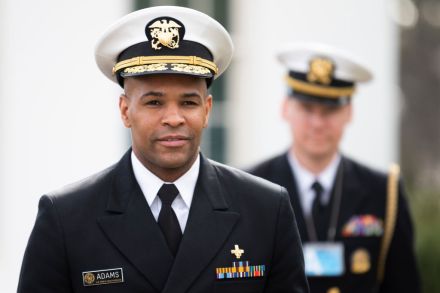
jerome adams nannies

Tips for Christmas tipples

From our UK edition

It’s telling that perhaps the best wine book of last year, Amber Revolution by Simon Woolf, was self-published, though you’d never guess from the quality of the design, photography or editing. Wine books are a tough slog for publishers unless they’re written by one of the big four: Clarke, Johnson, Robinson and Spurrier (sounds like a firm of provincial solicitors). Hugh Johnson wrote the first World Atlas of Wine in 1971. Since the 1998 edition he has been, in his words, ‘progressively passing the baton’ to Jancis Robinson. It’s astonishing how much has changed; early editions were little more than France, Germany, Italy, sherry and port.

Alcohol is the perfect cure for deafness

From our UK edition

New York   A busy ten days, or nights rather, with some heroic drinking thrown in for good measure. Hangovers discriminate against the old nowadays, but no one is doing anything about it — not in Washington, not in New York, not in London. Our former chairman Algy Cluff’s dinner party at a gentleman’s club, followed by an extremely funny speech given by him, started me boozing and things didn’t let up. One drinks to enhance an enjoyable evening, never to relieve boredom. Also one drinks when one can’t hear, as in extremely noisy New York restaurants.

Hipsters are getting high on an alcohol-free cocktail

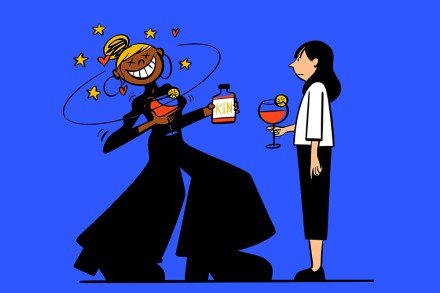
This article is in The Spectator’s inaugural US edition. Subscribe here to get yours. I met Jen Batchelor at a warehouse space in Brooklyn. She took a square, dark-red leather purse, unclasped it and removed a two-serving mini gold Martini shaker, two ornate cocktail tumblers, specialty bitters and a flask of Kin. Kin, an alcohol-free cocktail concoction that claims to occasion bliss and give rise to euphoria, is made from nootropics, adaptogens and botanics. It resembles a potion; it is not psychoactive. Its devotees will tell you it reconstructs the ritual of drinking.

kin

Why do Americans and Brits write about alcohol so differently?

This article is in The Spectator’s inaugural US edition. Subscribe here to get yours. ‘No nation is drunken where wine is cheap,’ Thomas Jefferson famously said, laying the blame for insobriety firmly on ‘ardent spirits’. The third president was a notorious wine-fancier with a particularly soft spot for Sauternes, yet it is true that countries with a long history of winemaking tend towards more easeful drinking. Despite the ghastly interregnum of Prohibition, America has become a serious wine-producing nation — and yet ardent spirits seem to have left far stronger a mark, on the national mindset and on the nation’s prose.

liquor american alcohol

How to live life like a drunk

From our UK edition

Since I’m not an alcoholic, recovering or otherwise, I don’t belong to Alcoholics Anonymous (AA) but I am close to several people in this ‘12-step fellowship’ who have changed their lives for the better through it. Most of them say its ‘programme for living’ would help anyone, drinker or not, to cope more successfully with mental stress. I’ve certainly found the memorable sayings and catchphrases in which their fellowship abounds to be useful in confronting my own anxieties — and sometimes very funny, too. And not being subject to AA’s rules about engaging with the media, I’m at liberty to share them here. Some are simple in their profundity.

Low life | 25 April 2019

From our UK edition

‘How’s your day going?’ said the taxi driver as he snapped his knob into drive. If I caught the plane it would be a miracle. Angry with myself for failing once again adequately to plan a simple journey to Bristol airport, I decided to tell him. ‘Well, my mother is dying of cancer, my brother’s cancer has spread to his hip, and mine is showing signs of waking up. I’ve just had a tax bill for 30 grand, I’ve had three hours’ sleep in the last 36, and unless you get me to the airport in 40 minutes I’m going to miss a plane. Otherwise everything is tickety-boo.’ ‘So where are you off to today?’ he said, sincerely envious. ‘France,’ I said. ‘France!’ he exclaimed. ‘Do you like wine?

Low life | 10 January 2019

From our UK edition

We were eight for dinner on New Year’s Eve: four men and four women with a combined age, I would guess, of around 500. A quarter of the company — two of the men — had been officially diagnosed as suffering from one form or another of dementia. We whose brains still neatly fitted the inside of our skulls were instead prey to all the usual anxieties, delusions, depressions and addictions typical of those wealthy, late middle-aged English people who exist in the strange limbo of expatriation. We sat there facing each other across the dinner table on the last day of the year, knackered, it’s true, each drifting aimlessly in a private universe of his or her own devising.

On the wagon

From our UK edition

Radio 3 tries to distract listeners from music by posing little quizzes and hearing quirky details of history from a ‘time traveller’. Last Wednesday we were assured that on the wagon, meaning ‘abstaining from alcohol’, derived somehow from condemned prisoners being taken from Newgate to Tyburn and having a last drink at St Giles’s. This is definitely not the origin of the phrase. That reliable philologist Michael Quinion gave the true version in his blog World Wide Words in 1998. The journey to Tyburn was a staple of popular miscellanies such as Hone’s Year Book and Chambers Book of Days, and earlier of fictionalised histories like Jonathan Wild (1725) and The Beggar’s Opera (1728).

Barometer | 13 September 2018

From our UK edition

The first suicide bomber Boris Johnson was criticised for likening Theresa May’s Chequers deal to a ‘suicide vest’ around the British constitution. — While the suicide vest is most associated with Middle Eastern terrorism, it was effectively invented by a Chinese soldier during the defence of the Chinese military HQ at the Sihang Warehouse during the Battle of Shanghai on 29 October 1937. — He strapped grenades around his chest and threw himself from the building, killing 20 Japanese soldiers who were besieging it. — His sacrifice did not prevent a Japanese victory in the battle, and it may have helped inspire Japanese kamikaze tactics.

The better the wine, the less bad it is for you

From our UK edition

I don’t hold out much hope for Drink Free Days, a new campaign launched by Public Health England and the alcohol industry to persuade people to abstain for two consecutive days a week. That was also the recommendation of the House of Commons Science and Technology Committee in 2012, as well as the advice of England’s Chief Medical Officer in 2016, but it doesn’t seem to have had much impact. According to a recent YouGov poll, more than 20 per cent of UK adults ignore the government’s drinking guidelines and are consuming more than 14 units a week. That may be an underestimate. A recent study published in the Lancet, which looked at alcohol use and its health effects in 195 countries, found that British men and women consume, on average, three drinks a day.