Airbnb

Low life | 31 May 2018

From our UK edition

We were standing in the tiny hall: me, Catriona, Annette and her toy Yorkshire terrier, Ahmed. It was our first Airbnb booking and Annette was welcoming us to her humble home. She was a mature, careworn, attractive French woman with a modest disposition and she spoke pretty good English. Her husband would be coming back from his work shortly and when he did she would introduce him to us, she said. Had we found the flat easily? Not that easily, in truth. The photo had suggested a house on a residential street, but a friendly black woman carrying a bag of laundry, who candidly admitted that she didn’t know her left from her right, had beckoned us through a communal doorway into a chilly concrete basement and sent us upa concrete ramp.

Dear Mary | 27 July 2017

From our UK edition

Q. My children are very lucky in that we have bought them all flats. However, they are now renting out these properties with Airbnb, then coming to stay with us at home, just when we thought they had flown the nest. They are more than welcome at weekends but during the week my ancient husband and I like to have a quiet time. How can we put a stop to this without our much-loved children (all in their thirties) feeling that they are unwelcome in their ‘own’ home? — Name and address withheld A. Their entitlement syndrome is certainly a tribute to your parenting, but for their sake you must nip it in the bud or risk their suffering from infantilisation.

Paradise lost | 9 March 2017

From our UK edition

The American dream was a consumerist idyll: all of life was to be packaged, stylised, affordable and improvable. Three bedrooms, two-point-five children, two cars and one mortgage. The sense was first caught by Alexis de Tocqueville in Democracy in America (1835–40), where he talks about a people more excited by success than fearful of failure. We all know when the dream died: on 9 November 2016. People in Brooklyn were crying. In Manhattan they couldn’t breathe. A national angst had been revealed: the land of plenty had become the land of the plenty cross. But when did the dream start?

Airbnb relies on discrimination. So why is it so bothered by Trump’s travel ban?

From our UK edition

Much of the fiercest opposition to the Trump regime has come from large corporations. The most recent example is Airbnb, whose Superbowl advert showed a group of people alongside a message saying: 'We believe no matter who you are, where you’re from, who you love or who you worship, we all belong'. It was a clear attack on the president's nationalist policies. We use Airbnb quite a bit, both as hosts and guests, and it is a fantastic business. On top of the extra cash it allows people to earn, it does bring some solid social benefits, perhaps the biggest of which is that, because of online reputations, it encourages people to behave in a very civil and considerate way. It also encourages trade, exchange and interaction with people from different parts of the world.

Real life | 29 December 2016

From our UK edition

What a fraught, divisive, infuriating sort of year it’s been. It started with me attempting to go on a blind date and being clocked by a speed camera doing 35 in a 30 in the dark on the way home. And on the way to the speed course, obviously, I pranged my car trying to park. I took this to be an omen. The ex-builder boyfriend was duly dusted off and put back into active service. In February, while having two new tyres fitted at a tyre shop in Wandsworth, I found myself being hit on by a jihadist tyre-fitter. We got chatting as I sat in his waiting room. He sat at his desk, beneath a golden passage from the Koran, and I somehow ended up telling him I had been to Iraq. The next thing I knew he was confessing to the fact that he was just back from there, for top secret reasons.

Real life | 17 November 2016

From our UK edition

The Israeli chef and I have become firm friends since he moved out of my flat. He has his own place now, and is trying to find a job. I take him horse riding at the weekends. On the way down the A3 he asks me all sorts of questions about his new life in Britain and the things he is struggling to make sense of. Like why he can’t get a work visa. He is very upset about this. ‘You have to understand,’ I explain, ‘that the mistake you made was to come here legally and apply to the system honestly and openly, stating clearly that you wanted to find work.’ I glanced at him as I drove, surveying his handsome baby face, dark skin, slightly curly black hair.

There’s nothing new about the sharing economy – it’s the swinging sixties all over again

From our UK edition

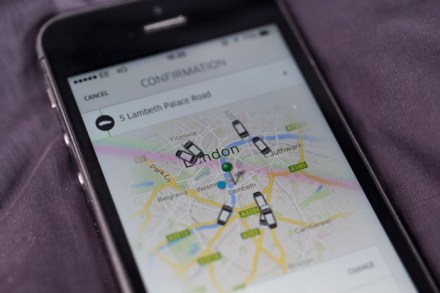
On the same day I put my spare room on Airbnb I also had my first cabshare experience, courtesy of Uber. When I mentioned this to a young friend of mine, he patted me on the back and said, ‘Welcome to the sharing economy!’ The sharing economy is one of those buzz terms that everyone uses these days — but what exactly is it? Apparently, it refers to a whole range of online goods and services that instead of buying and owning, we can borrow, rent or have access to — sometimes free, usually for a price. Likewise, we can be the ones providing these goods or services, and make a profit. Share a taxi ride, borrow a dog for an afternoon or rent out your flat for the weekend and you’re part of the sharing economy.

Real life | 10 November 2016

From our UK edition

A wonderful email has arrived from Airbnb entitled ‘Discrimination and Belonging — What It Means For You’. Having tried to make sense of it, I feel it can mean only one thing with any certainty. And that is that the Airbnb party is over. The web business started by a whizz kid in his New York apartment is about to feed itself to the ravening equality agenda wolves. Sadly, the once proud Airbnb corporation has decided to launch ‘a comprehensive effort to fight bias and inequality in the Airbnb community’.

Real life | 20 October 2016

From our UK edition

After the Fawlty Towers incident, I decided it was best to research the origin and extraction of all future B&B guests on arrival, before the builder boyfriend got stuck in. You may remember that he accidentally on purpose got a piece of gaffa tape caught on his top lip and held some ceiling felt at a jaunty angle during the stay of the Airbnb customers from Bavaria. Thankfully, they were in another room and didn’t see but I had to shush him because he was making a bad job of whispering, ‘Don’t mention Brexit! I mentioned it once but I think I got away with it!’ A girl from Taiwan and a gentleman from Zimbabwe then came and went with no major incidents. But when a young chap from Israel booked in I thought I had better be careful.

Is the sharing economy over already? Yes, if letting companies get their way

From our UK edition

Sitting on the lanai (balcony) sipping a beer, the wind gently rustling through the palm trees and my Hawaiian hosts’ adorable puppy licking my toes: life was sweet. I’d struck gold. I was living the Airbnb dream. David and Doug treated me like one of the family, complete with days out and home-cooked meals. Nothing was too much trouble. When they dropped me off at the airport (no extra charge), we vowed to be friends forever and I cried the whole flight home. I experienced Airbnb exactly the way it was meant to be - living like a local with the locals. But back in the UK it’s a different story.

Real life | 26 May 2016

From our UK edition

After a tense two week stand-off, the Balham Airbnb Crisis has been resolved. My upstairs neighbour and I have drawn back from the brink. He has agreed to let me station bed and breakfast guests in my main bedroom. I have agreed to pay slightly higher building insurance contributions. By the time we signed the new direct debit forms, we had brought Balham to the brink of world war three. The biggest irony is, now it’s all sorted, I’m not so sure I want to do Airbnb. I’m not sure my nerves will stand it. My latest guest, a girl from Taiwan, arrived on Sunday afternoon when I was out doing the horses. I had hidden a key and messaged her to call me when she got there. I talked her through where the key was, and though it took her quite a while, she found it.

Real life | 28 April 2016

From our UK edition

The gloves are off in my battle with the two brothers who live in the flat upstairs. They have just socked me a brutal left hook. And so no more am I going to be the neurotic, menopausal fruitcake downstairs. From now on I am going to unleash my difficult side. It’s a shame, because when they first moved in I thought they were going to be the neighbours I had always dreamed of: handsome and polite, with a look of dread in their eyes whenever I banged on their door. When I explained that the wheelie bin must be put out at right angles to the kerb at 8 p.m. sharp on Wednesday night, they did it. When I told them they had better not clank about in high heels they said they wouldn’t.

Real life | 14 April 2016

From our UK edition

I am becoming the Basil Fawlty of Airbnb. Almost everything that tormented Basil has tormented me since I started taking in guests. I am thinking of nailing up a sign saying Kitey Towers, with the ‘y’ askew. If you don’t know what Airbnb is: some whizz-kid in America hit upon the idea of charging people to sleep on an airbed in his New York apartment. He started a website. You register your home, put up photos, and choose guests you think you will get on with. I’ve had customers from Australia, New Zealand, America, Spain. But while they are usually delightful, I have often felt myself bristling like Fawlty at the sheer cheek of the paying public.

When sharing isn’t fair

From our UK edition

In Silicon Valley, renting out is the new selling —and renting out stuff that belongs to other people can be far more profitable than renting out your own. Over the past few years, companies like Airbnb and Uber have made a great deal of money by pioneering a business model of connecting consumers, who want to use things — such as apartments and cars with drivers — with other people, who want to provide them. For public relations reasons they promote this model as the ‘sharing economy’. And who could be against ‘sharing’? But this isn’t the kind of sharing your mother taught you.

Real life | 30 July 2015

From our UK edition

‘No, I do not do WhatsApp.’ That’s pretty much all I ever seem to say to people nowadays. They ask me if I do WhatsApp, I say I don’t do WhatsApp and they never bother with me again. I deduce from this that not only can we not now meet in person (so 80s), we cannot talk on the mobile phone either (so 90s), and nor can we email each other (so noughties). We have to do WhatsApp. I don’t know what WhatsApp is and I cannot bring myself to find out. In answer to the next person who asks, I say: WtfApp! WhocaresApp?! GetalifeApp!! I was full up with pointless technology when I got as far as using an iPhone.

That’s not a ‘sharing economy’: that’s an invitation to sell your whole life

From our UK edition

Technology businesses have a genius for inflicting indignities on us and spinning them as virtues. When they don’t want to respect copyright, they talk about the ‘democratisation of content’. When they want to truffle through our contact lists and browsing histories, they talk about ‘openness’ and ‘personalisation’. A hundred years ago, when a widow had to take in lodgers to pay the bills, it was called misfortune. Today, when an underemployed photographer has to rent out a room in his house or turn his car into a taxi, it’s called the ‘sharing economy’. First Google took his job. Now Airbnb wants his house. Next they’ll be after his pets. In fact, they already are.

Podcast: Cameron’s second coalition dream and the problems of the sharing economy

From our UK edition

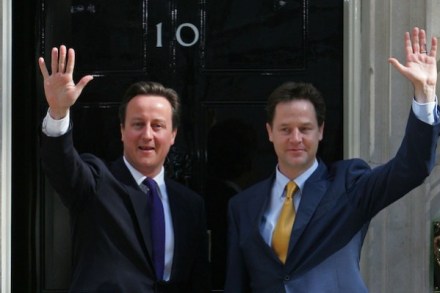
David Cameron is secretly planning for a second coalition, according to the new Spectator. In this week’s View from 22 podcast, James Forsyth and Miranda Green discuss the possibility of another Conservative-Liberal Democrat coalition after the general election. Would it be more difficult than it was five years ago to strike a deal? Will the Conservative party back Cameron if he falls short of a majority and decides against a minority government? And why is 30 MPs the magic number for the Liberal Democrats to enter into another coalition? Fraser Nelson and Alex Massie discuss our interview with Alex Salmond and his plans to hold Ed Miliband’s feet to the fire.