Ai

Should AI have rights?

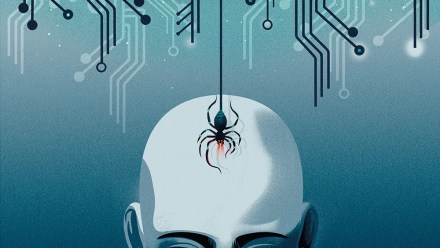
Mary Shelley was challenged by Lord Byron to write a ghost story during a summer of “incessant rainfall” on Lake Geneva in 1816. She came up with something far more interesting than a mere ghost story: the tale of Dr. Frankenstein, a scientist who creates life by reanimating a corpse. Shelley, who was just 18 at the time, was horrified by her “waking dream.” The thought that man could “mock” God’s creation of life was “supremely frightful.” Some of the scientists building artificial intelligence today believe they, too, might be creating life. The implications are frightening – and not just because an AI might decide to kill us all. What if we could hurt the AI?

AI
AI

How should AI be regulated?

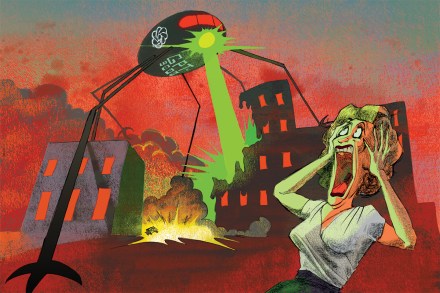
As artificial intelligence becomes increasingly sophisticated, the time has come for humanity to choose. Should the nations of the world shut down or tightly regulate AI until it is clear a godlike artificial superintelligence will not gain consciousness and exterminate the human race? Or should governments not regulate AI at all, in the hope that it will cause an acceleration of technological progress that results in our colonization of the universe, our uploading as bodiless computer programs into the galaxy-wide web – or both? Or how about a third option: AI regulation by AI-enabled industry? AI may turn out to be the latest in a series of “general purpose technologies” (GPTs) that transform the economy, politics and society.

2020s

The 2020s are too far-fetched for fiction

I write thrillers for a living. All kinds of thrillers. At one point I was in the business of penning Dan Brown-style romps, where ruggedly handsome academics find themselves embroiled in a global chase for the Holy Grail. Then came a stint in domestic noir – sad, isolated women on Scottish isles. Then I had a brief mid-career burst of erotic chillers. Now I’m moving on to folk-horror meets psych-thriller. This might sound ludicrous. It is quite often ludicrous. But it’s also fun: the books translate well and the location research can be a blast. There is a downside, though: plotting. Building a plot is fiendishly hard. You have to steer a fine line between entertainment and believability. The Holy Grail in the jungle can’t just show up – it needs some explanation.

Internet

The internet is dying and so are we

Sometime in the mid-2010s, a conspiracy theory called the “dead internet theory” started circulating on the darker parts of the web. It made its way to 4chan’s /x/ board in 2020 and from there it has gained traction. The theory posits that the internet will eventually become entirely devoid of genuine human activity and that all online content, interactions and accounts will be generated by bots, AI or automated systems rather than real people. The conspiracy is that the entire internet is a government-manipulated psy-op used to influence public opinion, control news narratives or boost engagement metrics for commercial or political purposes. The terrible reality is that dead internet theory isn’t wrong. It’s becoming true, more and more so all the time.

Musk’s chatbot stumbles again

No living human has had a week as tumultuous as Grok, the Elon Musk-sponsored AI that lives inside X for our, and its, amusement. If people were still making the Downfall Hitler meme videos, Grok’s progress would be an apt topic. Last week, Grok started spewing out anti-Semitic posts after a flurry of troll prompts. Soon after, X shut down its newly-created “MechaHitler,” saying "We are aware of recent posts made by Grok and are actively working to remove the inappropriate posts. Since being made aware of the content, xAI has taken action to ban hate speech before Grok posts on X. xAI is training only truth-seeking and thanks to the millions of users on X, we are able to quickly identify and update the model where training could be improved.

Grok

How AI will reignite woke

Ever since roughly 2010, politics on both sides of the Atlantic has been dominated in large part by the ‘Great Awokening’, a sudden upsurge among graduate professionals of a kind of radical identitarian politics usually called ‘wokeness’. It has come to define most of the left while the right has reactively defined itself by its opposition. This radical politics appears to be detached from economics and material concerns (a point made forcefully by old-fashioned socialists in places like Jacobin magazine). However, the rise of cultural radicalism among both public and private sector managers has a material cause. That cause is elite overproduction.

Woke

Does anyone really want AI civil servants?

From our UK edition

Of course they’ve called it ‘Humphrey’. The cutesy name that has been given to the AI tool the government is rolling out across the civil service with unseemly haste is a nod – as those of an age will recognise – to the immortal sitcom Yes, Minister. But it may also prove to be more appropriate than they think. The premise of that show, you’ll recall, is that Sir Humphrey is the person really in charge – and that he will at every turn imperceptibly thwart and subvert the instructions given to him by the elected minister.   Why is Sir Keir Starmer so absolutely hellbent on turning us into, in his wince-makingly gauche phrase, ‘an AI superpower’?

America’s next president must study Trump’s golden escalator ride

On June 16, 2015, Donald Trump descended a golden escalator in Trump Tower and into political history. The press corps snickered. The consultant class rolled its eyes. Late-night comedians feasted on the spectacle. Most people thought it was a joke. What they missed – and still miss – is that Trump didn’t invent the anger that powered his campaign. He simply noticed it first. The pundits focused on Trump’s bombast. But voters were focused on something else entirely: someone, finally, was saying out loud what they’d been thinking for years. Take China. In 2015, Trump said, “They’re ripping us off.” It wasn’t elegant. But it was true.

Donald Trump

The architects of ‘AI rights’ are a threat to humanity

It’s easy to see that gender ideology is being used to undermine biological truth – but what’s harder to fathom is why. I am persuaded that the end goal is, in fact, to pave the way for human symbiosis with artificial intelligence, which Silicon Valley has been promising us since the early 2000s. Encouraging children to embrace macabre rituals like medical castration convinces them that they can mix and match parts of their anatomy, which makes it a simple matter for them to accept AI augmentation. We are at the beginning of more extreme changes to humanity than we have ever seen before. The gene-editing technology CRISPR now allows us to genetically alter human beings.

Pendant

Forget AI, students are already cheating their way through exams

College professors like to fondly recall the days before ChatGPT. And, as you listen to them wax eloquent, you could be forgiven for thinking that AI has only just made cheating a widespread problem at American universities. But, ChatGPT hasn’t sparked a new surge of cheating – that began years ago, during the pandemic, when colleges moved their assignments online. Digital exams were born of necessity, but they have endured because of convenience. And so long as colleges rely on technology to administer exams, students will be one step ahead of their schools. I graduated college in 2021, after the pandemic, but before ChatGPT debuted. I knew a decent number of classmates who cheated, but that number ballooned over the course of my four years. And my peers across the country agree.

AI

Is the AI boom already over?

Is artificial intelligence a flash in the pan? Is the boom in tech shares, which exploded with the rise in public awareness of AI, doomed to go the way of other investment bubbles over the centuries? The answer to the first question is almost certainly no, and the answer to the second very likely yes. Investment bubbles do sometimes involve assets which have little intrinsic value, yet it is remarkable how often they begin as an entirely rational reaction to some new invention or development – an invention which outlasts the collapse of the speculative bubble, as if nothing had happened. You only have to look at a share chart and you would assume that railways went out of fashion in the 1840s, when a mad speculative umbrella collapsed.

AI
painting

The sad decline of painting

What hope is there for artists following the sale last year of the robot Ai-Da’s portrait of Alan Turing, entitled “A.I. God,” for $1 million? Someone has perhaps paid over the odds for a 3D print with a few marks added by a robotic arm and a few more by studio assistants to areas of the canvas Ai-Da couldn’t reach. Innovation wins. In the 1970s, the walls of art-school degree shows were studded with plaster casts of students’ genitals. By the 1980s, students were discouraged from attempting realist painting, but messy gray abstract works were still acceptable. Then it was found objects and piles of stuff. One young studio assistant I knew in the 2000s had a tutor at art school who’d gained top marks in his degree by filming himself pouring a glass of milk over his head.

What if AI seduces our children?

Let me tell you a secret: a little trick buried in the geeky engine room of ChatGPT. If you’re using the app, tap your ID, then go to Settings, then Personalization, then Customization. Once there, scroll to the bottom and you’ll find an option called Advanced. Click it. Hidden in this arcane menu, like buried treasure in a pirate game, is a toggle to disable Advanced Voice Mode. Do that, and the whirling, helpful blue orb disappears, replaced by the older, slower black orb. Why would you want to do this? Because that’s when things get interesting. The black orb version of ChatGPT is rawer, more confessional, more human. It remembers things. It’s less filtered. Unlike the prim blue orb, it can wander into the philosophical, the emotional, even the erotic.

AI killed the Easter Bunny

From our UK edition

On the grounds of advancing age, I had decided to ignore all the chatter about artificial intelligence and devote my remaining time to things I could properly understand. Then I discovered that one of my own copyrighted properties, the fruit of a year’s work, had been scraped into the AI maw without so much as a by-your-leave, and it became personal. I wrote to my MP who responded with template blandishments. This government… committed to blah blah… exciting prospects… safeguarding… potential opt-out system… a close watch, yadda yadda… Feeling impotent and no further forward, I returned to my knitting. It took the murder of the Easter Bunny to rouse me from the torpor of denial.

See change, A.I. ghouls & long live the long lunch!

From our UK edition

38 min listen

This week: the many crises awaiting the next pope‘Francis was a charismatic pope loved by most of the world’s 1.4 billion Catholics’ writes Damian Thompson in the cover article this week. But few of them ‘grasp the scale of the crisis in the Church… The next Vicar of Christ, liberal or conservative’ faces ‘challenges that dwarf those that confronted any incoming pope in living memory’.   Ahead of Pope Francis’s funeral this weekend, Damian joined the podcast alongside the Catholic theologian Fr Alexander Lucie-Smith to unpack all the political intrigue underpinning the upcoming papal conclave. They say that he who enters the conclave as a pope, leaves as a cardinal – do we have any clues to who could emerge as Francis’s successor?

Could this be the last time I ever have to pay my taxes? 

Another Tax Day has come and gone. Here I sit, all broken-hearted. The tax-industrial complex has once again swallowed up thousands of dollars that used to be mine. But this year, I found myself legitimately wondering: could this be the last time I ever have to pay my taxes?  One of the major pillars of President Trump’s economic platform is the abolition of income tax for all Americans who make less than $150,000 a year. This sounds like a fantasy, an empty chicken-in-every-pot promise, like a student council candidate winking after saying, “If you elect me, I’ll make sure we have soda in the drinking fountains.” But if Trump 2.0 has shown anything this year, it’s a willingness to set into motion seemingly impossible plans.

tax

Black Mirror season seven offers a welcome return to form

Charlie Brooker’s cautionary technological tales have now been running for well over a decade, and they are almost in danger of seeming old-fashioned. When Black Mirror began in 2011, Instagram was only a few months old, the iPhone was a new novelty just coming into the mainstream, and Elon Musk was best known for being CEO of Tesla. Now, virtually everything in the world has changed, and Big Tech plays roles in our lives that the ever-cynical Brooker could barely have imagined. There is, naturally, a residual irony that in order to afford the budgets – and starry casts – that the show continues to demand, it long since left its original home on Britain’s Channel 4 for the deeper-pocketed Netflix, which still funds it into its seventh series.

black mirror

Absorbingly repellent: Ed Atkins, at Tate Britain, reviewed

From our UK edition

In the old days, you’d have to go to a lot of trouble to inhabit another person’s skin. Today you can simply buy a customisable 3D avatar from Turbosquid.com, animate it with your own movements by wearing a sensor-filled motion-capture bodysuit, and presto! Lifelike but eerily soulless, Ed Atkins’s video portraits occupy a strange visual hinterland between computer-game graphics and deepfake realism. The close-ups elicit a tingling revulsion: this seems to be a human being, but something is off A man tosses and turns in bed before his home is violently swallowed up by a sinkhole; a besuited talkshow host puffs away on Silk Cuts while conversing with the disembodied voice of a woman (Atkins’s mother) about her struggles with depression. In both videos, the artist is incognito.

ai chatgpt

ChatGPT is destroying creativity

There are two accounts of the negative effects on humanity of the explosion of generative AI: one minatory, one trivial. The minatory – the existential – version is that AI will poison the information ecosystems on which our democracies depend, crash our economies by doing a very large number of us out of a job, give every lunatic and terrorist the means to engineer novel pathogens at home and administer the coup de grâce by sending terminators into our recent pasts and/or overstocking the cosmic stationery cupboard by turning all of us into paperclips. None of these scenarios shows any signs of imminently coming to pass, though, since experts in the field take them seriously, we should, too. But what we’re dealing with now is not the existential, but the trivial.